

What Is Orthognathic Surgery?
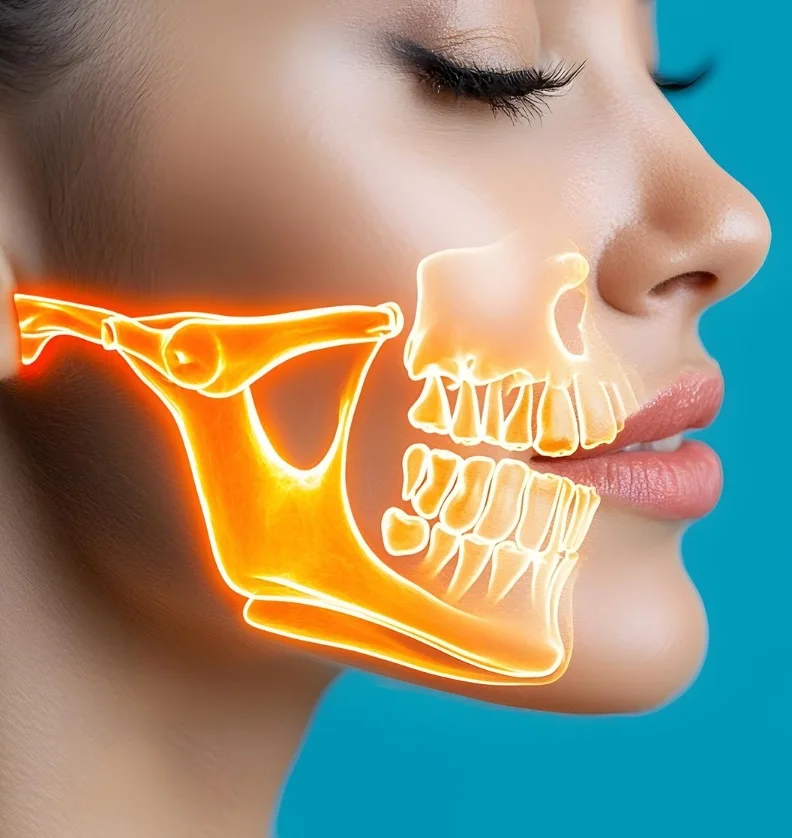
Orthognathic surgery is a general term for surgical procedures that correct the position of the upper and lower jaws in relation to each other or to the facial skeleton. Some bite problems are caused not by the alignment of the teeth but by the size or position of the jawbones. In these cases, orthodontic treatment alone can align the teeth, but the discrepancy between the jaws remains.
Treatment is planned jointly by an orthodontist and an oral and maxillofacial surgeon. Before surgery, orthodontic treatment positions the teeth to fit the new position of the jaws. During surgery, the jawbones are moved into the planned position and secured with plates and screws. Orthodontic treatment is then used to finalize the bite.
Who Is It Suitable For?
Orthognathic surgery is considered for people whose jaw growth is complete. It may be considered in cases such as a significantly recessed or protruding lower jaw, an open bite that prevents the front teeth from touching, sideways displacement of the jaws, asymmetry involving both the teeth and jaw alignment, difficulty chewing and biting, speech affected by jaw position, mouth breathing, and breathing problems during sleep.
Suitability is determined after a clinical examination, three-dimensional imaging, and model analysis. Not every patient is a candidate for this treatment, because mild and moderate discrepancies can often be treated with orthodontics without surgery.
Treatment Process
1. Evaluation and planning: A clinical examination, panoramic and cephalometric X-rays, three-dimensional tomography, and digital model analysis are performed. The orthodontist and oral and maxillofacial surgeon plan the new position of the jaws together.
2. Pre-surgical orthodontics: The teeth are aligned so that they will fit together correctly when the jaws are moved into their new position. This is usually the longest stage of treatment.
3. Surgery: The procedure is performed under general anesthesia through the mouth, so there is no incision scar on the face. The jawbones are moved into the planned position and secured with titanium plates and screws.
4. Recovery: Swelling and altered sensation are expected during the first few days. A soft-food diet is followed for a certain period, and bone healing progresses over the course of several weeks.
5. Post-surgical orthodontics: The bite is finalized with fine adjustments, and the result is maintained with retainers.