
All-on-4 in Turkey: An Overview
Papatya Dental Clinic is in Konyaaltı, Antalya, on Turkey's Mediterranean coast, and patients travel to us for All-on-4 from the UK and across Europe. The clinic holds the Ministry of Health's International Health Tourism Authorization Certificate and ISO 9001 certification, and patients rate it 4.7 out of 5 on Google.
All-on-4 is a way of giving you a full arch of fixed teeth when all the teeth in the upper or lower jaw are missing, or the remaining teeth cannot be saved. Two implants are placed at the front of the jaw and two at the back. The back implants are tilted so that they reach firmer bone and avoid the sinus in the upper jaw or the nerve in the lower jaw.
Because of the tilted implants, a bone graft can often be avoided even when the jaw has shrunk after years without teeth. A bridge is fixed to the four implants with screws, so it does not come out like a denture. Your dentist can remove it for check-ups and professional cleaning.
In suitable cases, a fixed temporary bridge is fitted within the first few days after surgery. The final bridge is made once the implants have fused with the bone, usually a few months later, which is why treatment in Turkey is normally planned as two trips.
All-on-4 is a well-studied treatment. A 2026 meta-analysis of 55 studies found that 98% of All-on-4 implants were still in place after five years or more, with results similar to All-on-6.
Implants
Four per jaw: two straight at the front and two tilted at the back.
Bone graft
Often not needed, because the tilted implants use the bone that is there.
Teeth after surgery
A fixed temporary bridge within the first few days in suitable cases.
Time in Turkey
First visit about 1–3 days; final bridge at a second visit a few months later.
Long-term results
98% of implants still in place after five years or more in a 2026 meta-analysis.
Who Can Have All-on-4 in Turkey?
All-on-4 is considered when a whole arch of teeth needs replacing. Whether it suits you is decided after an examination and a 3D scan, together with your general health and what you expect from treatment.
No teeth left in one jaw
If you have lost all the teeth in the upper or lower jaw and want fixed teeth instead of a denture.
Teeth that cannot be saved
If the remaining teeth are loose or badly damaged, for example after advanced gum disease, and would need to be removed.
A denture that will not stay in place
If your denture moves when you eat or speak and you would like teeth that stay fixed.
Bone loss
If the jaw has shrunk but there is still enough bone at the front and for the tilted back implants.
Bone at the front and back of the jaw
The 3D scan measures the bone available for each implant and the path of the tilted implants.
Gums and remaining teeth
Gum disease is treated and teeth that cannot be saved are removed as part of the plan.
General health and medicines
Poorly controlled diabetes, some osteoporosis medicines and past radiotherapy to the head and neck can change the plan.
Smoking and daily cleaning
Smoking slows healing. Cleaning under the bridge every day is part of keeping the implants healthy.
Very little bone in the upper jaw
If there is not enough bone even for tilted implants, zygomatic implants anchored in the cheekbone are considered.
Teeth that can still be saved
If several of your own teeth can be kept, single implants or bridges may be a better choice than replacing the whole arch.
Health that does not allow surgery yet
Some conditions need to be under control before implant surgery can be planned.
Risks of All-on-4 and How They Are Reduced
The risks of All-on-4 surgery are the same in Turkey as at home. What lowers them is careful planning on a 3D scan, an experienced surgical team and regular check-ups after treatment.
Swelling, bruising and discomfort
Common in the first days after surgery and usually settle within one to two weeks.
An implant that does not fuse
Uncommon. If an implant fails, it can usually be replaced once the area has healed.
Inflammation around the implants
Gum inflammation around implants (peri-implantitis) is more likely with smoking and poor cleaning, which is why daily cleaning and check-ups matter.
A chipped or broken bridge
In a 2021 systematic review, fracture of the acrylic bridge was the most common problem; the bridge can be repaired or remade.
Sinus or nerve problems
The tilted implants are planned on the scan to stay away from the sinus and the nerve in the lower jaw; problems are rare.
Getting used to the new teeth
Speech and chewing can feel different for the first weeks while you get used to the bridge.
How All-on-4 Treatment in Turkey Works
Treatment is usually planned as two visits to Antalya. The first visit, when the implants are placed and a temporary bridge is fitted in suitable cases, takes about 1–3 days. The final bridge is fitted at a second visit a few months later, once the implants have fused with the bone.
- 1
Before you travel
You send recent photos or an X-ray if you have one, and your coordinator talks you through the plan, the dates and your medical history. If you would like, we arrange your airport transfer and hotel in Antalya.
- 2
Examination and 3D scan
At the clinic your dentist examines your mouth, gums and bite, and a 3D scan (cone beam CT) shows the bone available for each implant.
- 3
Digital planning
The position and angle of the four implants and the shape of the temporary bridge are planned on a computer.
- 4
Surgery
Teeth that cannot be saved are removed and the four implants are placed, under local anaesthesia, with sedation or general anaesthesia if needed.
- 5
Fixed temporary bridge
If the implants hold firmly enough at surgery, a fixed temporary bridge is fitted within the first few days. If they do not, the implants heal first and you wear a removable temporary denture in the meantime.
- 6
Healing at home
You go home with the temporary bridge and eat soft foods while the implants fuse with the bone, usually over a few months.
- 7
Final bridge
At the second visit, scans or impressions are taken and the final bridge is made in the clinic's own CAD/CAM laboratory. After a try-in and bite adjustment, it is screwed into place.
Alternatives to All-on-4
All-on-4 is not the only way to replace a full arch. The right option depends on your bone, the teeth you have left and whether you want teeth that stay fixed.
All-on-6
Six implants instead of four, when there is enough bone, to spread the load over more implants.
Snap-on dentures
A removable denture that clips onto two to four implants and is taken out for cleaning.
Zygomatic implants
Implants anchored in the cheekbone when there is too little bone in the upper jaw even for tilted implants.
A conventional denture
No surgery, but the denture rests on the gums and can move when you eat or speak.
3D Planning and Our Own Laboratory in Antalya
All-on-4 is planned on a 3D scan (cone beam CT). It shows how much bone there is at the front and back of the jaw, where the sinus and the nerve run, and the angle each tilted implant should take.
Crowns and bridges are made in the clinic's own CAD/CAM laboratory, so the bridge is designed and adjusted under one roof while you are in Antalya.
A wide choice of implant systems is available, including Straumann, Nobel Biocare, Neodent, Osstem, MegaGen and Dentium. The implant system and the material of the final bridge are chosen with you during planning, and you receive an implant card for every implant placed.
3D CT (CBCT) scan
Measures the bone and the position of the sinus and nerve before surgery.
Digital implant planning
The angle and length of each implant are decided on the computer before the operation.
In-house CAD/CAM laboratory
The temporary and final bridges are made at the clinic.
Choice of implant systems
All major implant brands are available and are chosen with you.
Implant card
A record of each implant placed, for your dentist at home.
Recovery After All-on-4 and Aftercare at Home
Swelling and tenderness for a few days after surgery are normal and are managed with the medicines you are given. Your dentist's instructions on cleaning, food and check-ups always come first.
- 1
First few days
Swelling, some bruising and tenderness are normal. Rest, cold packs and the medicines you are given help.
- 2
First weeks
You eat soft foods with the temporary bridge and keep the area clean as shown to you.
- 3
First few months
The implants fuse with the bone. Avoid biting into hard or sticky food until your dentist confirms the final bridge can be made.
- 4
After the final bridge
You eat normally, clean under the bridge every day and come for regular check-ups.
Cleaning under the bridge
Use a water flosser or small brushes under the bridge every day; your dentist shows you how.
Stopping smoking
Smoking slows healing and raises the risk of inflammation around the implants.
Once you are back home
Every treatment at Papatya Dental Clinic includes 12 months of aftercare, and your coordinator stays reachable on WhatsApp after you return home. We also have an office in London (25 Southampton Buildings) and one in Helsinki.
Swelling or pain that gets worse
Especially after the third day, or with a fever.
A loose or broken bridge
Contact the clinic before trying to fix or remove it yourself.
What Affects the Cost of All-on-4 in Turkey
The cost of All-on-4 in Turkey depends on your scan and your plan. A fixed figure cannot be given before your scan has been assessed; current prices are shared with you, together with your treatment plan, when you contact us. You can pay by card, bank transfer or cash.
One jaw or both
Treating the upper and lower jaw is planned and priced as two arches.
Treatment needed first
Extractions, gum treatment or a bone graft, if needed, are added to the plan.
Implant system
The implant brand you choose with your dentist affects the cost.
Temporary and final bridge
The material of the final bridge is chosen with you during planning.
Anaesthesia
Sedation or general anaesthesia, if you need it, is planned according to your health.
Before / After
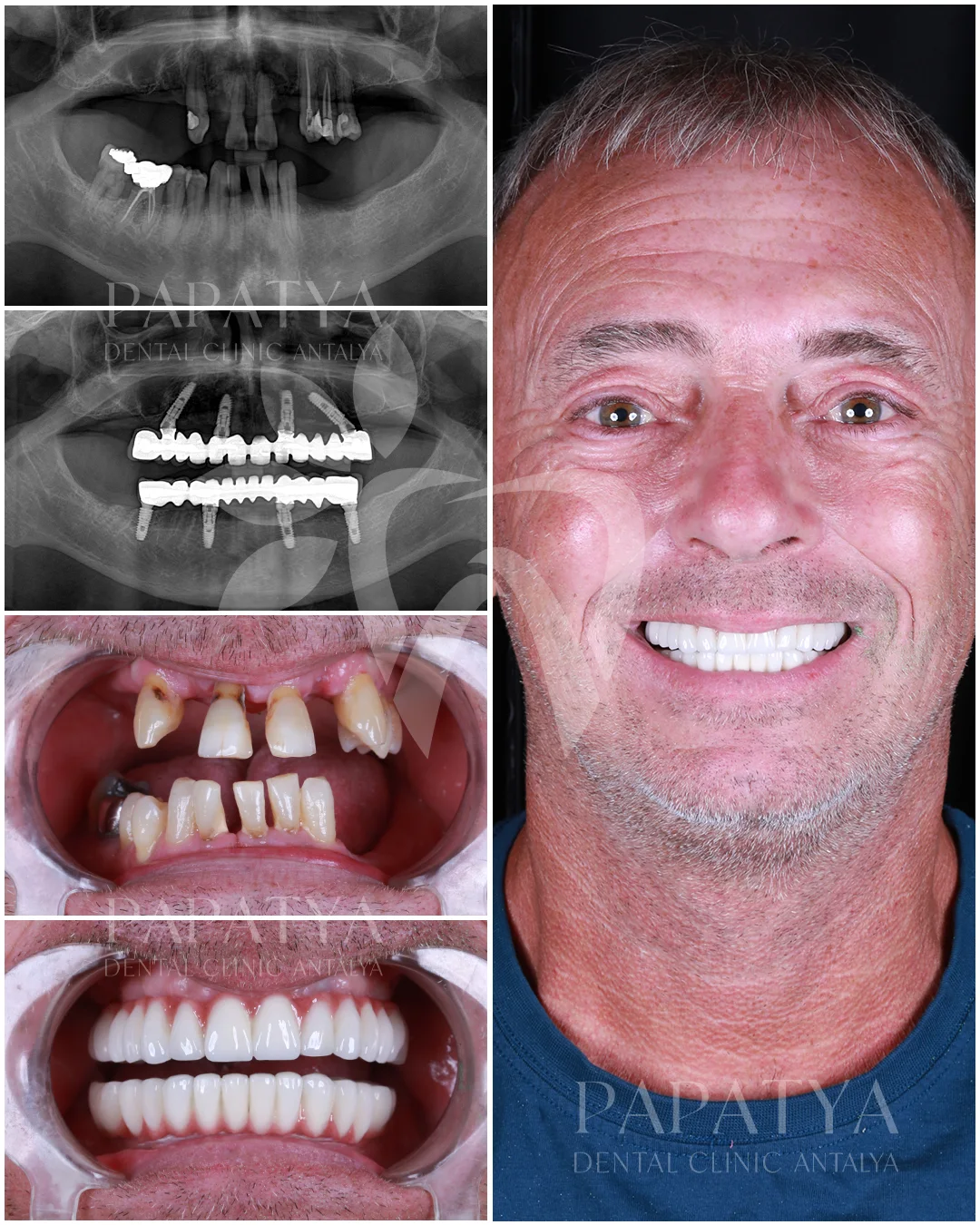
Start
26 March 2025
End
17 July 2025
All-on-4 in Turkey: Frequently Asked Questions
How much does All-on-4 cost in Turkey?
The price depends on whether one or both jaws are treated, whether extractions or a bone graft are needed first, the implant system and the material of the final bridge. A fixed figure cannot be given before your scan has been assessed. Current prices are shared with you, together with your treatment plan, when you contact us.
How many days do I need in Turkey for All-on-4?
The first visit, when the implants are placed and a temporary bridge is fitted, usually takes 1–3 days. The final bridge is fitted at a second visit once the implants have fused with the bone, usually a few months later.
Will I have fixed teeth straight after All-on-4?
In suitable cases, yes. If the implants are stable enough at surgery, a fixed temporary bridge is fitted within the first few days. If they are not, the implants heal first and a removable temporary denture is worn in the meantime.
Is All-on-4 in Turkey safe?
It depends on the clinic, not the country. Check who places the implants, whether a 3D scan is taken, which implant system is used and how aftercare works once you are home. At Papatya Dental Clinic, All-on-4 is planned on a 3D scan and carried out by oral and maxillofacial surgeons and periodontists, and the clinic holds the International Health Tourism Authorization Certificate and ISO 9001 certification.
How long do All-on-4 implants last?
In a 2026 meta-analysis of 55 studies, 98% of All-on-4 implants were still in place after five years or more. The bridge may need repairs over the years. Daily cleaning under the bridge and regular check-ups keep the implants healthy.
Do I need a bone graft for All-on-4?
Often not. The back implants are tilted to reach firmer bone, so a bone graft can often be avoided. When the upper jaw has very little bone left, zygomatic implants anchored in the cheekbone are considered.
What is the difference between All-on-4 and All-on-6?
All-on-6 uses six implants instead of four. It needs more bone, and it spreads the load over more implants. In a 2026 meta-analysis, long-term implant survival was similar for both. Which one suits you is decided from your scan.
Is All-on-4 painful?
Surgery is done under local anaesthesia, with sedation or general anaesthesia if needed, so you should not feel pain during it. Swelling and tenderness for a few days afterwards are normal and are managed with the medicines you are given.
What can I eat after All-on-4?
Soft foods are recommended while the implants fuse with the bone, usually for the first few months with the temporary bridge. Avoid biting into hard or sticky food until your dentist confirms the final bridge can be made.
Who carries out All-on-4 at your clinic?
All-on-4 is carried out by specialists in oral and maxillofacial surgery and periodontology: Ozan Ergen, Ali Bulut, Assoc. Prof. Gülen Kamak and Elif Teke. All four are members of the International Team for Implantology (ITI).
Can you arrange my airport transfer and hotel in Antalya?
Yes. If you would like, we arrange your airport transfer and hotel in Antalya and plan your appointments around your stay.
What aftercare do I get after I return home, for example to the UK?
Every treatment at Papatya Dental Clinic includes 12 months of aftercare, and your coordinator stays reachable on WhatsApp after you return home. Papatya Dental has an office in London (25 Southampton Buildings, open Monday to Saturday) and one in Helsinki, and holds MeetUp events in UK cities where you can meet the team in person.
Which languages do the dentists speak?
All our dentists speak English, and some also speak Russian. Each dentist's profile shows the languages they speak.
Medical sources
View medical sources
Medically reviewed by
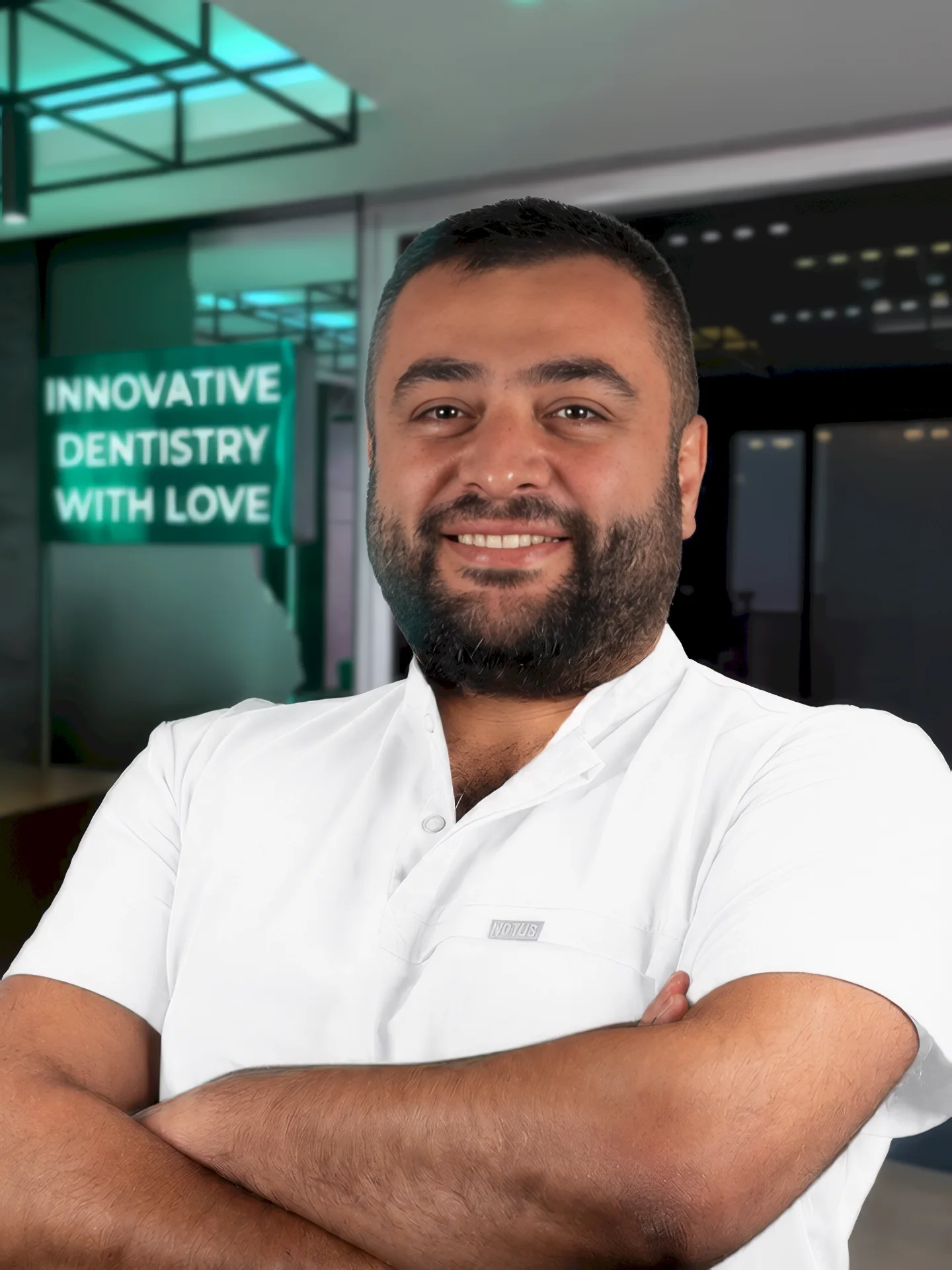
Ozan Ergen
Specialist in Oral, Dental and Maxillofacial Surgery
View doctor profile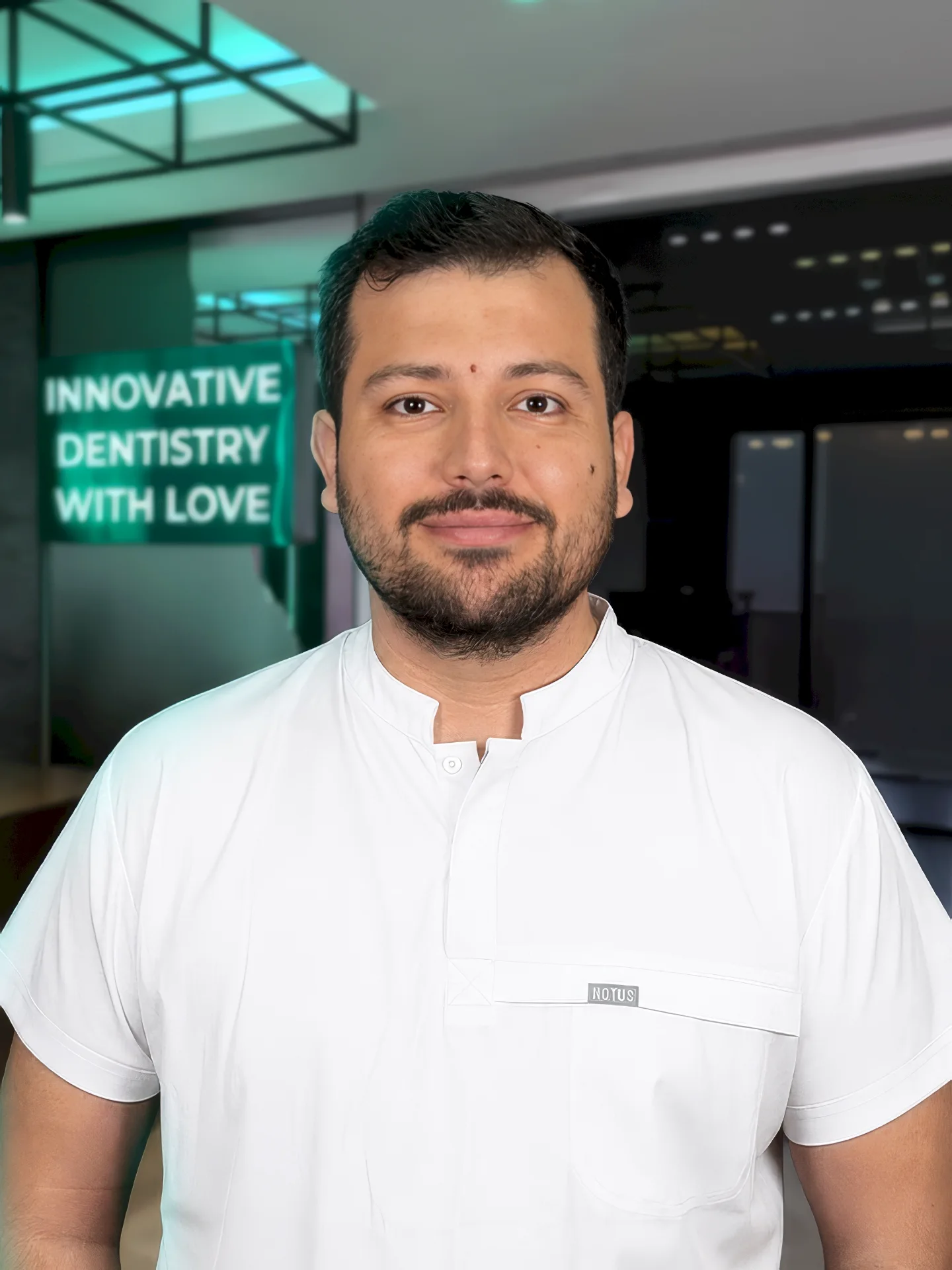
Ali Bulut
Specialist Oral, Dental and Maxillofacial Surgeon
View doctor profile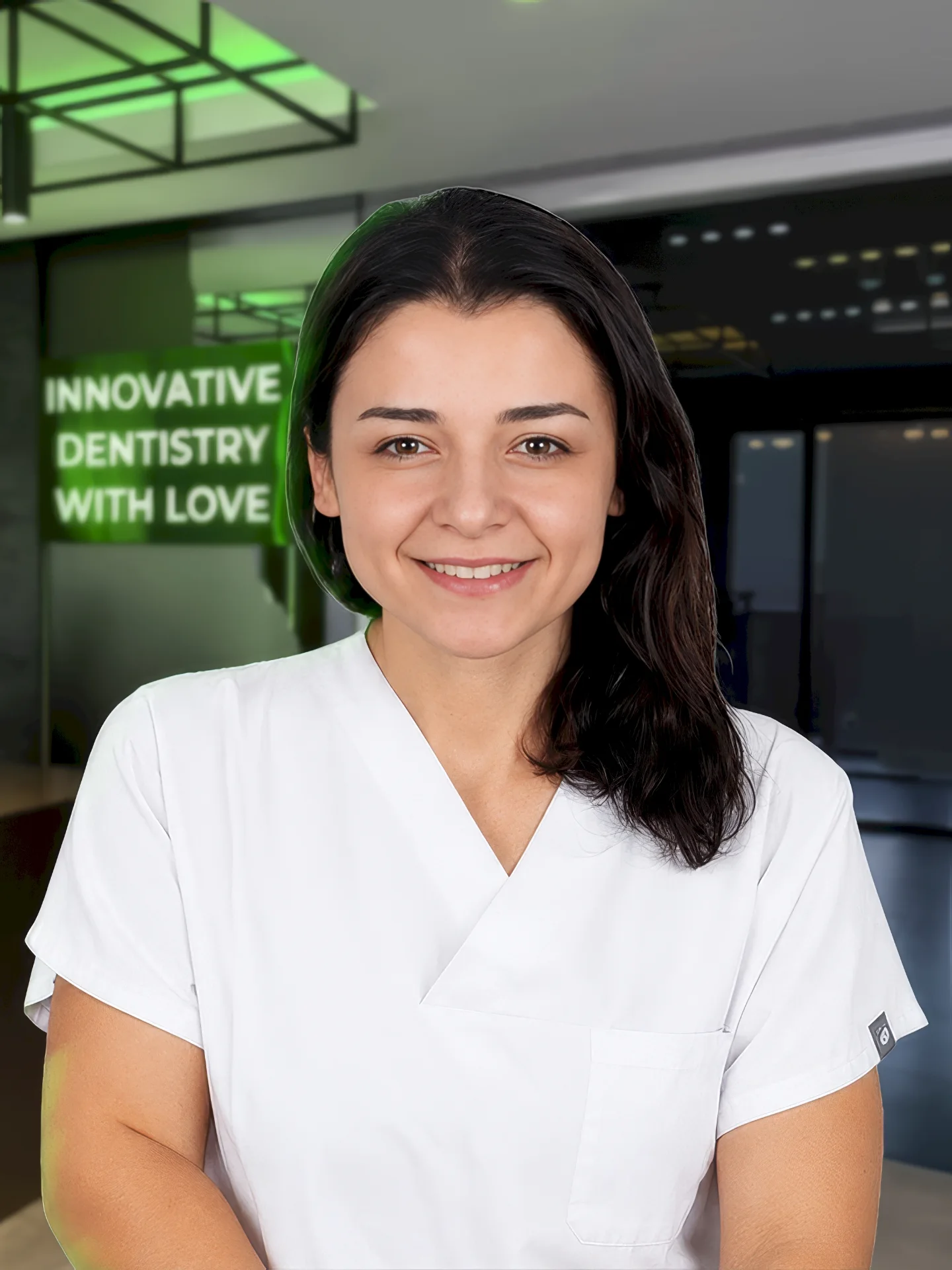
Gülen Kamak
Assoc. Prof., Specialist in Periodontology and Implantology
View doctor profileLast medical review: 15 October 2026