

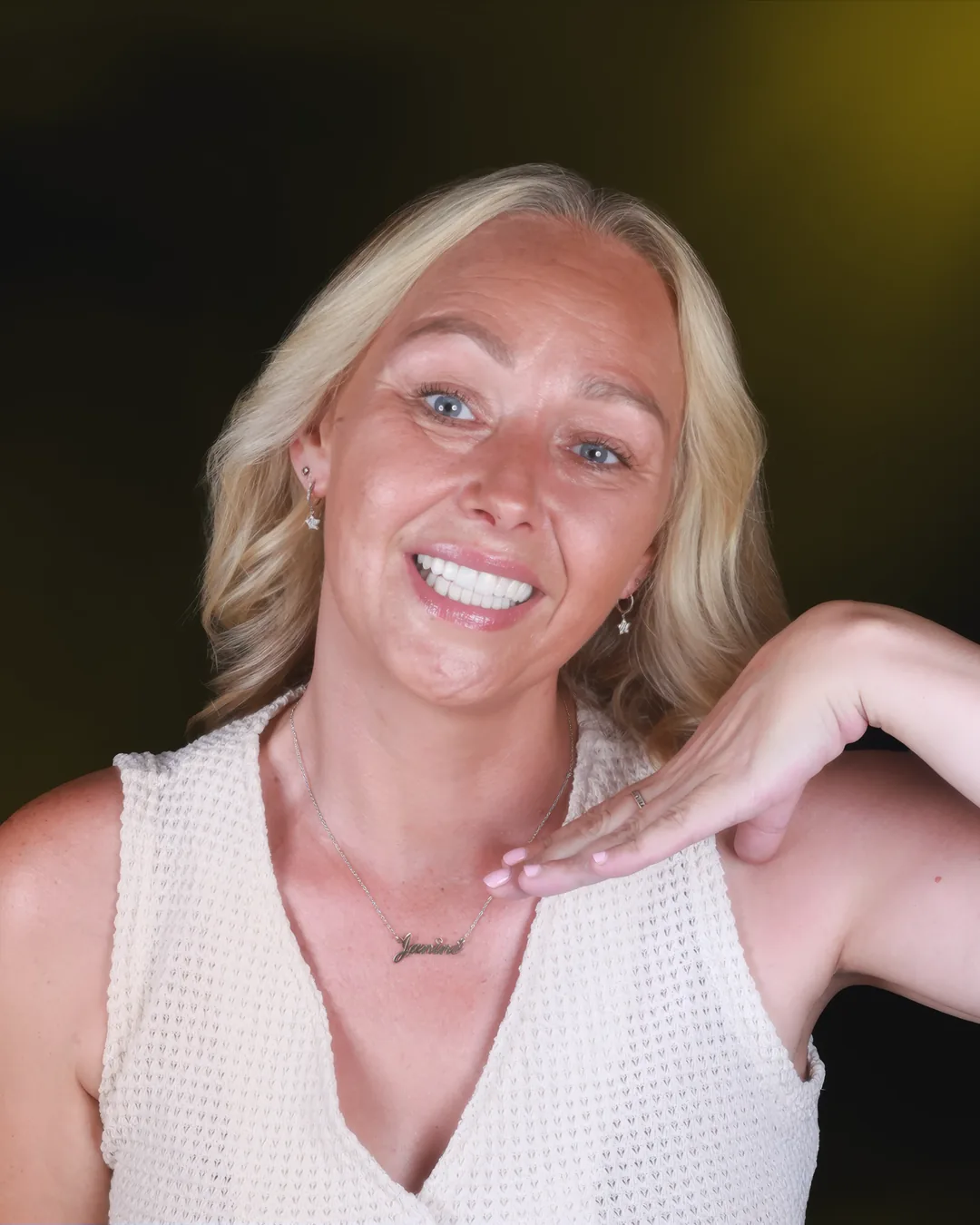
Dental Crowns in Turkey: An Overview
Papatya Dental Clinic is in Konyaaltı, Antalya, on Turkey's Mediterranean coast, and patients travel to us for crowns from the UK and across Europe. The clinic holds the Ministry of Health's International Health Tourism Authorization Certificate and ISO 9001 certification, and patients rate it 4.7 out of 5 on Google.
A crown covers the whole visible part of a tooth. It is used when a tooth is too damaged for a filling: after a large break, a big old filling, root canal treatment or heavy wear. Crowns are also used on implants and as part of a bridge that replaces a missing tooth.
Most crowns today contain no metal. Zirconia is very strong and is usually chosen for back teeth, bridges and people who grind their teeth. E.max (lithium disilicate) lets more light through, so it is often chosen for front teeth. Porcelain-fused-to-metal, layered zirconia and other materials are also available when a case calls for them.
A crown is not a cosmetic shortcut. To make room for it, the tooth is shaped down on all sides: in a laboratory study, crown preparations removed about 63–72% of the visible tooth, compared with about 3–30% for veneers. That is why we place crowns only on teeth that need one, and suggest whitening, bonding or veneers when they are enough.
Modern crowns last well. In a 2026 meta-analysis, 98.5% of monolithic E.max crowns and 96.8% of monolithic zirconia crowns were still in place after five years, similar to metal-ceramic crowns.
What a crown is
A cap that covers the whole tooth when it is too damaged for a filling.
Materials
Zirconia, E.max (lithium disilicate), porcelain-fused-to-metal and others.
Time in Turkey
Usually 3–5 days, in two appointments.
Tooth removed
About 63–72% of the visible tooth, so crowns are used only where needed.
Long-term results
96.8–98.5% of monolithic crowns still in place after five years.
Who Can Have Dental Crowns in Turkey?
A crown is considered when a tooth needs to be covered and protected. Whether it is the right choice is decided after an examination and X-rays, and compared with smaller options first.
A broken or cracked tooth
When too much of the tooth is lost for a filling to hold.
A large old filling or a root-treated tooth
A crown protects a weakened tooth from splitting.
Heavily worn teeth
When grinding or acid erosion has shortened the teeth and the bite needs rebuilding.
An implant or a missing tooth
Crowns go on implants, and a bridge of crowns can replace a missing tooth.
How much tooth is left
The examination shows whether a filling, an onlay, a veneer or a crown is the right size of repair.
The root and the gum
X-rays show whether the root is healthy or needs root canal treatment first.
Your bite and habits
Grinding and a heavy bite affect the choice of material.
The look you want
Shade and shape are planned with you, so the crown matches the teeth next to it.
Healthy teeth for a whiter smile
If your teeth are healthy and you want them whiter or neater, whitening, bonding or veneers remove far less tooth.
A small cavity
A filling or an onlay keeps more of your own tooth.
Untreated gum disease
Gum disease is treated first, so the gum around the crown stays healthy.
Risks of Crowns and How to Avoid 'Turkey Teeth'
In the UK, 'Turkey teeth' has become a nickname for very white, bulky teeth, often crowns placed on healthy teeth that were filed down heavily. The risks below are the same anywhere; what lowers them is crowning only teeth that need it, careful preparation and good cleaning.
Loss of healthy tooth
Preparing a tooth for a crown removes a lot of it. Crowns on healthy teeth cannot be undone, which is why smaller options come first.
Sensitivity or nerve damage
A tooth can become sensitive after preparation, and a few need root canal treatment later.
Chipping or fracture
Less common with monolithic zirconia and E.max than with layered porcelain; grinding raises the risk.
Decay at the edge
Decay can start where the crown meets the tooth if cleaning is poor.
Gum problems
A crown edge that is too deep or too bulky irritates the gum; careful design avoids this.
A crown coming loose
Uncommon; it can usually be fixed back in place.
How Crown Treatment in Turkey Works
For patients travelling to Turkey, crowns usually take 3–5 days in Antalya, in two appointments: the teeth are prepared and scanned at the first, and the permanent crowns are fitted at the second. If root canal or gum treatment is needed first, it can take longer.
- 1
Before you travel
You send recent photos or an X-ray if you have one, and your coordinator talks you through the plan and the dates. If you would like, we arrange your airport transfer and hotel in Antalya.
- 2
Examination and imaging
Your teeth, gums and bite are checked with a digital examination and panoramic X-rays, and 3D imaging where needed.
- 3
Planning the crowns
The material, shade, shape and size of each crown are planned digitally with you.
- 4
Preparing the teeth
Under local anaesthesia, each tooth is shaped and scanned or an impression is taken. You leave with temporary crowns.
- 5
Making the crowns
The crowns are designed and milled in the clinic's own CAD/CAM laboratory.
- 6
Fitting
At the second appointment, the crowns are tried in, the fit and bite are checked, and they are fixed in place.
- 7
Check before you fly
Your bite is checked again and you are shown how to clean around the crowns.
Alternatives to Crowns
A crown is the most extensive repair for a tooth. Smaller options keep more of your own tooth and are considered first.
Veneers
Thin shells on the front of the teeth, removing about 3–30% of the visible tooth, for shape and colour.
Composite bonding
Tooth-coloured resin added to the tooth, with little or no drilling.
Onlays
A partial crown that covers only the damaged part of a back tooth.
Teeth whitening
Changes the colour of healthy teeth without removing any tooth.
Digital Design and Our Own Laboratory in Antalya
Crowns are planned digitally: the colour, shape and size of the teeth are assessed on screen, so you can see the plan before the teeth are prepared.
The crowns are designed and milled in the clinic's own CAD/CAM laboratory. Making them under one roof is what makes the 3–5 day timeline possible while you are in Antalya.
The material is chosen for each tooth. In the 2026 meta-analysis, monolithic crowns made from a single block of zirconia or E.max chipped and fractured less often than crowns with a layer of porcelain on top.
Digital examination and X-rays
Show the tooth, the root and the bone before treatment.
Digital smile planning
Shade, shape and size are planned and shown to you first.
In-house CAD/CAM laboratory
Crowns are designed and milled at the clinic.
Monolithic zirconia and E.max
Single-block crowns that resist chipping.
Temporary crowns
Protect the prepared teeth between the two appointments.
After Your Crowns and Aftercare at Home
Most people go back to normal life on the same day. Some sensitivity to hot and cold for a few days is normal. Your dentist's instructions on cleaning and check-ups always come first.
- 1
Day of fitting
The bite may feel different for a day or two while you get used to the new shape.
- 2
First few days
Mild sensitivity to hot and cold is common and usually settles on its own.
- 3
First weeks
Your gums settle around the crowns. Brush and floss around them as shown to you.
- 4
Long term
Regular check-ups keep the edges of the crowns and the gums healthy.
Cleaning around the crowns
Brush twice a day and clean between the teeth every day; decay can still start at the edge of a crown.
Protecting against grinding
If you grind your teeth at night, a night guard protects the crowns.
Once you are back home
Every treatment at Papatya Dental Clinic includes 12 months of aftercare, and your coordinator stays reachable on WhatsApp after you return home. We also have an office in London (25 Southampton Buildings) and one in Helsinki.
A crown that feels high or loose
If your bite feels wrong or a crown moves, contact the clinic.
Pain that gets worse
Especially pain on biting or a throbbing ache days after fitting.
What Affects the Cost of Dental Crowns in Turkey
The cost of dental crowns in Turkey depends on how many teeth need crowns, the material and any treatment needed first. The exact fee is set after an examination and an individual treatment plan; current prices are shared with you, together with your treatment plan, when you contact us. You can pay by card, bank transfer or cash.
Number of crowns
A single crown and a full set are planned and priced differently.
Material
Zirconia, E.max, layered zirconia and porcelain-fused-to-metal have different costs.
Treatment needed first
Root canal treatment, gum treatment or build-ups are added to the plan if needed.
Crowns on implants
Implant crowns need extra parts that connect the crown to the implant.
Bridges
A bridge that replaces a missing tooth is made of several connected crowns.
Before / After
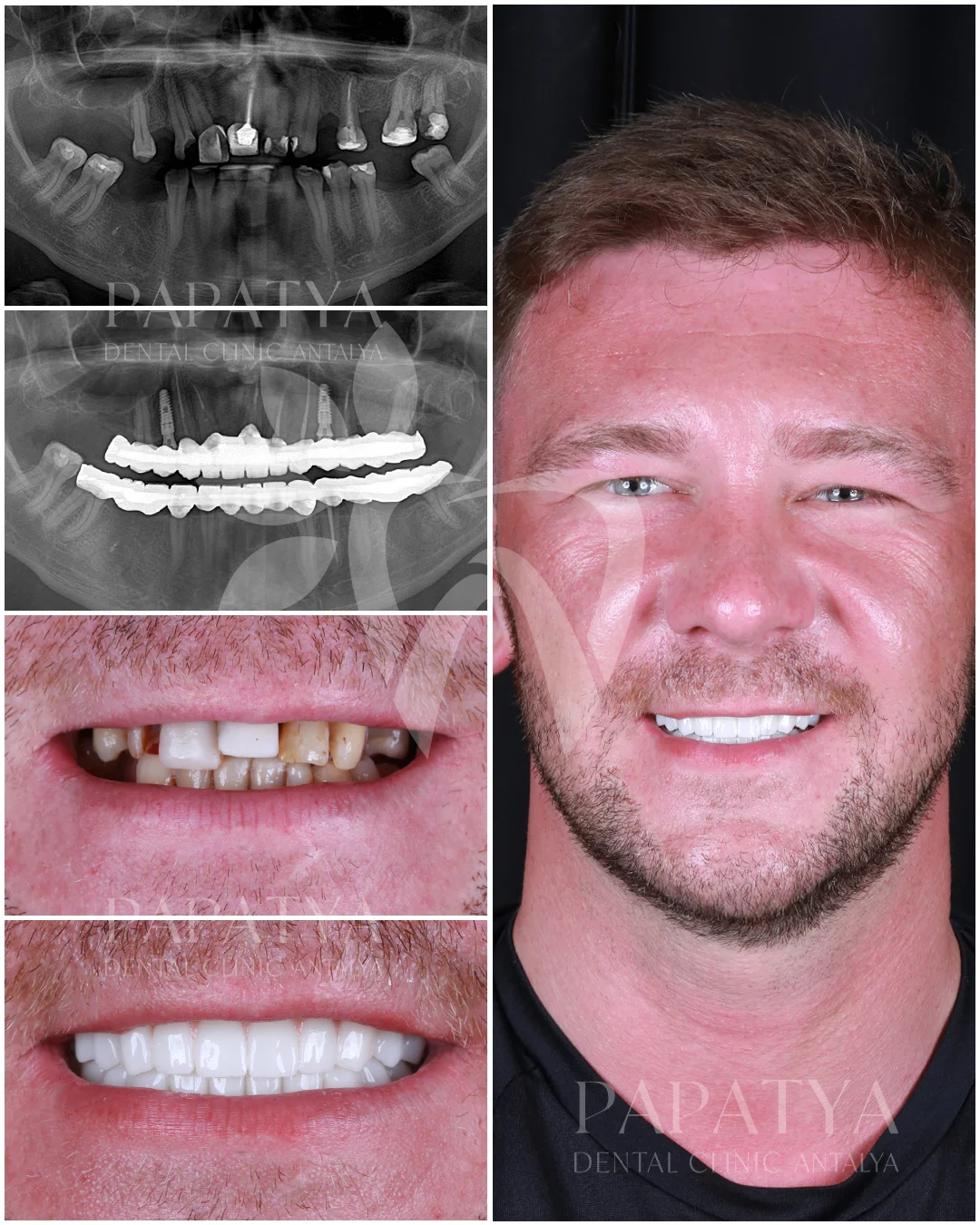
Start
24 June 2025
End
27 June 2025
Dental Crowns in Turkey: Frequently Asked Questions
How much do dental crowns cost in Turkey?
The price depends on how many crowns you need, the material and whether any treatment is needed first. A fixed figure cannot be given before your teeth have been examined. Current prices are shared with you, together with your treatment plan, when you contact us.
How many days do I need in Turkey for crowns?
Usually 3–5 days, in two appointments: the teeth are prepared at the first and the permanent crowns are fitted at the second. If root canal or gum treatment is needed first, it can take longer.
Zirconia or E.max crowns: which is better?
It depends on the tooth. Zirconia is very strong and is usually chosen for back teeth, bridges and people who grind. E.max lets more light through and is often chosen for front teeth. In a 2026 meta-analysis, both had five-year survival above 96%.
How long do zirconia crowns last?
In a 2026 meta-analysis, 96.8% of monolithic zirconia crowns and 98.5% of monolithic E.max crowns were still in place after five years. Cleaning around the crowns, wearing a night guard if you grind, and regular check-ups help them last longer.
What are 'Turkey teeth' and how do you avoid them?
'Turkey teeth' is a UK nickname for very white, bulky teeth, often crowns placed on healthy teeth that were filed down heavily. A crown removes about 63–72% of the visible tooth, so we place crowns only where a tooth needs one, and suggest whitening, bonding or veneers when they are enough. Ask to see your plan and why each tooth needs a crown before you agree.
Crowns or veneers: which do I need?
Veneers cover the front of a healthy tooth and remove far less of it. Crowns cover the whole tooth and are for teeth that are broken, heavily filled, root-treated or badly worn. Your examination decides which each tooth needs.
Does getting a crown hurt?
The tooth is prepared under local anaesthesia, so pain is not expected during the procedure. Some sensitivity to hot and cold for a few days afterwards is normal, and you wear temporary crowns between the two appointments.
Will my crowns look natural?
Each crown is planned for your tooth colour, face and smile line, and the shade is chosen with you. The aim is a shade and shape that sit naturally next to your own teeth.
Is it safe to get crowns in Turkey?
It depends on the clinic, not the country. Ask why each tooth needs a crown, which material is used, who makes the crowns and how aftercare works at home. At Papatya Dental Clinic crowns are made in the clinic's own laboratory, and the clinic holds the International Health Tourism Authorization Certificate and ISO 9001 certification.
Can you arrange my airport transfer and hotel in Antalya?
Yes. If you would like, we arrange your airport transfer and hotel in Antalya and plan your appointments around your stay.
What aftercare do I get after I return home, for example to the UK?
Every treatment at Papatya Dental Clinic includes 12 months of aftercare, and your coordinator stays reachable on WhatsApp after you return home. Papatya Dental has an office in London (25 Southampton Buildings, open Monday to Saturday) and one in Helsinki, and holds MeetUp events in UK cities where you can meet the team in person.
Which languages do the dentists speak?
All our dentists speak English, and some also speak Russian. Each dentist's profile shows the languages they speak.
Medical sources
View medical sources
Medically reviewed by
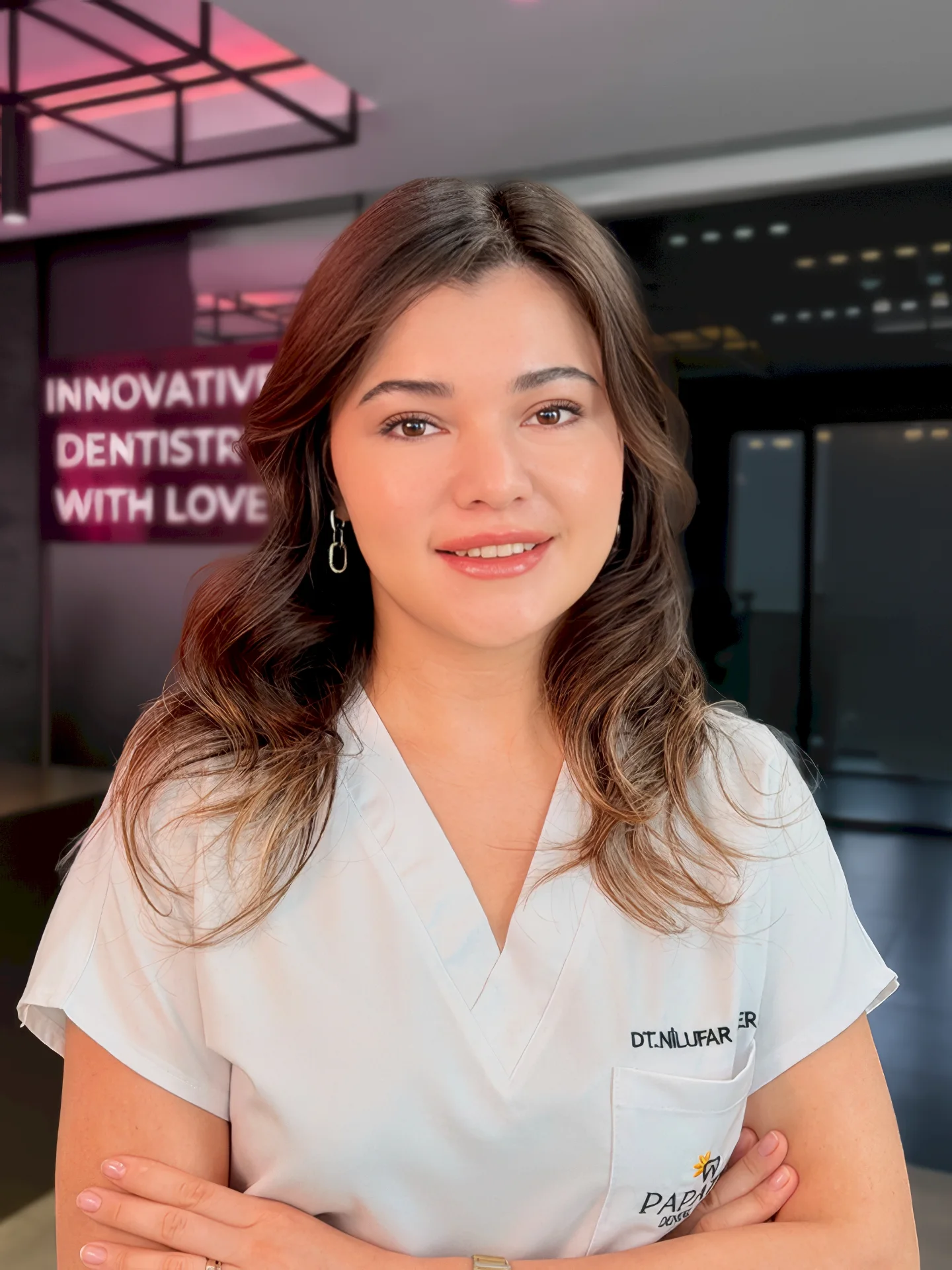
Nilufar Tulanova Şener
Dentist, Aesthetic Dentistry
View doctor profile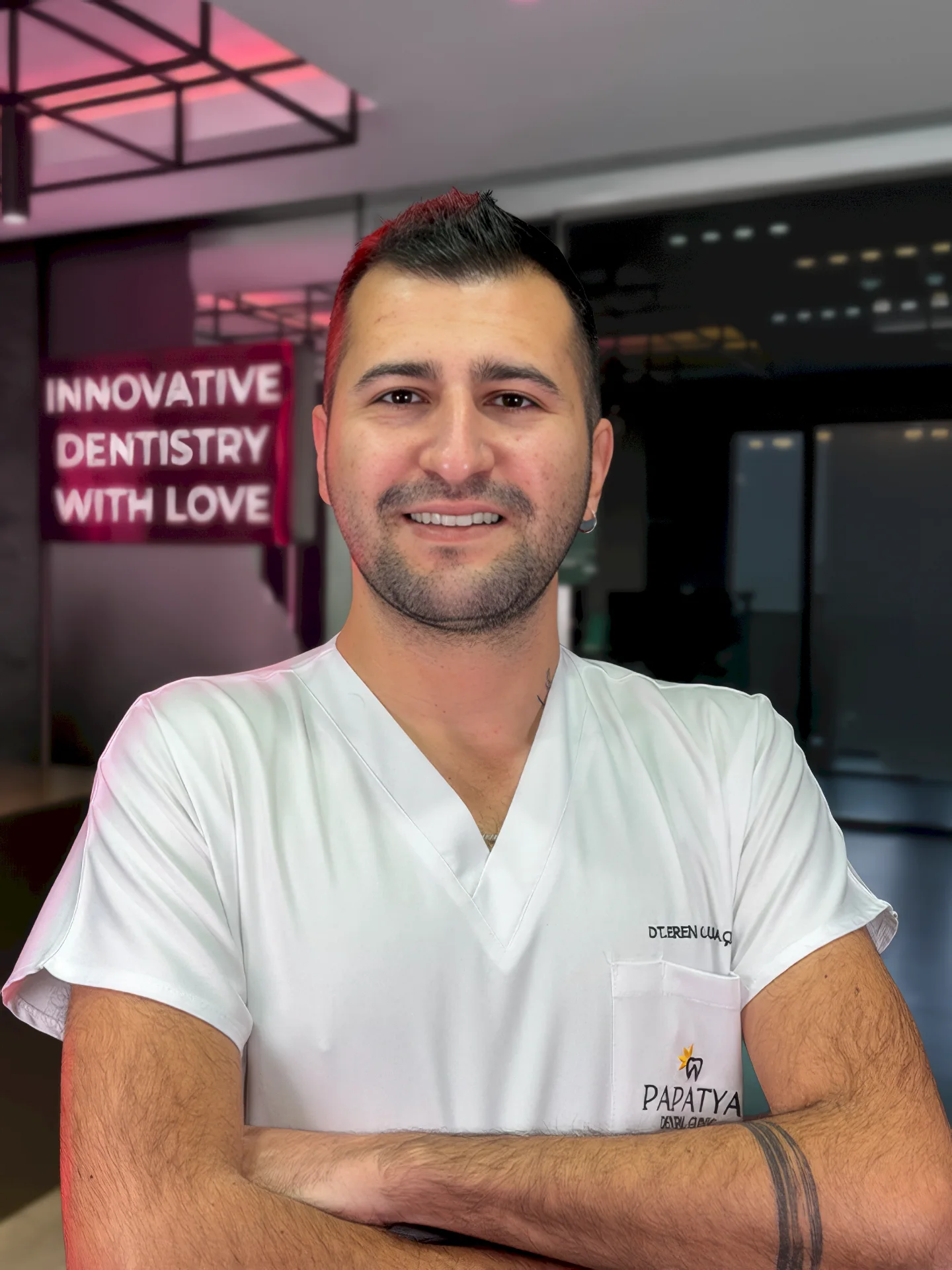
Eren Koluaçık
Dentist, Aesthetic Dentistry
View doctor profile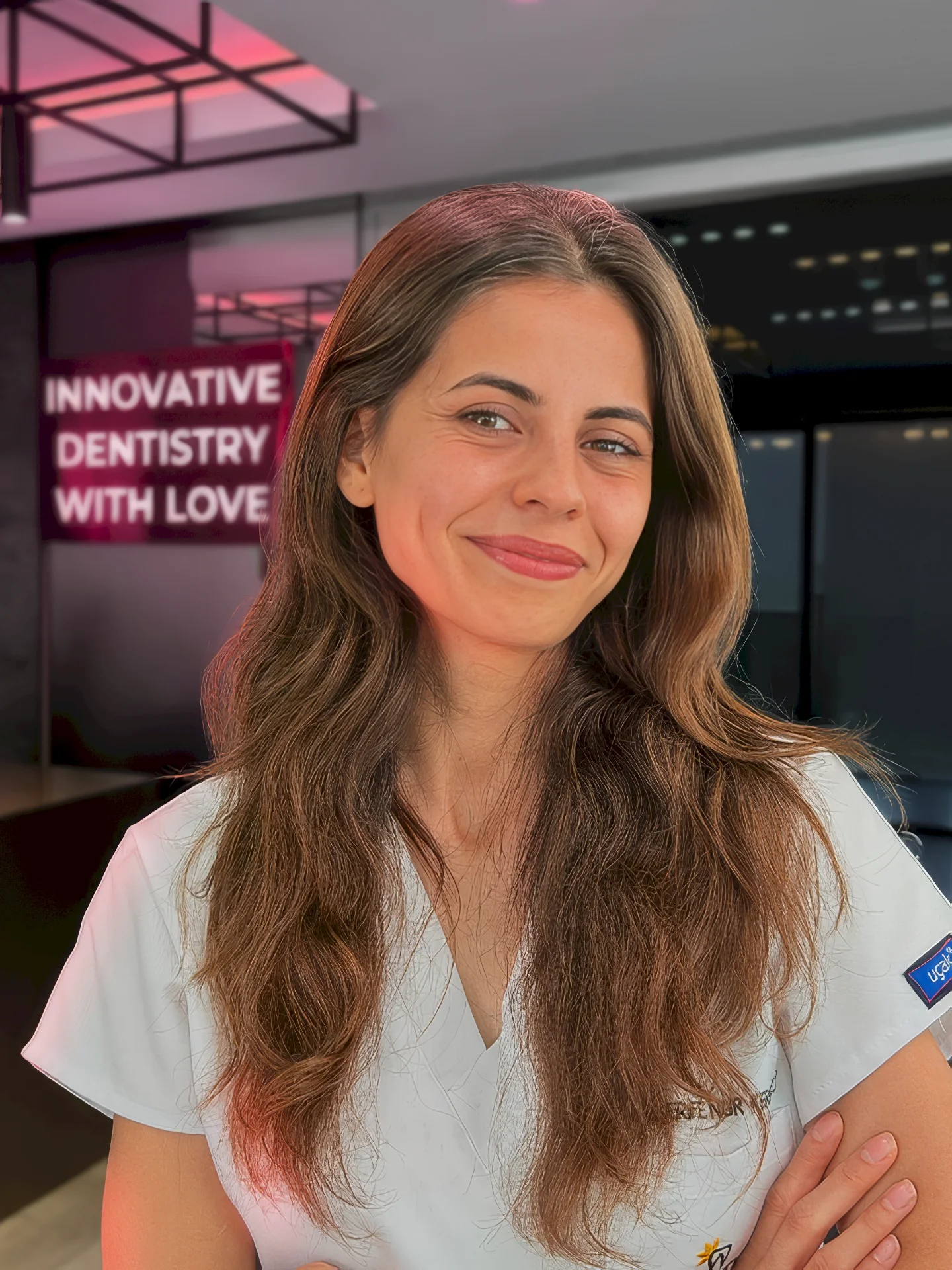
Şerife Nur Kerpiçci
Dentist, Aesthetic Dentistry
View doctor profileLast medical review: 15 October 2026