
Większość zapachu bierze się z tylnej części języka
Górna powierzchnia języka nie jest gładka. Między drobnymi wypustkami zwanymi brodawkami leży osłonięta przestrzeń, w której zbierają się resztki jedzenia, martwe komórki i bakterie. Kiedy te bakterie rozkładają resztki białek, uwalniają gazy siarkowe, a większość tego, co opisuje się jako nieświeży oddech, składa się z tych gazów. Im grubszy robi się nalot, tym silniejszy staje się zapach.
Szczotkowanie czyści powierzchnie zębów i zostawia język nietknięty. Dlatego ktoś, kto starannie myje zęby, wciąż może obudzić się z nieświeżym posmakiem i wyraźnym zapachem: w czasie snu wydzielanie śliny spada, język wysycha, a nalot przez noc grubieje. Picie wody na jakiś czas rozcieńcza zapach, ale nie zdejmuje nalotu.
Najmniej prawdopodobne jest, że to ty zauważysz własny oddech, bo nos w ciągu kilku minut przyzwyczaja się do stałego zapachu. To, że nic nie czujesz, nie znaczy, że nalotu nie ma.
Skrobaczka czy szczoteczka
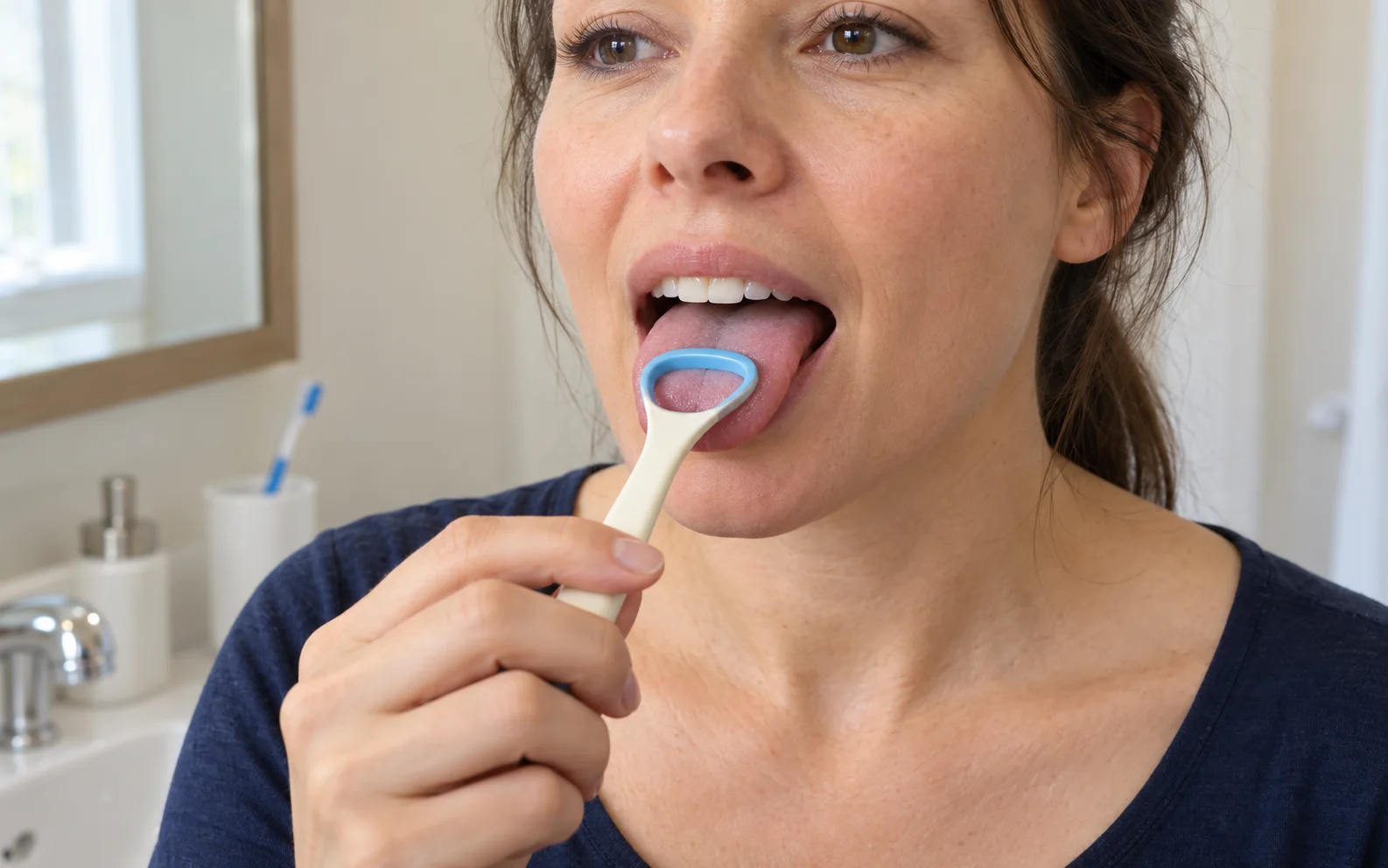
Obie robią swoje. Skrobaczka spotyka powierzchnię szerokim paskiem i zdejmuje więcej nalotu za jednym przejściem; żłobkowaną nakładkę na tylnej stronie wielu szczoteczek masz już w dłoni. Włosie też zabiera jego część, choć rozsmarowuje nalot na boki, zamiast sięgać między brodawki. Dla większości osób wybór sprowadza się do narzędzia, którego naprawdę będą używać codziennie.
- Połóż skrobaczkę daleko z tyłu, a potem przeciągnij ją do przodu w jednym kierunku; ruch tam i z powrotem tylko rozsmarowuje nalot.
- Po każdym przejściu opłucz narzędzie pod bieżącą wodą, a potem zacznij kolejny pasek.
- Większości osób wystarczą trzy albo cztery przejścia; przestań, gdy powierzchnia znów wygląda na różową.
- Jeśli używasz żłobkowanej nakładki na tylnej stronie szczoteczki, trzymaj ten sam kierunek i ten sam lekki nacisk.
Jak daleko sięgać
Najwięcej do zapachu dokłada tylna jedna trzecia języka; przednia część sama pozostaje czystsza, bo ociera się o podniebienie przy mówieniu i przełykaniu. Mimo to nie trzeba pierwszego dnia sięgać na sam koniec. Zaczęcie od środka i przesuwanie się do tyłu o mniej więcej szerokość palca co kilka dni stopniowo uspokaja odruch wymiotny. Nacisk też nie jest potrzebny: nalot jest miękki i schodzi przy lekkim dotyku.
Uspokajanie odruchu wymiotnego
- Wdychaj przez nos i oddychaj dalej w czasie skrobania; wstrzymywanie oddechu wzmacnia odruch.
- Wysuń język tak daleko, jak się da, żeby jego tylna część przesunęła się do przodu, a narzędzie trzymało się z dala od gardła.
- Rób to na pusty żołądek, najlepiej przed śniadaniem; pełny żołądek łatwiej wyzwala odruch.
- Jeśli odruch się pojawi, przerwij na kilka sekund, a potem kontynuuj milimetr bliżej przodu.
Biały nalot nie zawsze jest grzybicą
Większość jasnego nalotu na języku to zwykłe resztki: suchość w ustach, palenie, dieta złożona głównie z miękkich potraw, oddychanie przez usta przy zatkanym nosie i niektóre leki sprawiają, że grubieje. Taki nalot przerzedza się w ciągu kilku dni regularnego czyszczenia. Grzybica jamy ustnej zachowuje się inaczej: po starciu nalotu zostaje pod spodem czerwona, tkliwa powierzchnia, a samo czyszczenie jej nie usuwa. Pojawia się częściej u osób noszących protezy, przy suchości w ustach i tam, gdzie układ odpornościowy jest osłabiony.
Kiedy zapach zostaje mimo wszystko
Jeśli czyszczenie języka weszło w rutynę, a zapach wciąż jest, źródło leży gdzie indziej. Na przód kolejki wysuwają się wtedy zapalenie dziąseł, próchnica między zębami, stare wypełnienia z otwartymi brzegami, leki zmniejszające wydzielanie śliny, kamienie migdałkowe, kłopoty z nosem i zatokami oraz refluks z żołądka. Żadne z nich nie reaguje na skrobaczkę do języka; badanie, a w razie potrzeby zdjęcie rentgenowskie, pokazuje, które wchodzi w grę.
Najczęściej zadawane pytania
Jak często czyścić język?
Raz dziennie pasuje większości osób, a najłatwiejszym momentem jest chwila zaraz po porannym myciu zębów. Każdy, u kogo nalot narasta szybko, może to powtórzyć wieczorem. Więcej niż dwa razy dziennie zwykle drażni powierzchnię, niczego nie dodając.
Jak czyścić skrobaczkę do języka i kiedy ją wymieniać?
Po każdym użyciu dokładnie opłucz ją pod bieżącą wodą i przechowuj w suchym, otwartym miejscu; w zamkniętym, wilgotnym pojemniku bakterie się namnażają. Plastikową skrobaczkę wymień, gdy jej krawędź stanie się szorstka, porysowana albo wygięta; skrobaczka ze stali nierdzewnej posłuży długo, jeśli nie zostanie uszkodzona. Jeśli używasz żłobkowanej nakładki na tylnej stronie szczoteczki, wymieniasz ją razem ze szczoteczką, zwykle co trzy miesiące albo wcześniej, gdy włosie się zużyje.
Czy skrobanie języka wpływa na smak?
Robione z lekkim naciskiem nie szkodzi kubkom smakowym; jeśli już, to smaki są wyraźniejsze, gdy nalot się przerzedzi. Mocne skrobanie drażni powierzchnię i może zostawić uczucie pieczenia albo przytępiony smak na kilka dni. Jeśli widzisz krwawienie, zmniejsz nacisk.
Czy język geograficzny albo włochaty czyści się tak samo?
Przy języku geograficznym na powierzchni pojawiają się gładkie, czerwone pola przypominające mapę, które z czasem zmieniają położenie; to zmiana niegroźna i skrobanie jej nie usuwa. Wystarczy dalej wykonywać lekkie ruchy, nie naciskając na te miejsca. Przy języku włochatym brodawki się wydłużają, a powierzchnia wygląda na ciemną i aksamitną; delikatne, regularne czyszczenie zwykle przerzedza ją w ciągu kilku tygodni. Jeśli wygląd się zmienia albo pojawia się pieczenie lub ból, pokaż język dentyście.
Czy dzieci też powinny czyścić język?
Kiedy zęby już się wyrżną, na koniec mycia wystarczy kilka delikatnych ruchów po przedniej części języka. U małych dzieci odruch wymiotny jest silny, więc tylną część języka zostawia się w spokoju. Dziecko, które potrafi samo trzymać szczoteczkę, może też samo nauczyć się tego kroku.
Czy płyn do płukania może zastąpić czyszczenie języka?
Płukanka na jakiś czas obniża liczbę bakterii na powierzchni i maskuje zapach, ale nie zdejmuje nalotu spomiędzy brodawek. Bez mechanicznego czyszczenia zapach wraca w ciągu kilku godzin. Sprawdza się jako dodatkowy krok, a nie jako zamiennik.
Ta treść ma charakter ogólnoinformacyjny i nie zastępuje badania.
Opracowanie
Nilufar Tulanova Şener
Weryfikacja medyczna: Elif Teke, Specjalistka periodontologii
Ten artykuł powstaje w oparciu o doświadczenie kliniczne zespołu Papatya Dental i przed publikacją jest sprawdzany pod kątem rzetelności.
- Ostatnia aktualizacja:
- 2026-09-21
- Kontakt z redakcją:
- icerik@papatyadental.com