
Why your mouth dries out during training
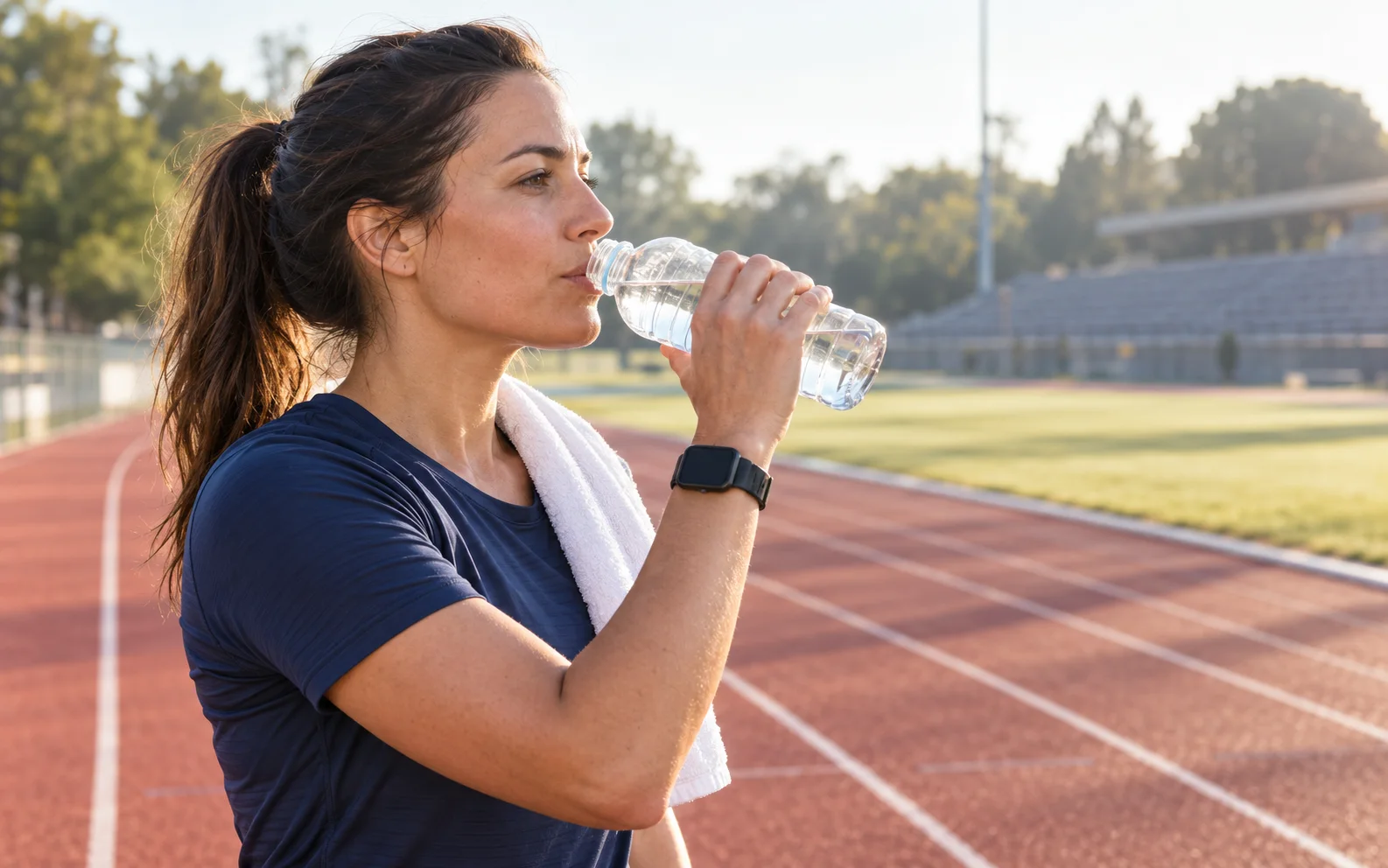
When the pace picks up, breathing speeds up and most people start taking air through the mouth as well as the nose. That steady airflow dries the lips and the tooth surfaces, and saliva drops away. Saliva is the mouth's natural protection against acid: it washes food away, dilutes acid and helps the tooth surface recover. On a long run or a long ride the mouth can stay dry for hours.
Losing fluid through sweat works the same way. As body fluid falls, saliva thickens and there is less of it, and the mouth feels sticky. In that state every acid contact lasts longer than it otherwise would. Sport itself does not rot teeth; what makes the difference is how you drink and snack when your mouth is dry.
With sports drinks, frequency matters more than volume
Most sports drinks, fruit juices and fizzy drinks are acidic. Acid softens the mineral in the tooth surface, which is what dental erosion means. Drinking a bottle in one go and stretching the same bottle across two hours in twenty sips are not the same thing for your teeth. Every sip turns the mouth acidic again, and the surface never gets time to recover. If a drink is needed on a long session, grouping the sips into set intervals shortens the time the acid is working.
- Drink at set intervals rather than holding the bottle and sipping constantly.
- Do not swill an acidic drink around your mouth or push it between your teeth.
- On short and moderate sessions, plain water is enough for most people.
- A mouthful of plain water after the drink dilutes the acid left behind.
Energy gels and bars stick to teeth
Gels, chews and energy bars are heavily sugared and sticky. In a dry mouth that mixture does not clear easily: it sits in the grooves of the back teeth and between them. Bacteria in the mouth turn the sugar into acid, and decay starts right there. Gels taken one after another on race day leave much the same mark on teeth as sugary snacking all day long.
Do not brush straight after training
Just after an acidic drink or a gel, the tooth surface is briefly softened. Brushing at that moment can wear the softened layer away. The usual advice is to rinse with plain water first and leave brushing for 30–60 minutes. In that time saliva dilutes the acid and the surface hardens again.
If brushing before the post-training shower has become a habit, changing the order is enough. For morning sessions there is a practical arrangement: brush before training and simply rinse with water afterwards. Brushing twice a day with a fluoride toothpaste stays the foundation of the routine for athletes too.
Mouthguards in contact sport
In boxing, rugby, hockey, basketball and skateboarding, and anywhere else a blow is possible, a mouthguard reduces broken teeth and cut lips. Shop-bought versions are softened in hot water and shaped by biting into them. A guard made from an impression taken by a dentist fits the mouth more closely and gets in the way of breathing and speaking far less.
A mouthguard only protects while it is in your mouth; the one left in the kit bag cushions nothing.
After a blow to the mouth, minutes count
If a tooth is knocked right out, act without delay. Hold it by the crown, the white part you normally see, and do not scrub or brush the root. If there is visible dirt on it, rinse it briefly in milk or cold water. If you can, put the tooth back into its own socket and bite gently on a clean cloth; if not, keep it in milk, or, if there is no milk to hand, hold it inside your cheek so your saliva keeps it moist. The longer the tooth is out, the lower its chance of reattaching, and that chance drops within minutes, so seek dental care without delay, the same day.
A baby tooth is not put back: pushing it into the socket can damage the adult tooth underneath. If a tooth is broken or loose, keep the fragment and still get seen the same day. No pain after a blow does not mean all is well, since damage to the tissue inside the root can show up weeks later.
Frequently asked questions
Do I need a sports drink instead of water during training?
For most moderate sessions under an hour, plain water does the job. On long, hard efforts or in the heat, a drink may be needed to replace fluid and salt. That is a nutrition decision; from the point of view of your teeth what matters is how often the drink is in the mouth and for how long.
Is it harmful to brush straight after training?
If you have had an acidic drink or a gel, the tooth surface is briefly softened and brushing then can wear it down. The usual advice is to rinse with plain water and leave brushing for about half an hour. If nothing acidic was involved, brushing straight away is fine.
Which sports call for a mouthguard?
Any sport where a blow or a fall is likely: boxing and martial arts, rugby, hockey, basketball, handball, skateboarding and cycling are among them. A guard made from a dental impression fits more closely, feels more comfortable and therefore tends to be worn more often.
My mouth gets very dry when I train. What can I do?
Breathing through the nose where possible, drinking at regular intervals and chewing sugar-free gum afterwards all bring saliva back. If the dryness carries on outside training, a medicine or another cause may lie behind it, and that is worth raising with a dentist.
Will the gels I take on race day give me decay?
One race day on its own does not cause decay. Decay follows repeated contact with sugar, so the risk rises for someone training long several times a week and taking gel after gel each time. Rinsing with water afterwards and keeping up fluoride brushing lower that risk.
A tooth has been knocked out. What should I do?
If it is an adult tooth, hold it by the crown, rinse it briefly in milk without scrubbing the root, and put it back into the socket if you can. If not, keep it in milk and seek dental care the same day, without delay. A baby tooth is not put back, but it still needs looking at the same day.
This content is for general information only and does not replace an examination.
Edited by
Samed Kağan Bozkurt
Medically reviewed by: Ahmet Metin Bal, Chief Dentist
This article draws on the clinical experience of the Papatya Dental team and is reviewed for accuracy before publication.
- Last updated:
- 2026-09-21
- Editorial contact:
- icerik@papatyadental.com