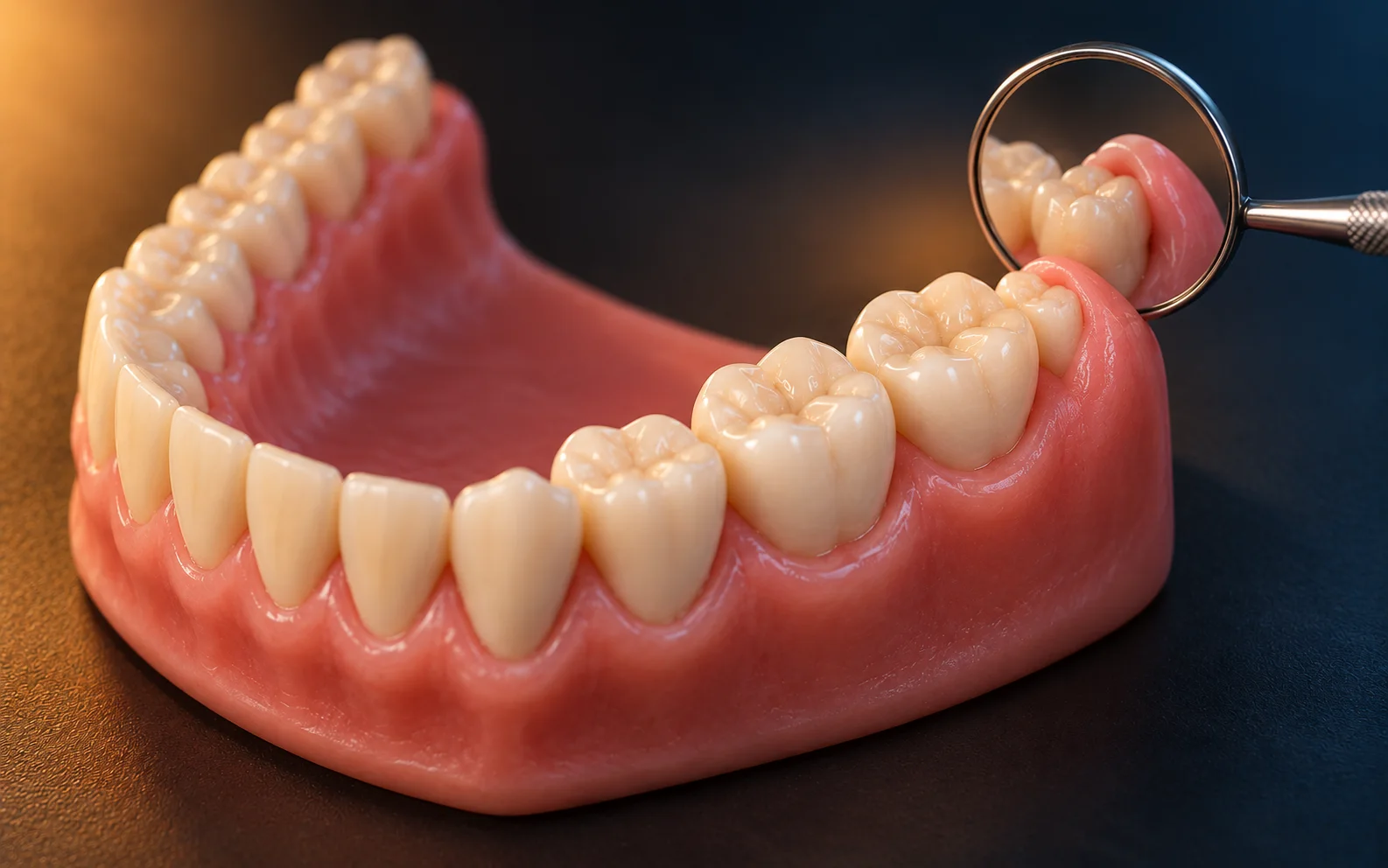

Why chemotherapy affects the mouth
Chemotherapy medicines act on cells that divide quickly. The thin lining of the mouth renews itself faster than most tissue in the body, so it feels the effects of treatment too. Salivary glands, gums and the surface of the tongue can all change in the same weeks. Most of these changes settle within weeks of the last cycle. While they last, though, they can make eating, talking and sleeping hard work.
A dental check before treatment starts
If something in the mouth is quietly going wrong, it tends to make itself known once chemotherapy begins. Decay, a broken filling, inflamed gums or a denture that no longer fits can each turn into a bigger problem when immunity is low. That is why oncology teams usually ask for a dental examination before the first cycle.
Changes you may notice in the mouth
- Mouth ulcers: sore red patches can appear inside the cheeks, on the tongue and along the inside of the lips, often in the first weeks of a cycle.
- A dry mouth: with less saliva the mouth feels sticky, swallowing gets harder and the risk of decay rises.
- Taste changes: food can taste metallic, salty or of nothing at all. For most people taste returns slowly once treatment ends.
- More risk of infection: while immunity is low, even mild gum inflammation can spread quickly.
- A tendency to bleed: when the platelet count drops, gums may bleed while brushing or on their own.
Daily habits that help
Mouth care is not something to drop during these months; it is something to soften. Stopping brushing altogether lets gum inflammation build; the point is to do the same job more gently.
- Use a soft toothbrush. If the bristles still feel firm, standing the brush in warm water for a moment softens them.
- Keep using a fluoride toothpaste. If the foaming feels harsh, a plain unflavoured paste is easier to tolerate.
- Avoid mouthwashes that contain alcohol; alcohol stings tissue that is already dry.
- Rinse your mouth with water through the day and sip water often.
- Rinse the brush after every use and stand it upright to air-dry, uncovered.
Flossing: ask your team first
Cleaning between the teeth is normally the practical way to keep those surfaces healthy, but during chemotherapy the answer depends on your blood counts. Flossing with a low platelet count can start bleeding, while leaving those surfaces uncleaned raises the risk of infection. That balance is not one to strike on your own. Ask your oncology team whether to carry on flossing and at which counts to pause.
Signs that should not wait
Mouth pain alongside a temperature is urgent: if you have a temperature, tell your oncology team the same day, including out of hours. A white or yellowish coating in the mouth, pain that will not settle, gums that bleed without being touched and ulcers that stop you swallowing also need looking at soon. Each of these has more than one possible cause, and only an examination can tell them apart. Mouth care during these weeks is usually steered by the oncology team.
While immunity is low, a small problem that starts in the mouth may not stay small, which is why every change noticed early counts.
Frequently asked questions
Should I stop brushing during chemotherapy?
No. If the mouth is very sore, soften the brush in warm water first, work with short, small strokes and start where it hurts least. Where the gum bleeds, brush more slowly rather than skipping the area. If pain is stopping brushing altogether, say so to your treatment team.
What helps with a dry mouth?
Sipping water through the day, rinsing the mouth with water often and keeping the room air from getting too dry all help. Sugar-free gum increases saliva for some people. If dryness is stopping you swallowing food, say so to your treatment team, because the degree of dryness varies from person to person.
Can a tooth be taken out during chemotherapy?
Where possible it is done before treatment starts. If an extraction becomes necessary between cycles, the timing is set by blood counts and decided by the oncology team and a dentist together. It is not something to arrange on your own.
Are taste changes permanent?
For most people they are temporary. Taste usually returns over the weeks after the last cycle, though how long that takes varies with the person and the drug plan. A loss of taste that does not improve after several weeks is worth reporting to your treatment team.
Why avoid mouthwash with alcohol in it?
Alcohol stings lining that is already dry and thinned, and it makes sore patches more painful. Alcohol-free products are the usual choice during these weeks. Which rinse suits you depends on what is happening in the mouth, so check the choice with your treatment team.
I wear a denture. What should I watch for?
Have the fit checked before treatment begins, because an edge that rubs turns into a sore patch easily during these weeks. Clean the denture daily, leave it out at night, and ask your treatment team how long to wear it on days when the mouth is painful.
This content is for general information only and does not replace an examination.
Edited by
Ali Bulut
Medically reviewed by: Elif Teke, Specialist Periodontist
This article draws on the clinical experience of the Papatya Dental team and is reviewed for accuracy before publication.
- Last updated:
- 2026-09-21
- Editorial contact:
- icerik@papatyadental.com