

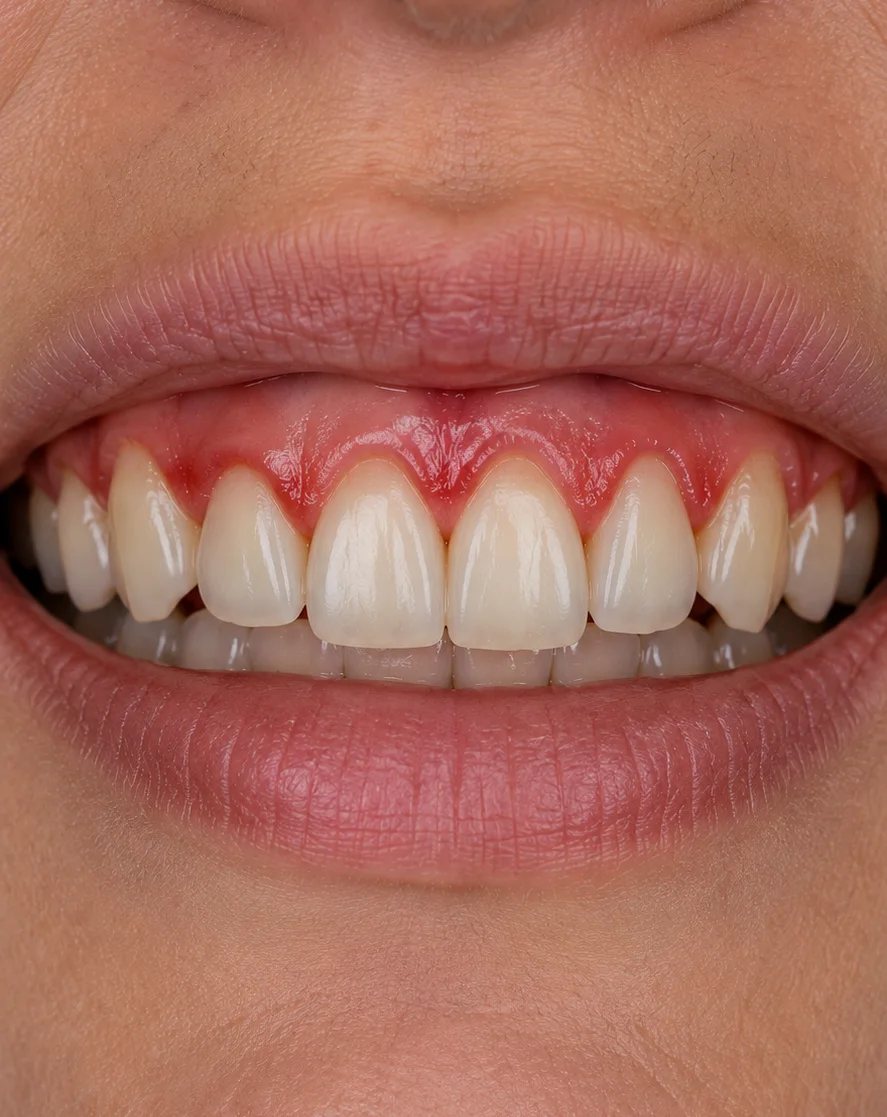
How does inflammation start and progress?
When bacterial plaque that accumulates on the tooth surface is not removed, it hardens and becomes tartar. The gums respond to this build-up with inflammation: they become red, swollen and bleed when you brush. This stage is called gingivitis and can be completely reversed with treatment.
If the inflammation continues, a pocket forms between the gum and tooth, and the process progresses to the bone supporting the tooth. This stage is called periodontitis. Lost bone does not grow back on its own; the aim of treatment is to stop the progression.
Bleeding is the symptom most often overlooked. Healthy gums do not bleed when you brush; bleeding is almost always a sign of inflammation, not of brushing too hard.
What symptoms are assessed?
During the examination, the appearance of the gums, pocket depth and bone level on an X-ray are assessed together.
- Bleeding when brushing or flossing
- Red, swollen gums that are sensitive to touch
- Persistent bad breath
- Teeth appearing longer or gaps developing between them
- A slight feeling that the teeth are loose
Treatment and care afterwards
At an early stage, treatment usually consists of tartar removal and adjustments to your brushing technique. If a pocket has formed, curettage and root planing may be considered; advanced cases may require a surgical approach.
The lasting effect of treatment depends largely on your home care. Cleaning between the teeth is the step most people miss; plaque accumulates there most readily and a toothbrush cannot reach it.
Diabetes, smoking and some medicines affect the course of inflammation. If any of these apply to you, the interval between check-ups will be planned accordingly.