

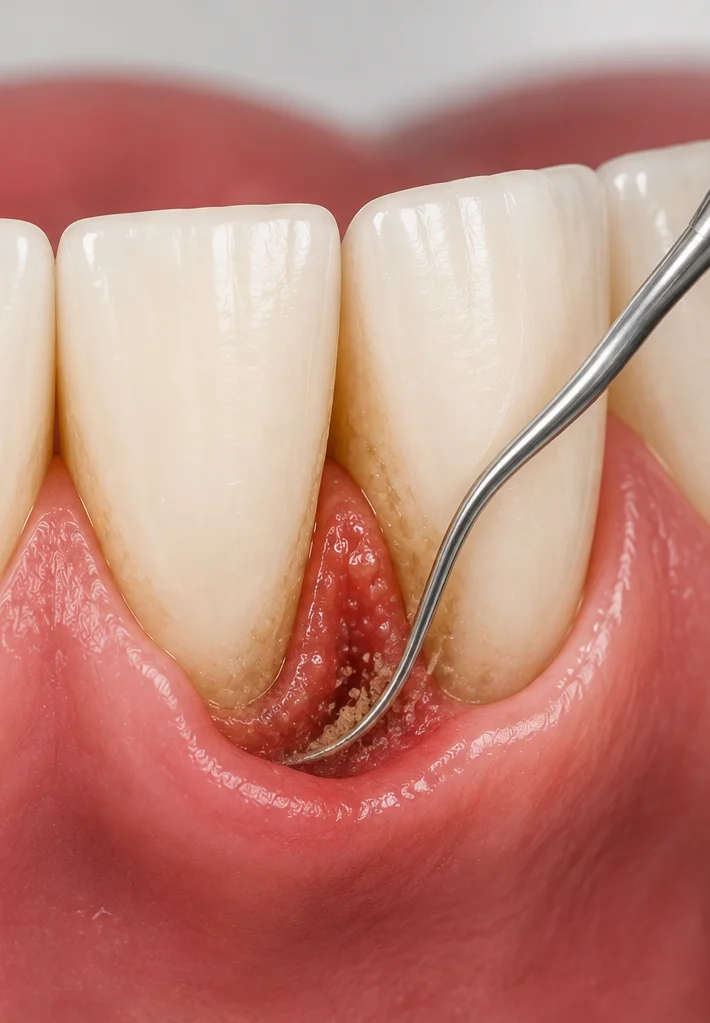
What is curettage and how does it differ from tartar removal?
In a healthy mouth, the gum is firmly attached to the tooth and there is only a groove of a few millimetres between them. When inflammation continues for a long time, this groove deepens and becomes a pocket. As the pocket deepens, neither a toothbrush nor dental floss can reach it, so bacteria continue to accumulate there.
Tartar removal removes deposits above the visible part of the gum. Curettage and root planing goes inside the pocket and down to the root surface. The root surface is smoothed and inflamed tissue is removed, leaving a suitable surface for the gum to reattach to the tooth.
The procedure is performed under local anaesthetic. The mouth is usually divided into sections and the treatment is completed in one or two sessions.
When is it considered?
Pocket depth is measured during the examination, while an X-ray shows the bone level. These two findings are assessed together.
- Gums that bleed regularly when brushing
- Pocket depth measured during the examination being greater than normal
- Gum recession and teeth appearing longer
- Persistent bad breath or an unpleasant taste in the mouth
- A reduction in the bone level around the teeth seen on an X-ray
After the procedure and ongoing care
Sensitivity to hot and cold is expected for the first few days; this is normal because the root surface has been cleaned and it usually settles gradually. It is also normal for the gums to look slightly more recessed: when tissue swollen by inflammation settles, the actual gum level becomes visible.
Curettage and root planing alone does not provide a lasting result. Preventing the pocket from deepening again depends on your home care; using an interdental brush or dental floss is particularly important.
A follow-up is usually planned after several weeks to assess the result. If the pockets have not closed, a surgical approach may be considered.