
It depends on which treatment you had
A scale and polish, a small filling or a check-up raises no particular flying problem, and plenty of people board a plane the same day. An extraction, an implant placement, a bone graft or the surgical removal of a buried wisdom tooth is a different matter. For several days afterwards the body is busy closing a wound, and during those days it helps to have your dentist within reach. How long to wait depends on what was done, how large the wound is and how healing is progressing; that call belongs to the dentist who carried out the work, not to the calendar.
There is one exception. If a sinus lift was carried out in the upper back jaw, or if your dentist mentioned that taking out an upper molar may have left an opening between the mouth and the sinus, the question is no longer only how far away your dentist is: there the pressure change itself matters. In those cases the usual instruction is several weeks with no flying, no nose blowing and no diving. The flight date is set by the dentist who did the work, and feeling well is not the same as being ready.
Why the first days after surgery are hard on a plane
Bleeding is most likely on the day of surgery and the day after. Swelling is usually at its most obvious on the second and third day. Both are manageable at home: you press on the socket with gauze, keep your head raised and ring the practice if you need to. None of that is easy at cruising altitude. Firm pressure is awkward in a seat, ice is not always available, cabin crew are not dental staff, and the onboard first-aid kit was not put together for this. The difficulty is rarely the flying itself; it is being out of reach of care.
Cabin air dries your mouth
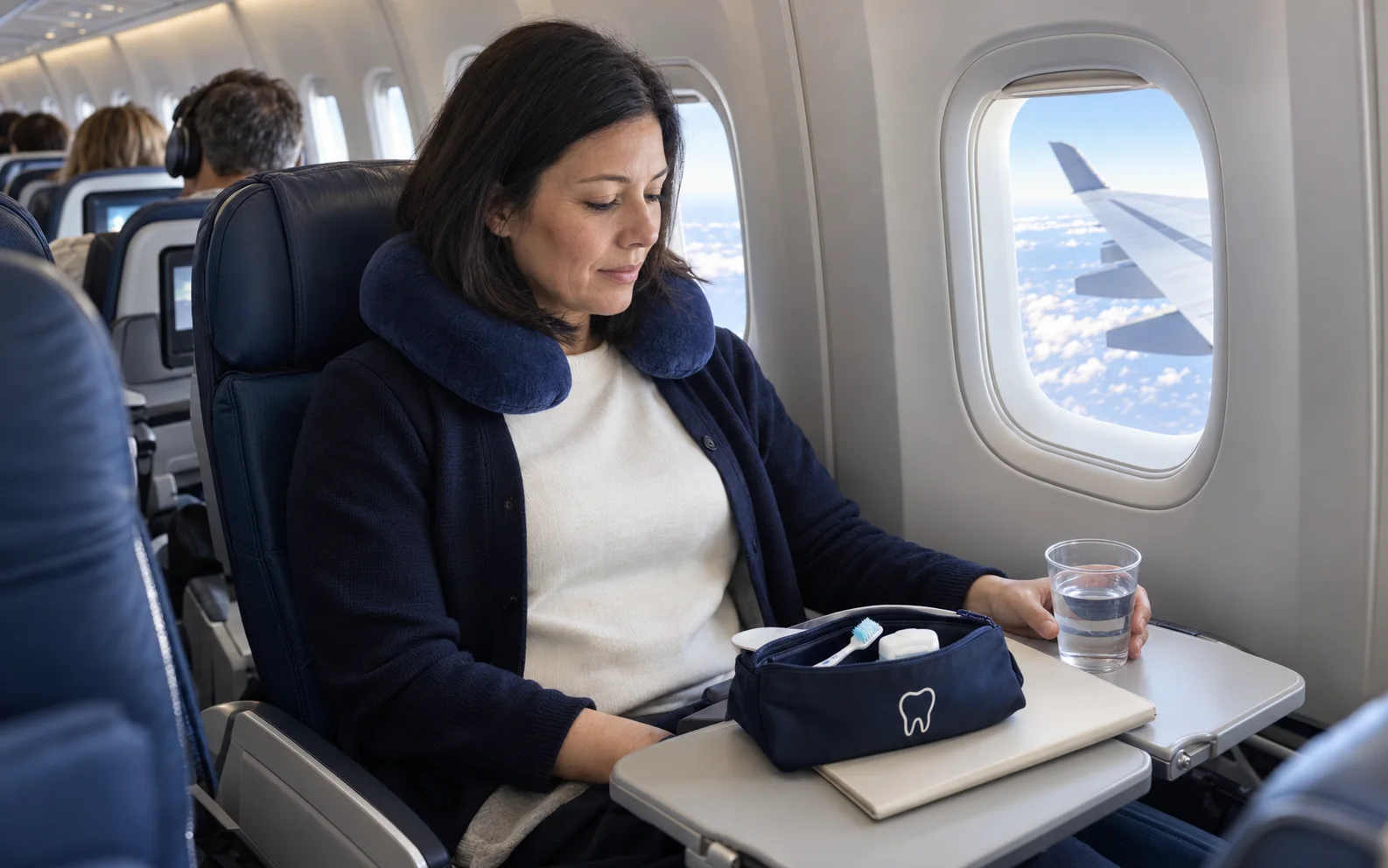
Humidity in an aircraft cabin drops below 20% on most flights, far drier than the air at home. When the mouth dries, saliva falls away, and saliva is the mouth's own cleaner: it rinses debris, buffers acid and keeps a wound moist. On a long flight, a blocked nose means you sleep with your mouth open and the dryness gets worse. Over a fresh extraction site that dryness is both uncomfortable and unhelpful while the mouth is trying to settle.
- Sip water steadily through the flight rather than waiting until you feel thirsty.
- Skip the straw; the sucking action can disturb the clot over the wound.
- Leave the salted snacks and the alcohol, both of which dry the mouth further.
Pain relief, alcohol and hours of sitting still
You may well need pain relief in the air. Which one and when is a question for the dentist who treated you rather than something to work out yourself, and the medicine belongs in your hand luggage, not the hold. Alcohol causes trouble on two counts: it does not belong on top of pain medication, and it dries the mouth and can make a fresh wound ooze. Sitting still for hours is part of the picture too. When it is safe to move about, take a few steps along the aisle, and prop your head above heart level while you sleep, which keeps swelling down.
Which tooth actually feels the pressure change
Cabin pressure changes on climb and descent. In a sound tooth with a well-sealed filling, the change is usually not felt at all. Pain tends to appear in a tooth that was already in trouble: a deep cavity, an inflamed nerve, a root canal treatment left half finished, or an old filling with a gap underneath. The pressure change simply makes the problem show itself. Temporary crowns and temporary fillings hold less firmly than permanent ones, and it is usually hard or sticky food rather than pressure that lifts them, which is a poor thing to discover thousands of kilometres from your dentist.
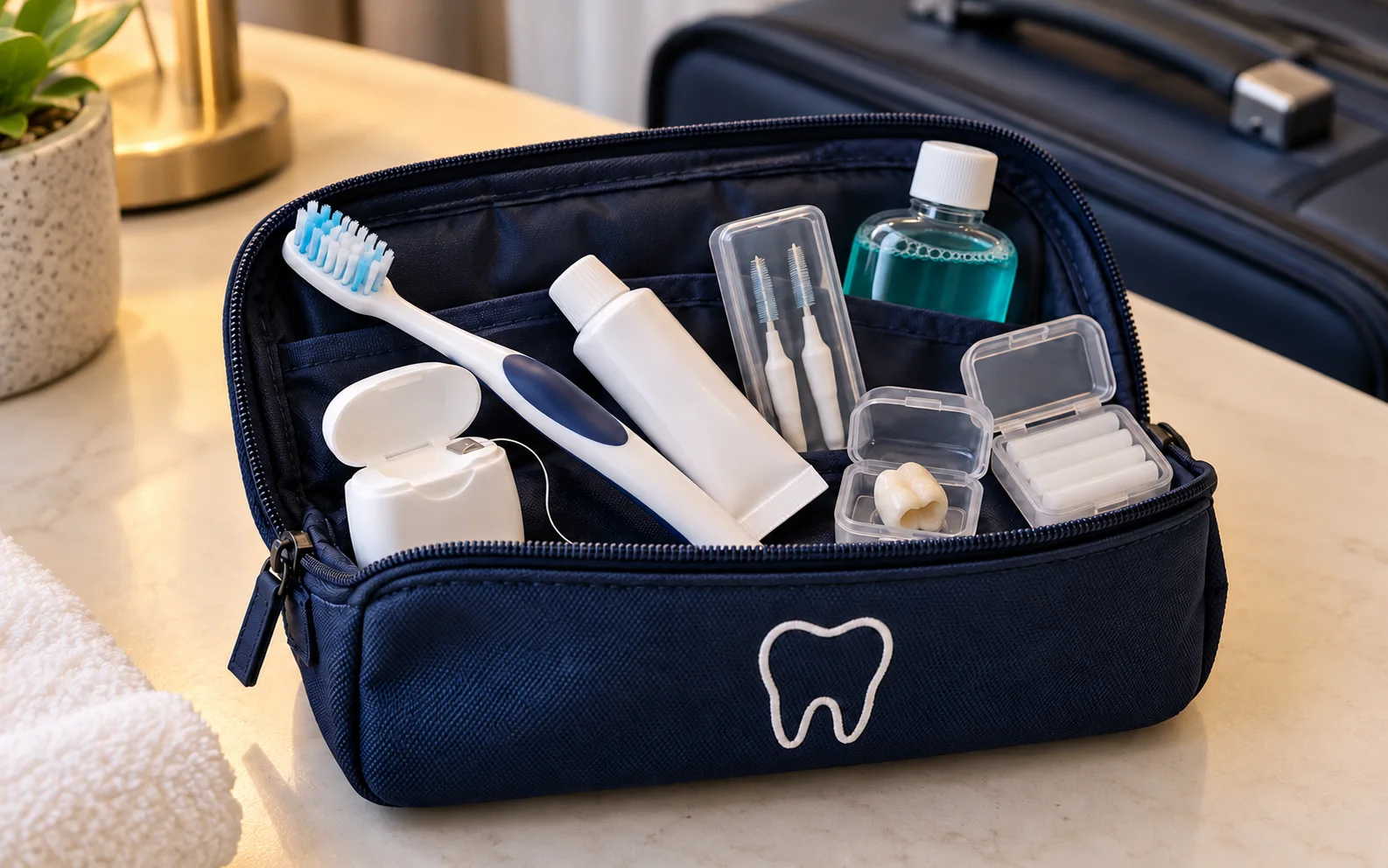
What makes a flight easiest is a small bag packed in advance and kept in your hand luggage.
What to take with you
- Sterile gauze, the simplest way to apply pressure if bleeding starts.
- The pain relief your dentist named, in its packet and with the written instructions.
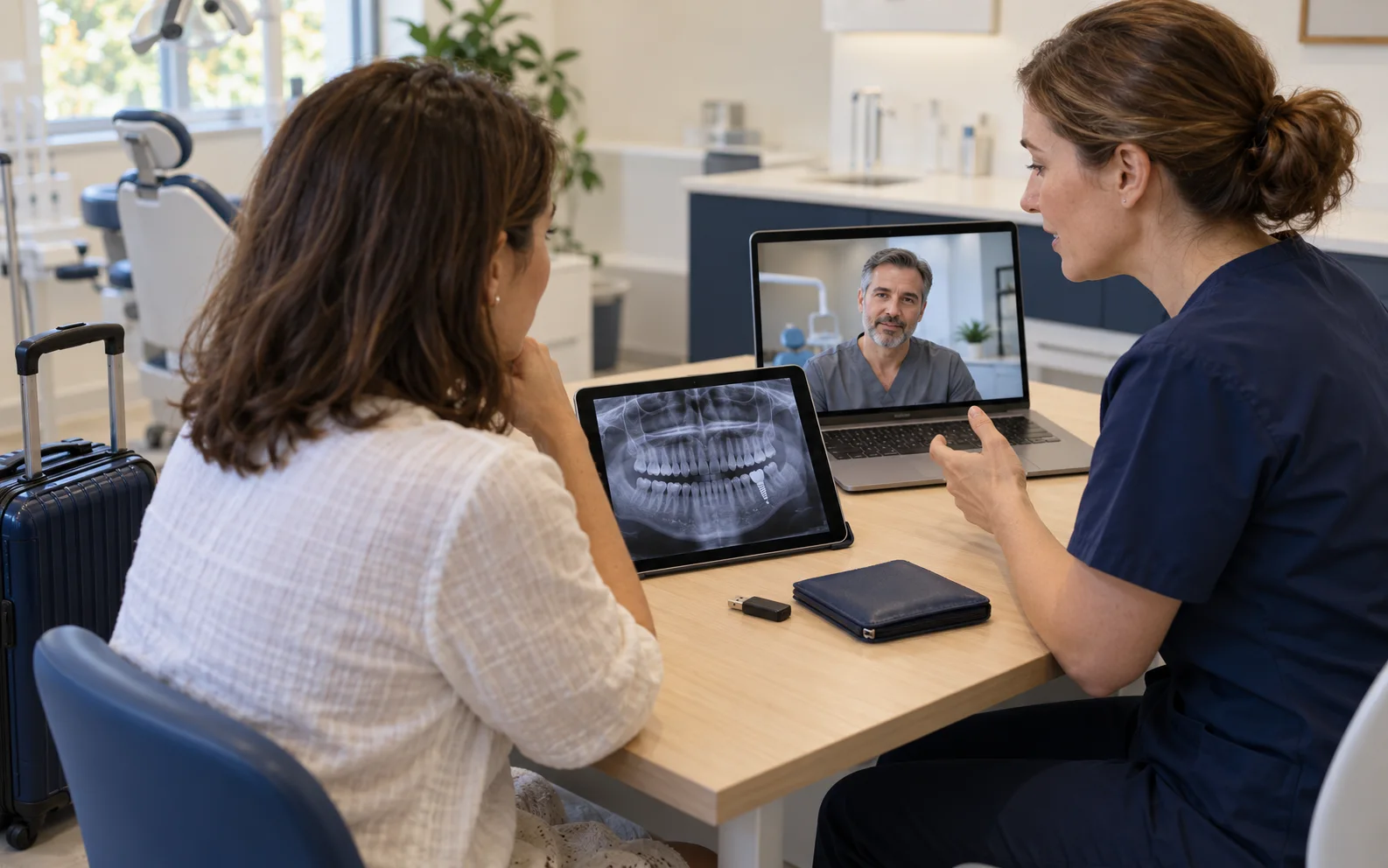
- A short treatment note describing what was done, so another dentist could read it.
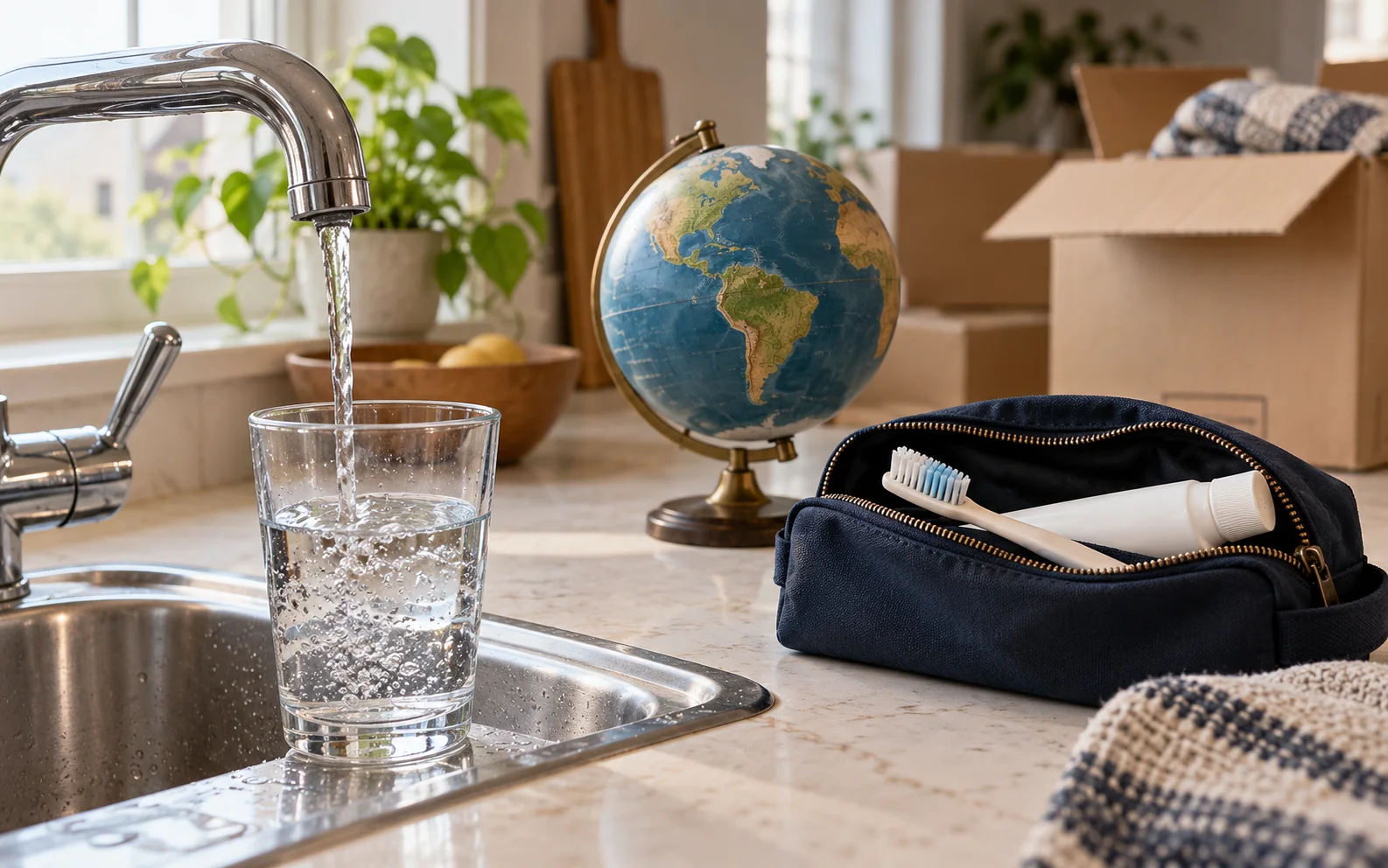
- An empty water bottle you can fill once you are through security.
- Something soft to eat and a lip balm, since chewing will not appeal.
All of it belongs in hand luggage; anything in the hold is not with you while you fly. Print the treatment note on paper as well as keeping it on your phone, because batteries run flat. Write down your dentist's phone number too.
Planning the return leg and the connections
When treatment falls in the middle of a trip, leaving room for healing makes for an easier journey than squeezing the procedure into the day before departure. Connecting tickets can double the total travelling time, and the hours spent in airports extend the same dryness and stillness. Leaving a day between a long flight and a second one gives you somewhere to turn if a problem does appear.
Frequently asked questions
How many days after an extraction can I fly?
There is no single number that fits everyone. A straightforward extraction and the surgical removal of a buried tooth are not the same thing, and how quickly bleeding settles, swelling fades and the socket closes varies from person to person. That is why the day you fly is set by the dentist who did the work.
Can cabin pressure loosen a new filling?
A well-sealed permanent filling is not expected to shift. If you are setting off on a long journey with a temporary crown, ask your dentist beforehand how to protect the tooth if the crown comes off and who you could see at your destination. Whether the crown can be fixed more securely for the trip can come up in the same conversation.
What can I do if a tooth starts hurting mid-flight?
Note whether the pain began on climb or on descent, keep your head raised and drink water. Use the pain relief your dentist named if you have it, and do not try a new medicine in the air. Once you land, say exactly when the pain started, because that timing helps a great deal.
Does flying harm a newly placed implant?
Cabin pressure has no effect on an implant sitting in bone; what deserves attention is the first days after surgery. The exception is the upper jaw after a sinus lift: there the no-flying period your dentist gives is what counts. Bleeding, swelling and signs of infection show up early, and being near the dentist who placed it helps.
Is it sensible to take a painkiller before boarding?
That is not a decision to make alone. The dentist who treated you says which pain relief suits you and when to take it, as some medicines can increase bleeding. Whatever you take should not be followed by alcohol, however readily it is offered on board.
Can I fly with an unfinished root canal treatment?
This is one of the situations most affected by pressure change, and an inflamed tooth can become noticeably painful on climb and descent. Tell your dentist about the flight, so the decision about finishing or temporarily sealing the tooth beforehand is made with the facts.
This content is for general information only and does not replace an examination.
Edited by
Ali Bulut
Medically reviewed by: Ozan Ergen, Specialist in Oral, Dental and Maxillofacial Surgery
This article draws on the clinical experience of the Papatya Dental team and is reviewed for accuracy before publication.
- Last updated:
- 2026-09-21
- Editorial contact:
- icerik@papatyadental.com