
Co te leki robią z kością
Kość nigdy nie jest skończona. Stara tkanka jest rozkładana, a w jej miejsce odkładana nowa, bez przerwy. W osteoporozie rozkład wyprzedza odbudowę i szkielet staje się cieńszy. Bisfosfoniany i denosumab spowalniają rozkład, więc więcej kości zostaje na miejscu, a złamania biodra i kręgosłupa zdarzają się rzadziej. Te same substancje stosuje się w leczeniu onkologicznym, ale w znacznie wyższych dawkach, podawanych we wlewie albo w zastrzyku. Większość tego, co pisze się o szczęce, pochodzi z tego obszaru.
Dlaczego szczękę traktuje się osobno
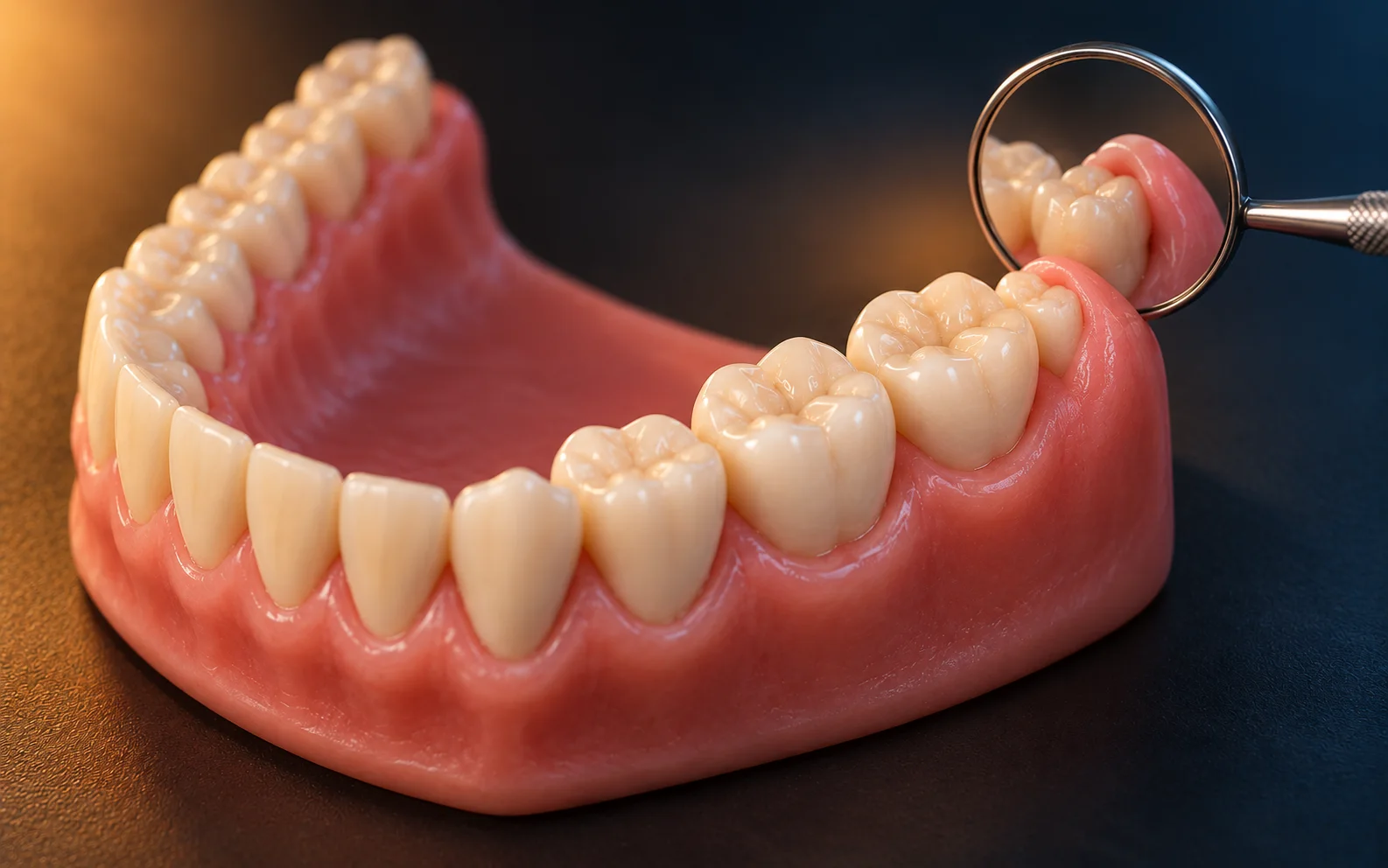
Kość szczęki od bakterii w jamie ustnej oddziela tylko cienka warstwa dziąsła. Po usunięciu zęba kość leży przez jakiś czas odsłonięta, a zębodół zamyka się tylko wtedy, gdy kość się odnawia. Kiedy odnowa jest spowolniona, razem z nią zwalnia gojenie. Rzadko zębodół w ogóle się nie zamyka: niewielki fragment kości zostaje odsłonięty i ulega zakażeniu. Dentyści nazywają to martwicą kości szczęki.
Złamania biodra i kręgosłupa, którym te leki zapobiegają, są częste, a ich skutki poważne, podczas gdy problem ze szczęką jest rzadki. Zważenie jednego z drugim to zadanie lekarza, który przepisuje lek.
Jak duże jest naprawdę ryzyko
U osoby leczonej z powodu osteoporozy martwica kości szczęki jest bardzo rzadka; zdecydowana większość nigdy jej nie doświadcza. Obraz zmienia się u pacjentów onkologicznych, którzy dostają znacznie wyższe dawki. Podanie jednej liczby wprowadzałoby w błąd, bo ryzyko przesuwa się zależnie od substancji, drogi podania, czasu przyjmowania i innych chorób, z którymi ktoś żyje. W osteoporozie decyzję o kontynuowaniu podejmuje się zwykle z ryzykiem złamania przed oczami.
- Wysokie dawki podawane we wlewie albo w zastrzyku, jak w leczeniu onkologicznym
- Lata nieprzerwanego stosowania
- Zabiegi sięgające kości: usunięcie zęba, implanty, zabiegi na dziąsłach
- Nieleczona choroba dziąseł albo zakażone korzenie zębów
- Sterydy w tabletkach, źle kontrolowana cukrzyca, palenie
- Proteza, która ociera dziąsło i zostawia rany
Kontrola stomatologiczna przed pierwszą dawką
Najłatwiejszy moment przychodzi przed rozpoczęciem leczenia. Próchnicę się wypełnia, kamień usuwa, a chore dziąsło leczy. Zęby, których nie da się uratować, usuwa się wtedy, zostawiając wystarczająco dużo czasu, by zębodoły zamknęły się przed pierwszą dawką. Jeśli nosisz protezę, sprawdza się ją pod kątem miejsc, które ocierają. Nic z tego nie staje się niemożliwe po rozpoczęciu leku; planowanie wymaga po prostu większej staranności.
Leczenie stomatologiczne w czasie przyjmowania leku
Toczy się dalej. Wypełnienia, leczenie kanałowe, korony, skaling i rutynowe kontrole przebiegają normalnie, bo żadne z nich nie otwiera kości. Grupa, która wymaga namysłu, to ta, która sięga kości: usunięcie zęba, implanty i zabiegi na dziąsłach. Kiedy jeden z nich jest potrzebny, dentysta rozmawia z lekarzem, który przepisał lek, a substancję, czas stosowania i twoje inne choroby rozpatruje się razem. Czasem ząb, który by usunięto, ratuje się zamiast tego. Wspominaj o leku na każdej wizycie.
Nie odstawiaj leku na własną rękę
Odstawienie dlatego, że czeka leczenie stomatologiczne, przywraca ryzyko złamania, a przy tym szybko nie zmienia sytuacji w szczęce. Niektóre substancje zostają długo związane w kości i działają jeszcze po ostatniej dawce. O przerwie decyduje wyłącznie lekarz, który przepisał lek, po rozmowie z dentystą. Jeszcze jedno: nawet jeśli odstawiono lek lata temu, powiedz o tym w nowym gabinecie stomatologicznym, bo może tego nie być w dokumentacji.
Najczęściej zadawane pytania
Czy w czasie przyjmowania tych leków można usunąć ząb?
U większości osób tak, a o wyniku rozstrzyga przygotowanie. Dentysta musi znać substancję, czas przyjmowania i inne choroby, z którymi żyjesz, i tam, gdzie to przydatne, porozmawia z lekarzem, który przepisał lek. Zakażenie w jamie ustnej opanowuje się wcześniej, a zębodół obserwuje uważnie potem.
Czy mogę jeszcze mieć implant zębowy?
U większości osób leczonych z powodu osteoporozy implant można rozważyć, choć odpowiedź ustala się indywidualnie. Liczą się czas stosowania, inne choroby i to, jak czysto utrzymuje się jamę ustną. U pacjentów onkologicznych przyjmujących znacznie wyższe dawki zwykle unika się implantów.
Czy na czas leczenia stomatologicznego potrzebuję przerwy w leku?
Tej decyzji nie może podjąć sam dentysta i nie jest to też decyzja dla ciebie. W niektórych sytuacjach lekarz, który przepisał lek, rozważa krótką przerwę; w większości uznaje się ją za niepotrzebną. Ponieważ odstawienie przywraca ryzyko złamania, decydują o tym razem obaj specjaliści.
Czy ryzyko znika, gdy przestanę je przyjmować?
Nie od razu, a to, jak długo, zależy od grupy leków. Bisfosfoniany wiążą się z kością i mogą w niej pozostawać latami, natomiast działanie denosumabu słabnie w ciągu kilku miesięcy od ostatniej dawki. Dlatego dentysta powinien wiedzieć, jaki lek przyjmowano w przeszłości i kiedy podano ostatnią dawkę.
Czy higiena jamy ustnej naprawdę zmienia ryzyko?
Pośrednio tak. Im mniej próchnicy i choroby dziąseł, tym mniej zębów trzeba w końcu usuwać, a im rzadziej narusza się kość, tym mniejsze ryzyko. Dlatego liczą się mycie zębów dwa razy dziennie, czyszczenie przestrzeni między zębami i przychodzenie na kontrole.
Ta treść ma charakter ogólnoinformacyjny i nie zastępuje badania.
Opracowanie
Ozan Ergen
Weryfikacja medyczna: Ali Bulut, Specjalista chirurgii jamy ustnej i szczękowo-twarzowej
Ten artykuł powstaje w oparciu o doświadczenie kliniczne zespołu Papatya Dental i przed publikacją jest sprawdzany pod kątem rzetelności.
- Ostatnia aktualizacja:
- 2026-09-21
- Kontakt z redakcją:
- icerik@papatyadental.com