
Hvorfor det å beholde din egen tann kommer først
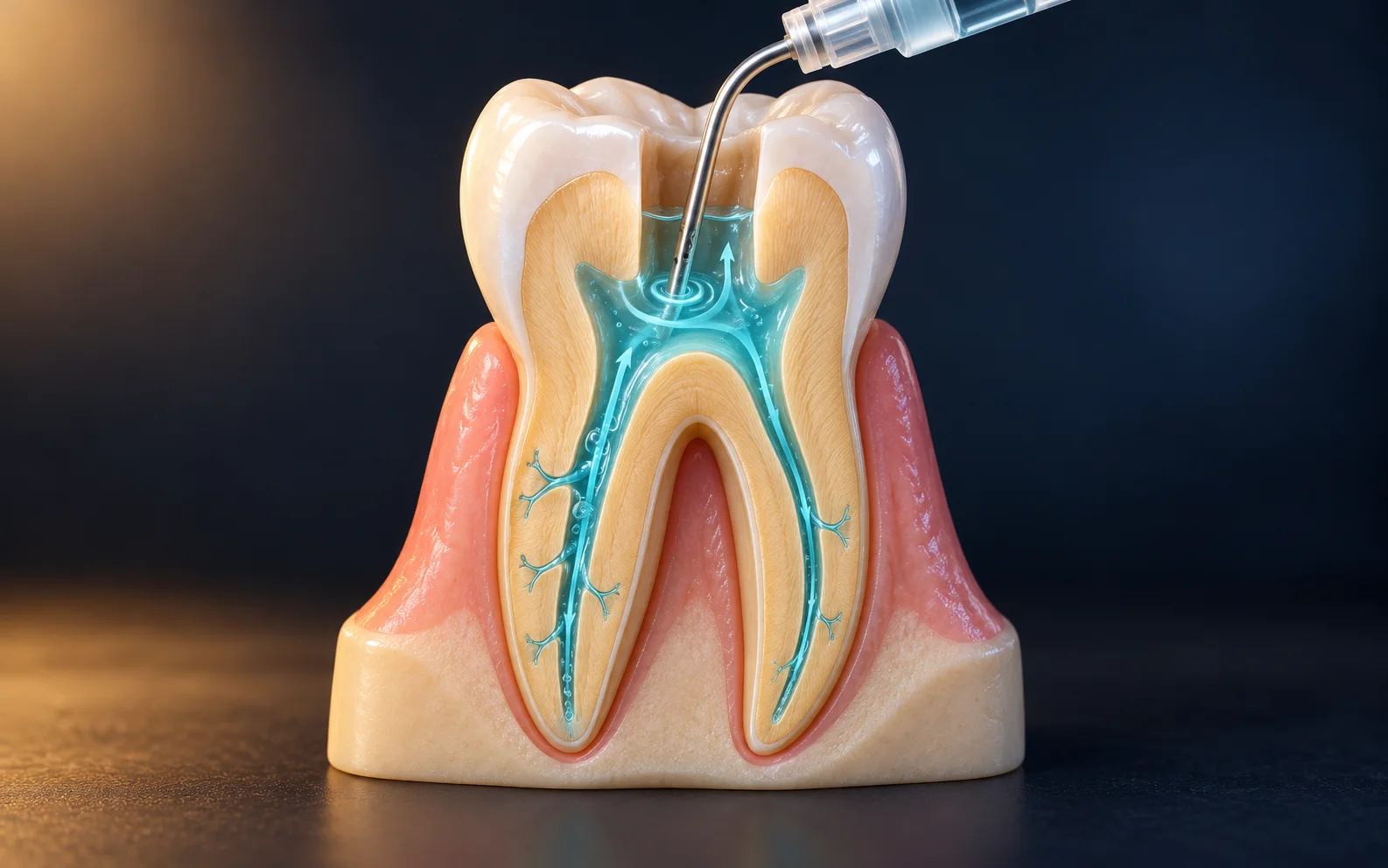
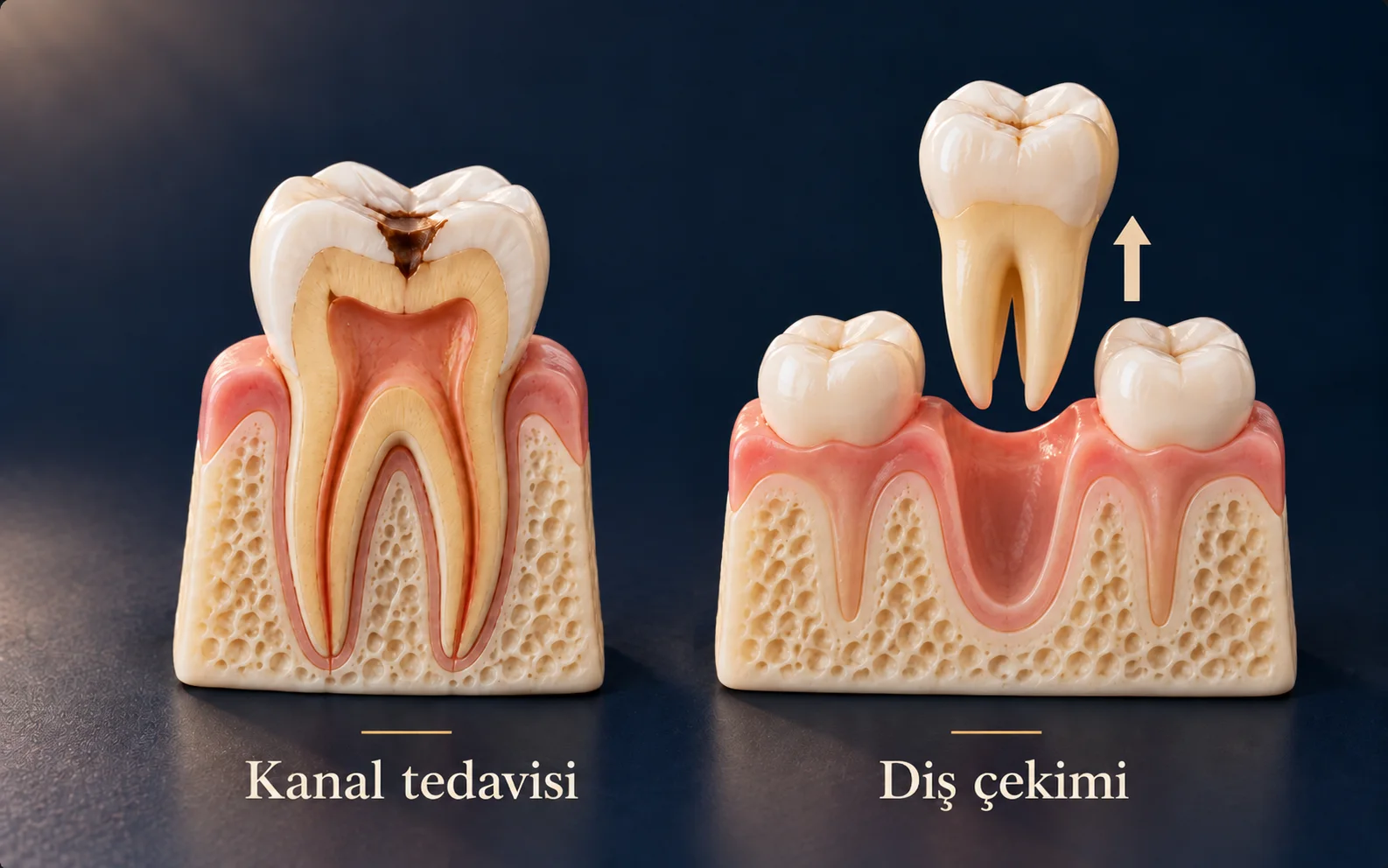
Hver tann deler tyggearbeidet med naboene og belaster benet under seg, noe som holder det ved like. En naturlig rot er forankret i kjeven på en måte ingen kunstig erstatning kopierer nøyaktig. Så arbeidsregelen i tannlegefaget er enkel: en tann som kan beholdes, beholdes. Det er det rotfylling er til for. Det betente vevet inne i tannen renses ut, kanalene fylles, og det harde skallet av tannen blir stående. Smerte alene avgjør ingenting; en tann som verker kraftig, kan ofte reddes, og en tann som aldri gjorde vondt, må kanskje trekkes.
Fire ting som avgjør spørsmålet
En tannlege som velger mellom behandling og trekking, ser aldri på tannen alene. Hva som er igjen av kronen, om roten er hel, hvor fast tannkjøttet og benet fortsatt holder tannen, og hvilken jobb den tannen gjør i munnen, veies sammen. Når alle fire ser friske ut, er avgjørelsen lett. Når én av dem har brutt kraftig sammen, blir tannen ofte ikke stående lenge selv om de tre andre er i orden.
- Gjenværende tannsubstans: hvor mye fast vegg som er igjen over tannkjøttet
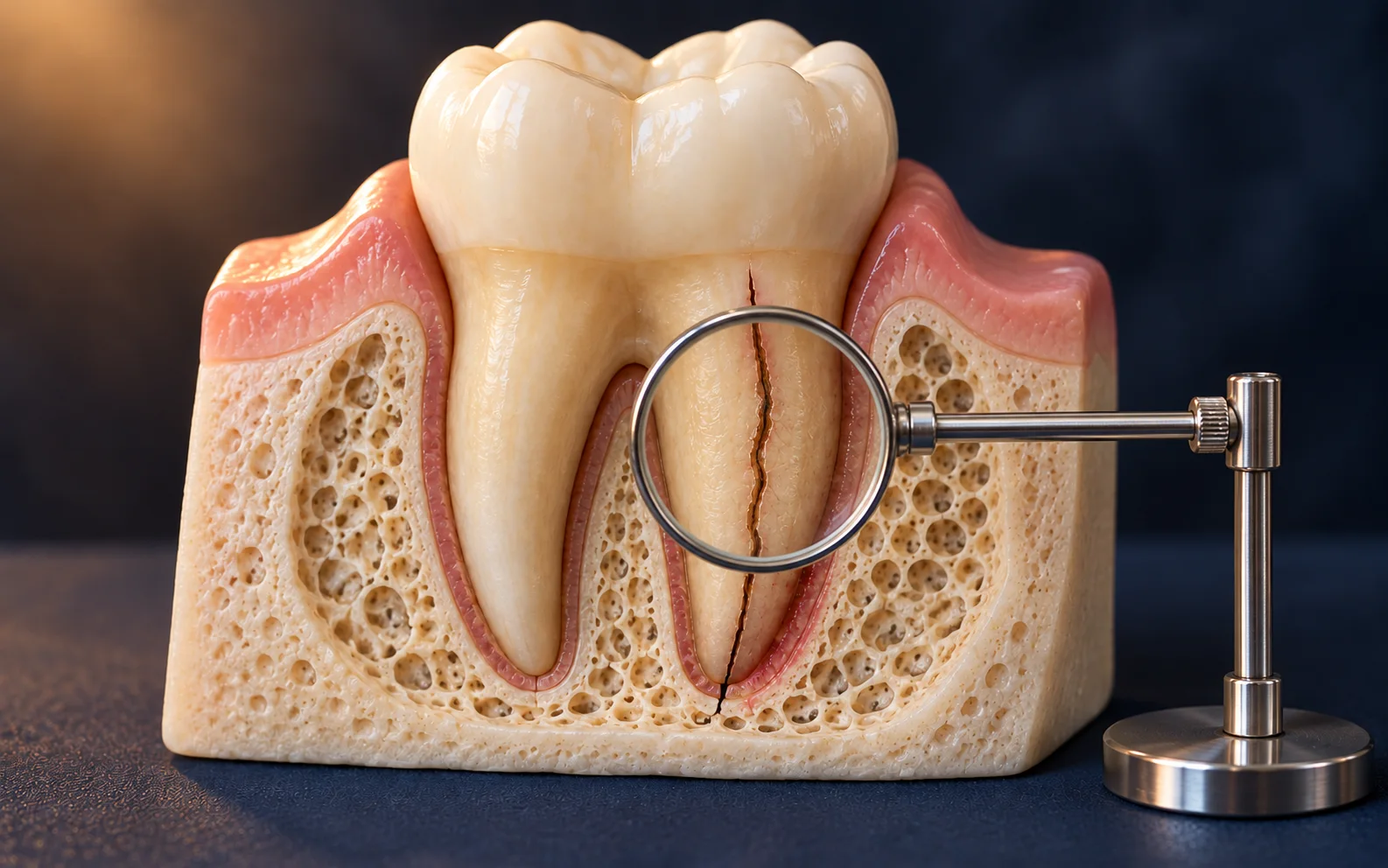
- Rotsprekker: om en sprekk går langs hele roten
- Støtte fra tannkjøtt og ben: hvor løs tannen har blitt
- Tannens rolle: hvor mye tygging og tale hviler på den
Hvor mye frisk tann som er igjen
En rotfylling renser innsiden av en tann; den bygger ikke opp utsiden. Når behandlingen er ferdig, legges en fylling eller en krone på toppen, og den oppbyggingen trenger faste vegger å gripe i. Går det fortsatt et belte av fast tann hele veien rundt over tannkjøttkanten, holder oppbyggingen. Har karies gått ned under tannkjøttet, eller tannen knekt nesten ned til rotnivå, kan delen som settes oppå, løsne i løpet av måneder selv om kanalene ble godt fylt. I en slik tann er det veggene som avgjør, ikke kanalene.
En sprukket rot gir lite rom
En sprekk som går langs hele roten, er det ene rotfylling ikke kan reparere. Linjen i sprekken holder innsiden av roten i forbindelse med bakteriene i munnen, så uansett hvor godt kanalene fylles, kommer betennelsen tilbake. En slik sprekk viser seg ikke alltid på røntgen; noen ganger finnes den først når tannen åpnes eller tannkjøttet løftes til side. Skarp smerte på ett bestemt punkt når du biter, en gjenstridig byll rundt én rot, og hevelse som ikke vil gi seg, peker alle den veien.
At en rotfylling sviktet én gang, betyr ikke at tannen er ferdig; i de fleste tilfeller kan kanalene renses og fylles på nytt.
Luken etterpå er en egen avgjørelse
Å trekke en tann avslutter én jobb og starter en annen. Nabotennene driver inn i det tomme rommet over tid, tannen rett overfor flytter seg mot luken, og bittet endrer form. Derfor hører planen for å fylle luken hjemme i den samme samtalen som trekkingen: et implantat, en bro eller en delprotese. Hvilken som passer, kommer an på hvor tannen sto, på tilstanden til naboene og på hvor mye ben som ligger under. Noen ganger trengs noen måneders tilheling mellom trekkingen og erstatningen.
Slik snevrer undersøkelsen det inn
Svaret kommer sjelden av ett blikk. Et røntgenbilde viser formen på roten, hvor mange kanaler det er og hvor stor betennelsen ved rotspissen har blitt. Tannkjøttet bedømmes ved å måle lommene rundt tannen; en dyp lomme på ett smalt sted kan være signaturen til en sprukket rot. Hvor mye tannen beveger seg, og hvor det gjør vondt når du biter, går begge inn i bildet. I noen tenner blir svaret først klart når den gamle fyllingen løftes av og tannlegen kan se inn, så en plan kan endre seg underveis. Å høre om den muligheten på forhånd sparer deg for en ubehagelig overraskelse senere.
Ofte stilte spørsmål
Må en tann som gjør veldig vondt, alltid trekkes?
Nei. Hvor vondt en tann gjør, sier ingenting om den kan beholdes. Sterk smerte kommer som regel av betennelse i vevet inne i tannen, og det er nettopp det rotfylling løser. Derfor kan det å avbryte en påbegynt behandling fordi smerten har gitt seg, koste sjansen til å beholde tannen.
Går det raskere å trekke en tann enn å rotfylle den?
Målt i tid i stolen, som regel ja. Men når en tann først er borte, krever det å fylle luken sitt eget sett med timer, så hele løpet blir ofte lengre enn å behandle tannen. Tid alene er en dårlig rettesnor.
Kan en tann som allerede er rotfylt, behandles på nytt?
I de fleste tilfeller ja. Det gamle fyllmaterialet tas ut, kanalene renses og fylles på nytt, og holder betennelsen ved rotspissen seg, er et lite kirurgisk steg et annet alternativ. Så lenge ny rotfylling fortsatt er mulig, er trekking sjelden det første steget.
Er avgjørelsen annerledes for en visdomstann?
Som regel. En visdomstann bærer lite av tyggearbeidet for de fleste, har kanskje ingen partner rett overfor, og de krokete kanalene gjør behandlingen vanskeligere. Så skade som ville blitt behandlet i en annen tann, fører oftere til trekking her.
Er det et problem å la luken stå tom?
Bakerst i munnen lar selv én enkelt luke nabotennene helle og tannen rett overfor flytte seg mot den over tid; bittet forskyves, og å fylle rommet senere blir vanskeligere. Å avklare når og hvordan luken skal fylles før tannen trekkes, holder planen enkel.
Kan avgjørelsen vente litt?
Uten smerte og uten hevelse er en kort tenkepause som regel ufarlig. Men en infisert tann gir seg ikke av å vente; etter hvert som betennelsen ved rotspissen vokser, blir behandlingen vanskeligere og sjansen for å beholde tannen faller. Med hevelse eller feber er det ikke et alternativ å vente.
Dette innholdet er til generell informasjon og erstatter ikke en undersøkelse.
Utarbeidet av
Ali Bulut
Faglig gjennomgått av: Samed Kağan Bozkurt, Tannlege, estetisk tannbehandling
Denne artikkelen bygger på den kliniske erfaringen til teamet hos Papatya Dental og blir gjennomgått for riktighet før publisering.
- Sist oppdatert:
- 2026-09-21
- Redaksjonell kontakt:
- icerik@papatyadental.com