

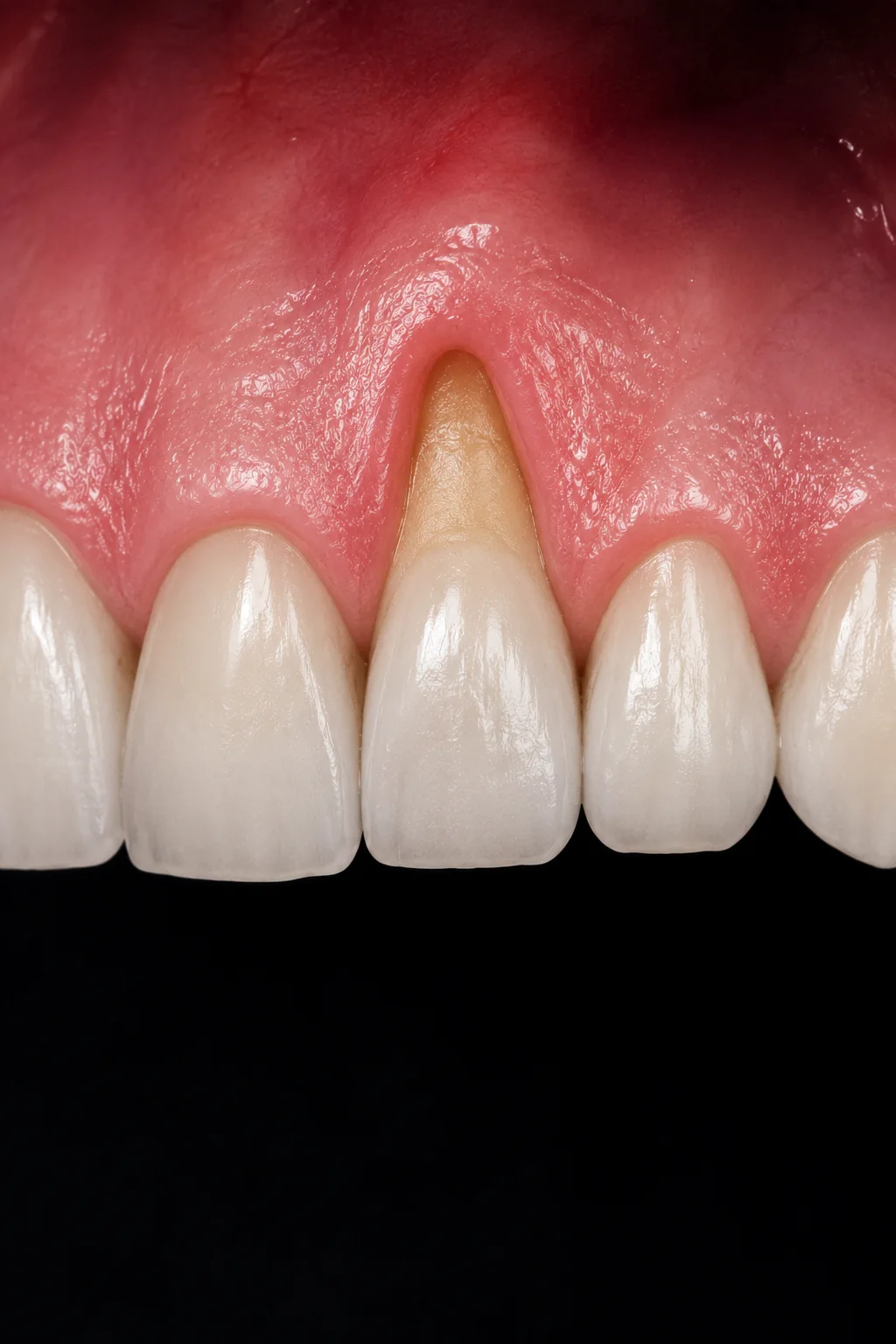
Why does gum recession occur?
The tooth does not become longer; the gum recedes and the root surface that was previously covered becomes visible. This surface is not covered with enamel, so marked sensitivity to hot and cold can develop.
There is no single cause. Brushing too hard and brushing with horizontal movements are among the most common. Gum inflammation that continues for a long time, force placed on the teeth by clenching and grinding, the position of the teeth in the dental arch and naturally thin gum tissue can also play a role.
The cause must be identified before treatment is planned. Covering the area before removing the cause may result in recession recurring in the same area.
What approaches are considered?
The extent of the recession, gum thickness and the condition of the surrounding bone are assessed together. Not every case of recession requires surgery.
- Adjusting your brushing technique and the firmness of your toothbrush
- Surface treatments intended to reduce sensitivity
- A protective night guard if you clench your teeth
- Covering the exposed surface with a gum graft
- Curettage and root planing or cleaning first if inflammation accompanies the recession
Cases where a graft is used
When coverage is needed, a thin piece of tissue taken from the inner surface of the palate or another suitable area is placed over the exposed root surface. The procedure is performed under local anaesthetic.
Sensitivity is expected in both the area where the tissue was taken and the treated area during the first few days. You should avoid chewing on that side and brushing the area during this period; your dentist will explain when you can return to normal care.
It may take several months for the tissue to integrate and for its colour to blend with the surrounding area. The result varies according to the initial extent of the recession and the thickness of the tissue; the entire root surface may not be covered in every case.