
Hvorfor munnen åpner seg om natten
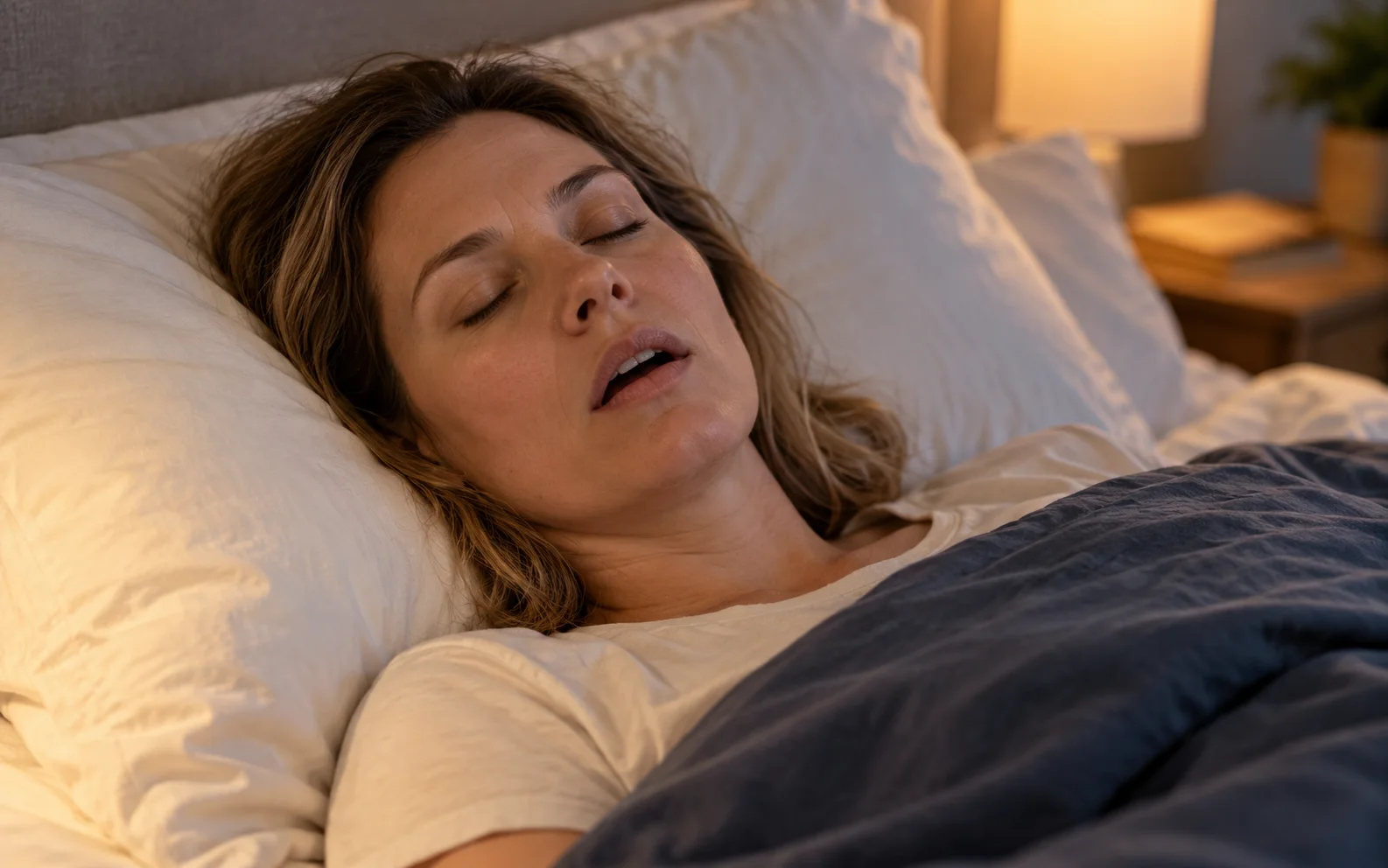
Er nesen tett, tar kroppen den letteste veien og munnen åpner seg. Hos noen er nesen åpen, men vanen har satt seg: gjennom nesen om dagen, gjennom munnen når man først sover. Å ligge på ryggen lar også underkjeven gli bakover, og leppene skiller lag av seg selv.
Å våkne med tørr munn
Spyttstrømmen er lavest om natten uansett. Når munnen først står åpen, tørker luften som beveger seg over den, bort det lille som er igjen. Tungen og ganen kjennes som papir, og leppene kleber seg sammen. Lukten du merker når du våkner, starter her: bakterier tilbringer natten i en tørr munn uten spytt til å skylle dem bort.
- En tørr, ru følelse på tungen og ganen
- Ånde som er sterkest før du pusser
- Å våkne i de små timene etter et glass vann
- Sprukne lepper og en raspende hals
Hva tennene mister når spyttet blir lite
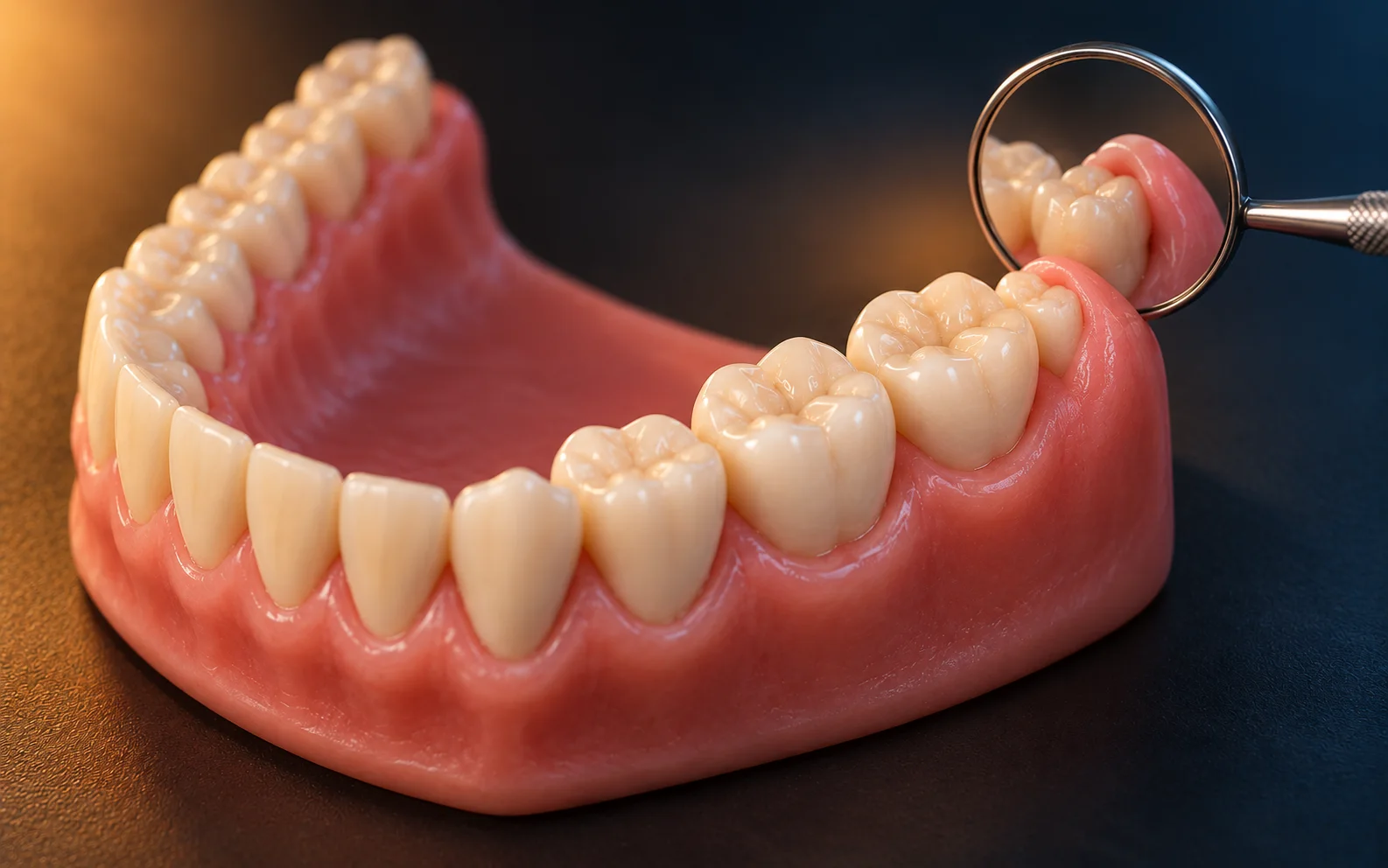
Spytt gjør mer enn å holde ting fuktig. Det tynner ut syre etter måltider, bærer mineraler tilbake i emaljen og feier stadig bort bakteriehinnen. Når den beskyttelsen mangler i timevis i strekk, starter karies tidligere langs tannkjøttkanten på fortennene og rundt broer og regulering, der renholdet uansett er tungvint. Tannkjøttet i det tørre området blir lettere rødt og blør under pussing.
Om natten er spyttet allerede på sitt laveste, og med åpen munn er tennene da dårligst beskyttet.
Hvorfor nesen tetter seg
Pollen, husstøv, en forkjølelse som ikke vil gi seg, og sigarettrøyk sveller alle slimhinnen inne i nesen. Hos barn snevrer falske mandler og mandler inn rommet luften må passere gjennom. Hos voksne gjør en skjev neseskillevegg eller forstørrede neseganger det samme. Det er en øre-nese-hals-lege som rydder opp i dette, og allergi håndteres for seg. Når nesen først er åpen, lukker munnen seg ofte av seg selv om natten.
Dette endrer seg hos barn
Når et barn puster gjennom munnen i årevis, hviler tungen lavt i stedet for å ligge opp mot ganen. Uten den støtten vokser ganen smal og høy, overkjeven får for lite plass, og tennene kommer trangt fram. Underkjeven kan ligge lenger bak, og leppene møtes bare med anstrengelse. Fortennene blir stående tørre, og tannkjøttkanten ser varig rød ut. Fanget opp tidlig kan både nesen og bittet tas hånd om mens veksten fortsatt pågår.
- Å sove med åpen munn og en fuktig pute
- Snorking, urolig snuing, svette i sengen
- Tunge morgener, vaghet på dagtid og irritabilitet
- En varig rød tannkjøttkant på fortennene og tørre lepper
Snorking er ikke det samme som søvnapné
Ved snorking rasler luften i det bløte vevet i en innsnevret luftvei. Ved søvnapné stopper pusten helt i korte perioder, personen våkner uten å vite om det, og mønsteret gjentar seg mange ganger gjennom natten. Utenfra høres de to like ut, men følgene er ikke de samme. Bare en lege kan skille dem og avgjøre om en søvnregistrering trengs. Der en skinne som brukes i munnen, kommer inn i bildet, planlegger en tannlege og en søvnlege den sammen.
Ofte stilte spørsmål
Holder et glass vann ved sengen mot tørr munn?
Vann hjelper et øyeblikk, men det trer ikke inn i stedet for spytt: det verken demper syre eller bærer mineraler tilbake til tannen. Kommer tørrheten tilbake hver natt, er årsaken verdt å spore opp. En tett nese, en fastgrodd vane med å sove med åpen munn eller virkningen av en medisin du bruker, kan alle være med, og det er et spørsmål til legen din.
Gir munnpusting hull i tennene?
Ikke alene, men den gjør jobben lettere for karies. Med mindre spytt blir syren liggende lenger på tannen, og mineraltapet går raskere. Dukker det opp hvite, kritaktige flekker langs tannkjøttkanten på fortennene, må det området vises til en tannlege.
Er det en god idé å teipe munnen igjen om natten?
Å teipe munnen igjen får mye oppmerksomhet på nettet, men er nesen virkelig tett, gjør det pusten vanskeligere, og med udiagnostisert søvnapné er det ikke trygt. Den første jobben er å slå fast hvorfor nesen er lukket. Å gå denne veien uten en medisinsk vurdering er uklokt.
Barnet mitt sover med åpen munn. Går det over?
Hos noen barn gir det seg så snart en forkjølelse er over. Har det pågått i måneder, er det å vente feil trekk, fordi kjevene og ganen tar form nettopp i disse årene. Falske mandler og allergi hører til øre-nese-hals-legen, og hvordan tennene står, hører til tannlegen.
Har alle som snorker, søvnapné?
Nei. De fleste som snorker, har ikke apné, og ikke alle med apné snorker høyt. Det som skiller dem, er symptomene, og en søvnregistrering der det trengs. Har noen sett pusten stoppe, eller gjør søvnighet på dagtid vanlig liv vanskelig, må den vurderingen ikke utsettes.
Hva hjelper mot tørr munn om natten?
Er luften på soverommet svært tørr, hjelper det å fukte den. Å pusse og rengjøre mellom tennene før leggetid får morgenånden ned. Munnskyll som inneholder alkohol, kan gjøre tørrheten verre, så et alkoholfritt munnskyll er et bedre valg. Mindre alkohol og koffeinholdig drikke om kvelden kan også dempe tørrheten om natten.
Dette innholdet er til generell informasjon og erstatter ikke en undersøkelse.
Utarbeidet av
Hasan Kamak
Faglig gjennomgått av: Fatih Bayır, Spesialist i kjeveortopedi
Denne artikkelen bygger på den kliniske erfaringen til teamet hos Papatya Dental og blir gjennomgått for riktighet før publisering.
- Sist oppdatert:
- 2026-09-21
- Redaksjonell kontakt:
- icerik@papatyadental.com