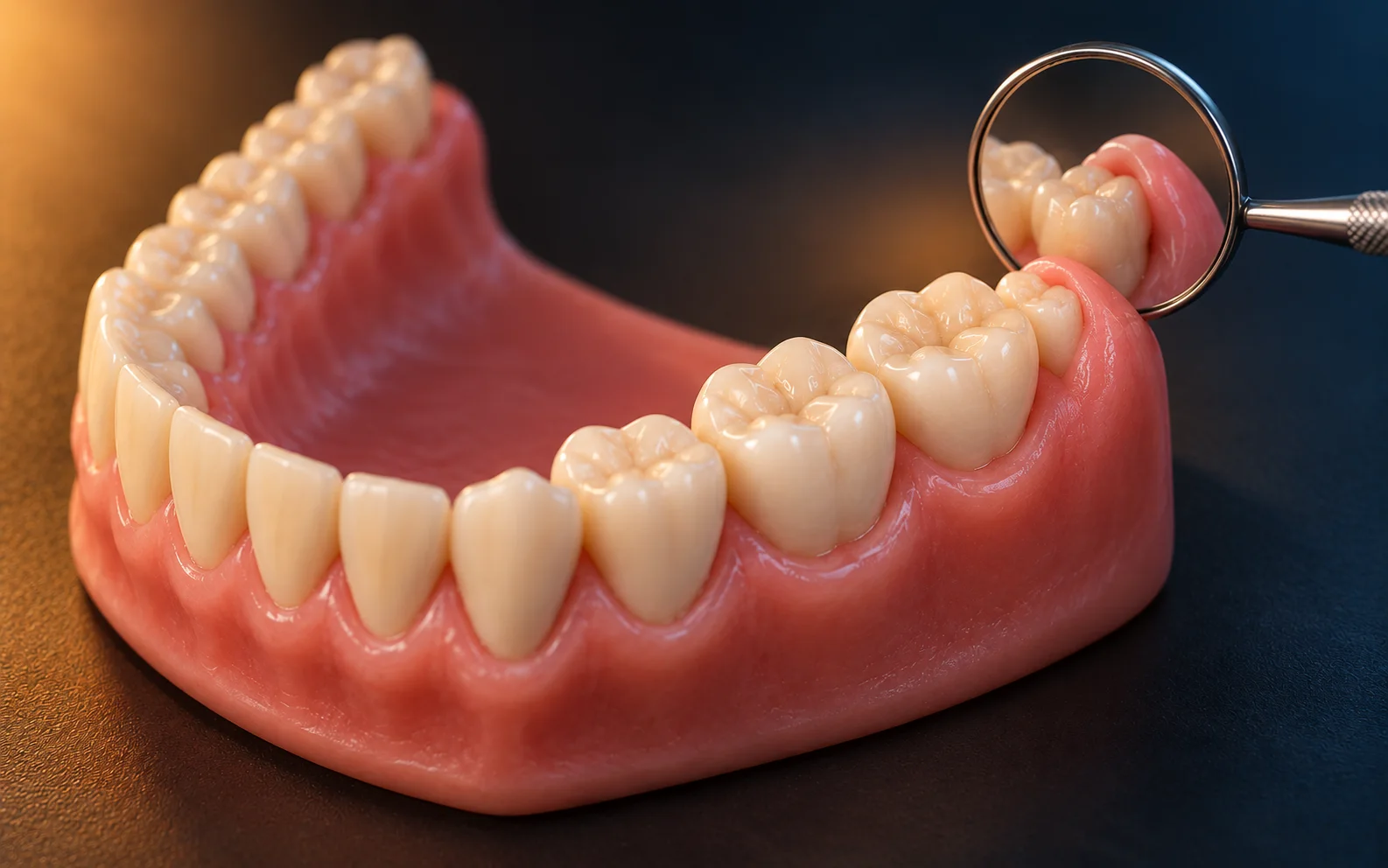

Hva som endrer seg i munnen i overgangsalderen
Østrogenet faller i overgangsalderen, og det fallet rekker lenger enn til ben og søvn. Slimhinnen i munnen, spyttkjertlene og tannkjøttet svarer alle på østrogen. Etter midten av førtiårene legger mange kvinner merke til at munnen kjennes tørr, at tungen svir, eller at tannkjøttet blør lettere enn før. Endringene kommer langsomt, over år, og det er derfor de så ofte settes på alderen alene.
Hvorfor munnen blir tørr
Spyttkjertlene lager mindre spytt når østrogenet faller. I de samme årene kan tabletter tatt mot blodtrykk, søvn eller nedstemthet også gjøre spyttet mindre, og de to virkningene legger seg oppå hverandre. Tørrhet er ikke bare tørste. Spyttet skyller tannflaten, bufrer syre og bærer mineraler tilbake i emaljen; når det blir tynt, svikter alle tre jobbene.
- Å våkne om natten med tørr munn og ha vann stående ved sengen
- Å trenge en slurk vann for å svelge tørt brød eller kjeks
- At tungen setter seg fast i ganen, og at stemmen blir sliten under lange samtaler
- At en protese gnager i ganen eller sklir i løpet av dagen
Hvor karies dukker opp når spyttet faller
I en tørr munn dukker karies ikke opp der du har lært å vente den. Etter hvert som tannkjøttet trekker seg tilbake, blir rotoverflaten blottlagt, og rotoverflate er langt mykere enn emalje. Så etter overgangsalderen starter hull ofte ved tannhalsen, rett ved tannkjøttkanten. Den stripen er lett å gå glipp av med en børste og vanskelig å se i et speil. En som ikke har hatt hull på tjue år, kan plutselig samle flere; det er spyttet, ikke slurv.
Brennende munn-syndrom er virkelig
Noen kvinner kjenner en jevn svie på tungespissen, i ganen eller i leppene. Det er ikke noe synlig sår; vevet ser normalt ut når en tannlege undersøker det. Dette er brennende munn-syndrom, og det dukker oftere opp rundt overgangsalderen. Fordi ingenting viser seg, blir det i årevis avfeid som psykisk. Svien kommer i virkeligheten av måten følenervene i munnen oppfører seg på. Den er typisk mild om morgenen, bygger seg opp mot kvelden og letter ofte mens du spiser.
En sviende tunge handler ikke alltid om overgangsalderen; mangel på jern og B12, diabetes uten kontroll og en soppinfeksjon gir den samme følelsen.
Hvorfor tannkjøttet blør lettere
Tannkjøttvevet blir tynnere og svarer mer på hormonelle endringer. Den samme mengden tannstein som ikke ga blødning ved førti, kan gi det ved femtifem. Hos noen kvinner ser tannkjøttet blekt, blankt og stramt ut, og varm eller sterk mat er ubehagelig. Det mønsteret er uvanlig, men det må kjennes igjen når det kommer. Tilbaketrekningen kan også gå raskere: tannen ser lengre ut, og kalde drikker begynner å svi.
Kjevebenet og legemidler mot bentetthet
Bentettheten faller etter overgangsalderen, og kjeven er en del av det. Går tannkjøttsykdom videre i en kjeve som har tapt ben, blir tennene løse tidligere. Bruker du et legemiddel mot bentap, må tannlegen din vite om det før en uttrekking eller et implantat, fordi noen av disse legemidlene gjør at kjevebenet heler langsommere. Ikke slutt med legemiddelet på egen hånd: å slutte er, som å starte, en avgjørelse for legen som følger deg opp.
Hvilke tegn som ikke bør vente
De fleste endringene i overgangsalderen går langsomt og kan håndteres ved en planlagt kontroll. Noen få funn i munnen forklares likevel ikke av overgangsalderen i det hele tatt. De er uvanlige, men det er verdt å vite hvordan de ser ut.
- Et sår på tungen eller i munnen som ikke har helet på to uker: søk hjelp hos tannlege eller lege samme dag.
- En hvit eller rød flekk på kinnet eller tungen som ikke tørkes bort.
- Nummenhet du ikke kan forklare, ensidig smerte eller vansker med å svelge.
- Hevelse i ansiktet eller kjeven sammen med feber: bli sett uten opphold.
Ofte stilte spørsmål
Er tørr munn etter overgangsalderen varig?
Tørrheten varer i årevis hos de fleste kvinner, men styrken varierer. Hormoner er sjelden den eneste årsaken; legemidler, munnpusting og hvor mye du drikker, spiller alle en rolle. Fordi flere av disse kan endres, er det galt å behandle tørrhet som noe som ligger fast for godt.
Sitter brennende munn-syndrom bare i hodet?
Nei. At ingenting viser seg ved undersøkelsen, betyr ikke at svien er innbilt; den oppstår i nervene. Dårlig søvn og angst kan gjøre den verre. Før navnet brukes, må andre årsaker utelukkes: nivåene av jern, B12 og folat, blodsukkeret og en soppinfeksjon.
Vil hormonbehandling roe symptomene i munnen?
Virkningen på tørrhet og svie er ulik fra kvinne til kvinne, og symptomer i munnen alene er ingen grunn til å starte eller slutte med hormonbehandling. Den avgjørelsen hører til legen som følger deg opp, som veier den mot helsen din ellers.
Bør jeg pusse annerledes nå?
Hvor ofte du pusser, blir det samme; det du sikter mot, endrer seg. Tannkjøttkanten og den blottlagte roten er nå den skjøre delen. En myk børste, rens mellom tennene og tannkrem med fluor samler seg alle der. Å skrubbe hardere gjør tilbaketrekningen verre, ikke bedre.
Kan en tann trekkes mens jeg bruker legemidler mot benet?
I de fleste tilfeller ja, men tannlegen må vite om legemiddelet og følge tilhelingen tett etterpå. Typen legemiddel, hvor lenge det er brukt, og om det svelges eller gis i blodet, endrer alt planen. Så ingen uttrekking bør avtales før du nevner det.
Vokser tannkjøtt som har trukket seg tilbake, ut igjen?
Tannkjøtt som har trukket seg tilbake, kommer ikke tilbake av seg selv. Det som kan gjøres, er å stanse tilbaketrekningen og å beskytte den blottlagte roten mot karies. Kirurgi for å dekke roten er av og til et alternativ; tilstanden til tannkjøttet og benet rundt tannen avgjør om det er det.
Dette innholdet er til generell informasjon og erstatter ikke en undersøkelse.
Utarbeidet av
Nilufar Tulanova Şener
Faglig gjennomgått av: Elif Teke, Spesialist i periodonti
Denne artikkelen bygger på den kliniske erfaringen til teamet hos Papatya Dental og blir gjennomgått for riktighet før publisering.
- Sist oppdatert:
- 2026-09-21
- Redaksjonell kontakt:
- icerik@papatyadental.com