
Hva som avgjør rekkefølgen
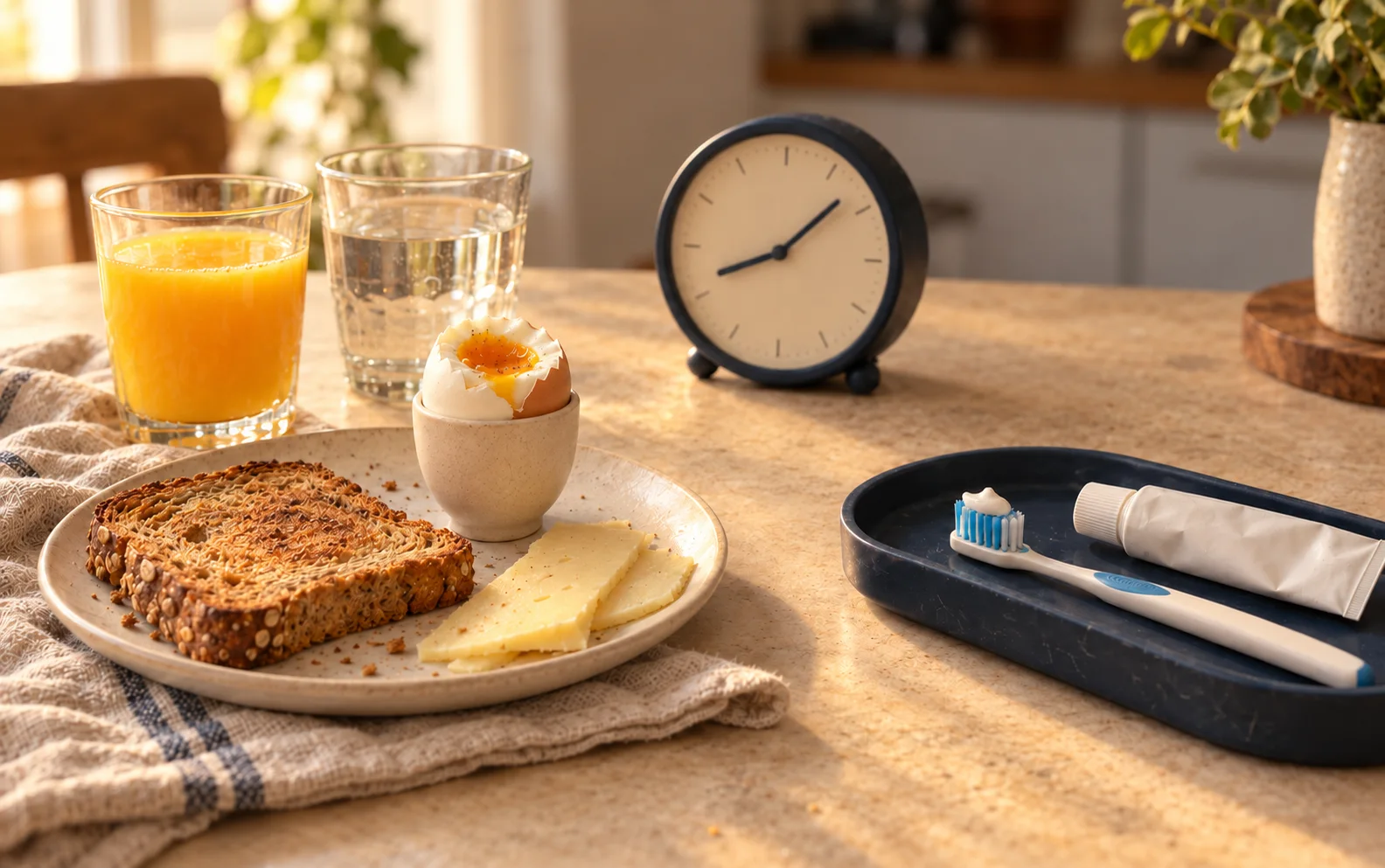
Det finnes ingen eneste riktig time for morgenpussen. Den som pusser før frokost, starter ikke dagen med plakket fra natten. Den som pusser etterpå, fjerner det måltidet la igjen. Den virkelige forskjellen kommer av hva du spiser og drikker ved bordet.
Hva det gjør å pusse før frokost
Spyttmengden faller mens du sover, og munnen tørker ut. Bakterier formerer seg lett i de timene, og plakk setter seg på tannflaten, og det er derfor munnen kjennes ru med én gang du våkner. Å pusse før frokost løfter bort det plakket. Fluoren i tannkremen når også tennene før måltidet, så en tynn beskyttende hinne ligger på emaljen mens du spiser.
Hva det gjør å pusse etter frokost
Etter måltidet tar børsten ut det som blir liggende mellom tennene og i furene på de bakre tennene. Var det syltetøy, honning, søtet frokostblanding eller sukker i teen, bruker sukkeret kortere tid på emaljen. Ånden kjennes friskere også. Er ingenting på bordet surt, gir det ingen trøbbel å pusse rett etter frokosten.
En sur frokost utsetter pussen
Sur mat og drikke gjør overflaten på emaljen myk en kort stund. Dette er ingen skade som ikke kan gjøres om: spyttet nøytraliserer syren i løpet av minutter, og overflaten blir hard igjen. Pusser du i det myke vinduet, slites derimot litt av den myke overflaten bort. Gjentar det seg gjennom år, blir emaljen tynnere, og tennene reagerer tidligere på kulde.
- Appelsin-, grapefrukt- og sitronjuice
- Varme drikker med sitron og frukttrekk
- Brus og smakstilsatt kullsyreholdig vann
- Eddikdressinger og sylteagurk
- Sure frukter som kiwi, ananas og sitrus
Etter noe surt er det vanlig praksis å vente 30–60 minutter før du pusser. I mellomtiden kan du skylle med rent vann, som fortynner syren; et glass melk eller en skive ost hjelper i tillegg med å nøytralisere den. Å tygge sukkerfri tyggegummi øker spyttmengden, og emaljen kommer seg tidligere.
Mens morgenen blir kranglet om, er det kveldspussen som stille blir hoppet over, og det er den som gjør munnen klar for de timene spyttet renner minst.
Refluks, tørr munn og kvalme om morgenen
Av og til kommer syren fra inne i kroppen framfor fra frokosten. Når magesyre når munnen gjennom natten, eller når kvalme om morgenen ender i oppkast, arbeider en børste brukt i det øyeblikket du våkner, på emalje som alt er blitt myk. På slike morgener er det tryggere å skylle med rikelig vann først og la børsten ligge en stund. Der munnen er vedvarende tørr, holder spyttet syren dårligere i sjakk, så å drikke vann gjennom dagen teller like mye som ventingen. Skjer dette stadig, er saken verdt å ta opp med en lege.
Hva som betyr mer enn klokken
Debatten om tidspunktet bør ikke overskygge selve pussingen. To minutter, to ganger om dagen, med en tannkrem med fluor avgjør langt mer enn timen på klokken. Å skylle munnen med vann etterpå vasker bort fluoren tannkremen la igjen; å spytte ut kremen og la være å skylle lar mer av den bli på tennene. Rens mellom tennene når de flatene en børste ikke kommer inn på.
Ofte stilte spørsmål
Er det riktigere å pusse før eller etter frokost?
Det finnes ikke ett riktig svar. Er morgenen travel eller glemmer du lett å pusse, er vanen lettere å holde når du pusser før frokost; pusser du etter måltidet, blir munnen renere. På lang sikt betyr det mest å holde fast ved den rekkefølgen du velger, hver morgen.
Hvor lenge bør du vente med å pusse etter frokost?
Har du spist eller drukket noe surt, er det vanlig praksis å vente 30–60 minutter. I løpet av den tiden nøytraliserer spyttet syren, og emaljeoverflaten blir hard igjen.
Erstatter det å skylle med vann tannpussen?
Det gjør det ikke. Vann hjelper til å tynne ut syren og skylle bort løse rester, men det løfter ikke plakk. Plakk går bare av med en børste og med rens mellom tennene; å skylle er skrittet du tar mens du venter.
Gjør det en forskjell å drikke appelsinjuice med sugerør?
Det gjør en viss forskjell. Et sugerør gjør at mindre av drikken skyller over forflatene på tennene i overkjeven. Syren blir likevel i munnen, så et sugerør erstatter ikke det å vente før du pusser.
Vil det å pusse før frokost ødelegge smaken på maten?
Skummemiddelet i noen tannkremer kan endre smaken en kort stund. Å vente noen minutter etter pussen, eller å gå over til en tannkrem med mildere myntesmak, løser problemet for de fleste.
Hvilken rekkefølge er lettest å holde med barn?
I morgenstresset er det lettere å få til å pusse før frokost i de fleste hjem, fordi børsten gjerne blir hoppet over når det nærmer seg tid for å gå. Er det juice eller sure frukter på barnets frokost, er den rekkefølgen uansett den tryggeste.
Dette innholdet er til generell informasjon og erstatter ikke en undersøkelse.
Utarbeidet av
Nilufar Tulanova Şener
Faglig gjennomgått av: Elif Teke, Spesialist i periodonti
Denne artikkelen bygger på den kliniske erfaringen til teamet hos Papatya Dental og blir gjennomgått for riktighet før publisering.
- Sist oppdatert:
- 2026-09-21
- Redaksjonell kontakt:
- icerik@papatyadental.com