

Surgical Treatments
An implant approach that takes support from cortical bone when bone volume has reduced
Corticobasal implants are one-piece implants designed to take their support from the hard, dense cortical layer on the outer surface of the jawbone. For some patients whose bone height or width has reduced, they can be considered without additional procedures such as a bone graft or sinus lift. They are mostly used in full-arch or extensive treatments, where several implants are joined by a fixed bridge and loaded within a short time. Whether they suit you is decided with a 3D scan and a detailed examination.
Not ready to book yet?
Chat with our expert team
These photos and videos were taken at our clinic with real patients. No AI was used.
The jawbone has two layers: a thin but hard and dense cortical shell on the outside, and more porous spongy bone inside. Conventional implants are mostly placed in the spongy bone, and a healing period of usually two to six months is needed for them to fuse with the bone. Corticobasal implants, by contrast, are placed so that their tip or horizontal disc sits in the cortical layer, often in the second cortex on the opposite side.
These implants are usually one-piece: the part inside the bone and the part that reaches into the mouth are made together. Thanks to their slim body, they can also be planned in areas where the bone has become narrower, and in most cases they are placed without opening the gum (a closed, flapless technique).
The support taken from cortical bone allows the implants, in suitable cases, to carry a fixed bridge within a short time. For this reason corticobasal implants are mostly used with an immediate loading protocol. For some patients whose bone volume has reduced and who have been advised to have a bone graft or sinus lift for conventional implants, they can be considered as an alternative.
The hard, dense outer layer of the jawbone (cortical bone)
Mostly a one-piece implant with a slim body
In suitable cases, loading with a fixed bridge within a short time; suitability is decided at the examination
In some cases with reduced bone volume, it can be planned without a graft
3D scan (CBCT) and bite analysis
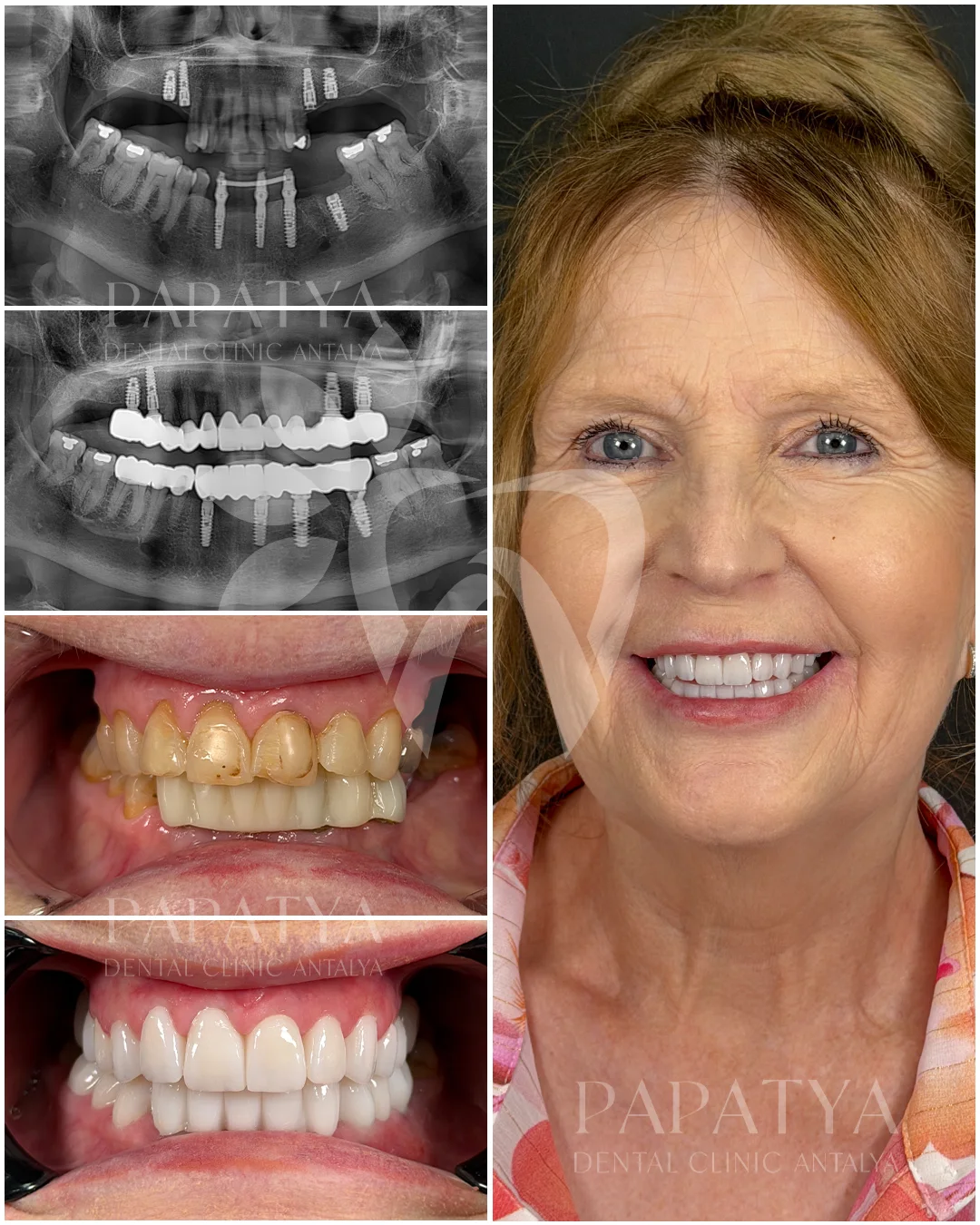
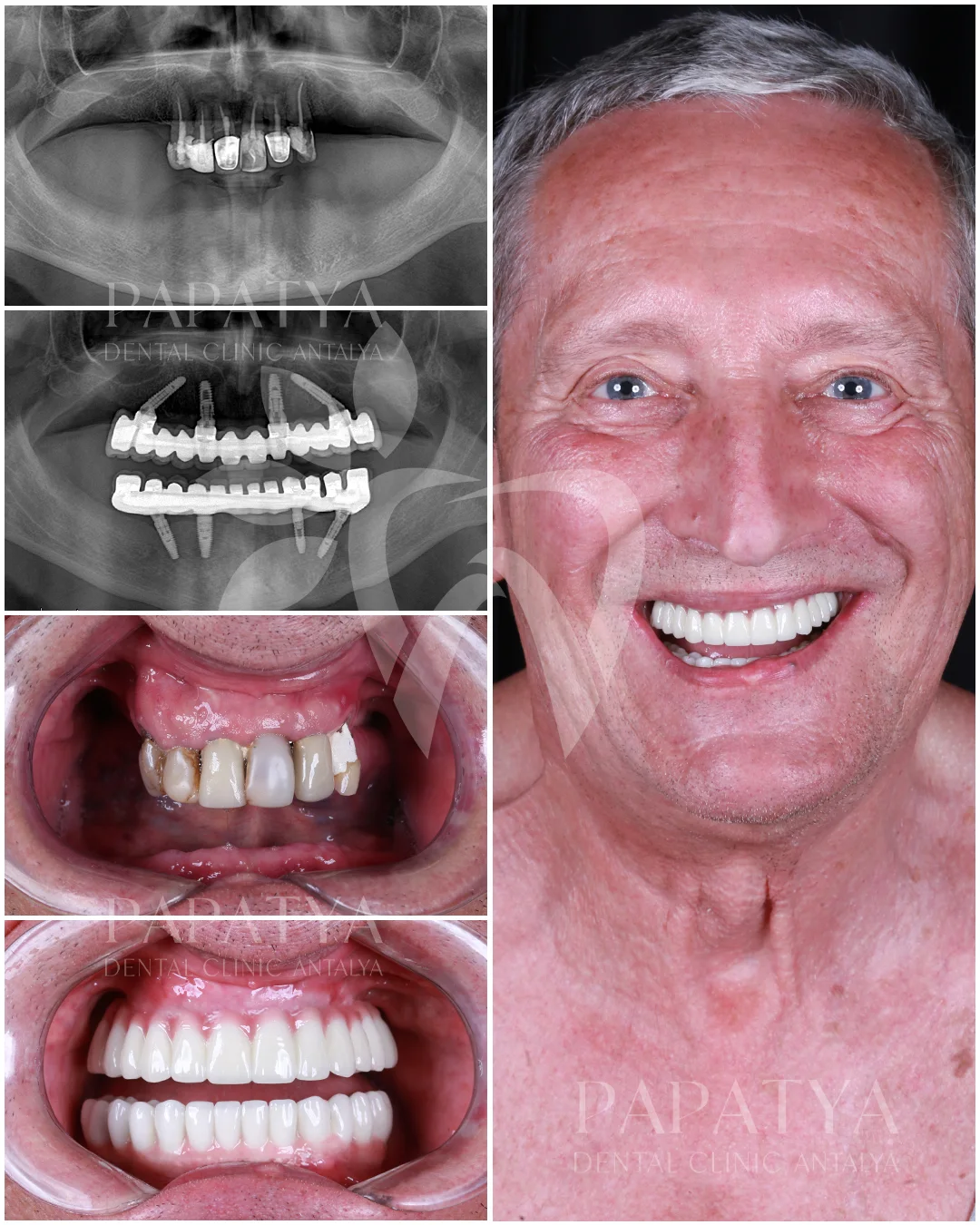
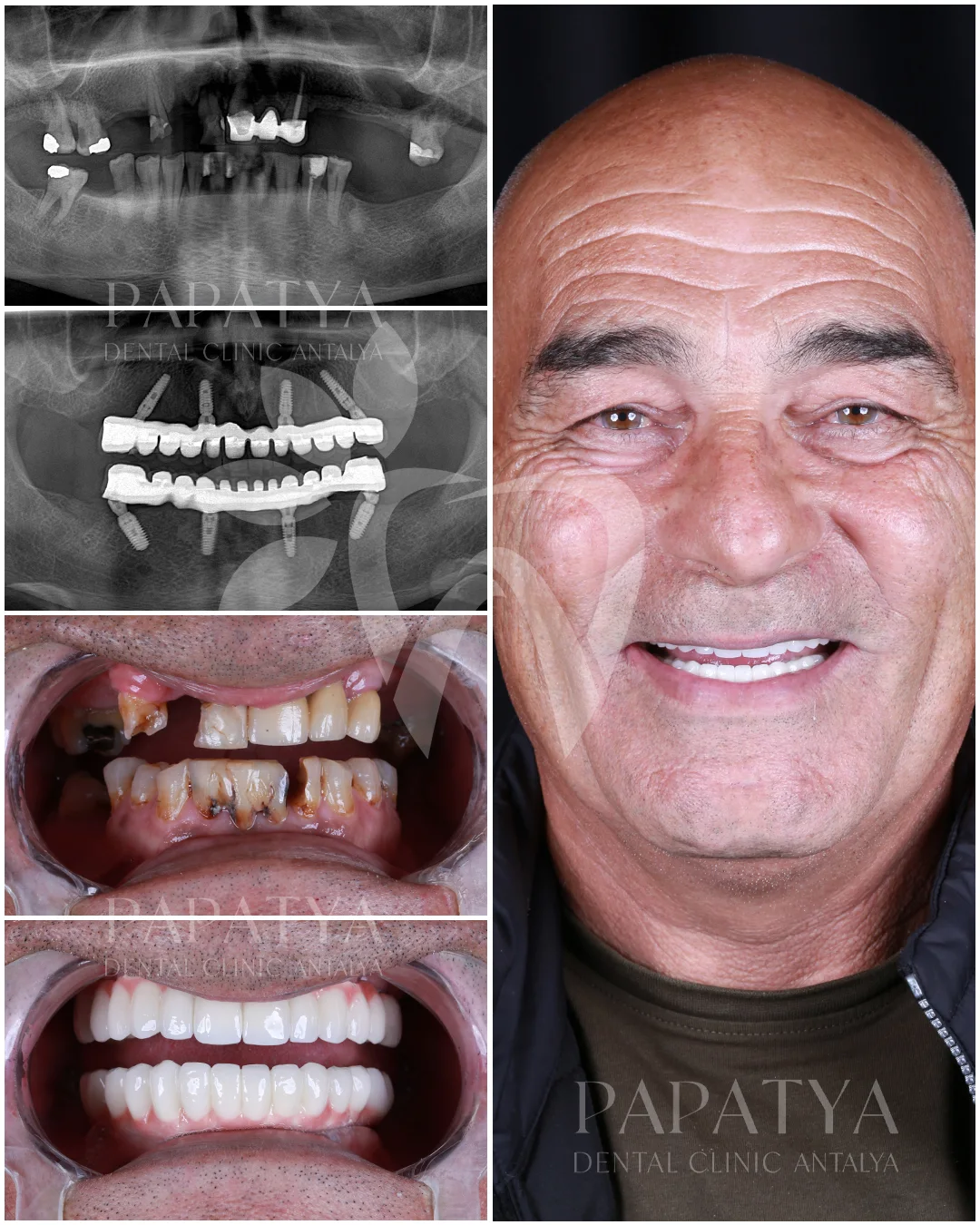
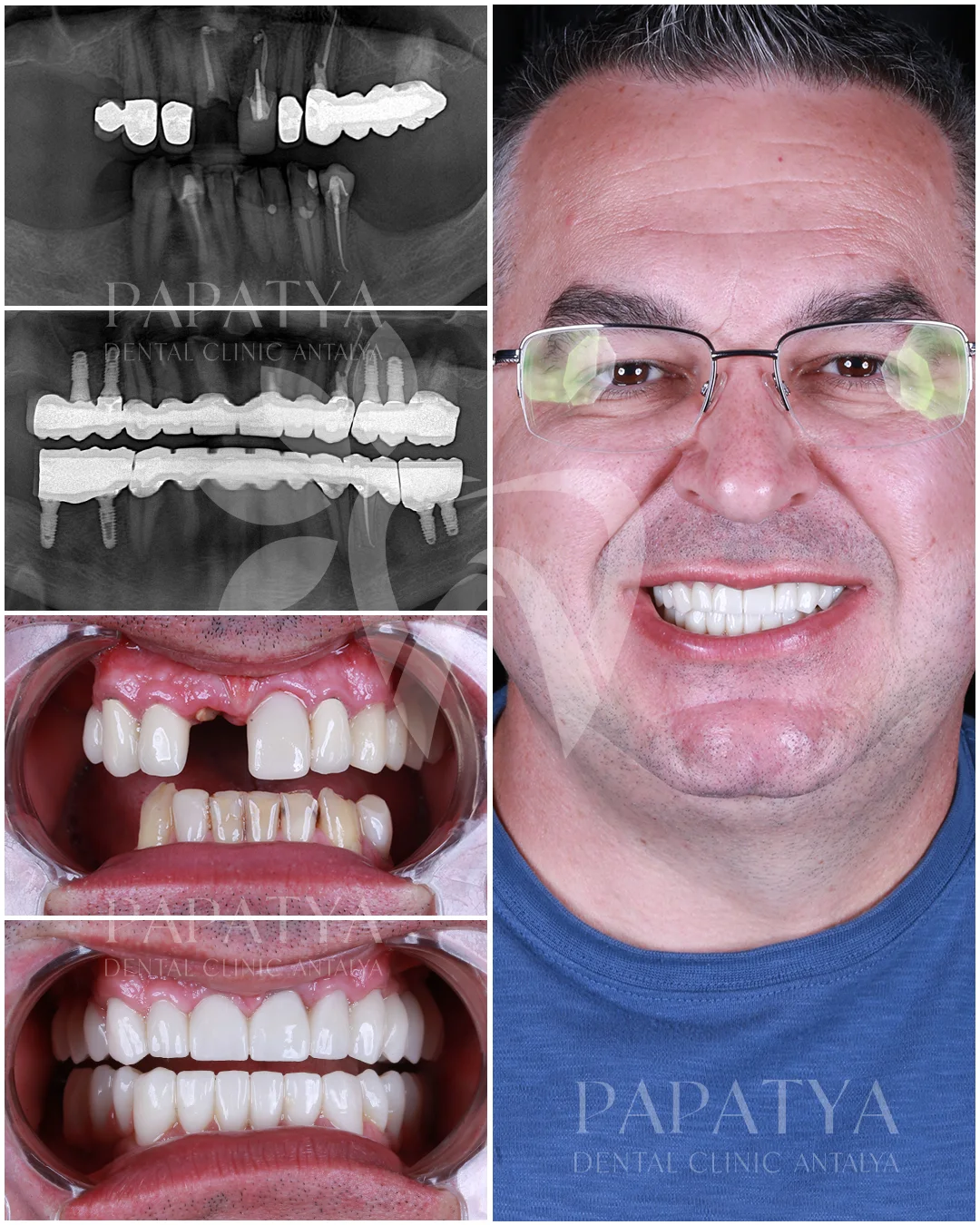
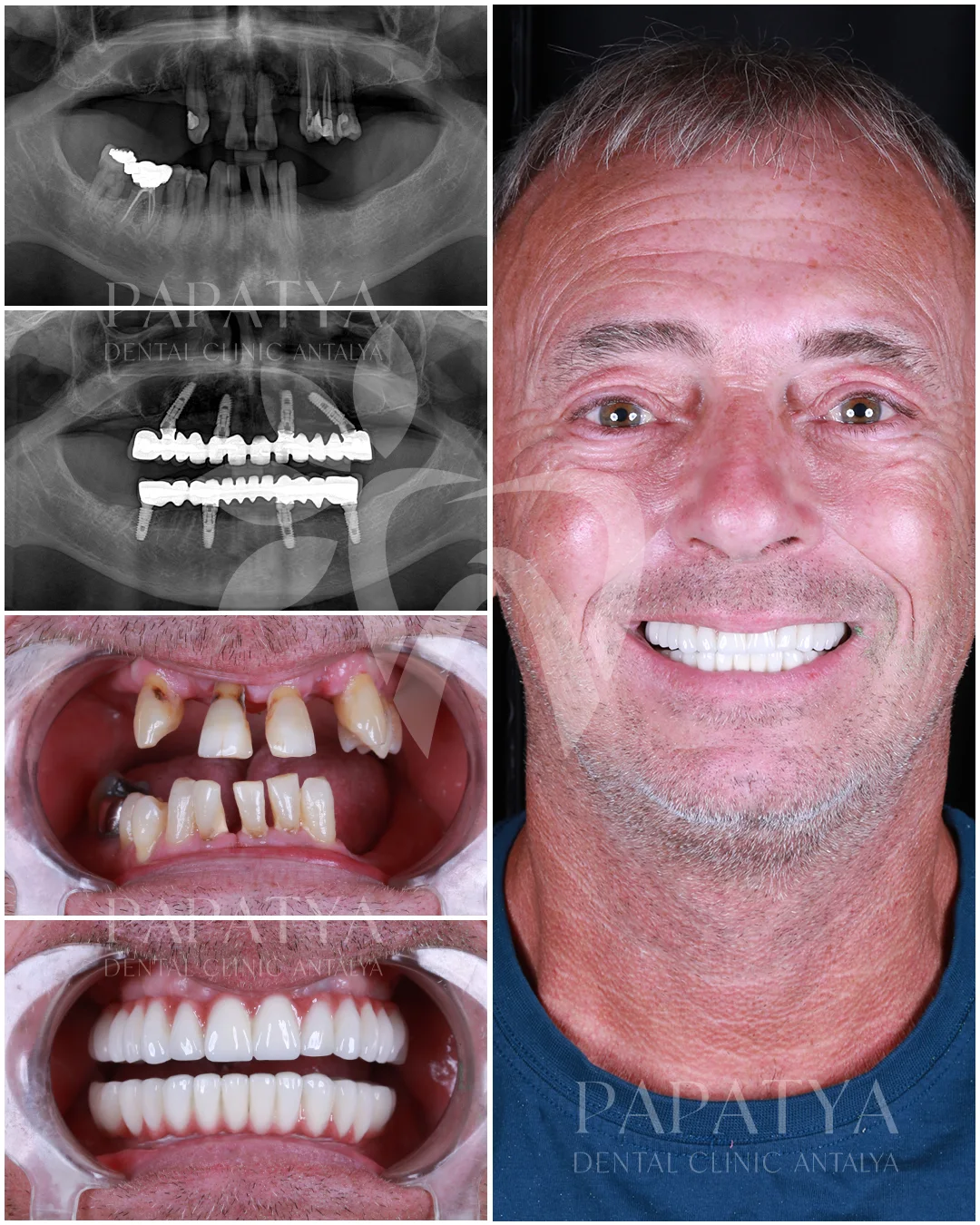
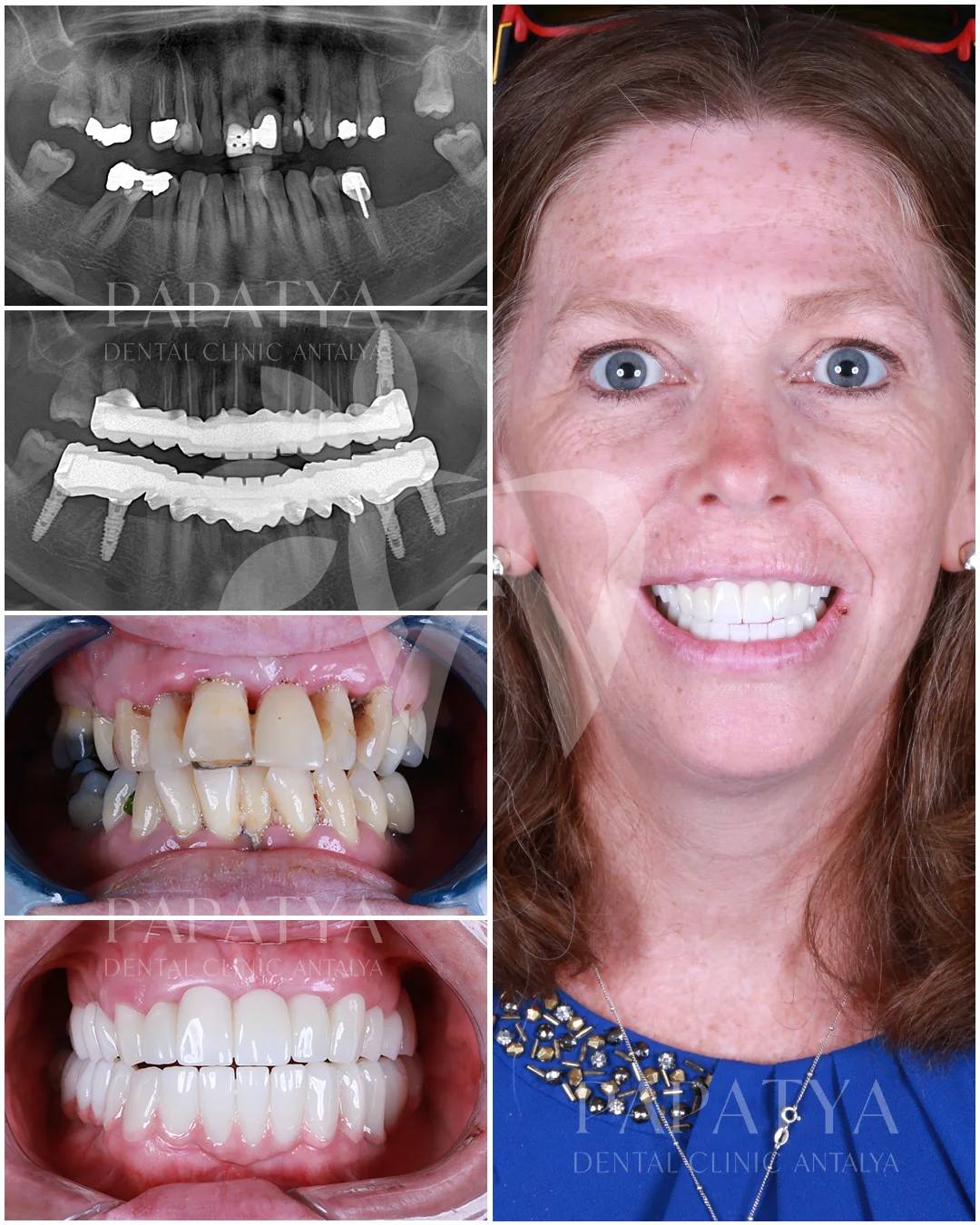
These photos and videos were taken at our clinic with real patients. No AI was used.
Videos
Patients who travelled to Antalya talk about their treatment and their days at the clinic, and the treatment videos show you the steps. Each story is that patient's own experience; your plan is decided after your examination.
These photos and videos were taken at our clinic with real patients. No AI was used.
Corticobasal implants are not the first choice for every patient. They can be considered in the situations below; the final decision is made after the examination and scan.
Some patients whose bone height or width is not enough for conventional implants and who have been advised to have a bone graft.
Some patients who have been advised to have a sinus lift because there is little bone height at the back of the upper jaw.
People who wear removable dentures and those who need most of their teeth removed.
People who are advised against extra procedures such as grafts because of their general health and who are found clinically suitable.
The scan shows whether the cortical layer the implant will sit in is present and how thick it is.
The teeth in the opposite jaw and any clenching or grinding habit affect the plan.
How well diabetes is controlled, the medicines you take and smoking are all reviewed.
Implant surgery may be postponed until your blood sugar is under control.
People who take medicines such as bisphosphonates, or who have had radiotherapy to the head and neck area, need a detailed assessment.
Corticobasal implants are mostly used in treatments where several implants are joined together; for a single missing tooth, a conventional implant is usually preferred.
Corticobasal implants are also a surgical procedure and have known risks. Most of the scientific literature on this approach consists of case series and observational studies; long-term controlled studies comparing them with conventional implants are limited.
Pain, swelling, bleeding and bruising can occur; they usually ease within the first few days.
One of the implants may not fuse with the bone. In that case it may need to be placed again, or the bridge may need adjusting.
If chewing forces are spread unevenly, bone loss around an implant or a broken bridge can occur; this is why regular bite checks matter.
Careful planning is needed close to structures such as the sinus and the nerve canal; numbness can occur in rare cases.
Corticobasal implant treatment is a process in which the surgical and prosthetic stages are planned together. The order and length of the stages depend on your bone structure and the area being treated.
An examination of your mouth, your medical history and a 3D scan show where the cortical bone is, how thick it is and how close it lies to structures such as the sinus and the nerve canal.
The number of implants, their angle and the cortical area each one will sit in are decided. The design of the bridge that will join the implants together is planned at this stage too.
Any extractions needed and the placement of the implants are mostly done in the same session, under local anaesthetic. The implants are usually placed without opening the gum.
After surgery, impressions are taken and the fixed bridge that joins the implants is made in the laboratory.
In suitable cases the fixed bridge is fitted within a short time, and the bite is adjusted so that chewing forces are spread evenly on both sides.
Regular check-ups take place during healing and afterwards; the bite is readjusted when needed.
When the jaw has reduced bone volume, there may be more than one way to treat it. The choice depends on your bone structure, your general health and what you expect from treatment.
The missing bone is first rebuilt with a graft, and the implants are placed after it heals. This approach has the most extensive long-term scientific evidence, but treatment takes longer.
At the back of the upper jaw, the sinus floor is raised to make room for the implant.
In some areas where bone height is limited, treatment can be planned with shorter conventional implants without a graft.
In a jaw with no teeth, a fixed bridge is placed on four or six conventional implants, some of them placed at an angle.
With corticobasal implants, two of the most important factors for success are placing the implants in the right cortical area and making sure the bridge spreads the forces evenly across all of them. That is why the surgery and the bridge are planned together.
The position and thickness of the cortical bone and anatomical structures such as the sinus and the nerve canal are examined in three dimensions.
The angle of each implant and the cortical area it will sit in are planned on the computer.
The fixed bridge that joins the implants is made in the clinic's CAD/CAM laboratory.
Because corticobasal implants are mostly placed without opening the gum, swelling and pain in the first days are usually limited; even so, healing differs from person to person. Your dentist's advice on care, eating and check-ups always comes first.
Mild pain, swelling and some oozing can occur. Cold compresses and the painkillers your dentist recommends help.
While the implants continue to fuse with the bone, you follow a soft diet and avoid hard and sticky foods.
Your bite and bridge are checked at your check-ups. The bridge and the bite are readjusted if needed.
Clean under the bridge and around the implants every day with an interdental brush or a water flosser.
With corticobasal implants it matters that forces are spread evenly on both sides; do not skip regular bite checks.
Smoking harms healing and the health of the tissues around the implants; stopping during the healing period is recommended.
If pain gets worse instead of easing, or you notice widespread swelling, a fever, a bad taste or discharge, your dentist needs to see you.
If the bridge feels loose or breaks, or your teeth start to meet differently, your dentist needs to see you without delay.
The scope of corticobasal implant treatment depends on how many jaws are treated, the number of implants, the teeth to be removed and the design of the bridge. Your treatment plan is drawn up after the examination and scan.
Whether treatment covers the upper jaw, the lower jaw or both sets the scope of the plan.
The number of implants, decided by your bone structure and bite, affects both the surgical and the prosthetic stages.
Removing teeth that cannot be saved and treating any infection in the area are handled within the same plan.
The material and design of the fixed bridge that joins the implants are chosen for each person.
Conventional implants are mostly placed in spongy bone, and they usually need two to six months to fuse with it. Corticobasal implants take their support from the hard outer layer of the jawbone; this means that in suitable cases they can carry a fixed bridge within a short time and can be planned without a graft in some jaws with reduced bone volume.
Not always. For some patients with reduced bone volume, a plan with corticobasal implants and no graft can be considered. Whether this is possible is decided by looking at the cortical bone on the scan.
In suitable cases the fixed bridge that joins the implants can be fitted within a short time, often in the first few days. This is not a promise; it can change depending on what is found during surgery and how you heal.
It can be considered for patients whose diabetes is under control. How well your blood sugar is controlled and any other conditions that may affect wound healing are taken into account in the plan.
Usually not. Corticobasal implants are mostly used in treatments where several implants are joined together; for a single missing tooth, a conventional implant is more often the choice.
Most publications on corticobasal implants are case series and observational studies. Long-term controlled studies comparing them with conventional implants are limited. This is why the choice of treatment is weighed together with your bone structure and the alternatives.
Discover our full range of treatments
Leave your details and our team will get back to you shortly.
Cookies We use cookies to measure how the site is used. If you decline, the site works exactly the same; we simply do not measure.