

What Is a Sinus Lift?
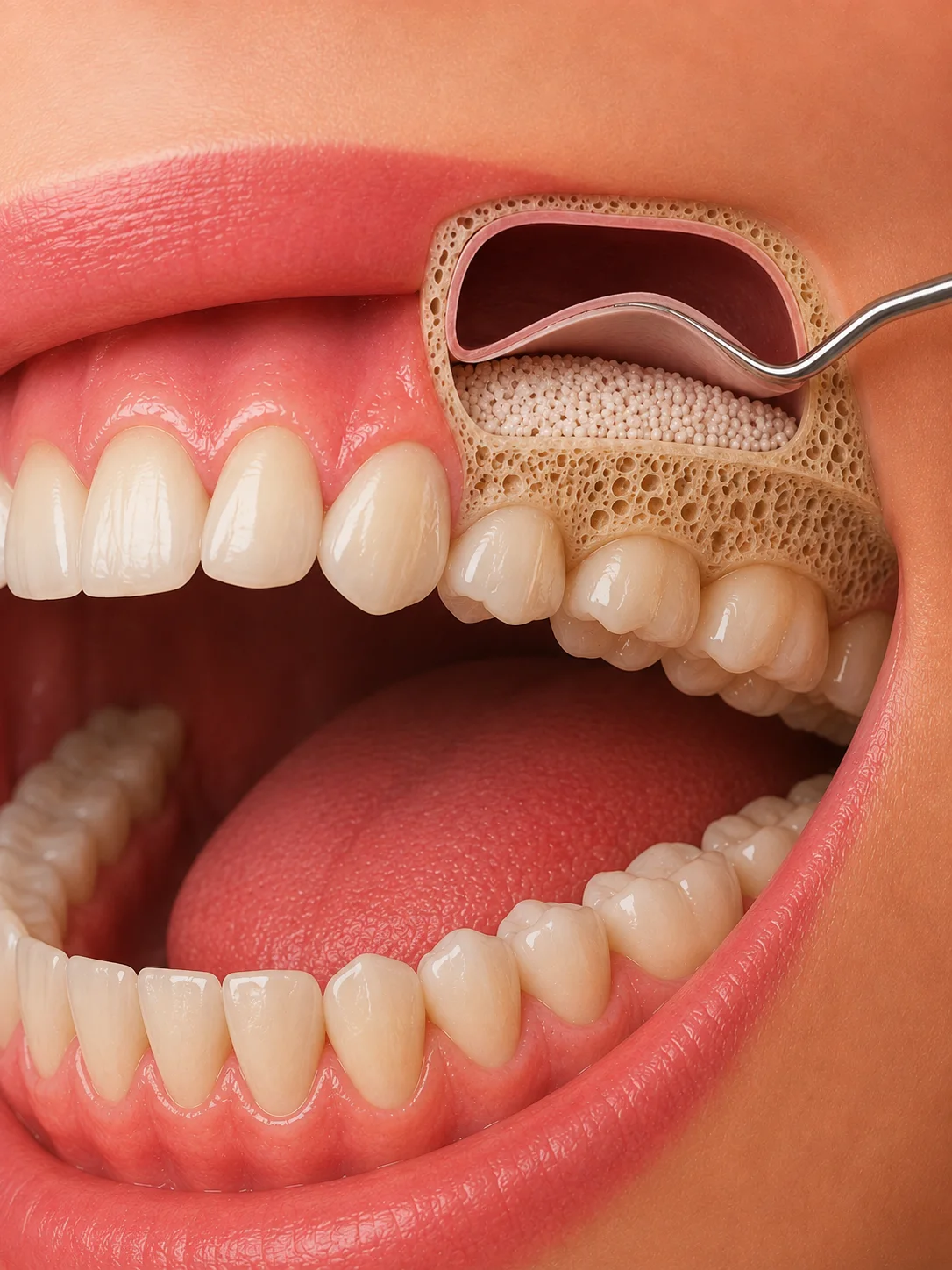
A sinus lift, also known as sinus floor elevation, is a surgical procedure performed when there is insufficient bone volume in the posterior region of the upper jaw due to tooth loss.
During the procedure, the sinus membrane is carefully lifted and bone graft material is placed in the space created. During healing, the graft material integrates with the jawbone and helps form the bone support required for implant treatment.
Before treatment, a detailed evaluation is performed using panoramic X-rays and, when necessary, three-dimensional dental tomography (CBCT). A personalized treatment plan is prepared based on the findings. In suitable cases, implant placement can be planned during the same appointment. When necessary, the procedure is performed before implant treatment.
Who Is It Suitable For?
Sinus lift treatment may be considered for patients who:
- Are planning to have implants placed in the posterior region of the upper jaw,
- Do not have sufficient bone height for implant placement,
- Have experienced bone loss due to long-term tooth loss,
- Require increased bone support before implant treatment.
Suitability for treatment is determined following a clinical examination and three-dimensional imaging.
Situations That May Be Considered
Patients With Insufficient Bone Height in the Upper Jaw
- It may be performed in patients with bone loss resulting from long-term tooth loss.
Patients Planning Implant Treatment
- It may be considered to create sufficient bone support before implant placement.
Patients Who Have Experienced Bone Loss After Tooth Extraction
- It may be performed before implant treatment when bone loss has occurred following tooth extraction.
Patients Who Require Stronger Bone Support for Implants
- It is one of the preparatory procedures that may be performed to enable implant treatment to be planned.
Treatment Process
1. Examination and Digital Evaluation
- The sinus structure and bone height are examined in detail using panoramic X-rays and, when necessary, three-dimensional CBCT imaging.
2. Treatment Planning
- The amount of bone is assessed and the most suitable treatment plan is prepared for the patient. In suitable cases, implant placement can be planned during the same appointment.
3. Sinus Lift Procedure
- The procedure is performed under local anesthesia. The sinus membrane is carefully lifted, and bone graft material is applied to the relevant area.
4. Healing Process
- Healing is monitored through regular check-ups. Implant treatment can be planned once sufficient bone support has formed.
Who Carries Out Your Treatment?
At Papatya Dental Clinic, this treatment is carried out by specialists in oral and maxillofacial surgery and periodontology:
- Ozan Ergen, Specialist in Oral, Dental and Maxillofacial Surgery: Hacettepe University, specialist training at Dicle University, 16 years of experience, member of ITI (International Team for Implantology)
- Ali Bulut, Specialist Oral, Dental and Maxillofacial Surgeon: Ankara University, specialist training at Süleyman Demirel University, 10 years of experience, member of ITI
- Assoc. Prof. Gülen Kamak, Specialist in Periodontology and Implantology: Selçuk University, doctoral and specialist training at Atatürk University, 20 years of experience, member of ITI and the European Federation of Periodontology
- Elif Teke, Specialist Periodontist: Ankara University, specialty training at Süleyman Demirel University, 13 years of experience, member of ITI
Planning, laboratory and implant systems
- 3D CT (CBCT) scan to measure bone height and width before surgery
- Grafting and the later implant surgery are carried out by the same surgical team
- A wide choice of implant systems, including Straumann, Nobel Biocare, Neodent, Osstem, MegaGen and Dentium for the implant stage
- You receive an implant card for every implant placed. The warranty period depends on the implant system used.
Which treatment suits you is decided after a clinical examination and a CT scan.