
What mouthwash cannot replace
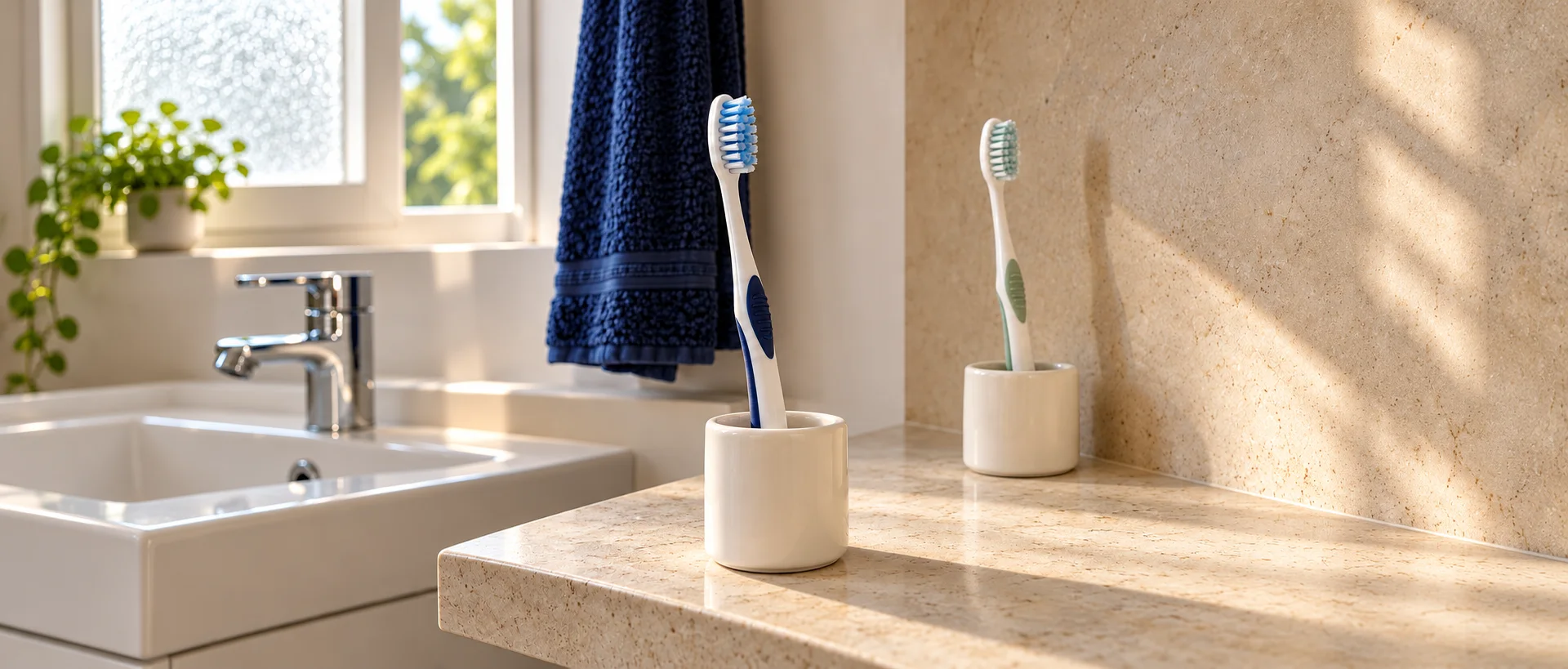
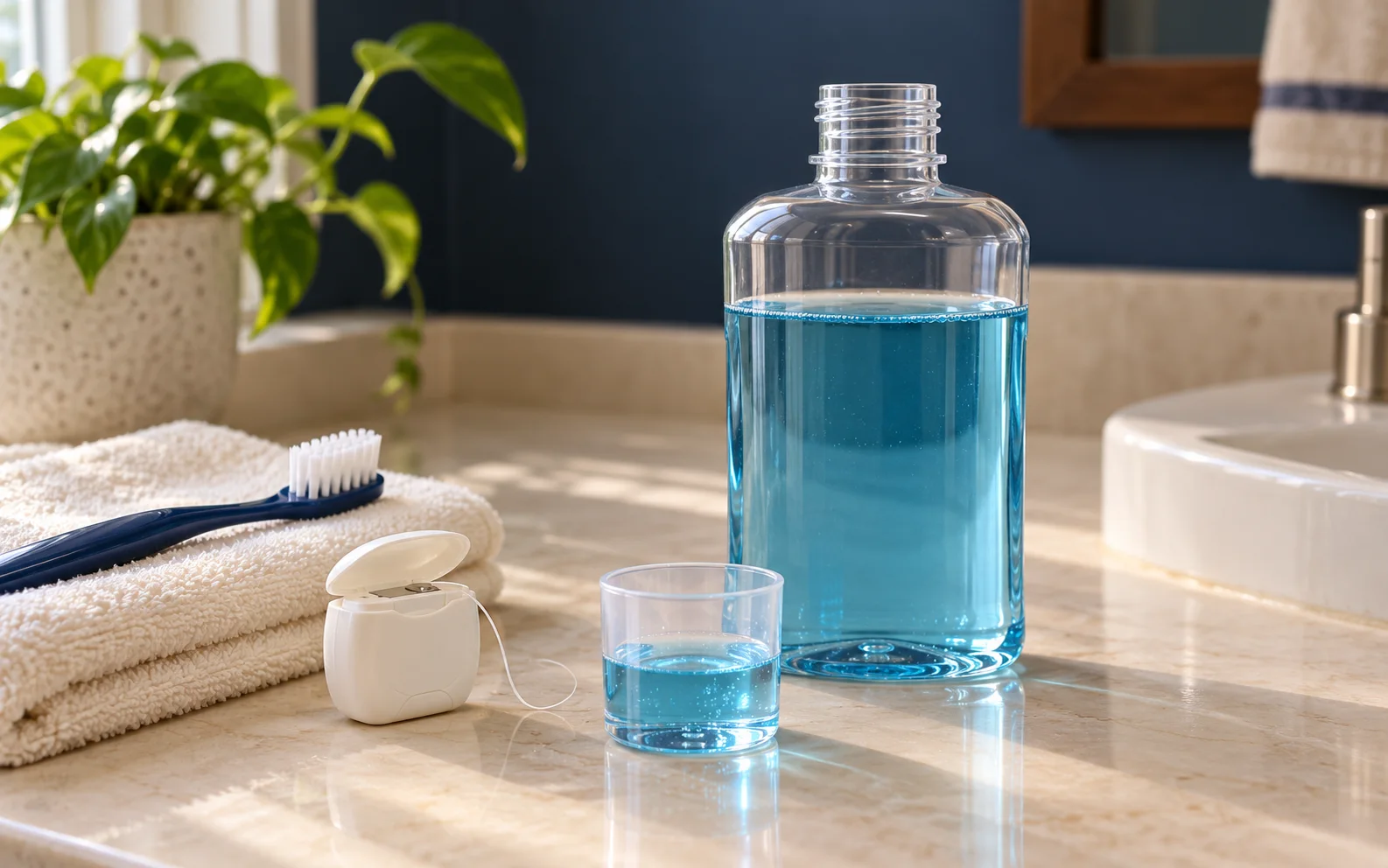
Plaque is a soft but sticky film. It does not float off when liquid is swished around the mouth; it comes away through friction. That is why a rinse does not stand in for a toothbrush and floss. Decay and gum trouble most often begin between the teeth, and only floss or an interdental brush reaches those surfaces. Mouthwash is a thin layer added to a clean surface; it does not rescue a surface that was never cleaned.
What a fluoride rinse does
Of all the rinses, the fluoride ones have the clearest effect. Fluoride stays on the enamel surface, makes it more resistant to acid attacks and slows down decay that has only just started. Used once a day, it adds one more contact with fluoride on top of a fluoride toothpaste. Not everybody needs that; it becomes worthwhile where the risk of decay is high.
- People who get cavities often or have had several fillings recently
- Anyone wearing fixed braces, a bridge or an implant-retained denture
- People with a dry mouth, because saliva protects less
- People whose hand movement is limited, which makes brushing harder
- Anyone whose gums have receded and left root surfaces exposed
Rinsing straight after brushing
If you reach for the mouthwash the moment you finish brushing, you wash away the fluoride the toothpaste has left behind. Fluoride needs time on the tooth surface to do anything at all. Spitting the paste out and leaving the mouth unrinsed is the usual advice, with the rinse moved to another point in the day. Mid-afternoon, or any gap between two brushings, works well for it.
Why chlorhexidine is not for daily use
A chlorhexidine rinse brings the number of bacteria in the mouth down quickly. It is normally used for a short, defined period set by a dentist: after gum surgery, while a sore is healing, or when brushing is temporarily impossible. Kept up for longer, it leaves brown stains on the teeth and at the edges of fillings, dulls taste for a while and can increase the build-up of tartar. The staining usually comes off with a clean at the practice, but that is a separate visit. A chlorhexidine rinse is not used straight after toothpaste; leave at least half an hour in between.
A mouthwash that stings is not cleaning more thoroughly; most of that sting comes from the alcohol.
Who an alcohol-based rinse does not suit
Alcohol gives a rinse its sharp taste, but it is not the ingredient doing the work. For people with a dry mouth, for anyone who has had radiotherapy to the head and neck, and for people who must stay away from alcohol, an alcohol-based rinse burns and can make the dryness worse. The same active ingredients are widely sold in alcohol-free versions, so choose one of those if your mouth feels dry.
Children, and what to look for on the label
Below the age of six a mouthwash is generally unsuitable, because a child may swallow the liquid. For older children it is given under adult supervision, and only once the child can swish and spit without swallowing. For adults, too, not every bottle is meant for daily use, and reading the label settles which is which.
- Fluoride strength: the label gives it in ppm, and daily rinses contain far less than a toothpaste does
- Directions: wording such as 'for daily use' or 'for short-term use' tells you how long the product is meant to be used
- Age: most labels state the age from which the rinse can be used; check it before choosing one for a child
Frequently asked questions
Can mouthwash be used instead of floss?
No. Even where a rinse reaches between the teeth, it cannot lift the plaque there. If flossing is difficult for you, there are alternatives such as interdental brushes or a water flosser; ask your dentist which one suits your teeth.
How often should mouthwash be used?
Once a day suits most products, and the label sets the frequency. Using it more often adds nothing; with chlorhexidine, both the frequency and the length of the course are set by a dentist.
Is it bad to rinse right after brushing?
It is not harmful, but it washes off the fluoride the toothpaste has just left behind, so part of the benefit of brushing goes with it. Leave half an hour, or move the rinse to another time of day.
Does mouthwash fix bad breath?
It covers the smell for a while without removing the source, which is usually a coating on the back of the tongue, inflamed gums or a cavity. If the smell keeps coming back, have a dentist look at it.
Is an alcohol-free rinse weaker?
No. The work is done by the fluoride or the antibacterial ingredient, not by the alcohol, which mostly adds a sharp taste and a sting.
Is a salt water rinse enough?
Salt water can soothe a sore spot or swollen gums for a while. It does not break up plaque, stop decay or supply fluoride.
This content is for general information only and does not replace an examination.
Edited by
Eren Koluaçık
Medically reviewed by: Elif Teke, Specialist Periodontist
This article draws on the clinical experience of the Papatya Dental team and is reviewed for accuracy before publication.
- Last updated:
- 2026-09-21
- Editorial contact:
- icerik@papatyadental.com