
Czego płyn do płukania nie zastąpi
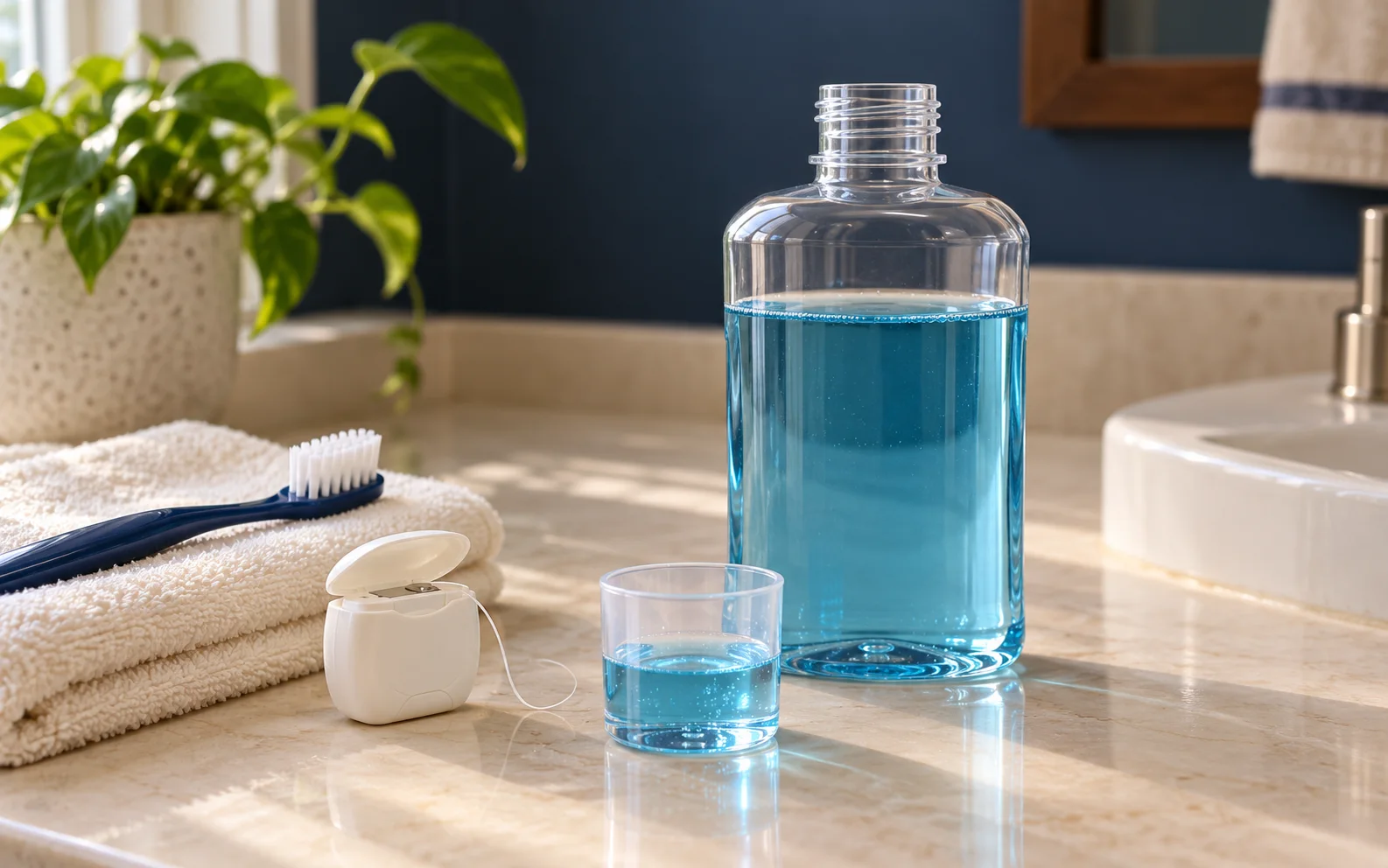
Płytka nazębna to miękka, ale lepka warstwa. Nie odpływa, kiedy przepłukujesz usta płynem; schodzi przez tarcie. Dlatego płukanka nie zastępuje szczoteczki i nici. Próchnica i kłopoty z dziąsłami najczęściej zaczynają się między zębami, a do tych powierzchni sięga tylko nić albo szczoteczka międzyzębowa. Płyn do płukania to cienka warstwa dołożona do czystej powierzchni; nie ratuje powierzchni, której nigdy nie wyczyszczono.
Co robi płukanka z fluorem
Ze wszystkich płukanek te z fluorem mają najwyraźniejsze działanie. Fluor zostaje na powierzchni szkliwa, czyni je odporniejszym na ataki kwasów i spowalnia próchnicę, która dopiero się zaczęła. Używana raz dziennie, dokłada jeszcze jeden kontakt z fluorem do tego, który daje pasta z fluorem. Nie każdy tego potrzebuje; nabiera sensu tam, gdzie ryzyko próchnicy jest wysokie.
- Osoby, u których ubytki pojawiają się często albo które ostatnio miały kilka wypełnień
- Każdy, kto nosi stały aparat ortodontyczny, most albo protezę osadzoną na implantach
- Osoby, którym zasycha w ustach, bo ślina chroni wtedy słabiej
- Osoby z ograniczoną sprawnością rąk, którym trudniej jest szczotkować zęby
- Każdy, komu cofnęły się dziąsła i odsłoniły powierzchnie korzeni
Płukanie zaraz po szczotkowaniu
Jeśli sięgasz po płyn do płukania w chwili, gdy kończysz szczotkowanie, spłukujesz fluor, który zostawiła pasta. Fluor potrzebuje czasu na powierzchni zęba, żeby w ogóle cokolwiek zrobić. Zwykle radzi się wypluć pastę i nie płukać ust, a płukankę przesunąć na inny moment dnia. Dobrze nadaje się na to popołudnie albo dowolna przerwa między dwoma myciami.
Dlaczego chlorheksydyna nie jest do codziennego użytku
Płukanka z chlorheksydyną szybko obniża liczbę bakterii w jamie ustnej. Stosuje się ją zwykle przez krótki, określony czas wyznaczony przez dentystę: po zabiegu na dziąsłach, w czasie gojenia rany albo wtedy, gdy szczotkowanie jest chwilowo niemożliwe. Używana dłużej, zostawia brązowe przebarwienia na zębach i na brzegach wypełnień, na jakiś czas przytępia smak i może nasilić odkładanie kamienia. Przebarwienia zwykle schodzą przy czyszczeniu w gabinecie, ale to osobna wizyta. Płukanki z chlorheksydyną nie stosuje się bezpośrednio po paście do zębów; między nimi zostawia się co najmniej pół godziny.
Płyn, który szczypie, nie czyści dokładniej; większość tego szczypania bierze się z alkoholu.
Komu nie odpowiada płukanka na alkoholu
Alkohol nadaje płukance ostry smak, ale to nie on wykonuje pracę. Osobom z suchością w ustach, każdemu po radioterapii głowy i szyi oraz osobom, które muszą trzymać się z dala od alkoholu, płukanka na alkoholu piecze i może pogłębić suchość. Te same substancje czynne są szeroko dostępne w wersjach bezalkoholowych, więc wybierz jedną z nich, jeśli czujesz suchość w ustach.
Dzieci i to, na co patrzeć na etykiecie
Poniżej szóstego roku życia płyn do płukania zasadniczo się nie nadaje, bo dziecko może połknąć płyn. Starszym dzieciom podaje się go pod okiem osoby dorosłej i dopiero wtedy, gdy dziecko potrafi wypłukać usta i wypluć płyn, nie połykając go. U dorosłych też nie każda butelka jest przeznaczona do codziennego użytku, a przeczytanie etykiety rozstrzyga, która jest która.
- Stężenie fluoru: podaje się je na etykiecie w ppm, a w płukankach do codziennego użytku jest go znacznie mniej niż w paście
- Czas stosowania: dopiski w rodzaju „do codziennego stosowania” albo „do krótkotrwałego stosowania” mówią, jak długo produkt ma być używany
- Wiek: na większości etykiet podano, od jakiego wieku można używać płukanki; sprawdź to, zanim wybierzesz ją dla dziecka
Najczęściej zadawane pytania
Czy płukanka może zastąpić nić dentystyczną?
Nie. Nawet jeśli płukanka dociera między zęby, nie usuwa stamtąd płytki. Jeśli nitkowanie sprawia ci trudność, są inne możliwości, na przykład szczoteczki międzyzębowe albo irygator; zapytaj dentystę, co pasuje do twoich zębów.
Jak często używa się płynu do płukania?
Raz dziennie pasuje do większości preparatów, a częstotliwość podaje etykieta. Częstsze stosowanie nic nie wnosi; przy chlorheksydynie zarówno częstotliwość, jak i długość kuracji ustala dentysta.
Czy płukanie zaraz po myciu zębów jest złe?
Nie jest to szkodliwe, ale spłukuje fluor, który pasta dopiero co zostawiła, więc część korzyści ze szczotkowania odchodzi razem z nim. Odczekaj pół godziny albo przesuń płukanie na inną porę dnia.
Czy płyn do płukania rozwiązuje problem nieświeżego oddechu?
Na jakiś czas maskuje zapach, nie usuwając jego źródła, którym zwykle jest nalot na tylnej części języka, stan zapalny dziąseł albo ubytek. Jeśli zapach wciąż wraca, daj to obejrzeć dentyście.
Czy płukanka bez alkoholu jest słabsza?
Nie. Pracę wykonuje fluor albo składnik przeciwbakteryjny, a nie alkohol, który dokłada głównie ostry smak i pieczenie.
Czy płukanie wodą z solą wystarczy?
Woda z solą może na chwilę ukoić podrażnione miejsce albo obrzęknięte dziąsła. Nie rozbija płytki, nie zatrzymuje próchnicy i nie dostarcza fluoru.
Ta treść ma charakter ogólnoinformacyjny i nie zastępuje badania.
Opracowanie
Eren Koluaçık
Weryfikacja medyczna: Elif Teke, Specjalistka periodontologii
Ten artykuł powstaje w oparciu o doświadczenie kliniczne zespołu Papatya Dental i przed publikacją jest sprawdzany pod kątem rzetelności.
- Ostatnia aktualizacja:
- 2026-09-21
- Kontakt z redakcją:
- icerik@papatyadental.com