
Czy leczenie kanałowe czyni ząb kruchym
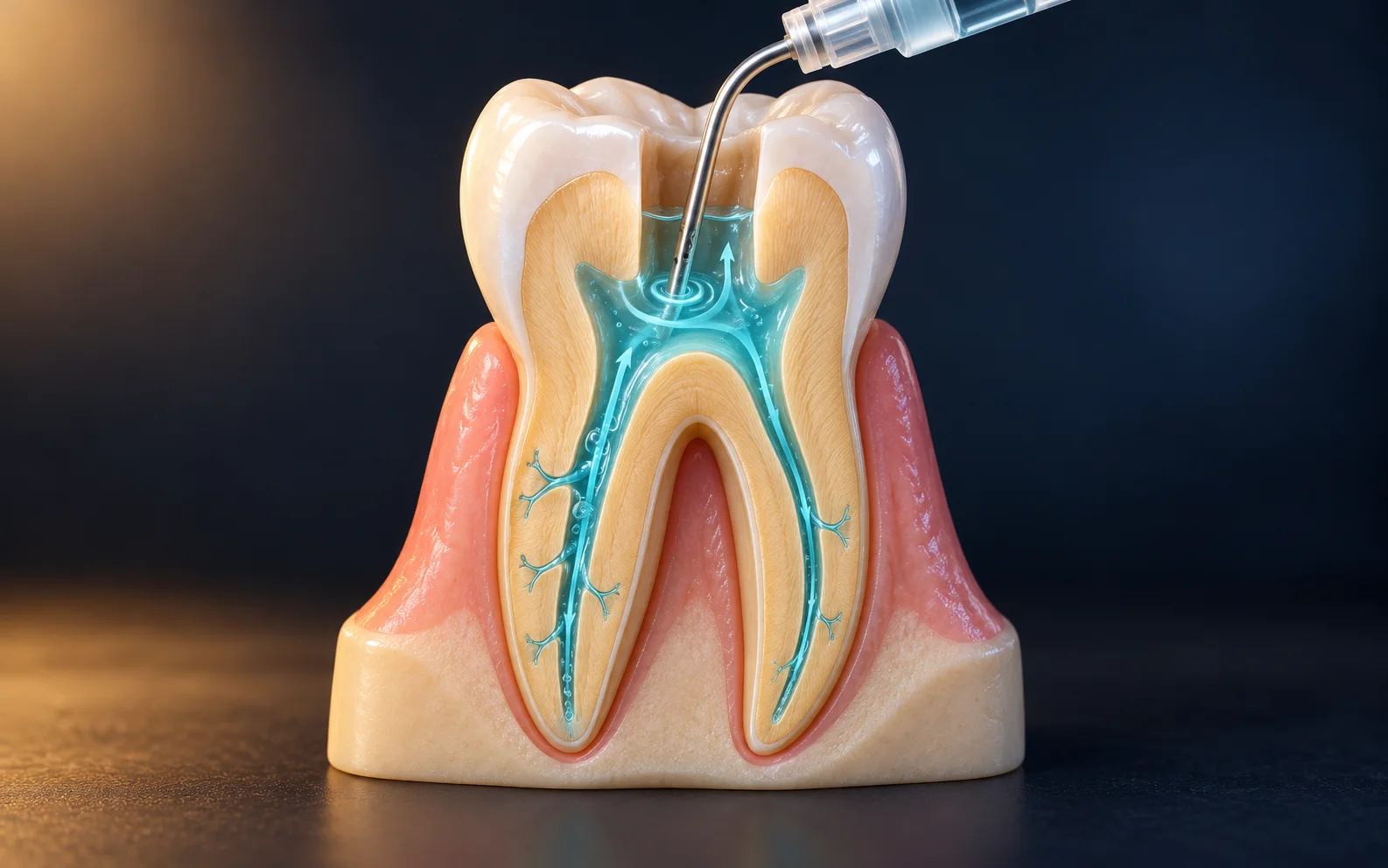
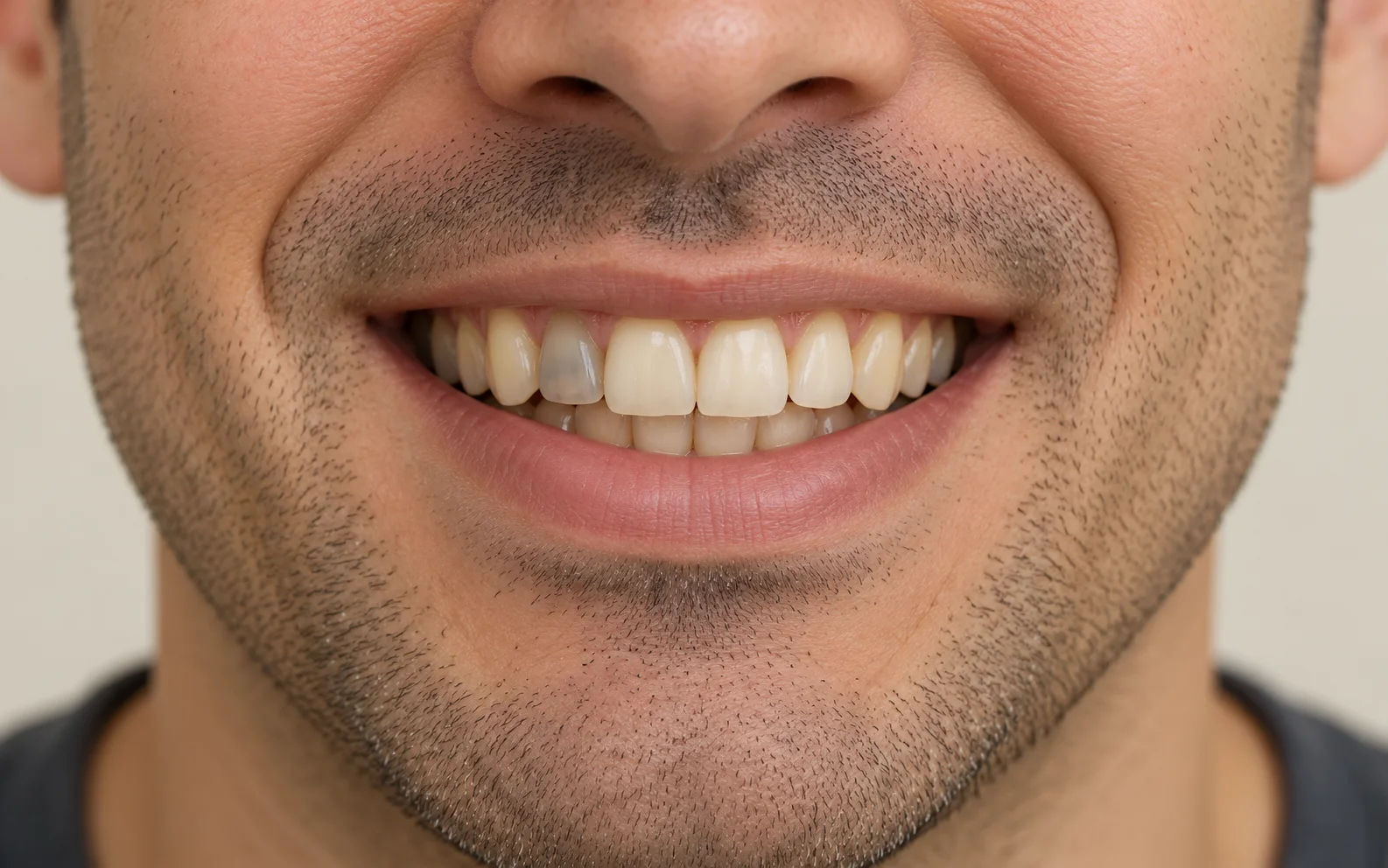
Powszechne przekonanie jest takie, że ząb po leczeniu kanałowym obumiera, wysycha i w końcu pęka. Nerw i ukrwienie w środku rzeczywiście zostają usunięte, ale twardość pozostałej tkanki zęba zmienia się przez to bardzo niewiele. O tym, czy ząb pęknie, decyduje nie to, czy nadal żyje, lecz ile zdrowych ścian zostało i jak są grube.
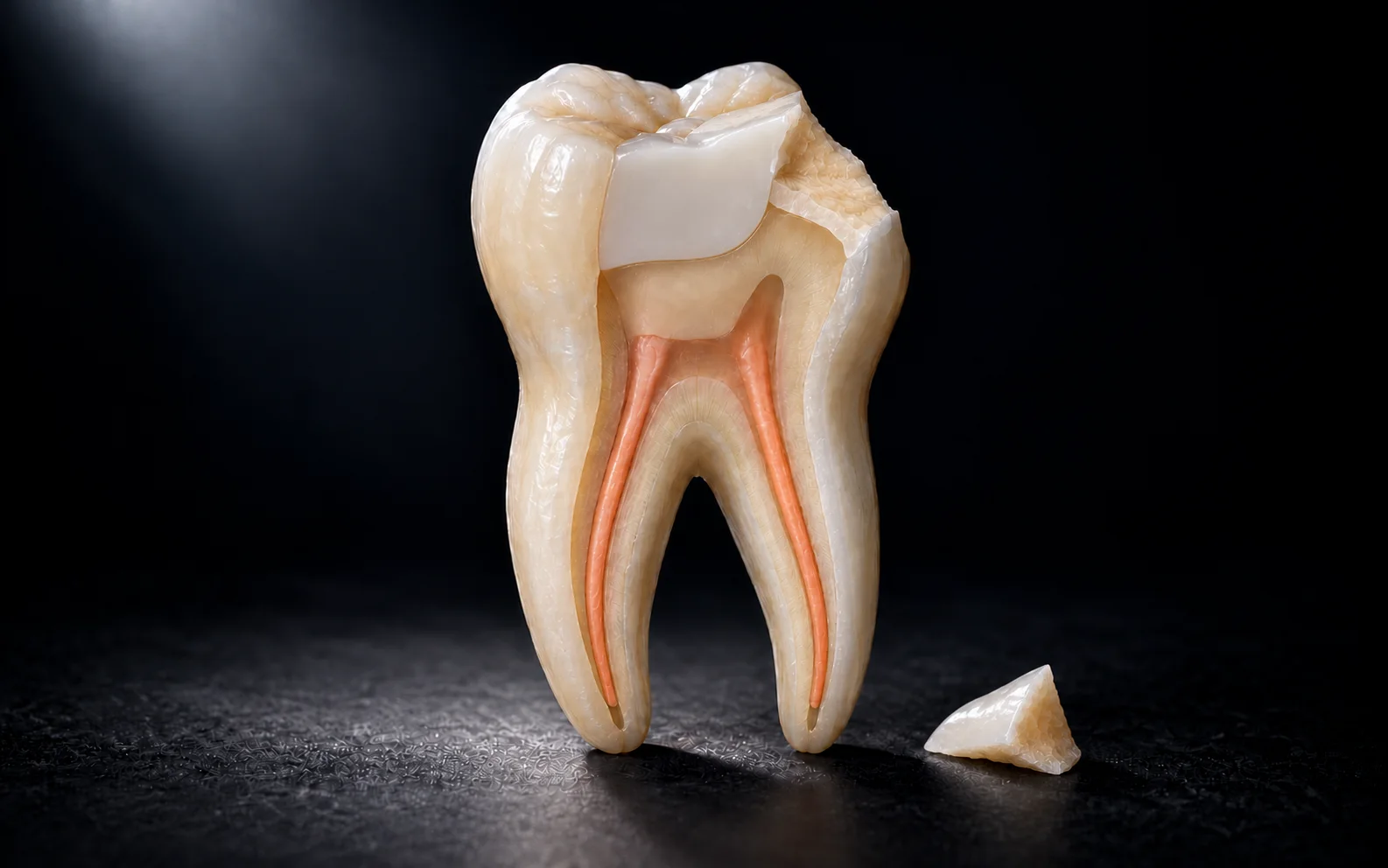
Większość zębów trafia do leczenia kanałowego już zniszczona. Jest głęboka próchnica, pod nią szerokie stare wypełnienie, czasem ściana, która już się odłamała. Do tego dochodzi otwór potrzebny, by dotrzeć do kanałów, więc ząb wychodzi z leczenia z mniejszą ilością tkanki, niż miał na początku.
Gdzie ząb traci tkankę
- Tkanka zęba utracona przez próchnicę
- Przestrzeń, która poszerza się trochę bardziej przy każdej wymianie starego wypełnienia
- Otwór wycięty przez powierzchnię żującą, żeby dojść do kanałów
- Ściany, które pękły albo odłamały się jeszcze przed leczeniem
Najcięższa z nich to utrata listew w miejscach, w których ząb spotyka się z sąsiadami. Te listwy wiążą ściany ze sobą, trochę jak wieko i dno pudełka. Kiedy obie znikną, ściany zostają wolne u góry i rozchylają się przy każdym nagryzieniu. Ściana, która ciągle się wygina, w końcu pęka.
Dlaczego zęby boczne to inny przypadek
Obciążenia żucia są w tylnej części jamy ustnej wyraźnie większe, bo trzonowce pracują bliżej mięśni zamykających żuchwę. Ich powierzchnia żująca składa się też z uniesionych guzków i bruzd, więc część obciążenia przychodzi pod kątem, a nie prosto wzdłuż długiej osi zęba. Obciążenia skośne wypychają ściany na boki. Zęby przednie mają mniejszy otwór i obciążenie bardziej pionowe, i dlatego obraz jest tam zwykle spokojniejszy.
O długoterminowym wyniku leczenia kanałowego często decyduje nie to, co dzieje się w kanale, lecz to, co zbuduje się potem na zębie.
Co zmienia zakrycie guzków
Zwykłe wypełnienie wypełnia przestrzeń, ale nie wiąże ścieńczałych ścian z powrotem. Odbudowa zakrywająca uniesione guzki, onlay albo korona, zdejmuje obciążenie z górnej krawędzi ścian i rozkłada je w bryłę zęba, więc ściany wyginają się wyraźnie mniej. Dlatego jakaś forma zakrycia tak często wchodzi w grę przy zębach bocznych po leczeniu kanałowym. Tam, gdzie otwór w zębie przednim pozostał mały, wypełnienie może wystarczyć; odpowiedź idzie za konkretnym zębem.
Zaciskanie podnosi stawkę
Zgrzytanie i zaciskanie w nocy obciążają ząb inaczej niż żucie: siła trwa dłużej i przychodzi bardziej z boku. Dla ścian, które już są cienkie, to wymagające połączenie. Mięśnie żucia zmęczone rano, spłaszczone starte powierzchnie zębów i uczucie napięcia po przebudzeniu to wskazówki. Szyna nocna jest wtedy jedną z możliwości, które lekarz dentysta z tobą omówi.
Większość pęknięć nie daje ostrzeżenia
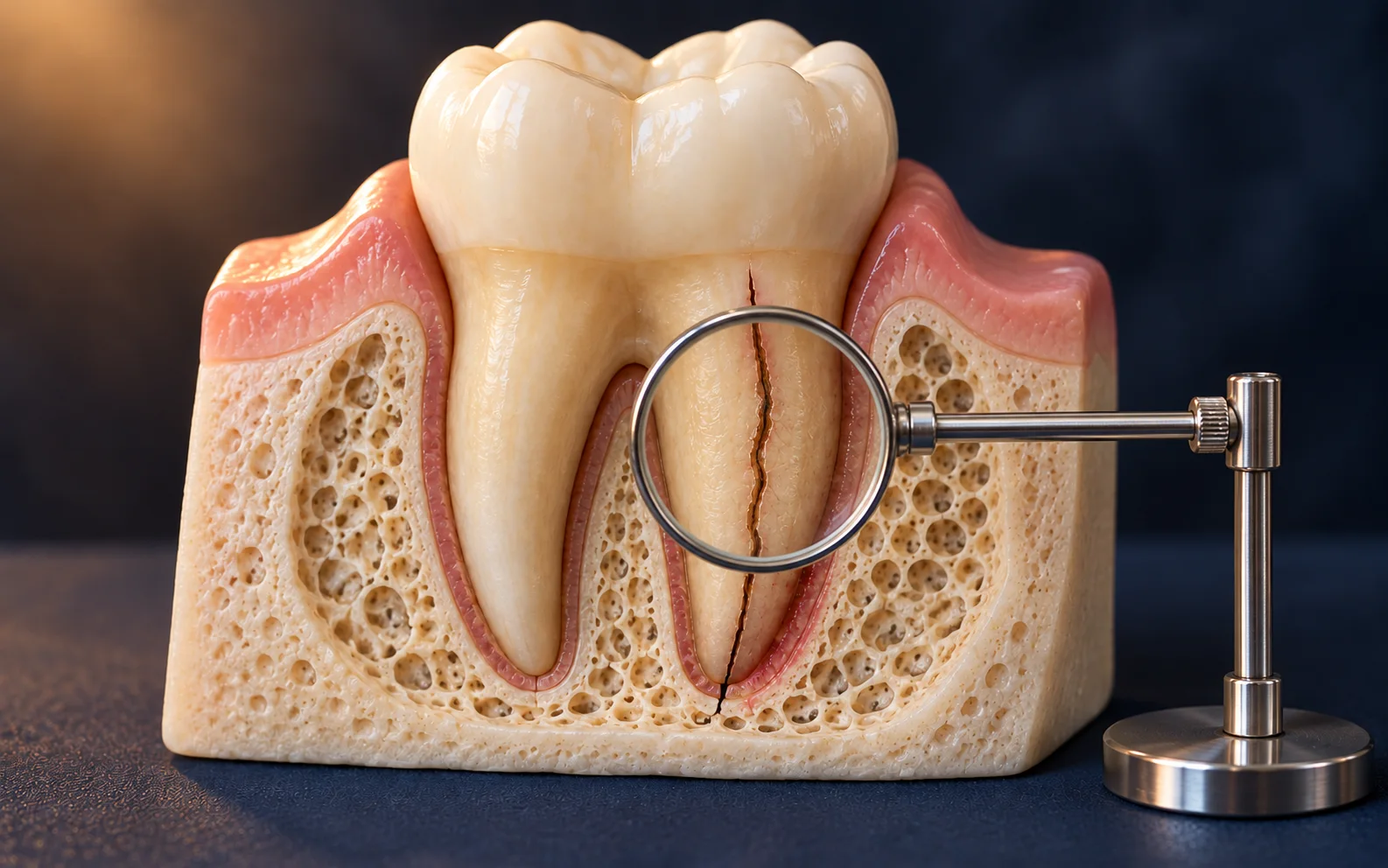
Tkanki, która zgłaszałaby ból, w zębie po leczeniu kanałowym już nie ma, więc pęknięcie może rosnąć, gdy ząb milczy. U części osób jedynym objawem jest krótki, ostry ból przy nagryzieniu czegoś twardego albo ukłucie w chwili zwolnienia nacisku. Ponieważ te objawy przychodzą i mijają, łatwo je zbyć.
O wyniku decyduje to, gdzie kończy się linia pęknięcia. Pęknięcie, które zatrzymuje się nad poziomem dziąsła, zwykle da się odbudować. Pęknięcie schodzące w korzeń mocno zawęża możliwości i może skończyć się usunięciem zęba. Jeśli ostry ból przy nagryzaniu ciągle wraca albo ząb zaczyna się ruszać, daj go obejrzeć lekarzowi dentyście bez zwłoki.
Najczęściej zadawane pytania
Czy to normalne, że nowa korona lub wypełnienie wydaje się za wysokie przy zagryzaniu?
W pierwszych dniach nowe uzupełnienie może wydawać się obce. Jeśli jednak przy zagryzaniu styka się wcześniej niż pozostałe zęby, to nie jest normalne: zbyt wysokie wypełnienie lub korona przeciąża ząb przy każdym nagryzaniu. Jeśli to uczucie nie minie w ciągu kilku dni, powiedz o tym dentyście; zwykle wystarczy niewielka korekta.
Czy każdy ząb po leczeniu kanałowym wymaga korony?
Nie. W zębie przednim z małym otworem i zdrowymi ścianami wystarczyć może wypełnienie. Zęby boczne niosą znacznie większe obciążenia żucia, więc odbudowa zakrywająca guzki wchodzi tam w grę wyraźnie częściej. Odpowiedź idzie za tym, ile zęba zostało.
Jak długo może czekać ostateczne wypełnienie albo korona?
Zakłada się je zwykle wkrótce po skończeniu pracy kanałowej. Jeśli wypełnienie czasowe siedzi w ustach miesiącami, brzegi zaczynają przeciekać, a osłabione ściany niosą obciążenie bez ochrony. Termin dla tego konkretnego zęba wyznacza twój lekarz dentysta.
Czy pęknięcie widać na zdjęciu rentgenowskim?
Często nie. Zdjęcie pokazuje ząb tylko z jednego kierunku, a cienkie pęknięcie, które nie leży w osi promieni, może pozostać niewidoczne. Dlatego dentysta korzysta też z testu nagryzania, prześwietlenia zęba światłem i pomiaru dziąsła wokół zęba; czasem pęknięcie widać dopiero po usunięciu starego wypełnienia.
Co zmienia się, jeśli zgrzytam zębami?
Zgrzytanie i zaciskanie obciążają pozostałą tkankę zęba oraz wypełnienie albo koronę na niej przez długie okresy i od boku. Szyna nocna jest wtedy jedną z możliwości: nie wzmacnia samego zęba, ale rozkłada obciążenie.
Jeśli ząb nie boli, czy wszystko jest w porządku?
Ząb po leczeniu kanałowym nie ma już tkanki, która sygnalizuje ból, więc pęknięcie albo świeża próchnica mogą postępować po cichu. Rutynowe kontrole i, gdy trzeba, zdjęcie to sposób, w jaki problem rozpoznaje się, zanim pojawią się objawy.
Ta treść ma charakter ogólnoinformacyjny i nie zastępuje badania.
Opracowanie
Şerife Nur Kerpiçci
Weryfikacja medyczna: Samed Kağan Bozkurt, Lekarz dentysta, stomatologia estetyczna
Ten artykuł powstaje w oparciu o doświadczenie kliniczne zespołu Papatya Dental i przed publikacją jest sprawdzany pod kątem rzetelności.
- Ostatnia aktualizacja:
- 2026-09-21
- Kontakt z redakcją:
- icerik@papatyadental.com