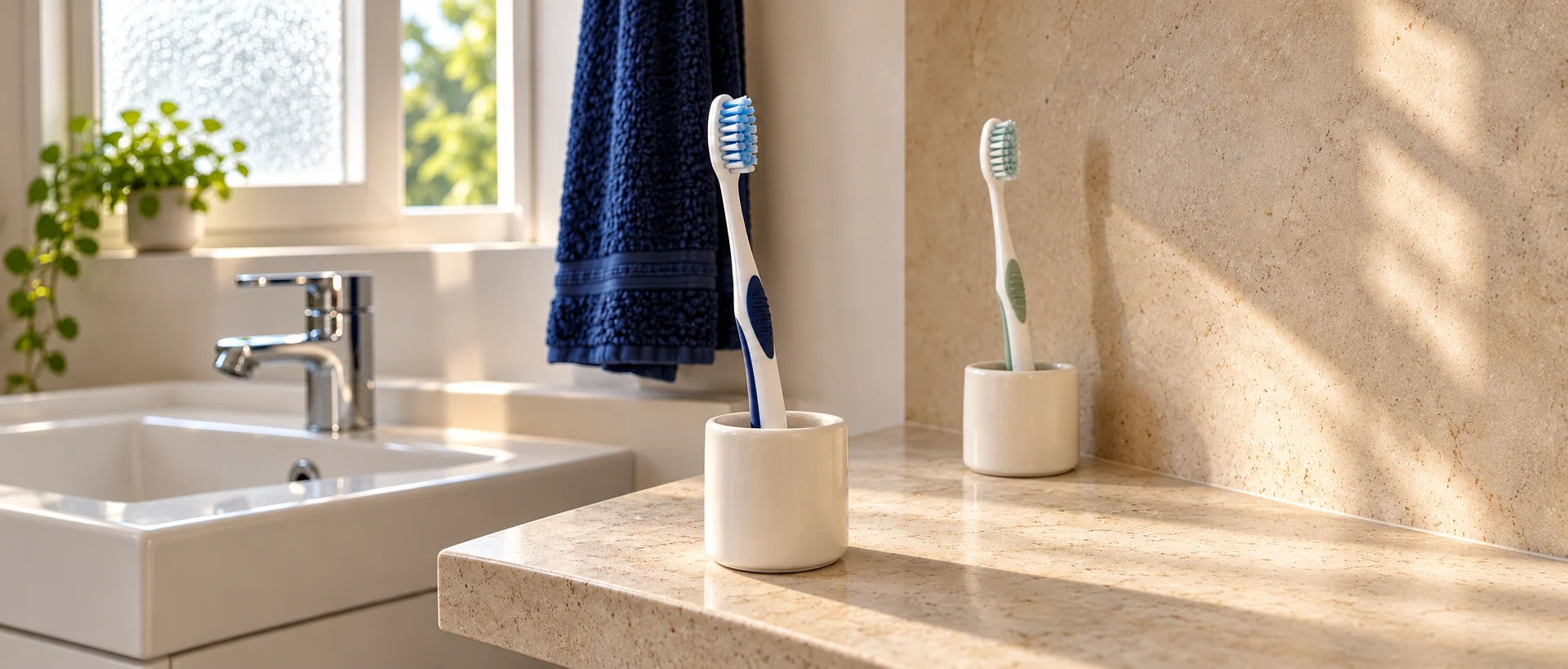

Trzy miesiące to przypomnienie, a nie reguła
Trzy miesiące to odstęp, o którym większość osób słyszała, i działa jak przypomnienie, a nie data przydatności. W dniu, w którym te trzy miesiące mijają, nic w szczoteczce się nie zmienia. Wyobraź sobie dwie osoby kupujące tę samą szczoteczkę tego samego ranka: jedna myje zęby dwa razy dziennie lekkim chwytem, druga szoruje w pośpiechu przed pracą. Trzy miesiące później szczoteczki mają ten sam wiek i są w zupełnie innym stanie.
Data ułatwia życie, ale nie podejmuje decyzji. Traktuj ją jak górną granicę.
Prawdziwą miarą jest włosie
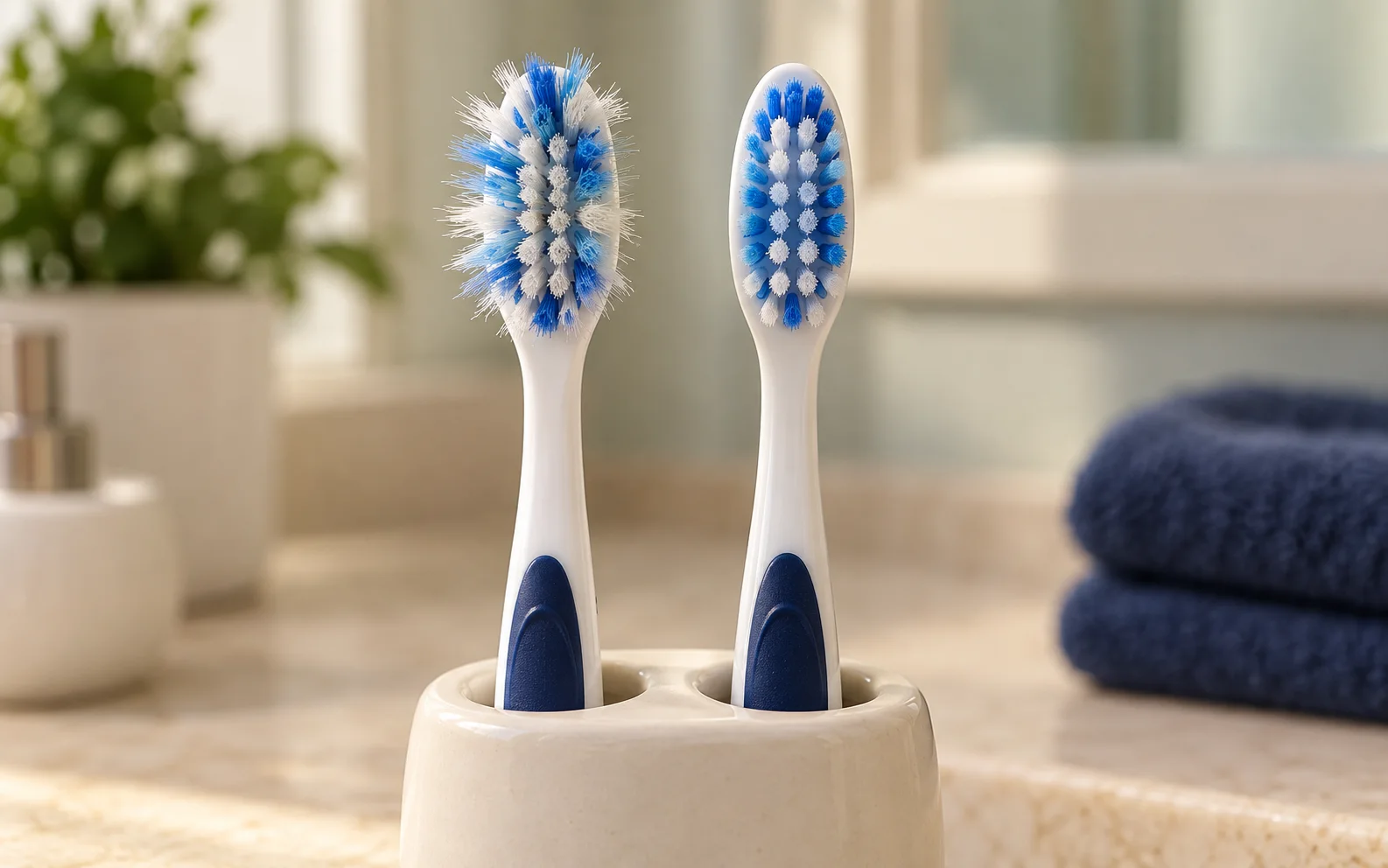
W nowej szczoteczce pęczki stoją blisko siebie, a końcówki zostają dość zwarte, by sięgnąć linii, w której ząb spotyka dziąsło. Z użyciem końcówki się rozpłaszczają, a pęczki rozchodzą na boki. Rozpłaszczone włosie zbiera przy tym samym ruchu mniej płytki, więc czyszczenie słabnie, choć twoje dwie minuty się nie zmieniły. Przyjrzenie się szczoteczce pod światło od czasu do czasu pokazuje to lepiej niż jakakolwiek data.
- Pęczki rozeszły się na boki, a obrys główki wygląda na postrzępiony
- Końcówki się rozpłaszczyły, więc z boku szczoteczka wygląda na przysadzistą
- Kolorowe włosie wskaźnikowe wyblakło albo straciło kolor do połowy długości
- Włosie się obluzowuje albo wypada u podstawy pęczka
Mocny nacisk zużywa szczoteczkę szybciej
Im mocniej naciskasz, tym szybciej włosie się rozpłaszcza. Szczoteczka, która rozchodzi się długo przed upływem trzech miesięcy, mówi zwykle więcej o twoim chwycie niż o samej szczoteczce: następna będzie wyglądać tak samo po sześciu tygodniach. Trzymanie rączki jak długopisu, praca nadgarstkiem, a nie całym ramieniem, i małe kółka zamiast szorowania oszczędzają i włosie, i dziąsła.
Choćby szczoteczka była najnowsza, powierzchnia, której włosie nigdy nie dotknie, nie zostanie wyczyszczona, a najczęściej pomijaną powierzchnią jest tył ostatniego trzonowca.
Po chorobie
Wymiana szczoteczki po grypie, infekcji gardła albo czymkolwiek, co zostawia rany w jamie ustnej, to częsty nawyk. Ponownego zachorowania na to samo od własnej szczoteczki nie należy się spodziewać, ale zaczęcie zdrowienia od świeżej szczoteczki jest rozsądnym krokiem i większość dentystów nie widzi w tym nic złego. Bardziej liczy się to, żeby szczoteczki stojące w jednej szklance nigdy nie stykały się główkami.
Jak długo wytrzymuje główka szczoteczki elektrycznej
W szczoteczce elektrycznej wymienia się główkę, a ponieważ jej włosie jest krótsze, rozchodzenie się widać wcześniej niż w szczoteczce ręcznej. Opakowanie podaje zwykle coś bliskiego trzem miesiącom, ale miara jest ta sama: gdy włosie się rozejdzie, główka jest skończona, cokolwiek mówi kalendarz. Jeśli twoja szczoteczka ma czujnik nacisku i często ostrzega, ta główka zużywa się szybciej niż przeciętnie.
Co nie działa
Trzymanie rozchodzącego się włosia pod gorącą wodą, żeby je wyprostować, nie przywraca szczoteczki. Pęczki mogą na chwilę wyglądać schludniej, ale nigdy nie odzyskują pierwotnego wąskiego kształtu, a woda na tyle gorąca, by zmiękczyć plastik, wygina je jeszcze bardziej. Gotowanie szczoteczki, przepuszczanie jej przez zmywarkę albo wkładanie do mikrofalówki kończy się tak samo. Dzielenie szczoteczki z kimś innym nigdy nie jest rozsądnym rozwiązaniem.
Najczęściej zadawane pytania
Czy szczoteczkę można wymienić przed upływem trzech miesięcy?
Tak. U kogoś, kto myje zęby trzy razy dziennie, mocno naciska albo szoruje długimi ruchami, włosie rozejdzie się wcześniej i sześć do ośmiu tygodni jest wtedy zupełnie normalne. Zamki stałego aparatu ortodontycznego także szybciej niszczą włosie, a dziecko, które gryzie szczoteczkę, potrafi ją zniszczyć w kilka tygodni.
Czy gorąca woda wyprostuje rozpłaszczone włosie?
Nie. Pęczki mogą na chwilę wyglądać schludniej, ale nigdy nie odzyskują wąskiego kształtu, a czyszczenie nie wraca razem z nimi. Woda na tyle gorąca, by zmiękczyć plastik, wygina włosie jeszcze bardziej. Na tym etapie jedynym sensownym krokiem jest nowa szczoteczka.
Czy po chorobie trzeba wyrzucić szczoteczkę?
Nie jest to obowiązkowe, choć to częsty i rozsądny nawyk. Po chorobie, która zostawia rany w jamie ustnej, albo takiej, która ciągnie się tygodniami, świeża szczoteczka pasuje większości osób. Bardziej liczy się trzymanie szczoteczki z dala od innych szczoteczek w czasie choroby i suszenie jej pionowo na powietrzu.
Jak długo wytrzymuje główka szczoteczki elektrycznej?
Jej włosie jest krótkie, więc rozchodzenie się widać wcześniej niż w szczoteczce ręcznej, a opakowanie podaje zwykle coś bliskiego trzem miesiącom. Rozstrzyga i tak włosie: wymień główkę wcześniej, jeśli po myciu zostaje rozłożone albo jeśli czujnik nacisku często ostrzega.
Czy twarde włosie czyści lepiej?
Twarde włosie nie zbiera więcej płytki. Miękkie wystarcza większości ust i jest łagodniejsze dla dziąseł. Twarde włosie w połączeniu z mocnym chwytem może dokładać się do cofania dziąseł i do ścierania powierzchni zęba, i dlatego zwykle wybiera się miękkie.
Czy trzymanie szczoteczki w zamkniętym etui jest złe?
Zamknięte etui trzyma szczoteczkę wilgotną, a włosie zostaje mokre godzinami. Używaj go wtedy, gdy podróż tego wymaga, a po powrocie do domu znów wyjmij szczoteczkę. Przy codziennym przechowywaniu kontakt z powietrzem liczy się tak samo jak ochrona etui.
Ta treść ma charakter ogólnoinformacyjny i nie zastępuje badania.
Opracowanie
Nilufar Tulanova Şener
Weryfikacja medyczna: Canan Kale, Specjalistka stomatologii dziecięcej
Ten artykuł powstaje w oparciu o doświadczenie kliniczne zespołu Papatya Dental i przed publikacją jest sprawdzany pod kątem rzetelności.
- Ostatnia aktualizacja:
- 2026-09-21
- Kontakt z redakcją:
- icerik@papatyadental.com