
Dwa narzędzia, dwie różne prace
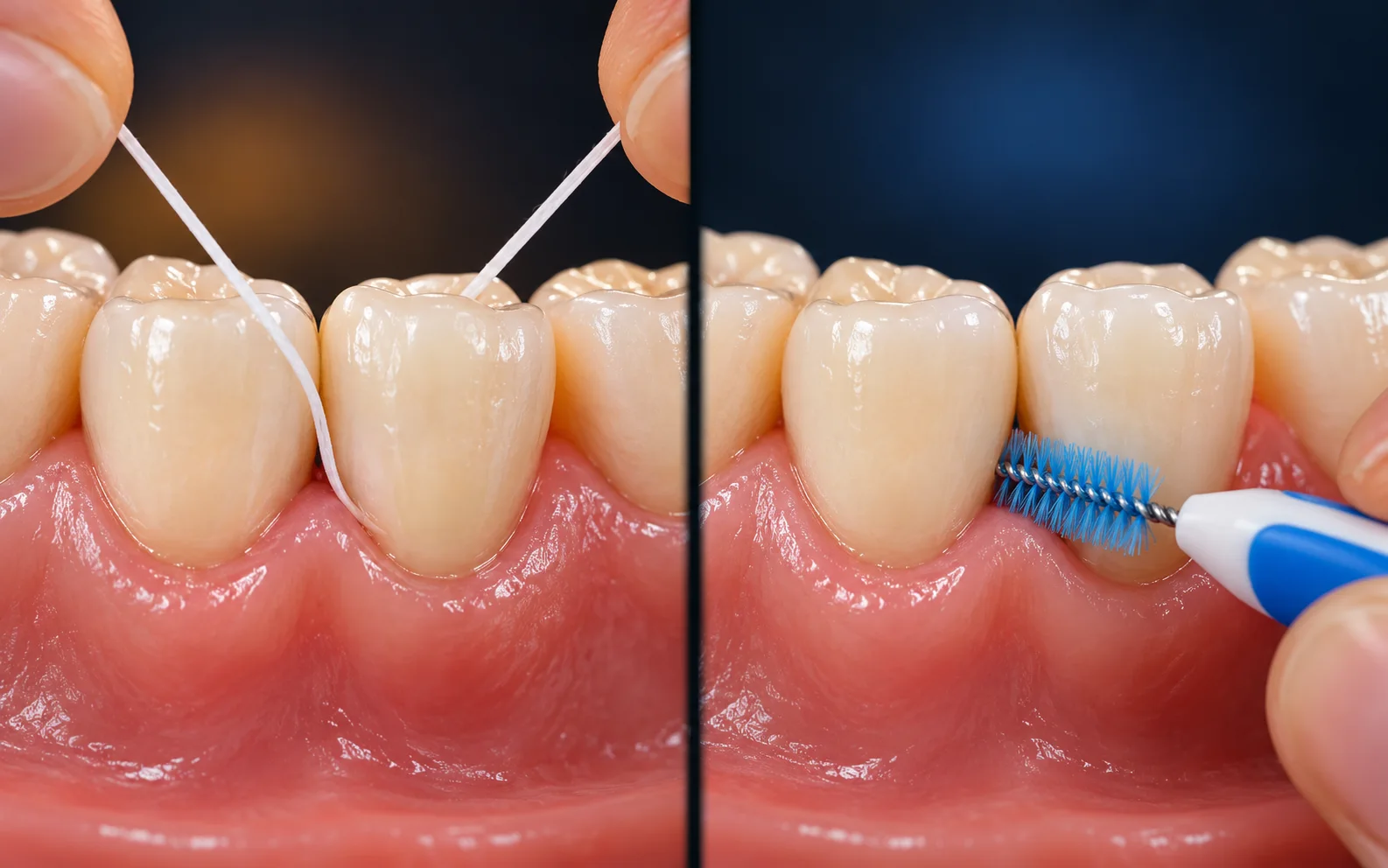
Szczoteczka czyści ząb od strony policzka i od strony języka; włosie nigdy nie sięga powierzchni, w której stykają się dwa zęby. Nić i szczoteczki międzyzębowe istnieją właśnie dla tej nieosiągalnej powierzchni, ale działają inaczej. Nić przechodzi przez punkt styczny jak cienka wstążka i zeskrobuje obie powierzchnie. Szczoteczka międzyzębowa zamiast tego wypełnia przestrzeń, więc włosie dotyka powierzchni ze wszystkich stron. Ta różnica rozstrzyga, która pomoże w twoich ustach.
Tam, gdzie jest przestrzeń, szczoteczka czyści więcej
Jeśli między dwoma zębami stoi otwarty, widoczny trójkąt, nić biegnie jego środkiem i ledwie dotyka boków. Szczoteczka międzyzębowa wypełnia tę samą objętość: włosie wyciera jednocześnie powierzchnię z lewej i z prawej. Im szersza przestrzeń, tym więcej powierzchni nić zostawia nietkniętej.
Przy ciasnych stycznościach zostaje tylko nić
Tam, gdzie zęby stoją ciasno i nie przejdzie nawet najcieńsza szczoteczka, praca przypada nici. Nić jest dość cienka na punkt styczny i schodzi w dół lekkim sprężeniem, a nie wciskaniem. Wpychanie szczoteczki w taką przestrzeń drapie dziąsło, gnie drucik i zwykle zostawia połowę włosia na zewnątrz. W młodej jamie ustnej z jędrnymi dziąsłami większość przestrzeni jest tak ciasna i nić nie ma tam zastępstwa.
Rozmiar dobiera się bez siły
Szczoteczki międzyzębowe są robione w wielu grubościach, a żadne usta nie są jednolite: przestrzenie między przednimi zębami są wąskie, te między trzonowcami zwykle szersze. Właściwy rozmiar wchodzi z lekkim oporem, ale nigdy nie wymaga wpychania. Jeśli drucik się gnie, szczoteczka jest za gruba; jeśli przechodzi, niczego nie dotykając, jest za cienka. W większości ust wychodzą dwa albo trzy rozmiary.
- Ustaw szczoteczkę wzdłuż przestrzeni, a nie prosto w dziąsło.
- Kiedy już wejdzie, poruszaj nią kilka razy w przód i w tył, nie obracając jej.
- Jeśli przestrzeń stawia opór, zejdź o jeden rozmiar niżej, zamiast nalegać.
- Wymień szczoteczkę, gdy tylko drucik się wygnie albo włosie się rozpłaszczy.
Cofnięte dziąsła zmieniają obraz
Kiedy dziąsło się cofa, odsłania się powierzchnia korzenia, a ta nie jest płaska: na wielu trzonowcach wzdłuż korzenia biegnie rowek. Napięta nić przechodzi prosto nad tym rowkiem i nie potrafi w niego wejść, a włosie potrafi. Odsłonięty korzeń jest miększy niż szkliwo i próchnica idzie przez niego szybciej. Dlatego w ustach z cofniętymi dziąsłami szczoteczka międzyzębowa staje się głównym codziennym narzędziem.
Próchnica i zapalenie dziąseł najczęściej zaczynają się na powierzchniach, w których spotykają się dwa zęby, czyli dokładnie tam, gdzie szczoteczka nigdy nie sięga.
Krwawienie nie jest powodem, by przestać
Krwawienie w pierwszych dniach czyszczenia przestrzeni międzyzębowych jest częste i zwykle znaczy, że dziąsło w tym miejscu jest zapalne. Zdrowe dziąsło nie krwawi przy czyszczeniu. Przerwanie z powodu krwi zostawia płytkę, która karmi stan zapalny, dokładnie tam, gdzie była; przy regularnym codziennym czyszczeniu krwawienie u większości osób ustępuje w ciągu dwóch tygodni. Krwawienie, które trwa dłużej, pochodzi wciąż z tego samego miejsca albo się nasila, powinien obejrzeć dentysta.
Mosty, implanty i stałe aparaty
Ani zwykła nić, ani zwykła szczoteczka nie mieszczą się pod przęsłem mostu, wzdłuż brzegu korony na implancie ani między zębami ze stałym aparatem. Te miejsca wymagają specjalnej nici ze sztywną końcówką i gąbczastym środkiem albo cienkich plastikowych nawlekaczy, które przeprowadzają nić za łukiem. Najmniejsze szczoteczki międzyzębowe mieszczą się pod zamkami. Dentysta, który założył most albo aparat, może pokazać, które narzędzie dosięga którego miejsca.
Najczęściej zadawane pytania
Czy trzeba używać obu?
W większości ust tak. Przestrzenie między trzonowcami mogą być otwarte, podczas gdy przednie zęby wciąż stoją ciasno; szczoteczka pracuje wtedy z tyłu, a nić z przodu. Dopasowanie narzędzia do każdej części jamy ustnej działa lepiej niż trzymanie się jednego z nich.
Czy szczoteczka międzyzębowa może uszkodzić dziąsło?
Przy prawidłowym używaniu nie. Uraz bierze się zwykle z mocnego ściskania rączki i wciskania szczoteczki w przestrzeń albo z obracania jej w środku; jeśli trzymasz rączkę lekko, opuszkami palców, siła sama się zmniejsza. Lekkie krwawienie w pierwszych dniach świadczy o stanie zapalnym, a nie o urazie; ostry ból albo skaleczenie oznacza natomiast, że szczoteczka jest wciskana na siłę.
Jak często należy czyścić przestrzenie międzyzębowe?
Raz dziennie wystarczy większości osób, zwykle przy wieczornym myciu. Płytka potrzebuje więcej niż doby, żeby narosnąć w warstwę drażniącą dziąsło, więc czyszczenie raz dziennie bez opuszczania dni daje więcej niż czyszczenie dwa razy dziennie od czasu do czasu.
Czy irygator zastępuje nić?
Strumień wody wypłukuje luźne resztki i pomaga wokół stałego aparatu, ale nie ściera płytki przyklejonej do powierzchni. Uznaje się go zwykle za dodatek do nici albo szczoteczki międzyzębowej, a nie za zamiennik którejkolwiek z nich.
Czy nitkowanie poszerza przestrzenie między zębami?
Nie. Kiedy nić mija punkt styczny, ząb na chwilę się ugina i wraca; przestrzeń nie robi się szersza. Szczeliny, które otwierają się z czasem, biorą się zwykle z cofających się dziąseł albo z przemieszczania się zębów.
Nić woskowana czy niewoskowana?
Nić woskowana łatwiej przechodzi przez ciasne styczności i mniej się strzępi; niewoskowana nieco mocniej trzyma się powierzchni. Obie zdejmują płytkę, więc wybór sprowadza się zwykle do tego, która przechodzi bez zahaczania.
Ta treść ma charakter ogólnoinformacyjny i nie zastępuje badania.
Opracowanie
Canan Kale
Weryfikacja medyczna: Elif Teke, Specjalistka periodontologii
Ten artykuł powstaje w oparciu o doświadczenie kliniczne zespołu Papatya Dental i przed publikacją jest sprawdzany pod kątem rzetelności.
- Ostatnia aktualizacja:
- 2026-09-21
- Kontakt z redakcją:
- icerik@papatyadental.com