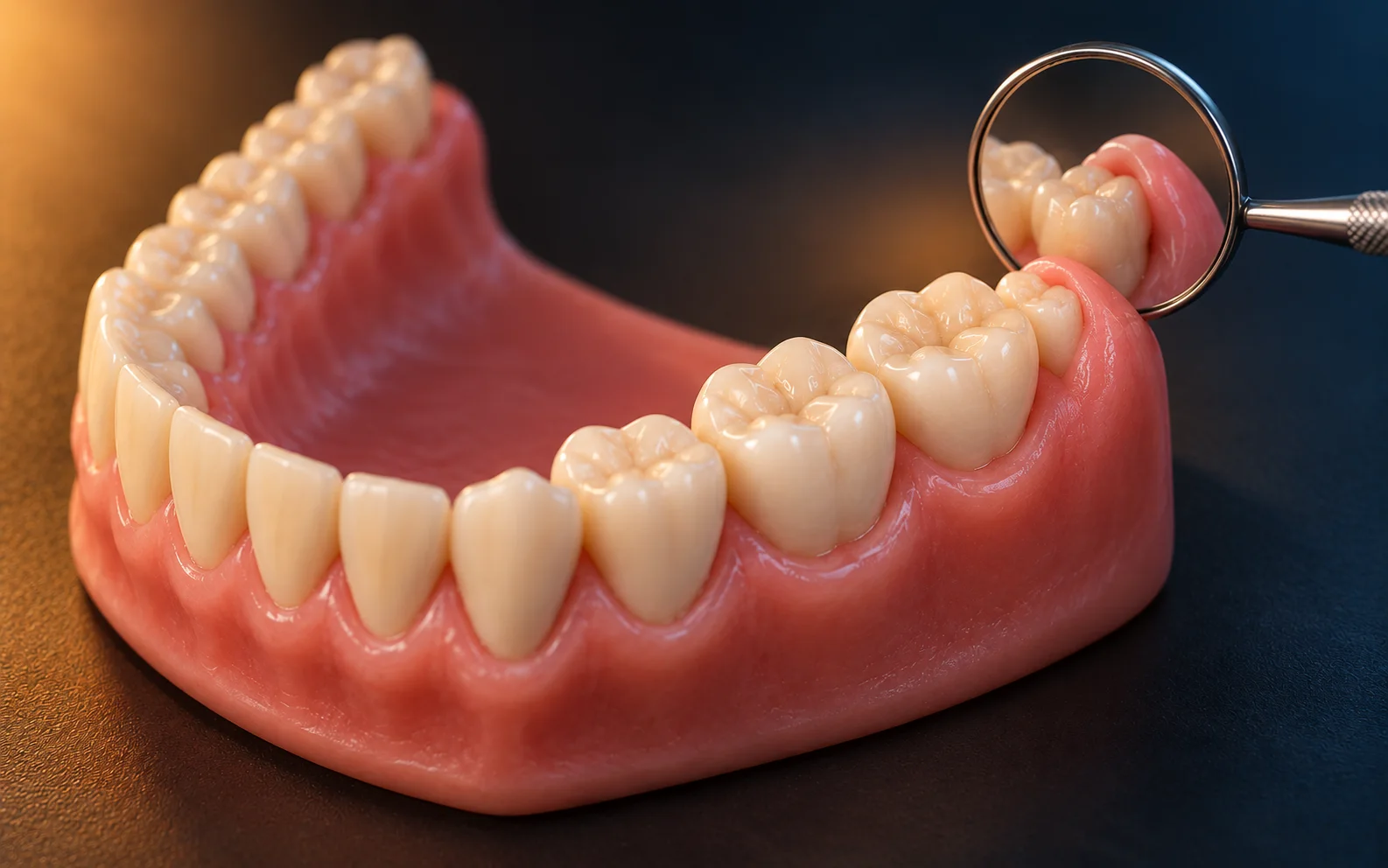


I stressende perioder endrer vanene seg først
I en krevende periode er det første som endrer seg i munnen ikke emaljen, det er vanen. Å holde kjeven spent hele dagen, å presse tennene sammen om natten, å hoppe over kveldspussen, å gripe etter noe søtt oftere: dette er vanlige reaksjoner på press. Hver av dem rammer de samme tennene, og de har for vane å komme sammen. Det er derfor en stressende periode sjelden viser seg som ett enkelt tegn.
Hvorfor sammenbiting og gnissing øker
Sammenbiting kommer i to former. Om dagen er det en vane som går upåaktet hen: de øvre og nedre tennene hviler lett mot hverandre i timevis mens du ser på en skjerm, kjører eller prøver å bli ferdig med en oppgave. Sammenbiting om natten har ingenting med viljestyrke å gjøre; den oppstår under søvn, og om morgenen huskes nesten ingenting av den. Normalt berører tennene hverandre bare kort, mens du tygger og svelger. Resultatet er det samme uansett: kjevemusklene arbeider langt lenger enn vanlig.
Morgenen røper sammenbiting om natten
De fleste merker det på hvordan morgenen kjennes framfor på noen lyd. Tegnene er tydeligst den første timen eller to etter at du våkner, og blekner utover dagen. Kjenner du deg igjen i flere av punktene nedenfor, kan nettene dine gå med tennene presset sammen.
- Slitne eller stive kjevemuskler i det øyeblikket du våkner
- En hodepine som starter i tinningene og er der når du åpner øynene
- Ny følsomhet for kulde og tyggeflater som blir flatere
- En blek strek langs innsiden av kinnet og tannmerker langs kanten av tungen
- At noen som sover i nærheten hører en gnissende lyd om natten
En nattskinne beskytter tannen; den stanser ikke sammenbitingen
En nattskinne er et hardt eller mykt dekke som går mellom de øvre og nedre tennene. Jobben dens er å fordele tyggekraften over en bred flate, slik at slitasjen skjer på skinnen i stedet for på emaljen. Sammenbitingen fortsetter mens skinnen er inne; det ene som endrer seg, er skaden tannen tar. Skinnen lages fra et avtrykk tatt av en tannlege, så den passer dine egne tenner. Skinnen børstes hver morgen og oppbevares tørt.
Rutinen er det første som glipper
En pussing som hoppes over, er den stilleste følgen av en tung periode. Morgenpussen overlever som regel, og kveldspussen blir borte, men det er kvelden som betyr mest, fordi spyttmengden faller under søvn. La tanntråd eller mellomromsbørste ligge ubrukt i noen dager, og tannkjøttet begynner å blø; å styre børsten rundt det stedet som blør, gjør det så verre.
Spisingen endrer seg også. Lange arbeidsdager sprer kaffe, energidrikker og søtsaker utover hele dagen. Det som belaster en tann, er hvor ofte framfor hvor mye: munnen holder seg sur en stund etter hvert lite måltid, og med ti av dem legger de periodene seg sammen. Timer med tyggegummi setter også kjevemuskler som alt er slitne, i arbeid.
Munnsår, tørr munn og tannkjøttet
Et munnsår er et lite sår med hvit midte og rød kant, vanligvis på innsiden av kinnet eller under tungen. Det dukker oftere opp i krevende uker; å bite seg i kinnet, å pusse for hardt og korte netter setter det i gang. De fleste munnsår heler av seg selv i løpet av 1–2 uker. Tørr munn er en egen sak: når spyttet faller, svekkes den naturlige beskyttelsen, og karies og trøbbel med tannkjøttet starter lettere.
Emalje bruker år på å slites ned, mens en sliten kjevemuskel kjennes neste morgen; det er derfor sammenbiting viser seg i muskelen først og ikke på tannen.
Tegn som ikke vil vente
De fleste tegn letter når rutinen roer seg, men noen vil ikke vente. Låser kjeven seg åpen eller lukket, får du ikke åpnet munnen to fingerbredder, eller er det hevelse i ansiktet sammen med feber, søk hjelp hos tannlege eller lege samme dag. Et munnsår som ikke har helet på to uker, en brukket tann og smerte som vekker deg om natten, må også ses på uten opphold. Å sette noe av dette på sammenbiting forsinker å finne årsaken.
Ofte stilte spørsmål
Gir stress karies direkte?
Nei. Karies skyldes bakterier i plakk og hyppig kontakt med sukker. Stress hever begge deler indirekte: pussingen glipper, småspisingen blir hyppigere, og noen får en tørrere munn.
Kan jeg finne ut på egen hånd om jeg biter tennene sammen om natten?
Delvis. En sliten kjeve om morgenen, verkende tinninger, den bleke streken inne i kinnet og tannmerker på tungen er sterke holdepunkter. Den faste avgrensningen gjøres ved en undersøkelse: de slitte flatene og kjevemusklene ses på, og et røntgenbilde tas om det trengs.
Er det vanskelig å venne seg til en nattskinne?
De første nettene kan skinnen kjennes som et fremmedlegeme i munnen, og du kan få mer spytt; de fleste venner seg til den i løpet av noen uker. Ved sammenbiting velges som regel en hard skinne, fordi en myk slites raskere. Trykker skinnen eller gjør den vondt et sted, ikke juster den selv, men la tannlegen tilpasse den.
Er en ferdigskinne fra apoteket god nok?
En skinne som ikke passer munnen, belaster noen tenner mer enn andre og kan flytte bittet over tid. En skinne laget fra et avtrykk passer dine egne tenner og kan sjekkes og justeres. Selv til kort bruk vises en ferdigskinne til en tannlege.
Hvor lenge varer et munnsår, og når bør det sjekkes?
Et vanlig munnsår heler vanligvis av seg selv i løpet av 1–2 uker. Et sår som varer utover to uker, vokser, blir hardt eller stadig kommer tilbake på samme sted, bør ses på uten opphold. Sår som er så mange at det blir vanskelig å spise, er også en grunn til en undersøkelse.
Dette innholdet er til generell informasjon og erstatter ikke en undersøkelse.
Utarbeidet av
Eren Koluaçık
Faglig gjennomgått av: Samed Kağan Bozkurt, Tannlege, estetisk tannbehandling
Denne artikkelen bygger på den kliniske erfaringen til teamet hos Papatya Dental og blir gjennomgått for riktighet før publisering.
- Sist oppdatert:
- 2026-09-21
- Redaksjonell kontakt:
- icerik@papatyadental.com