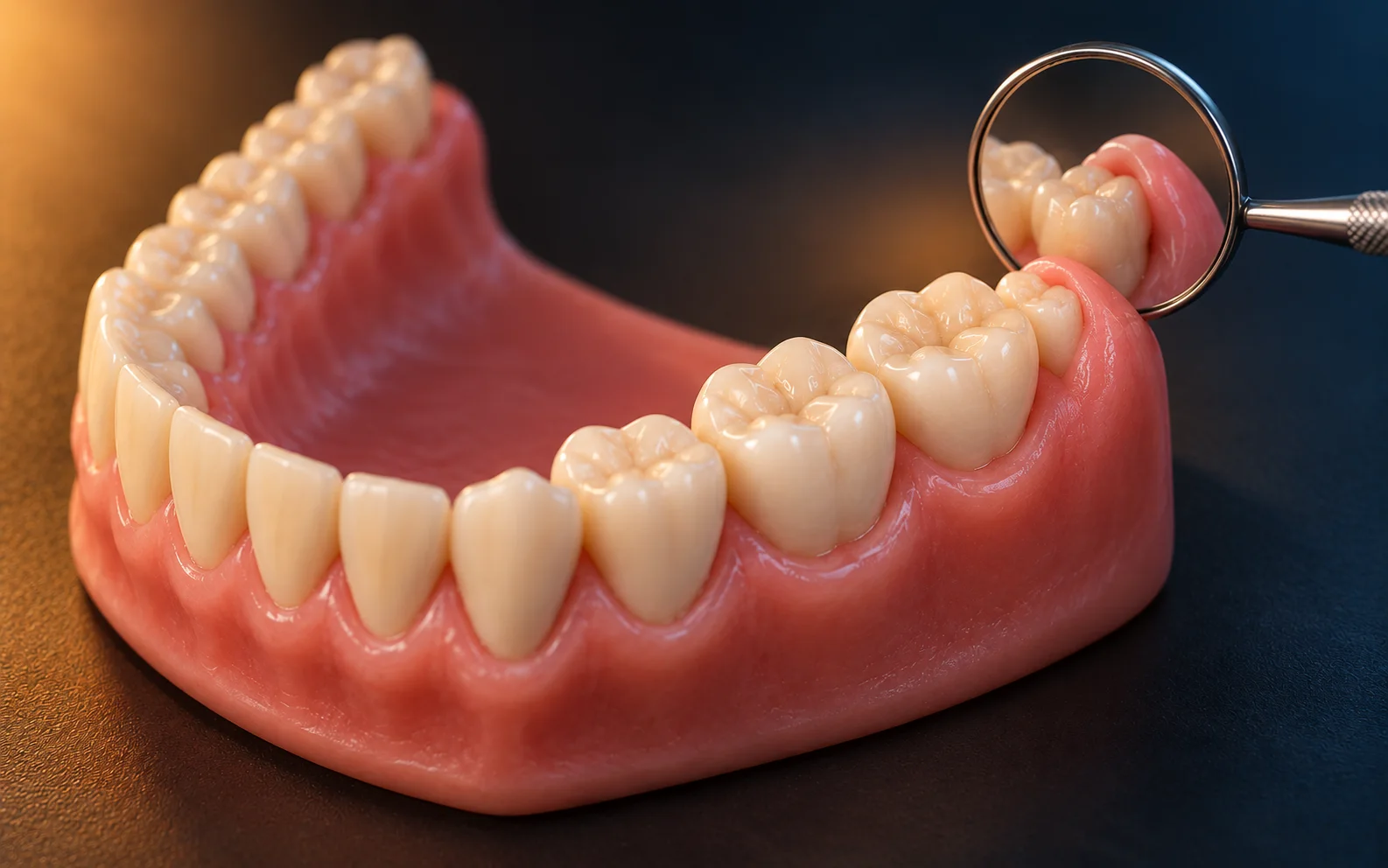


What changes in the mouth when immunity drops
The mouth is one of the most densely populated surfaces of the body. Bacteria and yeast live there all the time, and the immune system holds them in balance. When that balance slips, the mouth is often where it shows first: a white coating on the lining of the cheek, ulcers that keep returning, gums that bleed at a light touch. Wounds and the site of an extraction also close more slowly than usual.
- A white coating on the cheek, tongue or palate that wipes off and leaves a red, tender surface underneath
- Ulcers that return several times a month and are slow to close
- Gums that bleed more when you brush and look red along the margin
- Cracking and crusting at the corners of the mouth
- Healing that runs slower than expected after an extraction or a small injury
Why saliva counts as part of your defences
Saliva does more than keep the mouth wet. The defence proteins in it slow bacteria and yeast down, and the flow itself sweeps away food debris and acid. When the mouth dries out, both of those jobs falter at once. Some medicines, radiotherapy to the head and neck, and conditions affecting the salivary glands all reduce the flow, and tooth decay and fungal infection are more common in those patients.
What long-standing gum inflammation asks of the body
The other direction gets far less attention. A gum that has been inflamed for years behaves like a wound inside the mouth that never fully closes. Bacterial products cross that surface into the tissue, keep the immune system occupied around the clock, and the inflammatory load in the body rises. This shows most clearly in diabetes: gum inflammation makes blood sugar harder to control, and poorly controlled blood sugar inflames the gums more readily.
Links between gum disease and heart conditions, rheumatic disease and the course of a pregnancy are discussed too. That picture is less settled than the diabetes one, and two things appearing together does not show that one causes the other. Either way this stays true: reducing inflammation costs the body nothing.
Does looking after your mouth strengthen immunity
The short answer is no. Brushing does not boost your immune system, and it gives no extra protection against infection. What it does is narrower but it does matter: it reduces the source of inflammation the immune system has to deal with. That is why the sentence “oral care boosts immunity” is overstated. The accurate version runs the other way: a neglected mouth gives the immune system extra work.
Dental checks when immunity is suppressed
Chemotherapy, the medicines used after an organ transplant and long courses of immunosuppressive treatment all weaken the body's defences. In these patients a small infection in the mouth does not always stay put; it can enter the bloodstream and turn into a general illness. That is why the dental check comes before such treatment begins. Broken teeth, advanced gum disease and deep decay are dealt with beforehand.
The right moment for a dental check falls before immunity is suppressed; afterwards, even the smallest procedure may have to wait.
Which symptoms will not wait
With the symptoms below, do not count days, whether or not your immunity is low: seek dental or medical care the same day. In someone whose immunity is suppressed these problems move faster, but the urgency is the same for everyone. A fever alongside mouth pain is a different situation from toothache on its own, and it needs assessing without delay.
- Fever together with mouth pain, toothache or a swollen gum
- Swelling that spreads to the face, under the eye or down the neck
- Difficulty opening the mouth or swallowing
- Gum bleeding that will not stop
- A mouth sore that has not healed in more than two weeks
Frequently asked questions
Is oral care enough to strengthen immunity?
No, oral care does not strengthen immunity. In someone whose immunity is weak, the real value of regular care lies elsewhere: it gives a small infection in the mouth fewer chances to grow and spread through the body. That is why care, together with regular checks, matters even more for these patients.
Do mouth ulcers mean my immunity is weak?
Usually not. A single ulcer after biting your cheek or after a demanding week is common and heals within a week or two. Ulcers that return several times a month, grow large or last beyond two weeks are examined, particularly alongside fever, weight loss or unusual tiredness.
What does a white coating in the mouth mean?
A white coating that wipes off and leaves a red, tender surface underneath is usually thrush, an overgrowth of yeast. It appears more readily when immunity is low or the mouth is dry. A coating that will not wipe off is a different matter and is examined by a dentist rather than treated at home.
Why is a dental check asked for before chemotherapy?
Because the mouth often becomes the starting point for trouble as soon as blood counts fall. Deep decay, broken teeth and inflamed gums that would be minor at other times can turn into a serious infection during treatment. Dealing with them beforehand also avoids procedures during a phase when healing is slow.
Can bleeding gums point to something beyond the mouth?
Most bleeding comes from plaque sitting along the gum margin and settles within a couple of weeks of careful cleaning. Bleeding that is out of proportion, will not stop, or comes with bruising elsewhere on the body is a different matter: seek dental or medical care the same day.
This content is for general information only and does not replace an examination.
Edited by
Nilufar Tulanova Şener
Medically reviewed by: Elif Teke, Specialist Periodontist
This article draws on the clinical experience of the Papatya Dental team and is reviewed for accuracy before publication.
- Last updated:
- 2026-09-21
- Editorial contact:
- icerik@papatyadental.com