
Check-up intervals are not the same everywhere
In one country two check-ups a year are taken for granted; in another, being called in every six months would look unusual. Some systems leave the interval to the dentist, so an adult with a low risk of caries may be seen every 12–24 months. Elsewhere nobody sends a reminder and the diary is yours alone to keep. Asking early which pattern applies where you now live stops two years slipping past without a single check.
The calendar is not the only thing that sets the interval. Bleeding gums, a mouth full of fillings, a medicine that dries the mouth, or smoking all push check-ups closer together. A dentist seeing you for the first time in a new country knows none of that history, so you have to tell it.
What the health system covers is a local question
How far a public health system covers dentistry varies sharply from one country to the next. In some places adult dental care sits outside the system altogether and separate insurance is needed; in others children are covered in full up to a certain age. Waiting times, which treatments count as covered, and how freely you may choose a dentist differ just as much. Sorting this out in your first months is easier than catching up later.
Keep your own records
Your file does not travel with you when you change country. Record transfer between practices usually stops at the border, and a new dentist sees no more than the documents you bring. In many countries you have the right to ask your old practice for a copy of your records; check the rule on the local health authority's page. Doing it before you move is far easier than writing letters from a distance.
- Digital copies of your most recent x-rays, with the dates they were taken
- A list showing which tooth had which treatment, and when
- The card giving the manufacturer and part details of any implant or denture
- The numbers of the teeth with root canal treatment and with crowns
- Any problem during anaesthetic, and any allergies you know about
Where language actually gets in the way
Even someone at ease in everyday conversation stalls when describing pain. Throbbing, sharp, sensitive to heat, a feeling of pressure: each needs its own word, and no language course teaches them. Consent forms are the same. What you sign sets out what the treatment is and what may follow it. Asking for a translation, or for a slower explanation, is an ordinary request.
Consent means understanding before you sign; a question does not slow the appointment down, it keeps a misunderstanding out of it.
Find out where to go in an emergency before you need it
In most countries toothache is not a matter for the emergency department; there is a separate out-of-hours dental service, and its number usually sits on the local health authority's page. Looking for it once the pain starts means searching in a second language at midnight. Finding it in your first week and saving it to your phone takes a few minutes.
What the first appointment in a new country looks like
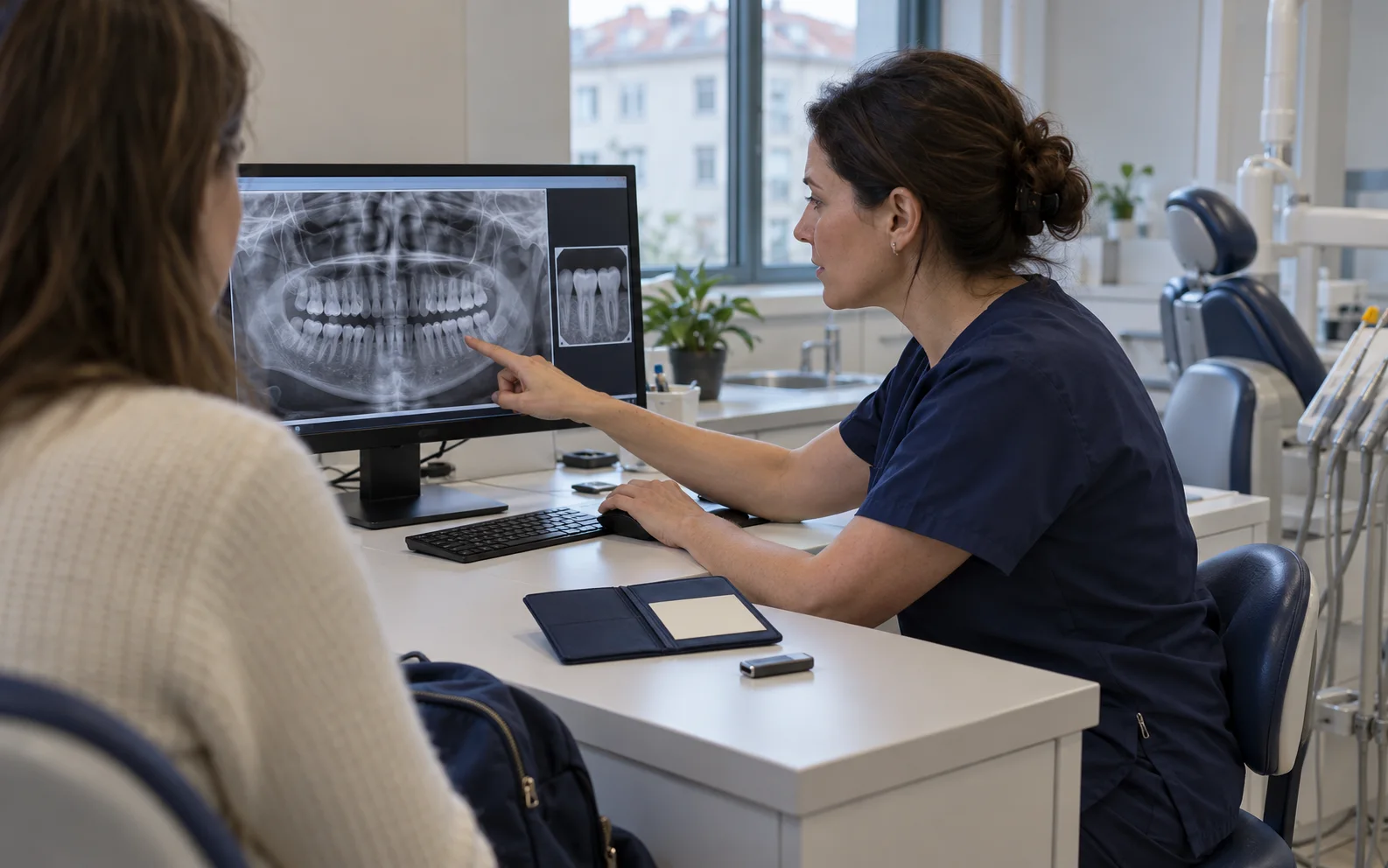
The first visit is usually an introduction: the mouth is examined, new x-rays are taken if they are needed, and a plan is discussed. Being asked for new images does not make the records you brought useless; the older pictures show how the bone and the teeth have changed over time, which is what makes comparison possible. Remember too that tooth numbering systems differ between countries, so having the tooth named in your documents, not only numbered, avoids confusion.
Frequently asked questions
How often is a dental check-up needed while living abroad?
There is no single number. An adult with a healthy mouth and a low risk of caries may go 12–24 months between check-ups, while bleeding gums or many fillings bring that down to six months or less. The dentist who examines you in your new country will name an interval; put it in your diary.
Are x-rays brought from my old country still useful?
Yes. The most useful form is the original digital files from the practice; many can supply them in DICOM format, while a photo or a printout loses detail. Make sure the date the image was taken is readable in the file name or on the image itself. For comparison, the most recent image together with one from a few years earlier is usually enough.
How do I get my records from my old practice?
A written request is usually enough. Ask separately for the x-ray files, the treatment history and any implant card, because a practice may otherwise send only a short summary. Writing a few weeks before you move leaves room to chase it if nothing arrives.
Can I bring an interpreter to a dental appointment?
Yes, and it is common. Some health systems arrange interpreting themselves; elsewhere the patient organises it. Even a companion who does not know the medical vocabulary can pass on when the pain started and what makes it worse. Saying in advance that an interpreter is coming lets the practice allow more time.
Should toothache abroad take me to the emergency department?
For pain alone, usually not; most countries run an out-of-hours dental service instead. But fever, swelling of the face or neck, or trouble swallowing or breathing belong in the emergency department, and going should not be delayed.
This content is for general information only and does not replace an examination.
Edited by
Nilufar Tulanova Şener
Medically reviewed by: Ahmet Metin Bal, Chief Dentist
This article draws on the clinical experience of the Papatya Dental team and is reviewed for accuracy before publication.
- Last updated:
- 2026-09-21
- Editorial contact:
- icerik@papatyadental.com