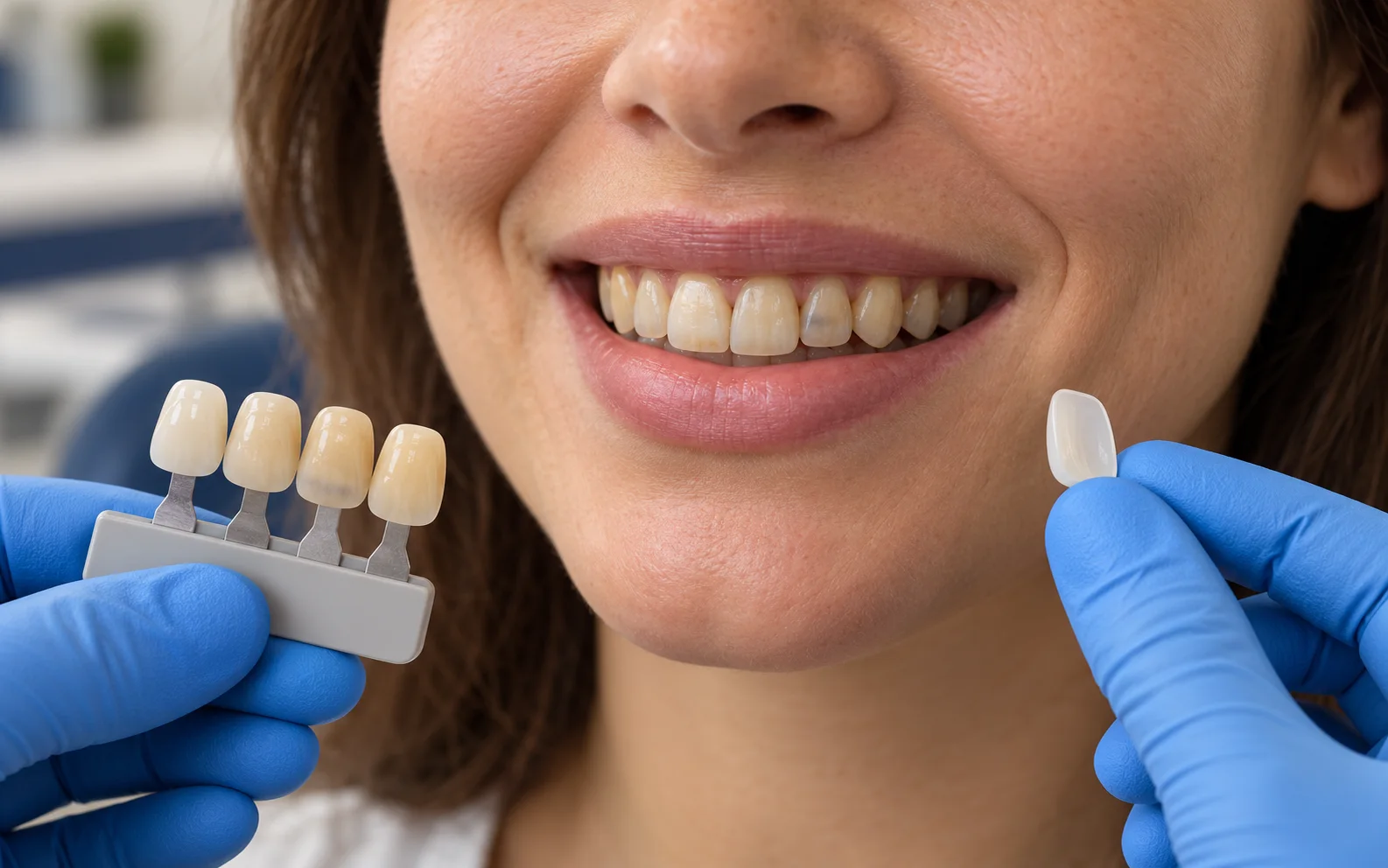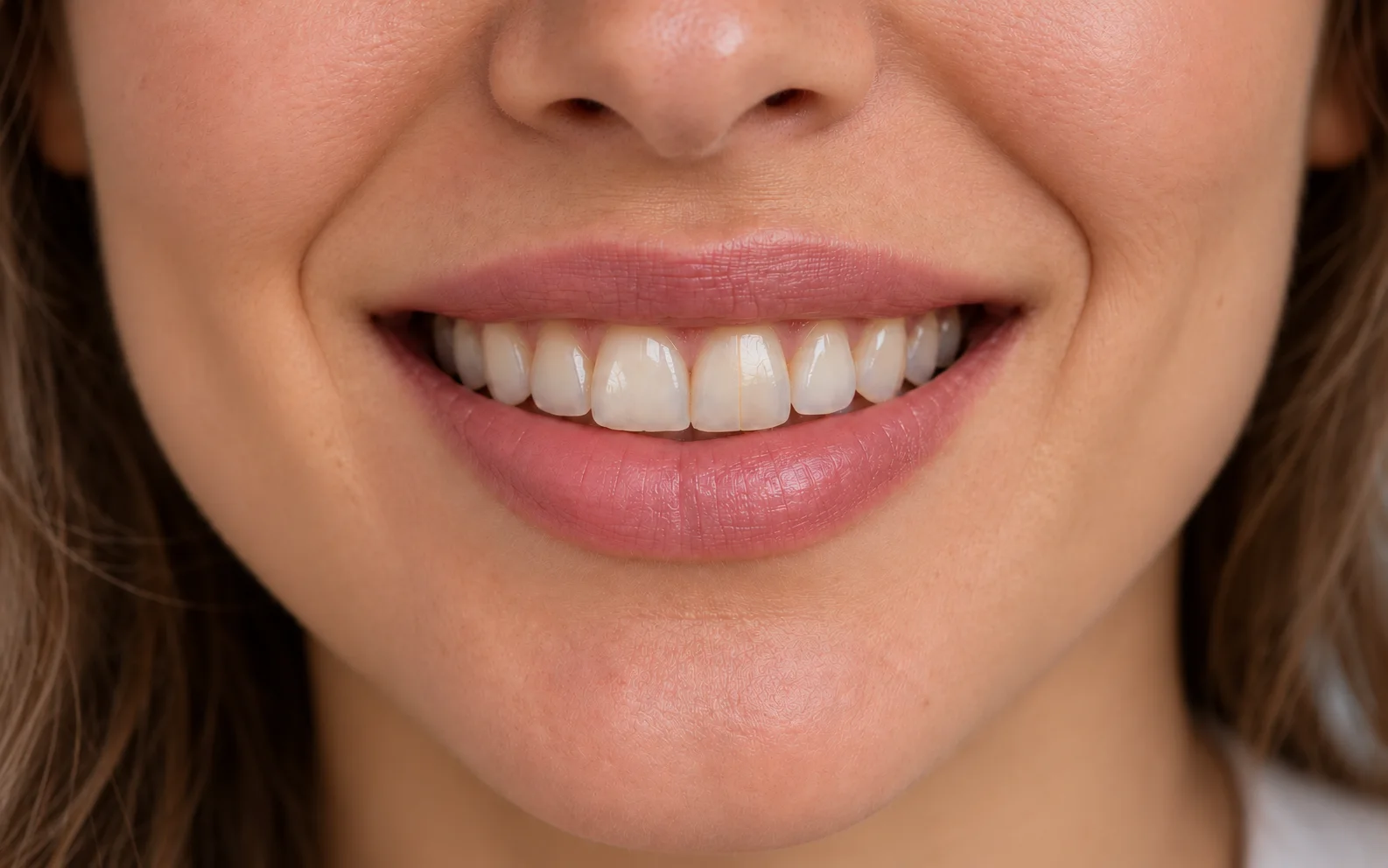

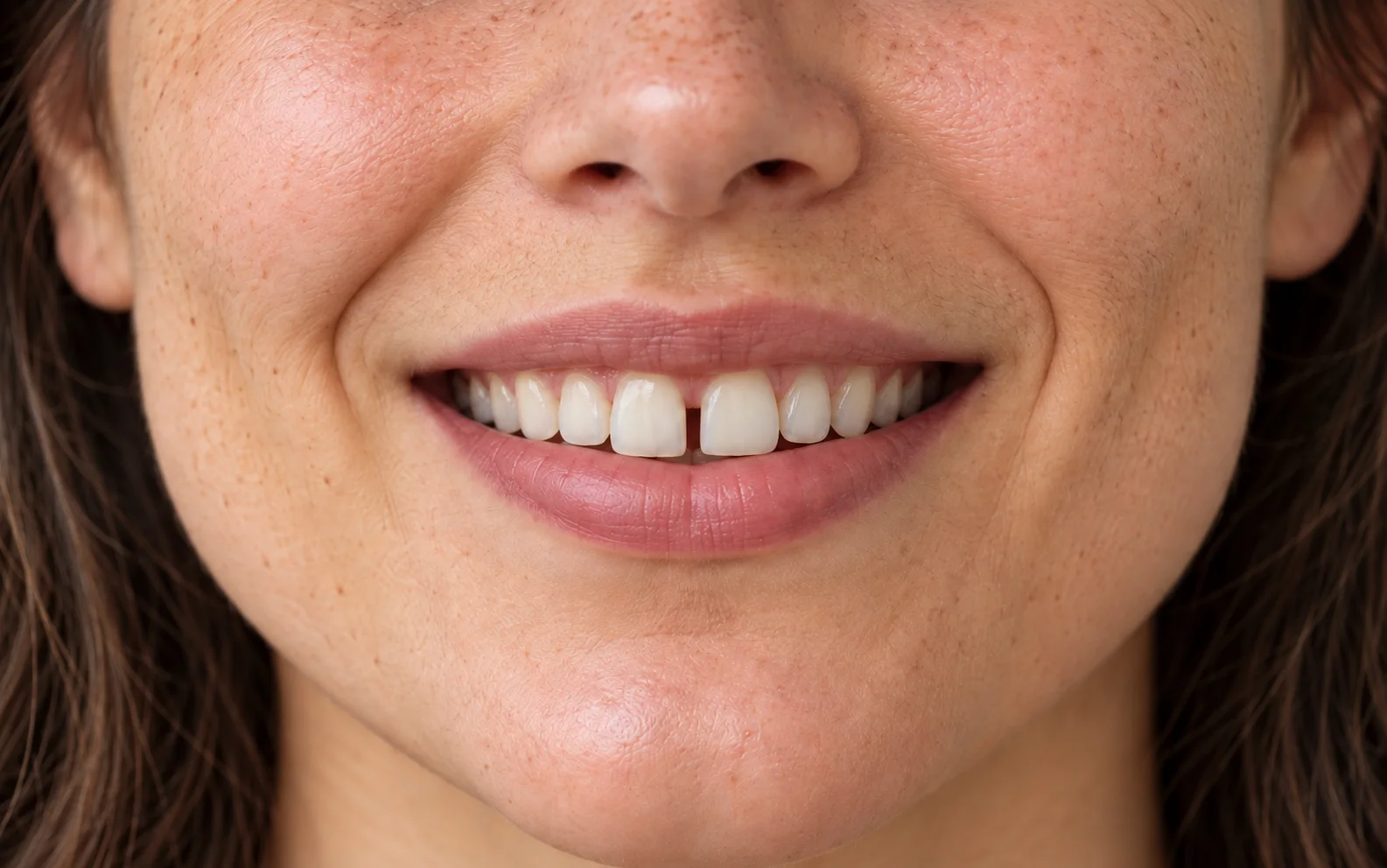
En glipe mellom fortennene er ikke alltid et problem
En diastema er rommet som står igjen mellom to tenner, og det vises tydeligst mellom fortennene i overkjeven. Så lenge ingenting blir skadet, tennene står fast og tannkjøttet er friskt, er glipen ingen sykdom i seg selv. Noen ser på den som en del av smilet sitt og lar den være, andre vil heller ha den lukket. Begge er fornuftige avgjørelser.
Hva som ligger bak glipen
En glipe mellom fortennene har sjelden én enkelt årsak. Oftest er forklaringen enkel, og noen situasjoner går igjen.
- Tenner som er smale for kjeven, slik at buen ikke fylles
- Et tykt bånd som løper fra overleppen og ned mellom de to fortennene
- En sidefortann som mangler fra fødselen eller er merkbart liten
- En vane med å presse tungen mot fortennene når man svelger
- Tannkjøttsykdom som svekker støtten rundt tennene og lar dem drive
Hos barn lukker glipen seg ofte av seg selv
En glipe mellom fortennene i overkjeven er et normalt syn mens melketennene fortsatt står og mens de voksne tennene kommer fram. Når sidefortennene og hjørnetennene kommer, skyver de fortennene mot hverandre, og glipen blir smalere av seg selv hos de fleste barn. Derfor er det vanligere å vente til tannskiftet er ferdig enn å behandle tidlig. Er glipen svært bred, eller ser en tann ut til ikke å komme fram, avklares det med tannlegen som ser barnet, hvor lenge man skal vente.
Leppebåndet kan holde glipen åpen
Den tynne folden som binder innsiden av overleppen til tannkjøttet, kalles leppebåndet. Når det er tykt og når ned mellom de to fortennene, kan det hindre dem i å komme sammen. Om det spiller en rolle, bedømmes ved undersøkelse og, der det trengs, et røntgenbilde. Trengs et lite inngrep på båndet, planlegges det som regel sammen med behandlingen som flytter tennene; gjort alene pleier det å la glipen bli stående som den var.
En glipe som dukker opp senere, er en annen sak
En glipe som har hatt samme bredde i årevis, er ikke det samme som en som åpner seg i voksen alder. Når betennelse svekker benet og tannkjøttet som holder en tann på plass, kan tenner drive framover, og gliper dukker opp der det ikke var noen. Tannkjøtt som blør, vond smak eller lukt, tannkjøtt som trekker seg tilbake og tenner som kjennes løse, kan følge med. Alle som merker en slik endring, bør oppsøke tannlegehjelp uten opphold: å lukke glipen mens årsaken under fortsatt er i gang, henter den bare tilbake.
Å veie hvordan den skal lukkes
Det finnes mer enn én måte å lukke en glipe på, og valget følger bredden, årsaken og tilstanden til tennene. Kjeveortopedisk behandling flytter tennene på plass og bevarer din egen emalje, men den tar tid. Å bygge tennene bredere med kompositt gir et resultat på én time, selv om kantene kan misfarges og arbeidet må fornyes. Porselensfasetter gir en flate som varer lenger, men krever at noe av tannoverflaten slipes ned. Hvilken vei som passer deg, avklares med tannlegen som undersøker munnen din.
Å lukke en glipe visker ikke bare ut avstanden; det endrer bredden på begge fortennene, bittet og linjen i smilet på én gang.
Ofte stilte spørsmål
Lukker en glipe mellom fortennene seg av seg selv?
Hos barn gjør den ofte det. Etter hvert som sidefortennene og hjørnetennene kommer fram, trekker de fortennene sammen, og glipen blir smalere uten behandling. Hos voksne lukker en glipe seg ikke av seg selv, og en som blir bredere, må få årsaken undersøkt.
Kan en diastema skade tennene?
Selve glipen gir ikke karies. En bred glipe kan legge en plystring i visse lyder og slippe mat lettere inn. Det som fortjener oppmerksomhet, er eventuelle tannkjøttproblemer som følger med, framfor rommet i seg selv.
Kan en lukket glipe åpne seg igjen?
Det kan den. Tenner som er flyttet, har en tendens til å drive tilbake om det ikke brukes retainer etterpå. En tungevane som fortsetter, eller tannkjøttsykdom som ikke er behandlet, kan også hente glipen tilbake.
Lukker kirurgi på leppebåndet glipen av seg selv?
Som regel ikke. Et inngrep på leppebåndet fjerner en hindring for at tennene kan komme sammen, men det flytter dem ikke. Derfor planlegges det stort sett sammen med behandling som flytter tennene, og rekkefølgen bestemmes av tannlegen.
Når bør et barn med en glipe bli sett?
Smerte, hovent tannkjøtt eller inntrykk av at en tann ikke kommer fram, er grunner til å bli sett med én gang. Ellers er den vanlige framgangsmåten en første kjeveortopedisk vurdering når de første voksne jekslene og fortennene er kommet.
Dette innholdet er til generell informasjon og erstatter ikke en undersøkelse.
Utarbeidet av
Fatih Bayır
Faglig gjennomgått av: Hasan Kamak, Førsteamanuensis, kjeveortoped
Denne artikkelen bygger på den kliniske erfaringen til teamet hos Papatya Dental og blir gjennomgått for riktighet før publisering.
- Sist oppdatert:
- 2026-09-21
- Redaksjonell kontakt:
- icerik@papatyadental.com