
Hva et filter faktisk endrer
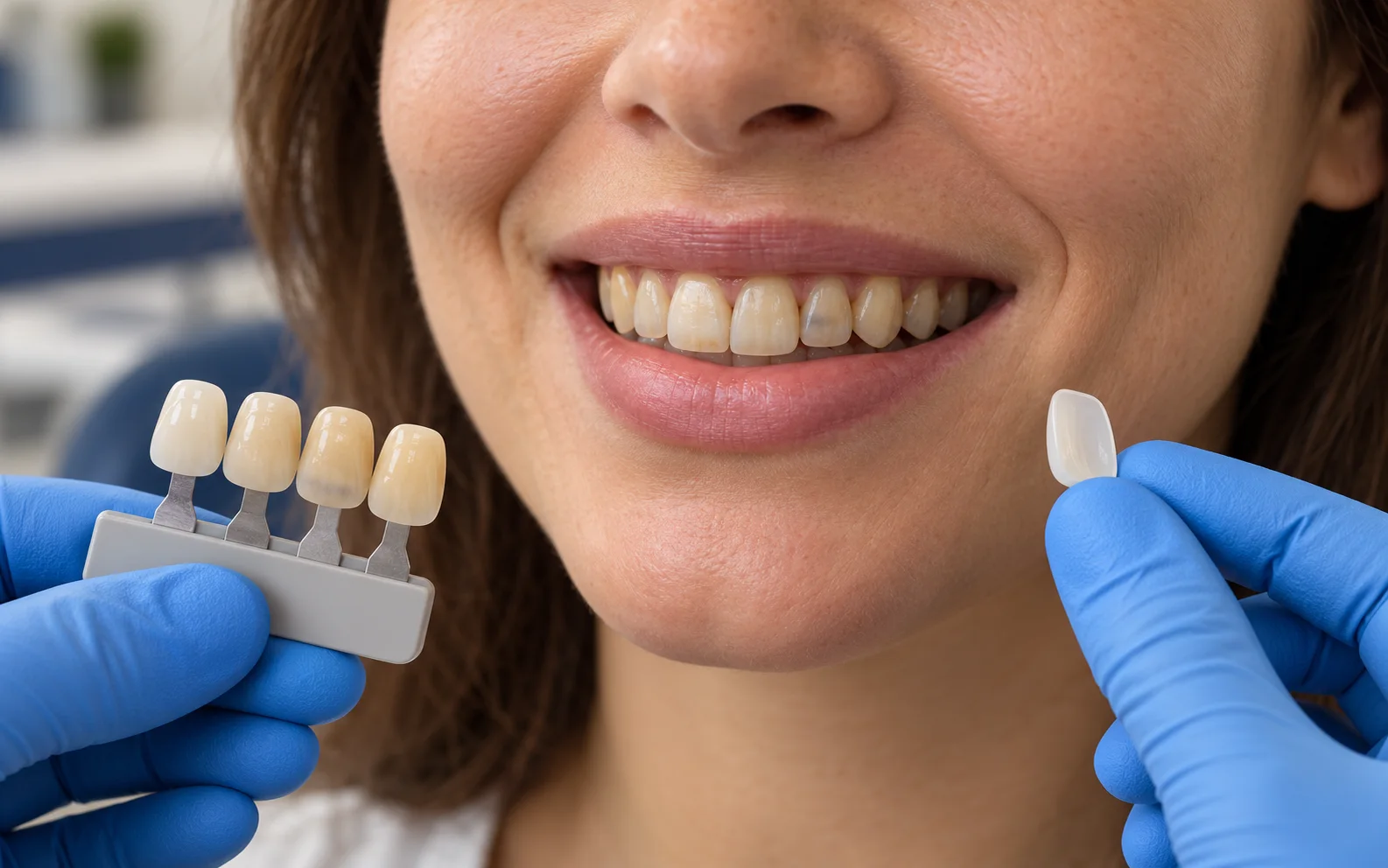
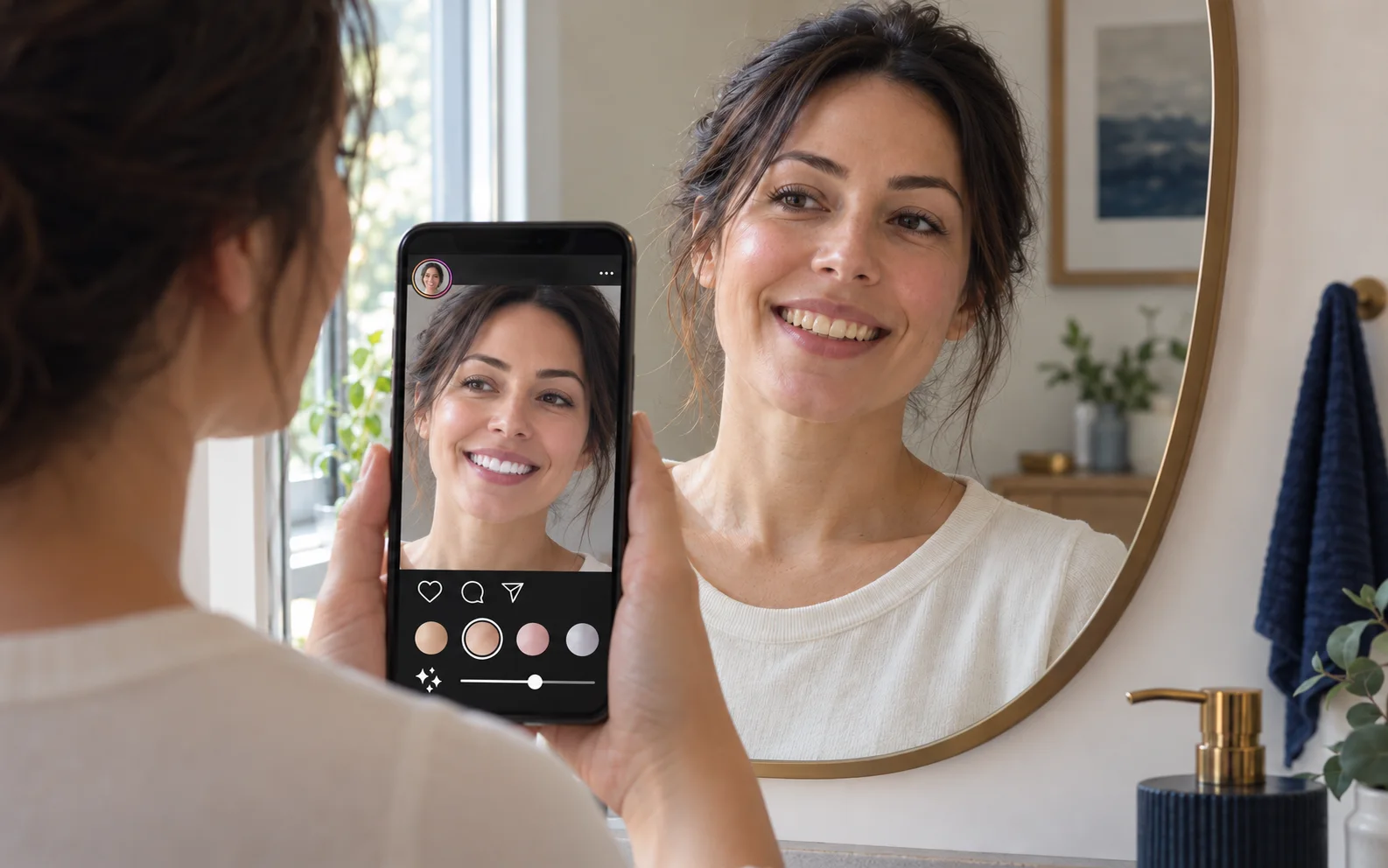
Et ansiktsfilter gjør to ting med tenner. Først løfter det fargen: de gule og grå tonene faller bort, og alt legger seg på én lys nyanse. Så rydder det kantene, så små fliser, lette dreininger og åpninger mykner bort fra synet. Fordi det samme filteret også glatter huden, kjevelinjen og øynene, ser du aldri etter forskjellen i tennene.
Ofte er ingenting av dette et bevisst valg. Telefonens egen behandling av bildet, appens standardinnstilling og fargebalansen på skjermen legger seg sammen, og et lysnet smil kan dukke opp uten at noen har trykket på en knapp. Sammenligningen gjøres så mot det bildet.
Naturlig tannfarge er aldri ett flatt lag
Emaljen, det ytre laget, er halvt gjennomskinnelig, og dentinet under er naturlig gulaktig. Fargen du ser, er summen av de to. Det er derfor området nær tannkjøttet ser mørkere ut mens bitekanten ser lysere ut og drar mot blågrått. En tann som er flatt, matt hvit helt ut til kanten, er sjelden i naturen.
- En gjennomskinnelig kant: lyset går gjennom tannen der, så fargen skifter mot blått og grått.
- Et mørkere bånd ved tannkjøttet: emaljen blir tynnere der, og mer av dentinet skinner gjennom.
- Fine linjer og myke bølger på overflaten: de sprer lyset, så tannen ikke ser død ut.
- Langsom mørkning med alderen: emaljen blir tynnere og nyansen gulner, og det er en forventet endring.
Små skjevheter gjør et ansikt gjenkjennelig
De to fortennene er ikke speilbilder av hverandre. Kantene deres ligger i litt ulik høyde, hjørnene er avrundet ulikt, og hos de fleste står sidefortennene litt lenger bak. Ansiktet selv er heller ikke symmetrisk: øyehøyde, munnvik og midtlinje ligger alle litt forskjøvet fra hverandre. Det er de små forskjellene som gjør et ansikt gjenkjennelig. Et smil gjort nøyaktig symmetrisk på en datamaskin leses som kunstig av de fleste som ser det, selv når de ikke kan si hvorfor.
Det som får et smil til å se naturlig ut, er ikke jevnhet, men måten lyset sprer seg på tannflaten.
Hvorfor sammenligning avler misnøye
Sammenligningen står aldri mellom to like bilder. Ditt eget ansikt ser du i et speil, i dagslys og i bevegelse; det andre smilet ser du utvalgt, redigert og frosset i ett bilde. Bedøm de to med samme målestokk, og resultatet går alltid imot deg. Utgangspunktet flytter seg også: etter hundrevis av redigerte ansikter på en dag blir det spennet du regner som normalt, smalere.
Kameraet er heller ikke nøytralt
Selv med alle filtre av viser ikke et fotografi et ansikt slik det er. Et vidvinklet frontkamera forstørrer midten av et nærbilde og skyver sidene bort, så fortennene kommer ut større og sidetennene mørkere enn de er. Direkte blits får emaljen til å se flat og livløs ut, mens varmt innelys får tenner til å se mørkere ut enn de er. Det samme smilet kan komme ut i to ulike farger i to rom.
Hva som hjelper når du ser på ditt eget smil
Den praktiske måten å få forventningene nærmere virkeligheten på, er å gjøre sammenligningen rettferdig. Det betyr å se på et bilde uten filter og uten redigering, i dagslys om du kan. Det betyr også å sette navn på hva som plager deg: fargen, tannkjøttlinjen, én dreid tann, åpningen mellom to tenner. En konkret setning forteller en tannlege langt mer enn et skjermbilde.
- Ta opp en kort video i dagslys uten filter; et smil i bevegelse er ærligere enn et stillbilde.
- Skriv ned i én setning hva som plager deg: farge, hvordan tennene står, en åpning eller tannkjøttlinjen.
- Bruk dine egne eldre fotografier som referanse framfor et redigert bilde.
- Smerte, blødning eller en løs tann er ikke en kosmetisk sak og bør ses på først.
Ofte stilte spørsmål
Får filtre virkelig tenner til å se hvitere ut enn de er?
De fleste filtre hever lysstyrken i de lyse områdene av et ansikt og flater ut forskjellene mellom dem. Tennene ender på én blek nyanse med gult og grått tatt ut. Slå av filteret, og det samme smilet ser annerledes ut; det som endret seg, var bildet, ikke tennene.
Hvor hvit skal en naturlig tann være?
Det finnes ingen eneste riktige nyanse. Fargen varierer fra person til person og til og med fra tann til tann i den samme munnen. Hjørnetenner er vanligvis litt mørkere enn fortennene, og bitekanter er lysere enn området nær tannkjøttet. Hudtone og leppefarge endrer også hvor lys en tann virker.
Bør en litt skjev tann rettes?
Det kan ikke avgjøres uten å se munnen. Handler en liten dreining bare om utseendet, er behandling ikke nødvendig. Lager den et sted en tannbørste ikke når, belaster bittet eller sliter ned nabotannen, er spørsmålet ikke lenger kosmetisk. Bare en undersøkelse kan skille de to.
Er det galt å vise en tannlege et filtrert bilde?
Det er ikke galt, men alene er det ikke nok. Et redigert bilde viser hva du liker; det viser ikke hva som er mulig i munnen din. Legg til et bilde uten filter og noen setninger om hva som plager deg, så blir samtalen langt mer konkret.
Kan stadig sammenligning virke inn på hvordan jeg har det?
Å se lenge på redigerte bilder kan snevre inn målestokken du bedømmer ditt eget utseende etter. Begynner tanker om smilet ditt å komme i veien for dagliglivet, er det verdt å ta opp med tannlegen din, og støtte fra en fagperson innen psykisk helse kan hjelpe.
Vil bleking gi meg den nyansen jeg ser i et filter?
Nei. Bleking kan lysne tannens egen nyanse noen trinn, men den endrer verken gjennomskinnelighet eller overflatetekstur, og den flate hvitheten i et filter kommer nettopp av at de to er visket ut. Resultatet varierer med tykkelsen på emaljen og med startnyansen.
Dette innholdet er til generell informasjon og erstatter ikke en undersøkelse.
Utarbeidet av
Samed Kağan Bozkurt
Faglig gjennomgått av: Eren Koluaçık, Tannlege, estetisk tannbehandling
Denne artikkelen bygger på den kliniske erfaringen til teamet hos Papatya Dental og blir gjennomgått for riktighet før publisering.
- Sist oppdatert:
- 2026-09-21
- Redaksjonell kontakt:
- icerik@papatyadental.com