

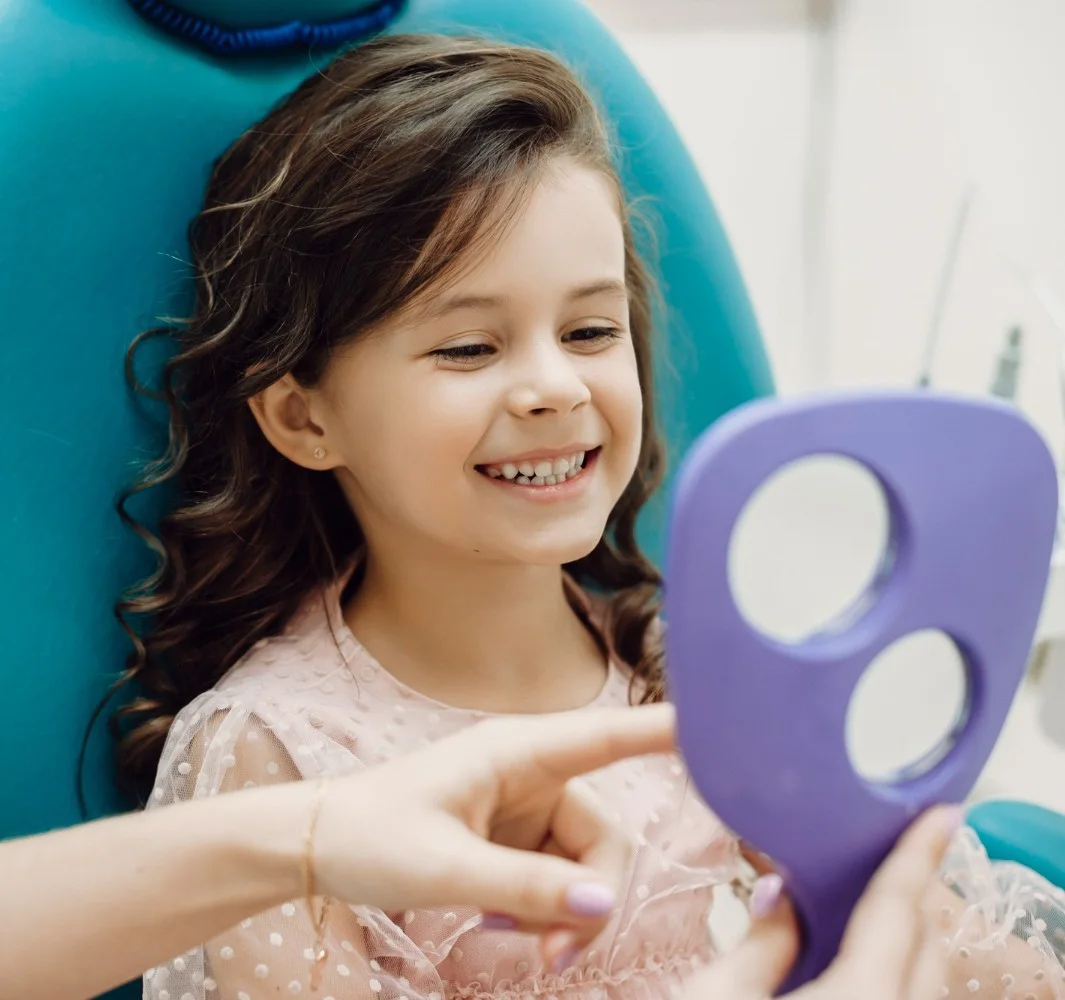
What Is Fluoride Application?
Fluoride application involves applying a varnish or gel containing concentrated fluoride to the tooth surface to increase the enamel's resistance to decay. Tooth enamel is constantly undergoing an exchange: after sugary foods, the mouth becomes acidic and minerals are lost from the surface; when the environment returns to normal, minerals in saliva are deposited back into the enamel. Decay begins when the balance between these two processes shifts towards mineral loss. Fluoride makes the redeposited mineral structure more resistant to acids and shifts the balance towards repair.
Fluoride applied in the clinic is not the same as the fluoride in toothpaste used at home. The fluoride in toothpaste provides daily protection at a low concentration, while the varnish used in the clinic is considerably more concentrated and continues to release fluoride for hours by adhering to the tooth surface. This is why the two do not replace each other: clinical application is an additional layer on top of daily care at home.
The application is simple and non-invasive. The teeth are cleaned and dried, fluoride varnish or gel is applied to the surface, and the procedure is completed within a few minutes. There are no needles, cutting or numbing. Your child only needs to keep their mouth open for a short time, so the application is generally straightforward even for very young children. After the application, avoiding food, drinks or brushing for a certain period may be recommended. Your dentist will tell you how long this should be, depending on the product used.
The scope of fluoride application is often misunderstood. Fluoride affects all surfaces of the tooth, which is how it differs from a protective coating that covers only the chewing surface, and the two are often planned together for children at high risk of decay. However, fluoride does not replace brushing or a healthy eating routine. Fluoride alone will not be enough for a child who frequently drinks sugary beverages. The frequency of application is not the same for every child; it is determined by assessing their history of decay, the number of existing cavities, eating habits and how well home care is being maintained.
Who Is It Suitable For?
Whether your child needs fluoride application and how often it should be carried out are determined by considering their history of decay, current dental condition, eating routine, how well home care can be maintained and their age together. The same interval is not used for every child.
If your child has had decay before: If decay has been found in any of your child's teeth, they are considered to be at high risk of decay, and regular fluoride application becomes a priority.
If there are early signs of decay on the surface: If there are early signs in the form of white spots, with no cavity yet formed in the enamel, fluoride may support repair in this area. At this stage, intervention may prevent the decay from progressing to the point where a filling is needed.
If sugary drinks and snacks are consumed frequently: The factor that determines the risk is frequency rather than quantity. If something sugary is consumed frequently during the day, the enamel remains in an acidic environment for longer, making fluoride support more important.
If regular brushing is difficult: In very young children or children who resist brushing, fluoride provides additional protection while a consistent care routine is being established.
If your child wears braces or an appliance: If there is an appliance in the mouth that makes cleaning more difficult, plaque build-up increases and fluoride application may be planned regularly.
If there is a condition that causes dry mouth: If your child has a diagnosis or regularly takes a medicine that reduces saliva production, the enamel's natural repair capacity decreases. Fluoride provides more noticeable benefits in this situation.
Why Papatya Dental?
Fluoride is planned according to risk, not as a routine At Papatya Dental, preventive treatments are planned by our dentist specialising in paediatric dentistry. Fluoride application is not treated as a routine carried out at the same interval for every child; a personalised frequency is determined after assessing the child's history of decay, current findings and eating routine.
Total fluoride intake is taken into account The type of toothpaste being used and any other sources of fluoride are discussed before the application. The aim is not only to provide protection, but also to ensure that total intake remains within suitable limits for your child's age.
Preventive treatments are considered together Fluoride covers all tooth surfaces, while a protective coating seals the deep grooves on the chewing surface. They serve different purposes. For children at high risk of decay, the appropriate combination is determined in a single assessment rather than deciding on each treatment separately at different appointments.
Information for parents is part of the process Fluoride alone is not enough. At the end of the appointment, we explain brushing techniques that reach the chewing surfaces, cleaning between the teeth and the frequency of sugary food and drink consumption. Preventive treatment has its full value when combined with a consistent routine at home.
The experience in the dental chair is part of the treatment Because fluoride application does not involve needles or cutting, it is often the first procedure through which a child becomes familiar with the dentist. We plan this appointment without rushing; the child's first relationship with dentistry can affect their cooperation with treatment in the years that follow.
A multidisciplinary team under one roof Dentists specialising in paediatric dentistry, periodontology, oral and maxillofacial surgery and cosmetic dentistry work at the same clinic. If the examination reveals a finding beyond preventive treatment, the child can be referred within the clinic.
Follow-up across borders in seven languages We manage the process in seven languages for families living in Antalya and those travelling from abroad. Families returning to their home country receive a record showing the product used, the date and the examination findings, allowing follow-up to continue seamlessly with another dentist.