


What Is a Full Metal Crown?
A full metal crown covers the biting surface and all sides of a tooth and is made from metal throughout. It is cast from a high-gold alloy or from a dental alloy without gold, such as cobalt-chromium. There is no porcelain on top, so it is gold or silver in colour rather than tooth-coloured.
It is one of the crown types with the longest track record. In a large clinical study following cast gold restorations, some had been in the mouth for more than 50 years. This will not be the same for everyone: oral hygiene, tooth grinding and the condition of the tooth itself all affect the outcome.
The main advantage of metal is that it holds up without breaking even in a thin layer. Porcelain and ceramic crowns need a certain thickness, so more of the tooth is removed for them. With a full metal crown that thickness is smaller and more of your own tooth is kept.
Appearance is its main drawback. Most people do not want a metal colour on teeth that show when they smile. That is why full metal crowns are now mostly considered for the molars at the very back of the mouth, for teeth that take heavy chewing forces, or for teeth that are too short for a thicker crown.
Material
High-gold alloys, or dental alloys without gold such as cobalt-chromium.
Where it is used
Back molars that do not show when you smile, especially the teeth at the very back.
Tooth reduction
Can be fitted with less tooth removed than a ceramic crown.
Fracture
With no porcelain layer, there is nothing to chip or crack off.
Cementation
Usually fixed with conventional dental cements; the inside of the crown does not need acid etching.
Who Might a Full Metal Crown Suit?
A full metal crown is considered when strength matters more than appearance. The decision does not rest on the material alone: the position of the tooth, how much sound tooth is left and your bite are assessed together.
Back molars
On the first and second molars, which do not show when you smile, a metal colour is not a concern for most people. These teeth also take the heaviest chewing forces.
People who clench or grind
If you grind or clench your teeth at night, a crown without a porcelain layer removes the risk of chipping. A night guard can also be discussed.
Short or worn teeth
When there is little space between a tooth and the opposing tooth, or the tooth is short or worn, there may not be room for the thickness a ceramic crown needs. A metal crown, which can be made thin, may be an option.
Back teeth with large fillings or root canal treatment
By covering the whole tooth, it can help protect a molar weakened by a large filling or root canal treatment against chewing forces.
Tooth position and smile line
Your dentist checks whether the tooth shows when you smile and talk. For teeth that show, a tooth-coloured option is usually suggested.
Sensitivity to metal alloys
Some people are allergic to alloy components such as nickel. If you have a known metal allergy, mention it at the examination so the alloy can be chosen accordingly.
Remaining tooth and root
Your dentist checks there is enough sound tooth to hold a crown and, if needed, takes X-rays to look at the root and surrounding bone.
Front teeth that show
A metal colour is not usually chosen for front teeth or for premolars that show when you smile.
Untreated gum disease or infection
If your gums bleed or are inflamed, or there is an infection at the root tip, these problems need treating first.
Possible Risks and Limits of a Full Metal Crown
The risks of a full metal crown are mostly linked to the tooth itself and to how it is looked after. Fracture of the material is rare.
Appearance
A metal colour is not suitable for teeth that show. Before deciding, talk to your dentist about whether the crown will be visible when you smile.
Temporary sensitivity
After the tooth is prepared and the crown cemented, there may be brief sensitivity to hot and cold.
Cement washout and decay under the crown
If the cement wears away at the edge over the years, the crown can loosen or decay can start underneath. Regular check-ups help catch this early.
Metal allergy
Although uncommon, some people react to alloy components such as nickel. If you have a known allergy, the alloy is chosen with this in mind.
Nerve problems
In teeth with deep decay or large fillings, root canal treatment may still be needed after the crown is fitted.
Gum irritation
Cement left at the edge or poor cleaning can lead to gum inflammation.
How Is a Full Metal Crown Made?
A full metal crown is usually completed in two appointments. At the first, the tooth is prepared and impressions are taken. Once the crown has been cast in the laboratory, it is tried in and cemented at the second.
- 1
Examination and planning
Your dentist checks the tooth, any old fillings, your gums and your bite, and takes X-rays if needed. If you need decay treatment, a filling or root canal treatment first, this is planned before the crown.
- 2
Preparing the tooth
Under local anaesthetic, the tooth is shaped so the crown can sit on it. Because metal can be made thin, less of the tooth is removed than for a ceramic crown.
- 3
Impressions and a temporary crown
Impressions are taken of the prepared tooth and the opposing teeth. A temporary crown protects the tooth while the permanent one is being made.
- 4
Casting in the laboratory
The dental technician first models the crown in wax and then casts it in the chosen alloy. The inside is finished to fit the tooth, the outside to fit your bite, and the surface is polished.
- 5
Try-in and bite check
Your dentist checks that the crown seats fully on the tooth, that its edges meet the gum neatly, and how it touches the neighbouring teeth and your bite. Small adjustments are made if needed.
- 6
Cementing the crown
Because a full metal crown fits tightly around the shape of the tooth, it is usually fixed with a conventional dental cement such as glass ionomer, resin-modified glass ionomer or zinc phosphate. The inside of the crown is not etched with acid. The choice of cement depends on the height of the tooth, how well it can be kept dry from saliva and whether the tooth is sensitive.
Alternatives to a Full Metal Crown
Depending on where the tooth is, how much of it is left and what you expect from its appearance, these options can also be considered.
Monolithic zirconia crown
A tooth-coloured, one-piece and strong option. It is often considered for back teeth by people who do not want a metal look.
Porcelain-fused-to-metal crown
A metal framework inside with tooth-coloured porcelain outside. It has a long clinical record, but the porcelain layer can chip.
E.max (lithium disilicate) crown
A glass-ceramic crown used on front teeth and some back teeth, with translucency close to a natural tooth.
Onlay or inlay
A restoration that covers only the damaged part of the tooth. If enough sound tooth is left, it can be considered instead of a crown, with less tooth removed.
Materials and Cementation in Full Metal Crowns
Full metal crowns are made from two main groups of alloy. High-gold alloys stay stable in the mouth, are easy to work with and can be fitted to the tooth very precisely. Alloys without gold, such as cobalt-chromium, are harder and are used as a more economical option.
How long a crown lasts depends not only on its material but also on how it is fixed to the tooth. Some ceramic crowns need special surface treatments and resin cements to bond well, whereas a full metal crown is held mainly by the shape the tooth has been given. This is why conventional cements work well with it.
During cementation it matters that the tooth is kept dry from saliva, that the cement is mixed to the right consistency, and that excess cement is cleaned away from the edges of the crown. Cement left at the edge can irritate the gum and make it easier for plaque to build up.
High-gold alloys
Alloys that stay stable in the mouth, resist corrosion and allow a precise fit on the tooth.
Alloys without gold
Harder alloys such as cobalt-chromium can be made thinner and are a more economical option.
Conventional cement
Glass ionomer, resin-modified glass ionomer and zinc phosphate cements are commonly used for full metal crowns.
Marginal fit
A crown edge that meets the tooth closely helps reduce the risk of decay forming underneath over time.
X-ray assessment
X-rays taken when needed show the condition of the root, any root filling and the surrounding bone.
Settling In and Caring for a Full Metal Crown
There may be a short period of getting used to the crown after it is fitted. Most people stop noticing it within a few days.
- 1
The first few hours
Avoid eating and hot drinks until the numbness wears off, and take care not to bite your cheek or tongue.
- 2
The first few days
The tooth may be briefly sensitive to hot and cold. This usually settles on its own.
- 3
The first few weeks
The new crown may feel different to your tongue at first. If it feels high when you bite, go back for a check; a small adjustment is usually enough.
- 4
Long term
The crown can be used for many years. At regular check-ups your dentist looks at the crown edge, your gums and your bite.
Daily cleaning
Brush the crown twice a day as you would your own tooth. Clean where the crown meets the gum and between the teeth with floss or an interdental brush.
Clenching and grinding
If you clench or grind your teeth, tell your dentist. A night guard can help protect both the crown and your other teeth.
Regular check-ups
Decay under the crown, cement washing out at the edges or gum recession are easier to deal with when spotted early.
Pain or a high spot when biting
If biting still hurts or the crown still feels high a few days after it was fitted, it needs checking.
The crown is loose or comes off
If the crown moves or comes off, keep it and contact the clinic. Do not try to glue it back yourself.
Gum swelling or signs of allergy
Lasting redness or swelling of the gum around the crown, or a burning or itching feeling in your mouth, needs assessment.
What Affects the Cost of a Full Metal Crown
The cost of a full metal crown depends on the type of alloy and on any extra treatment the tooth needs. You will get exact information after the examination and your personal treatment plan.
Type of alloy
There is a clear difference between high-gold alloys and alloys without gold. For gold alloys, the cost is also affected by the price of gold.
Treatment needed first
If you need decay treatment, a filling, root canal treatment or a post before the crown, the treatment becomes more extensive.
Number of teeth
A single crown and a plan covering several teeth need different amounts of laboratory work.
Gums and bite
If gum treatment or bite adjustment is needed, these steps are added to the plan.
Appointment plan
For patients coming from abroad, the laboratory time between the two appointments is planned together with the length of your stay in Antalya.
Before / After

Frequently Asked Questions About Full Metal Crowns
Is a full metal crown the same as a gold crown?
A gold crown is a type of full metal crown made from a high-gold alloy. A full metal crown can also be made from alloys without gold, such as cobalt-chromium. Neither has a porcelain layer.
How long does a full metal crown last?
Full metal crowns are known for lasting a long time, and some cast gold restorations have been recorded in the mouth for more than 50 years. Even so, lifespan varies from person to person: oral hygiene, tooth grinding and regular check-ups all have a direct effect.
Why is less of the tooth removed?
Metal stays strong even in a thin layer, so less space needs to be made for the crown. Ceramic crowns have to be thicker so they do not break, which means more of the tooth is removed.
How is a full metal crown cemented?
It is usually fixed with a conventional dental cement such as glass ionomer, resin-modified glass ionomer or zinc phosphate. Because the crown fits tightly around the tooth, it does not need the special surface treatment used for some ceramic crowns.
Will a metal crown stop me having an MRI scan?
Dental crowns do not usually prevent an MRI scan, but the image can be distorted in the area where there is metal. Simply tell the radiology team before the scan that you have a metal crown.
Can I have a full metal crown if I have a metal allergy?
If you have a known metal allergy, always mention it at the examination. Depending on which metal you react to, a different alloy or a metal-free crown can be chosen.
How many days do I need to stay in Antalya?
A full metal crown usually needs two appointments, with a few days in between for the crown to be made in the laboratory. The exact time depends on whether you need treatment beforehand and is confirmed after the examination.
Medical sources
View medical sources
Medically reviewed by

Nilufar Tulanova Şener
Dentist, Aesthetic Dentistry
View doctor profile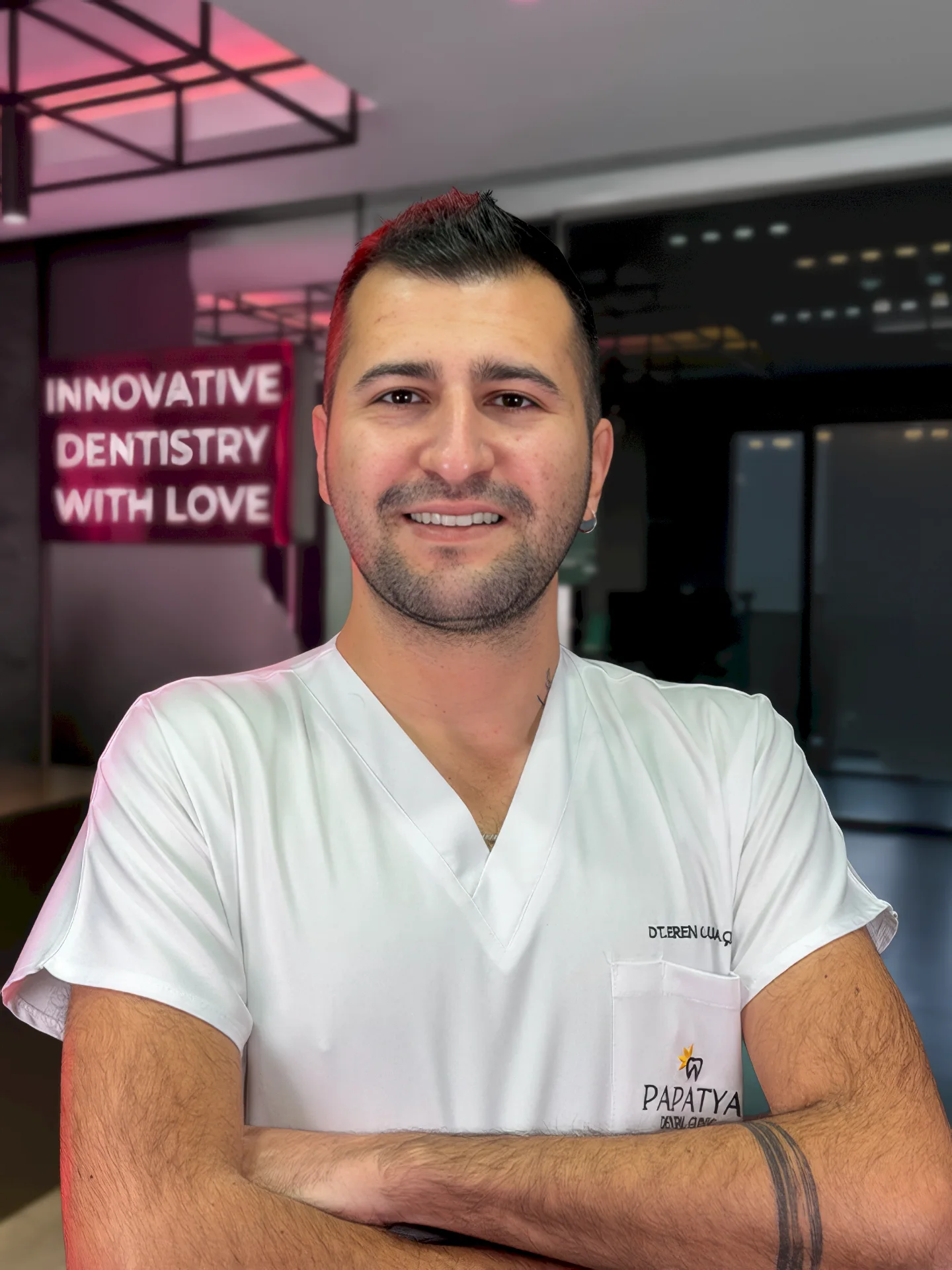
Eren Koluaçık
Dentist, Aesthetic Dentistry
View doctor profile
Şerife Nur Kerpiçci
Dentist, Aesthetic Dentistry
View doctor profileLast medical review: 12 October 2026