


Can You Go Back to Normal Teeth After Veneers?
You can have veneers removed, but you can only go back to the teeth you had if no enamel was taken away in the first place. Conventional veneers need room on the tooth, so a layer of enamel is filed off before they are bonded. A 2025 systematic review describes this as an irreversible loss of tooth structure. Enamel does not grow back.
What happens next depends on what is under your veneers. If your teeth were prepared, taking the veneers off leaves a tooth with less enamel than before, and it will normally need a new veneer, a crown or composite bonding to cover it. If nothing was filed away, as with no-prep veneers, the tooth keeps its original shape and a dentist can take the veneers off, although leftover bonding cement still has to be cleaned away.
Removing a veneer is a dental procedure in its own right. The authors of a 2025 systematic review of laser removal call the removal of ceramic veneers difficult, time-consuming and invasive. Veneers are bonded to stay on, so they are cut away with a dental drill or loosened with an erbium laser. Pooling three of its 16 studies, that review found that erbium lasers significantly lowered shear bond strength, and it concluded that with the right settings veneers can be removed without damaging the tooth underneath. The authors of a 2026 review of 29 studies add that laser results cannot yet be tied directly to outcomes for patients, and that more clinical studies are needed.
In practice, veneers tend to be replaced rather than simply taken off, for reasons such as a chip, a dark line at the edge or a gum line that has moved. In a study of 1,459 veneers in 341 patients at one private practice, 17.1% failed and were replaced during follow-up of up to ten years, usually with the same material, and another 17.3% were repaired and stayed in place. Most of the veneers in the study were direct composite, which had four times the risk of failure of ceramic in the survival analysis.
Papatya Dental Clinic is in Konyaaltı, Antalya, on Turkey's Mediterranean coast. It welcomes patients from the UK and elsewhere in Europe, and many of its enquiries come from the US. Whether you can go back to your natural teeth is one of the most useful questions to ask before a smile design, wherever you have it done: the answer depends on how much of the tooth is prepared, not on the country.
Can veneers be removed?
Yes, by a dentist, with a dental drill or an erbium laser.
Back to your natural teeth?
Only if no enamel was filed away. Enamel does not grow back.
Conventional veneers
The tooth usually needs a new veneer, a crown or bonding after removal.
No-prep veneers
The closest to reversible, because the tooth is not filed.
Removing them yourself
Never. Pulling at a veneer can break it or damage the tooth.
Patient stories
In their own words
Patients who travelled to Antalya talk about their treatment, their days at the clinic and the moment they first saw their new teeth. Each story is that patient's own experience; your plan is decided after your examination.
David from Nottingham talks through his whole treatment in an eight-minute interview: the first consultation, implant surgery, recovery and his new smile. Read the story
Which Veneers Can Be Reversed?
Veneers can be reversed only when the tooth was not prepared for them. Veneers on prepared teeth can be replaced, but the enamel that was removed cannot be put back, so check which kind you have or are being offered.
No-prep veneers
They are bonded without filing the tooth. At Papatya Dental Clinic, NopLamina veneers are 0.2–0.3 mm thick and the surface is only lightly roughened, so a dentist can take them off if needed and the natural tooth is preserved.
No-prep composite veneers
A 7-year study of 80 indirect composite veneers in 35 patients describes the no-prep technique as reversible, but it measured survival, not removal. The survival rate at seven years was 91.3%, with failures from debonding and fracture.
Composite bonding
Tooth-coloured resin is added to the tooth, usually with no drilling, and a dentist can remove or redo it, taking care over the enamel underneath.
Veneer or crown
A crown covers the whole tooth and needs far more preparation than a veneer, so your dentist first checks which one you have.
How much tooth was prepared
The examination and X-rays help show what is left, and old records from the dentist who fitted them can help.
Enamel or dentine
Ceramic bonds most reliably to enamel, and a 2024 review of 55 studies found that exposed dentine lowers the success of ceramic veneers.
Health of the teeth and gums
Decay under a veneer, a root-treated tooth or gum disease can change what can be done next.
Teeth filed for conventional veneers
The enamel does not grow back, so the teeth normally stay covered with a new veneer, a crown or bonding.
Crowns sold as veneers
Much more of the tooth has been removed, so it will normally need a crown or bridge from then on.
Teeth with a lot of exposed dentine
They can be more sensitive and need protecting, so leaving them uncovered is rarely an option.
The Risks of Removing Veneers
The main risk of removing veneers is losing more enamel, because veneer, cement and tooth can be hard to tell apart. These are the risks to discuss before you decide.
Losing more enamel
A drill can remove some tooth along with the cement, and each replacement can take a little more.
Sensitivity
Teeth with less enamel, or with dentine showing, can react to cold and sweet food.
A weaker bond next time
Ceramic bonds best to enamel, so a tooth with little enamel left may need a different plan, such as a crown.
Heat
Drills and lasers both produce heat, which can irritate the nerve of a tooth. In laser studies, the rise in pulp temperature stayed below commonly cited critical values with suitable settings. Clinical studies are still needed.
The look of the teeth underneath
Prepared teeth can look thinner or darker, so going without a cover is often not what people expect.
Removing a veneer yourself
Pulling or prising at a veneer can break it or the tooth. Only a dentist should remove one.
How Veneers Are Removed and Replaced
A dentist takes the old veneers off at a planned appointment, cleans and checks each tooth, then covers it with what was agreed beforehand, such as a new veneer, a crown or bonding. If you are travelling, a veneer trip to Antalya is usually planned for about 7 days; removing old veneers or treating what is found can change that, and your coordinator confirms the days once your teeth have been assessed.
- 1
Before you travel
You send photos, a video and any recent X-rays, and the clinic's dentists prepare an online assessment and a draft plan. Your coordinator explains the options, the dates and how many days you need.
- 2
Examination
Your teeth, gums and bite are examined, and X-rays help show the condition of the teeth under the veneers. Your dentist also checks whether you have veneers or crowns.
- 3
Agreeing what comes next
You and your dentist decide what will cover each tooth: new veneers, crowns, bonding or, where no enamel was removed, nothing at all.
- 4
Removing the veneers
Your dentist takes the veneers off, with local anaesthesia if needed, and explains the method and its risks before starting.
- 5
Cleaning the tooth
Leftover bonding cement is removed and the tooth surface is checked for decay, cracks and exposed dentine.
- 6
Protecting the teeth
Prepared teeth are not left bare: temporary veneers or bonding cover them while anything new is being made.
- 7
New teeth and a final check
New veneers or crowns are tried in, bonded and checked against your bite, and a last check is done before you fly home.
Options That Keep Your Enamel
If being able to go back matters to you, the options that keep your enamel are teeth whitening, composite bonding, no-prep veneers and clear aligners. Look at these before you agree to any preparation.
Teeth whitening
Lightens your own teeth with no preparation; the result fades gradually and can be topped up.
Composite bonding
Resin added to the tooth, usually with no drilling; easy to repair, but it stains and wears sooner than ceramic.
No-prep veneers
Thin veneers bonded without filing. A 2025 review of four randomised trials (126 patients, 612 veneers, 2 to 9 years) reported a slightly higher mean survival for no-prep ceramic veneers, 97%, than for conventional veneers, 92%. These figures are for ceramic veneers only and do not apply to NopLamina, which is not porcelain. No-prep veneers do not suit every tooth.
Clear aligners
Straighten crooked teeth instead of covering them, so less tooth needs to be prepared later, or none at all.
Drill or Laser: How Veneers Come Off
Veneers are removed with a dental drill or an erbium laser. With a drill, the dentist cuts the veneer away, and the difficulty is telling ceramic and cement from the tooth underneath, because the colours are so close. With a laser, the aim is to weaken the bond so that the veneer lifts off in one piece. In a 2026 review of 29 studies, the rise in pulp temperature stayed below commonly cited critical values, changes to the enamel were limited with suitable settings, and thinner veneers needed less laser time and energy, but the authors say these results cannot yet be tied directly to outcomes for patients. Composite veneers have been removed this way too: one case report followed new porcelain veneers for three years after aged composite veneers were taken off with an Er:YAG laser and the teeth had minimal preparation. Ask your dentist which method they would use for your teeth, and why.
Dental drill
The traditional method: the veneer is cut away, which takes time and care to keep the enamel underneath.
Erbium laser
Er:YAG and Er,Cr:YSGG lasers weaken the bond; the type of ceramic, its thickness and the cement all affect how well this works.
Leftover cement
Some cement usually stays on the tooth after removal and has to be cleaned off before anything new is bonded.
After Veneers Are Removed: How Your Teeth Feel and Look
Teeth can feel sensitive and rough after veneers are removed, and prepared teeth may look thinner or darker than you remember. That is why they are usually covered again straight away.
- 1
Same day
Your teeth can feel sensitive to cold and rough to your tongue. Temporary veneers or bonding protect them.
- 2
First few days
Sensitivity usually settles once the teeth are covered. Soft foods help if your teeth feel tender when you bite.
- 3
First weeks
New veneers or crowns can feel different when you speak and bite. If anything feels high, it can be adjusted.
- 4
The years after
Regular check-ups matter more on teeth that have lost enamel, so that small problems at the edges are found early.
Sensitive teeth
A toothpaste for sensitive teeth can help, and very hot or cold food and drinks are easier to avoid in the first days.
Temporary veneers
Avoid biting hard or sticky food on them, because they are not bonded as strongly as the final veneers.
Cleaning
Brush twice a day with a non-abrasive toothpaste and clean between your teeth every day.
Once you are back home
Papatya Dental Clinic follows up every treatment with 12 months of online aftercare, and your coordinator can be reached on WhatsApp.
Sensitivity that does not settle
Contact your coordinator, especially if it gets worse or one tooth hurts when you bite on it.
A temporary veneer comes off
Keep it, avoid biting on that tooth and send a photo to your coordinator.
A veneer that feels loose at home
Do not pull at it or stick it back yourself. Send a photo and ask for advice.
What Affects the Cost of Removing and Replacing Veneers
The cost of removing veneers depends on how many there are, what replaces them and any treatment needed first. A fixed figure cannot be given before your teeth have been assessed; current prices are shared with you, together with your treatment plan, when you contact us. The first step is an online assessment: you send photos and any recent X-rays, and the clinic's dentists prepare a draft plan. You can pay by card, bank transfer or cash.
Number of veneers
Removing one veneer and removing a full smile are planned and priced differently.
What replaces them
New veneers, crowns and bonding differ in material and in the work involved.
Treatment needed first
If the examination finds decay, gum disease or a tooth that needs root canal treatment, that work is added to the plan and can change the cost; any change is explained to you.
Number of visits
Your plan sets out how many days you need in Antalya and whether a second visit is needed.
Can Veneers Be Removed? Frequently Asked Questions
Can you go back to normal teeth after veneers?
Only if no enamel was filed away. If your teeth were prepared, the enamel does not grow back, so they will normally need a new veneer, a crown or bonding. With no-prep veneers, the natural tooth is preserved and a dentist can take them off, although cement has to be cleaned away and the surface may not look exactly as it did.
Are veneers permanent?
No. Veneers are bonded to stay on, but they can need replacing, and the preparation for conventional veneers cannot be undone. In a review of 25 studies and 6,500 porcelain veneers, the estimated ten-year survival rate was 95.5%, counting fracture, debonding, new decay or root canal treatment as failure.
Can veneers be removed without damaging your teeth?
Not always. A drill can take off some enamel. A 2025 systematic review concluded that, with the right settings, erbium lasers can remove ceramic veneers without damaging the tooth, but its pooled data measured bond strength, and a 2026 review says clinical studies are still needed. Your dentist should explain the method and the risk before starting.
What do your teeth look like after veneers are removed?
If the teeth were prepared, they can look thinner, darker and rougher than you remember, and leftover cement has to be cleaned off. This is why they are usually covered again straight away.
How are veneers removed?
A dentist cuts them away with a dental drill or loosens them with an erbium laser, with local anaesthesia if needed. The tooth is then cleaned and checked.
Does it hurt to have veneers removed?
It can be uncomfortable, so local anaesthesia is used if needed, and your dentist will tell you what to expect for your teeth. Sensitivity afterwards is common and usually settles once the teeth are covered.
Can composite veneers be removed?
Yes. Composite veneers can be removed and redone by a dentist. If the tooth was not prepared for them, the natural tooth stays underneath, which is why a 7-year study of no-prep composite veneers calls them a reversible form of treatment.
Are no-prep veneers really reversible?
They are the closest option, because the tooth is not filed. At Papatya Dental Clinic, NopLamina veneers are 0.2–0.3 mm thick and the surface is only lightly roughened, so a dentist can take them off if needed and the natural tooth is preserved. NopLamina can lengthen a tooth but not shorten it, and marked crowding needs orthodontics first. NopLamina is not porcelain; a study of no-prep porcelain veneers stressed strict patient selection.
Can I remove my veneers myself?
No. Pulling or prising at a veneer can break it or damage the tooth. If a veneer is loose or has come off, keep it, avoid biting on that tooth and contact a dentist.
How many times can veneers be replaced?
There is no fixed number. Each replacement can take a little more of the tooth, which is why keeping as much enamel as possible the first time matters.
Should I have my veneers removed if I regret them?
Talk to a dentist first. Old veneers can often be repaired, reshaped or replaced, and you need to know how much tooth is underneath before you decide. It is worth getting more than one opinion.
Can you remove veneers that were fitted in another country?
Yes. Veneers fitted in Turkey, the UK or the US are removed in the same way. Your dentist first checks whether they are veneers or crowns and how much tooth was prepared, so old records and X-rays help. You can send them to the clinic with your photos for an online assessment.
What should I ask before I have veneers fitted?
Ask how much of each tooth will be prepared, whether the preparation stays in enamel, whether no-prep veneers or bonding would work for you, and what would happen if you wanted them removed in ten years.
Can I meet the team before I travel?
Yes. Papatya Dental Clinic has offices in London (25 Southampton Buildings) and Helsinki, where you can have a first consultation and planning advice; all treatment is carried out in Antalya and the final plan is confirmed at your examination there. The clinic also holds MeetUp events in cities in the UK and the US, and you can start with an online assessment from home.
Medical sources
View medical sources
Medically reviewed by
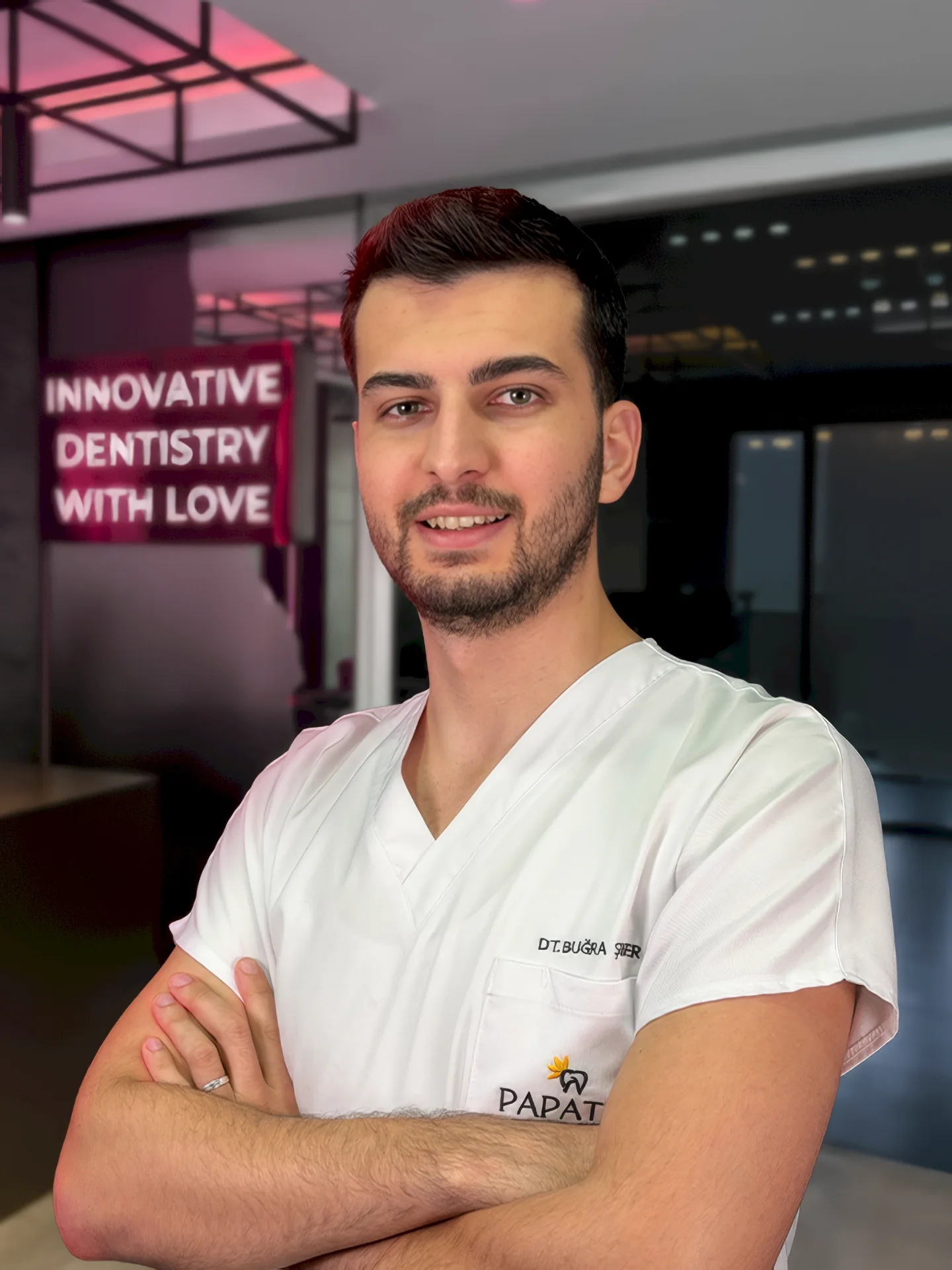
Muhammet Buğra Şener
Dentist, Aesthetic Dentistry
View doctor profile
Şerife Nur Kerpiçci
Dentist, Aesthetic Dentistry
View doctor profile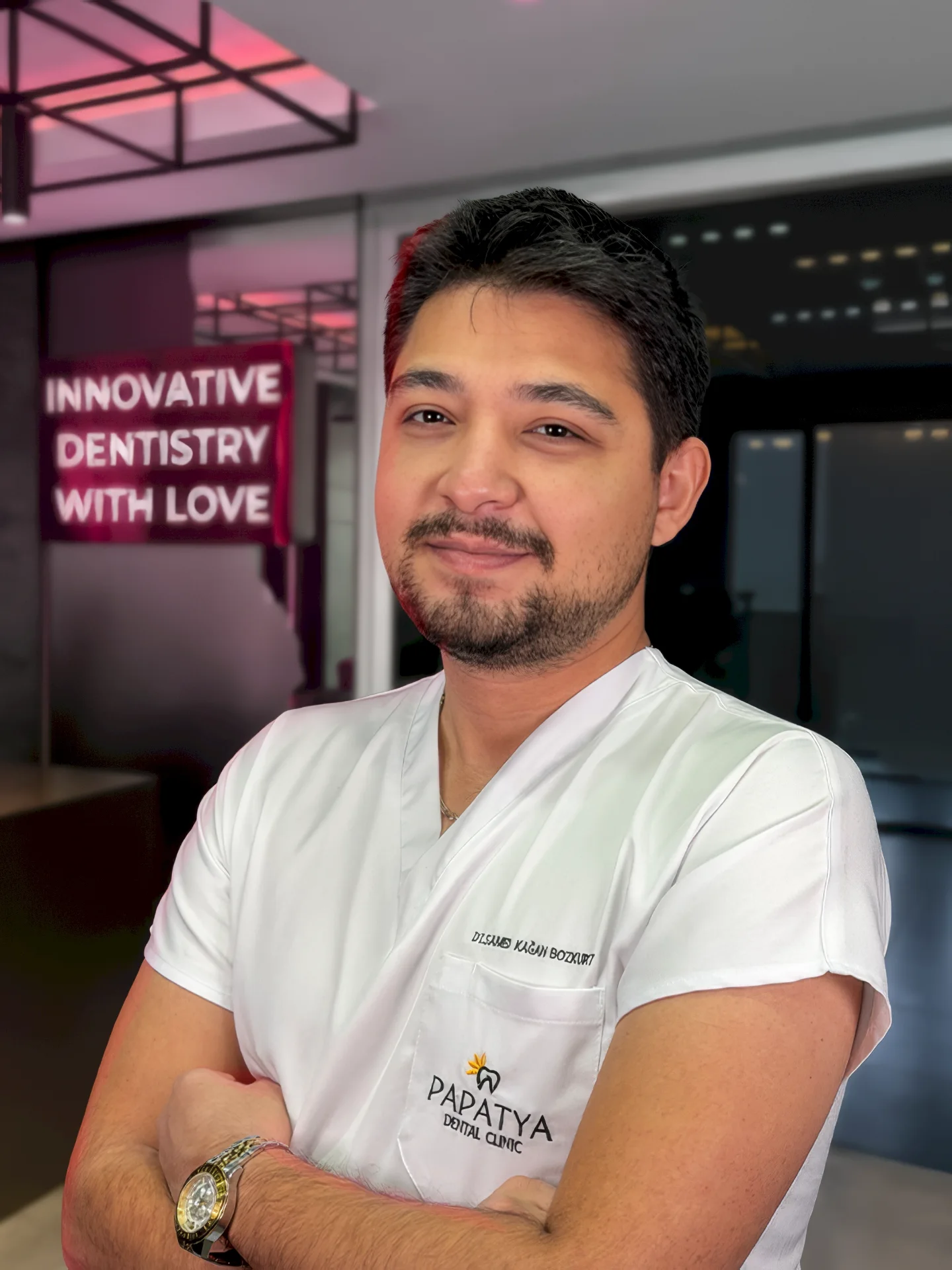
Samed Kağan Bozkurt
Dentist, Aesthetic Dentistry
View doctor profileLast medical review: 30 October 2026