
The bone depends on the tooth it holds
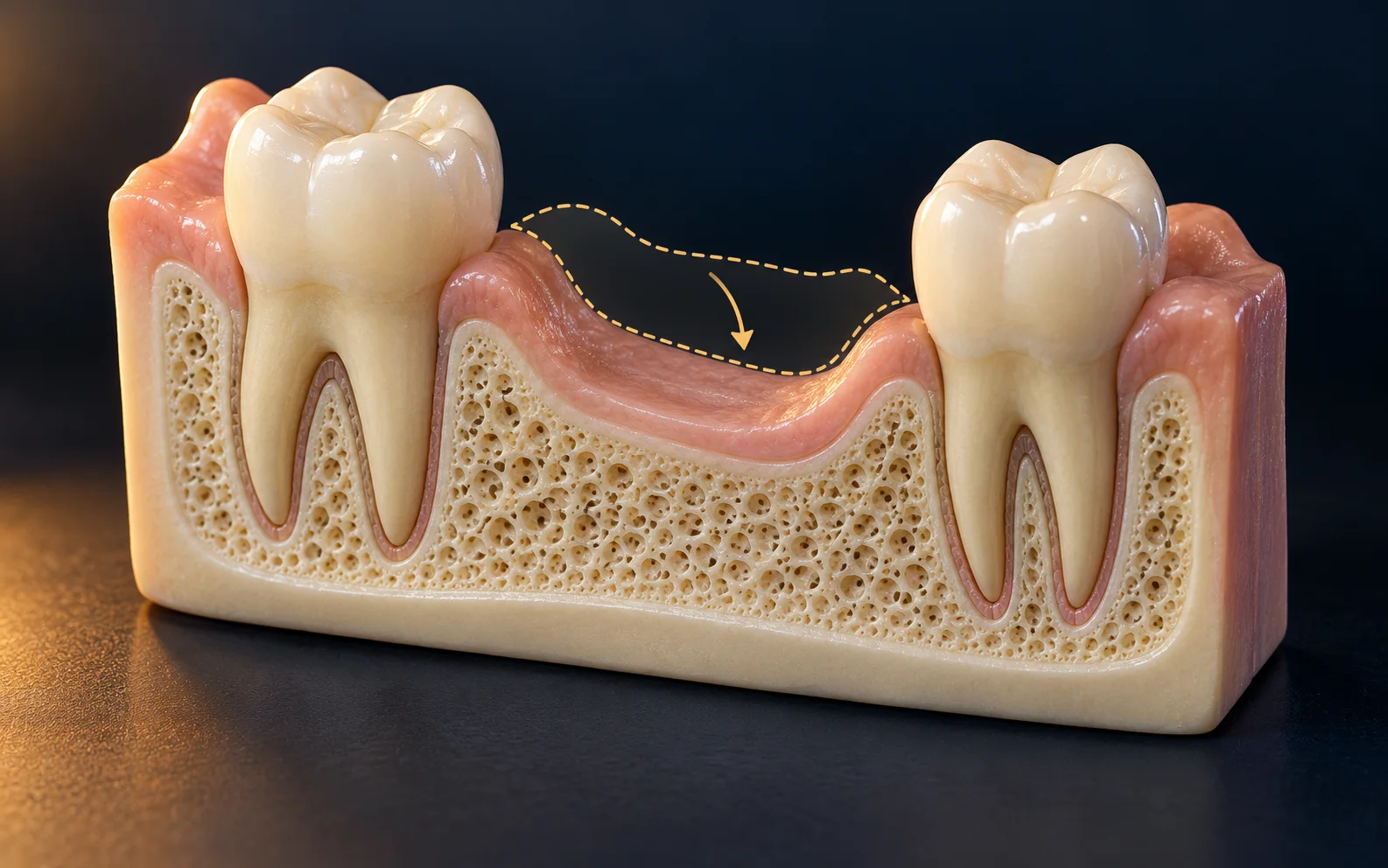
The bone that holds a tooth behaves differently from the rest of the jaw. A thin layer of fibres sits between the root and the bone, and every time you chew, the force spreads through those fibres into the bone around the root. Bone rebuilds itself according to the load it takes, so that part keeps its shape because a tooth is still in place there.
The first months after an extraction
Once a tooth is out, the socket first fills with a clot, which new tissue replaces over the following weeks; it takes months for bone to fill the socket. The outer wall of the ridge, the thin plate of bone on the cheek side, is the part that thins the most. That is why the area loses width before it loses height: the ridge grows narrow and sharp along the top.
- The ridge narrows and the gum line sinks inwards.
- Neighbouring teeth tilt into the gap and the tooth in the opposing jaw gradually grows into the space.
- As the gap widens the bite changes and chewing shifts to the other side.
The change slows down but does not stop
Most of the visible change happens in the first 3–6 months. After that the pace drops, though the ridge keeps changing quietly for years. How much bone is lost varies from person to person: how the extraction went, whether the area had been inflamed beforehand, how thick the bone was to begin with and general health all shift the picture.
The bone under a removable denture
A denture does not stand in for a root. It presses on the gum and loads the surface of the bone rather than its inside, so the ridge underneath keeps flattening year after year. In time the denture loosens, moves while you speak and lets food underneath. Needing a reline is often the first sign that the bone under it has changed shape.
Why less bone makes later decisions harder
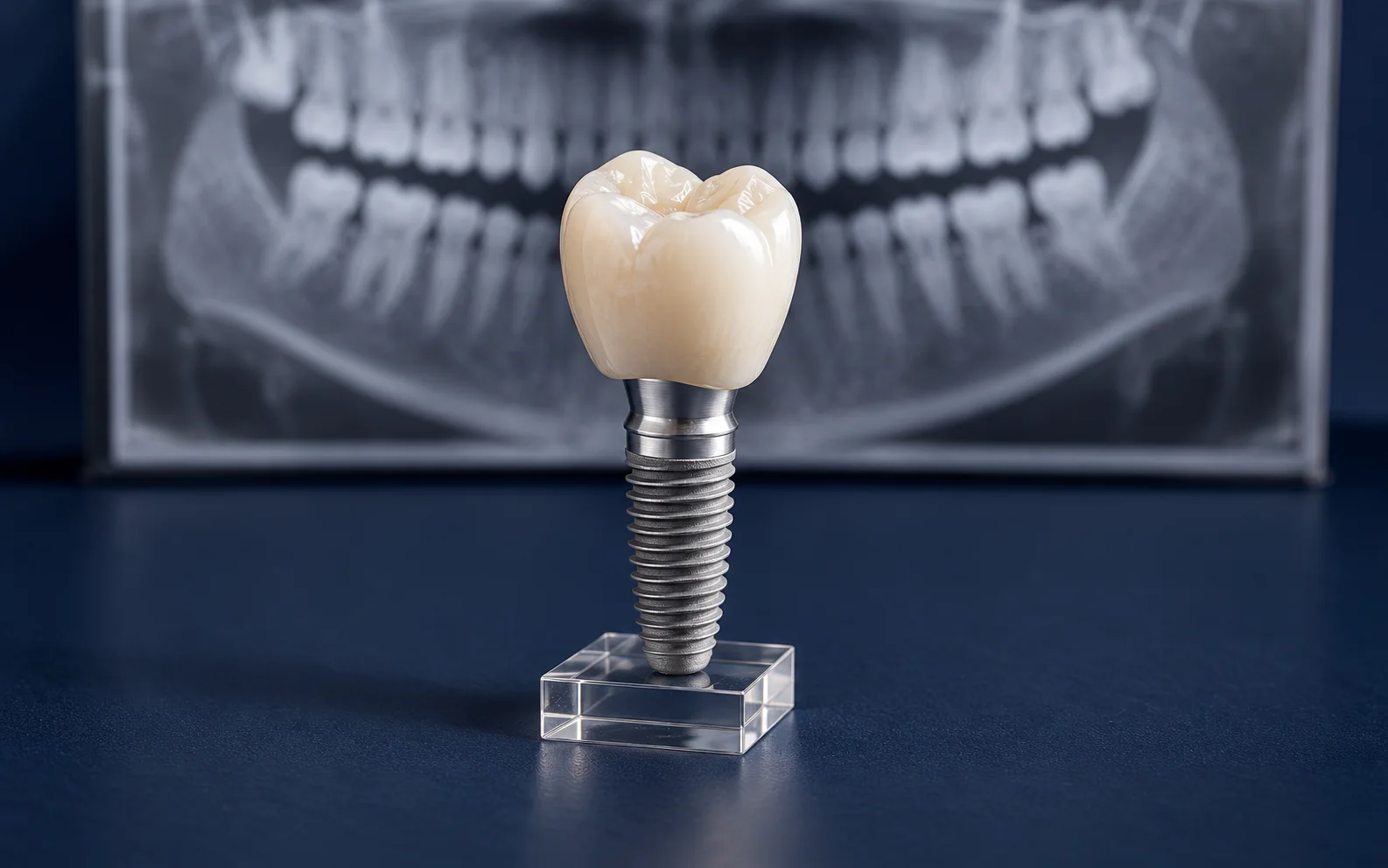
An implant sits inside the bone and needs a certain width and height to hold. If the ridge has thinned, bone may have to be added first, and at the back of the upper jaw the floor of the sinus may have to be raised. Every extra step means more healing time. An implant planned while the bone is still there usually involves fewer steps.
The hard part about bone loss is that it does not hurt; most people only notice it when a denture no longer sits securely.
How the remaining bone is measured
A ridge cannot be judged by looking at the gum. A panoramic X-ray gives the general view, and when the width of the ridge or its distance from the sinus matters, a three-dimensional image is taken. The measurement says nothing about how long the gap has been there; it shows how much bone is left today, and the plan follows that figure.
What can slow the change down
Filling the socket with a bone graft at the time of the extraction reduces how much the ridge shrinks. An implant placed in the gap sends chewing force back into the bone and helps to hold the volume at that spot. For anyone wearing a denture, regular checks and a reline at the right time keep it from pressing on one point. Which route suits a particular mouth depends on what is found in it.
Frequently asked questions
Is bone loss after an extraction unavoidable?
Some change in the shape of the ridge is expected, and a site that heals with no loss at all is rare. How much changes differs from person to person and depends on how long the gap stays open. Steps taken during the extraction can limit it.
Does bone loss hurt?
Usually not. That is why most people notice it only when a denture loosens, when the lower part of the face looks shorter, or when it shows up on an X-ray. The absence of pain does not mean the process has stopped.
Is gum recession the same as bone loss?
No. In recession the tooth stays where it is and part of the root becomes visible; in bone loss the volume that held the tooth is reduced. They can occur together or separately, and they are assessed in different ways: one at the examination, the other on an X-ray.
Can an implant still be placed for a tooth lost years ago?
Often yes, though it depends on how much bone is left. If the ridge has narrowed, bone may have to be added first and treatment takes longer. The decision follows what the examination and the imaging show.
Does a removable denture stop the bone from shrinking?
No. It loads the surface of the bone through the gum and does not do the work a root does. That is why a space opens under it over the years and it needs relining. Regular checks help to keep it from pressing on a single point.
Can bone loss change the way the face looks?
One missing tooth usually makes no visible difference to the face, although at the front a sunken ridge can be noticeable close up. When many teeth have gone and years have passed, the lower third of the face can shorten and the lips lose some support, because the height of the ridge has dropped.
This content is for general information only and does not replace an examination.
Edited by
Ozan Ergen
Medically reviewed by: Ali Bulut, Specialist Oral, Dental and Maxillofacial Surgeon
This article draws on the clinical experience of the Papatya Dental team and is reviewed for accuracy before publication.
- Last updated:
- 2026-09-21
- Editorial contact:
- icerik@papatyadental.com