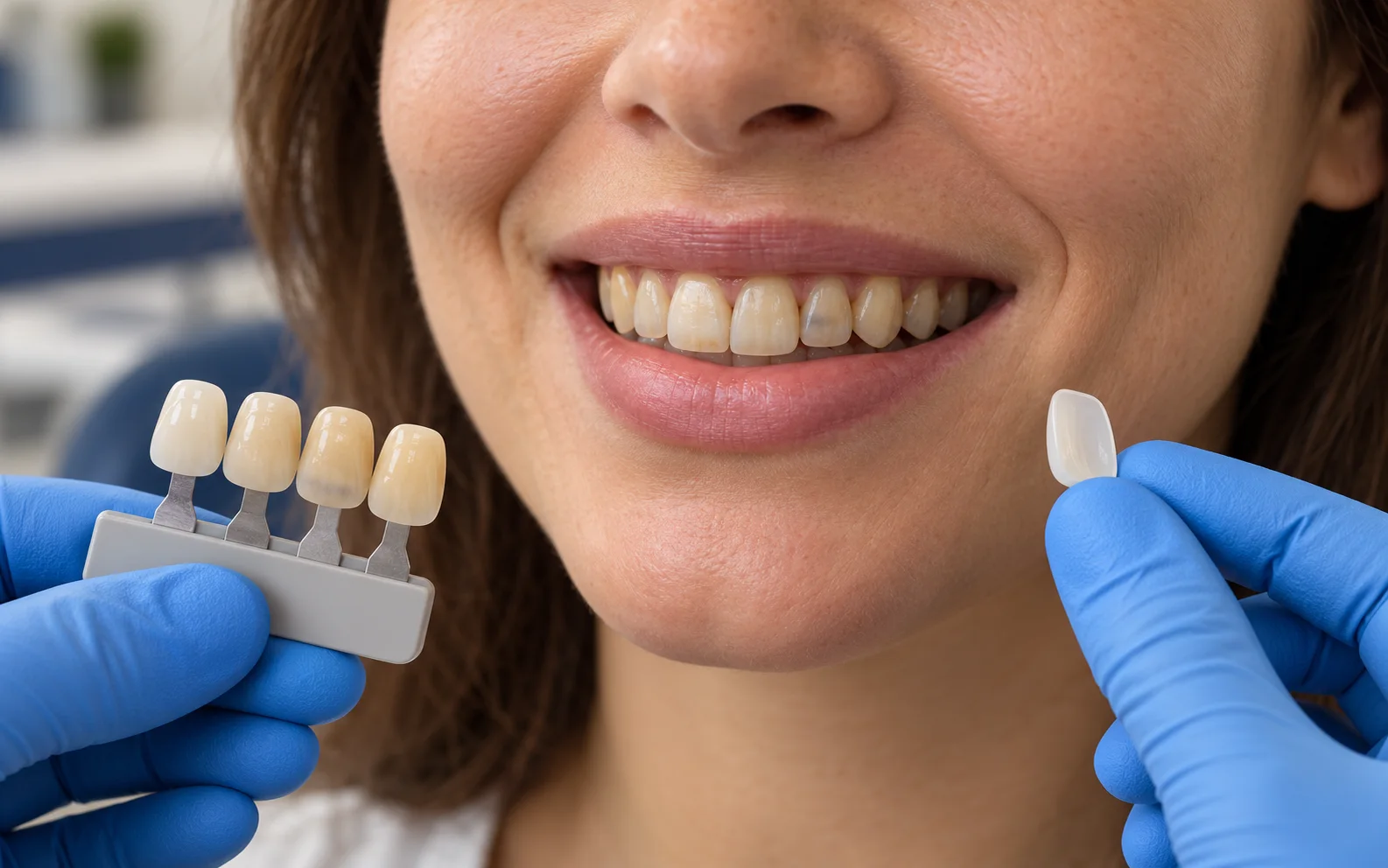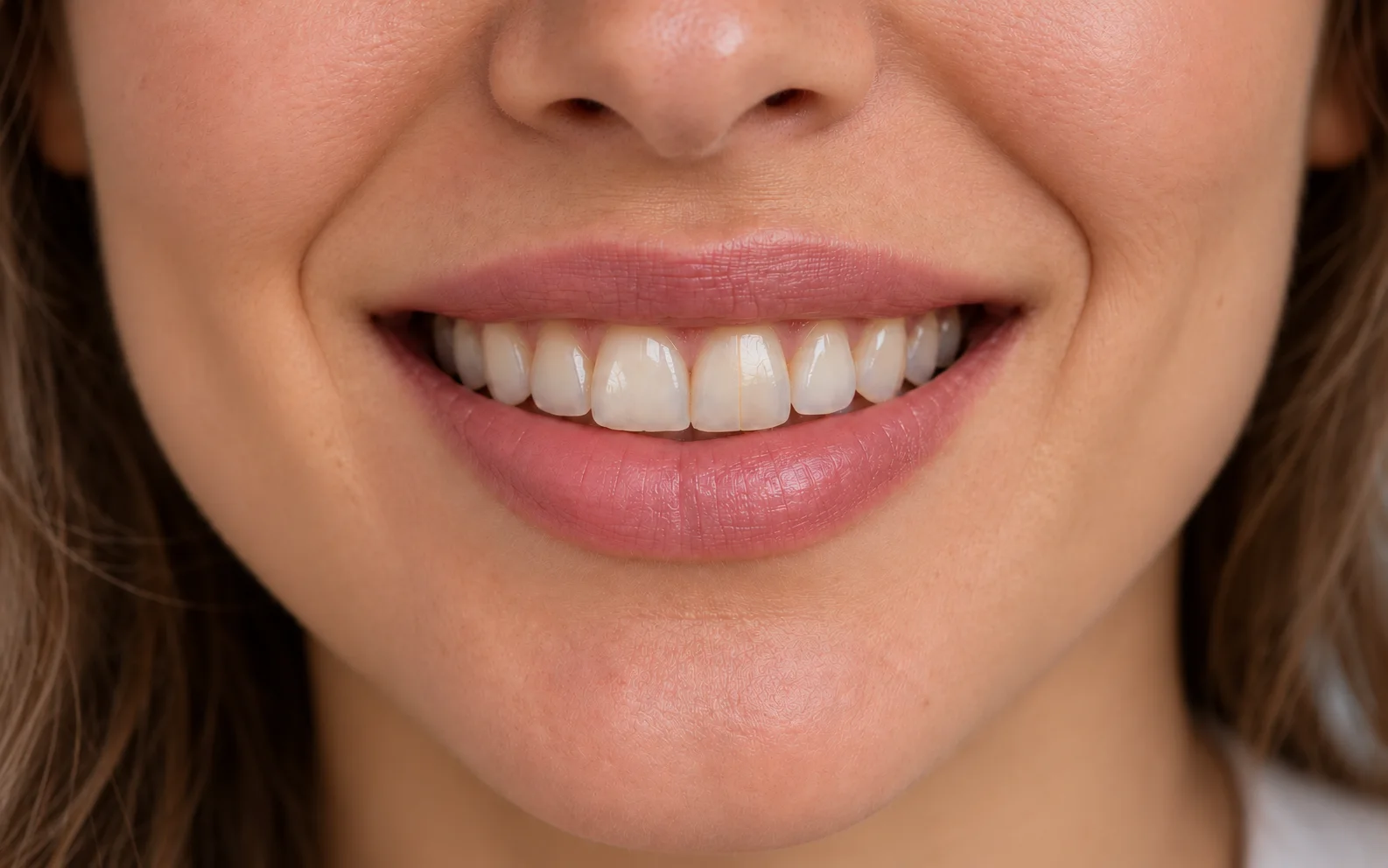


These stains sit on the surface, not inside the tooth
A few minutes after brushing, saliva forms a thin protein film on the enamel. That layer protects the tooth, but it also gives coloured substances something to hold on to. The tannins in coffee, black tea and red wine bind to this film, and the colour builds up on the surface.
Colour that comes from inside is a different matter. The natural shade of the tissue under the enamel, the darkening that arrives with age, or the grey a tooth takes on after a knock will not polish away. A coffee stain largely will. Telling the two apart is what decides whether anything is worth doing.
Which drinks leave the most colour
Three things decide it: how much tannin the drink holds, how dark it is, and how acidic. Black tea leaves more colour than coffee for many people, because its tannin content is high. Red wine carries dark pigment and acid together; the acid roughens the surface for a while, and the pigment settles into it more easily.
- Black tea: high in tannin, and it marks clearly despite its lighter colour
- Coffee: dark pigment, and it clings harder when taken black
- Red wine: pigment and acid at once, so the effect shows quickly
- Cola and dark fruit juices: acidic and coloured, and worse when sipped all day
Smoking changes the picture entirely
Tar from tobacco smoke makes the film sticky, so coloured substances stay on the surface for longer. When coffee and cigarettes go together, the brown mark that follows is darker than drinks alone would leave, and brushing does not shift it easily. In people who stop smoking, teeth pick up new staining noticeably more slowly.
Why coffee with milk leaves a lighter mark
Milk proteins bind to tannins. A tannin that is already bound cannot attach to the tooth surface, so coffee with milk leaves less colour than black coffee. That does not make it harmless: if the amount and the frequency stay the same, the gap narrows. The same holds for tea with milk.
Do not brush straight after drinking
Enamel softens briefly after an acidic drink. Brushing at that moment wears the surface down rather than cleaning it. Rinsing the mouth with water once the cup is finished dilutes both the colour and the acid. Leaving the brushing until half an hour later is the usual advice.
What actually helps in daily habits
- A straw for cold drinks keeps less of the liquid against the front teeth
- Finishing a coffee in one sitting, rather than nursing it all morning, shortens the time the surface stays acidic
- A glass of water afterwards stops the remaining pigment from sitting on the surface
- Drinking water through the day keeps the mouth from drying; less saliva means staining settles faster
How long a tooth stays lighter after a clean is decided less by the procedure than by the habits that follow from the next day on.
What a professional clean does and does not do
Scaling followed by a polish lifts most of the colour that has built up on the surface. The tooth looks lighter afterwards, but its own shade has not changed: what shows is the colour underneath. Darkening that comes from inside calls for whitening, a separate procedure that does not suit every kind of discolouration. If the habits stay the same, surface staining starts to build again within weeks.
Frequently asked questions
Does coffee stain teeth permanently?
Colour that builds on the surface is not permanent; scaling and a polish lift most of it. Years of heavy coffee or tea drinking can drive colour into fine cracks in the enamel, and a faint mark may then remain after cleaning.
Does white wine not stain?
White wine has no dark pigment, but it is acidic. The acid roughens the surface for a while, and coffee or tea taken afterwards holds on more easily. So white wine may leave no mark of its own while still adding to what other drinks do.
Does a straw really make a difference?
With cold drinks it does: less of the liquid spreads across the front teeth. With hot coffee or tea a straw is not practical, and there the difference comes from finishing sooner and rinsing with water afterwards.
Will whitening toothpaste remove these stains?
These pastes use abrasive particles to lift some of the fresh marking off the surface. They do not change the shade under the enamel. Used often and with a hard brush they can thin the surface, which is why most dentists treat them as a poor substitute for an everyday toothpaste.
How soon does staining come back after a clean?
It varies with the person and the habit. Someone drinking several cups of dark drinks a day and smoking may see the first mark within a few weeks; with more moderate habits it can take months. What decides it is not the procedure but the daily routine that follows.
Why has one tooth gone darker than the rest?
A single dark tooth is rarely explained by surface staining. Behind it there is usually an old knock, a tooth that has had root canal treatment, or an old filling. A colour difference like that needs a dentist to look at it.
This content is for general information only and does not replace an examination.
Edited by
Nilufar Tulanova Şener
Medically reviewed by: Muhammet Buğra Şener, Dentist, Aesthetic Dentistry
This article draws on the clinical experience of the Papatya Dental team and is reviewed for accuracy before publication.
- Last updated:
- 2026-09-21
- Editorial contact:
- icerik@papatyadental.com