
Teknikken betyr mer enn børsten
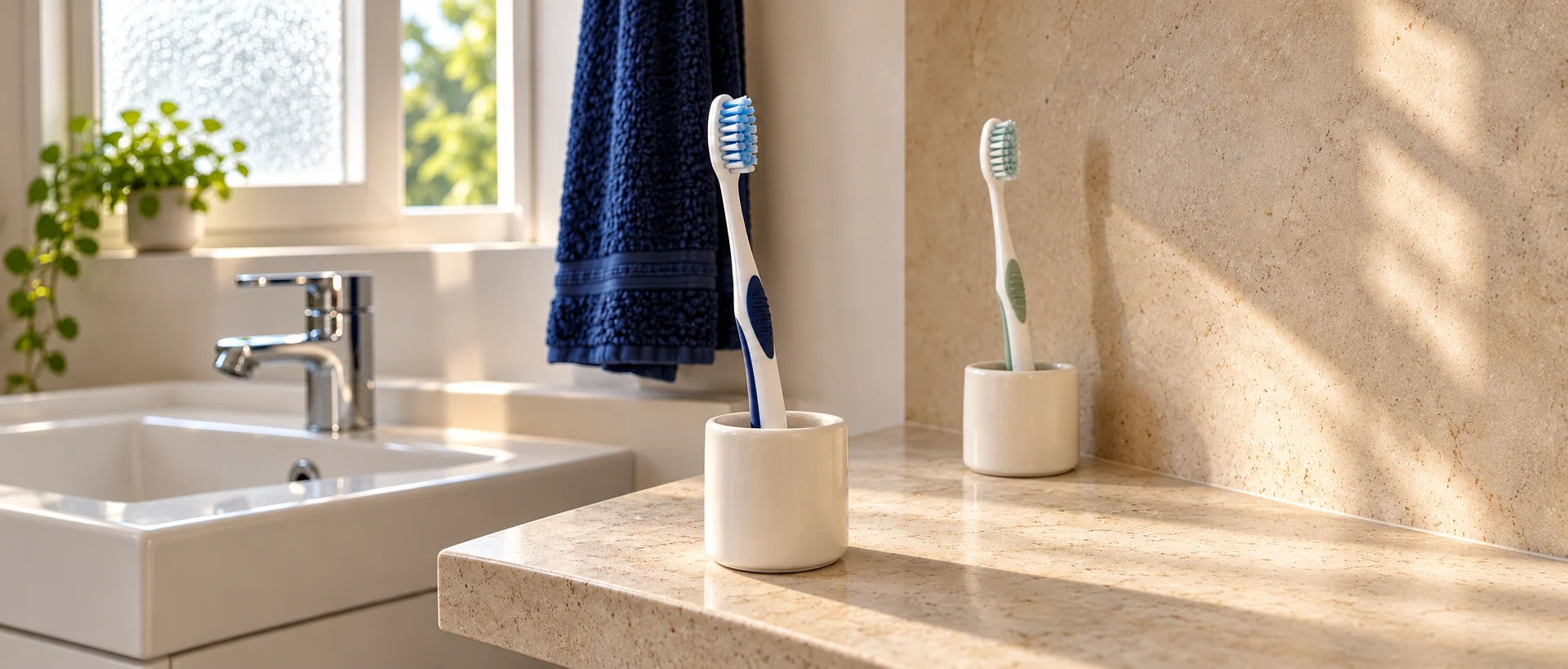
To børster står side om side på hylla, og spørsmålet er alltid det samme: hvilken rengjør best? Det ærlige svaret er at en manuell børste brukt godt slår en elektrisk børste som vinkes rundt i munnen. Typen børste overstyrer ikke vanen.
Plakk, den myke bakteriehinnen som bygger seg opp på tennene, samler seg langs tannkjøttkanten og mellom tennene. De to stedene er de samme uansett hvilken børste du holder. Vinkler du busten mot tannkjøttet i omtrent 45 grader og går gjennom hver flate etter tur, går plakket av.
Oscillerende-roterende og soniske børster virker på ulike måter
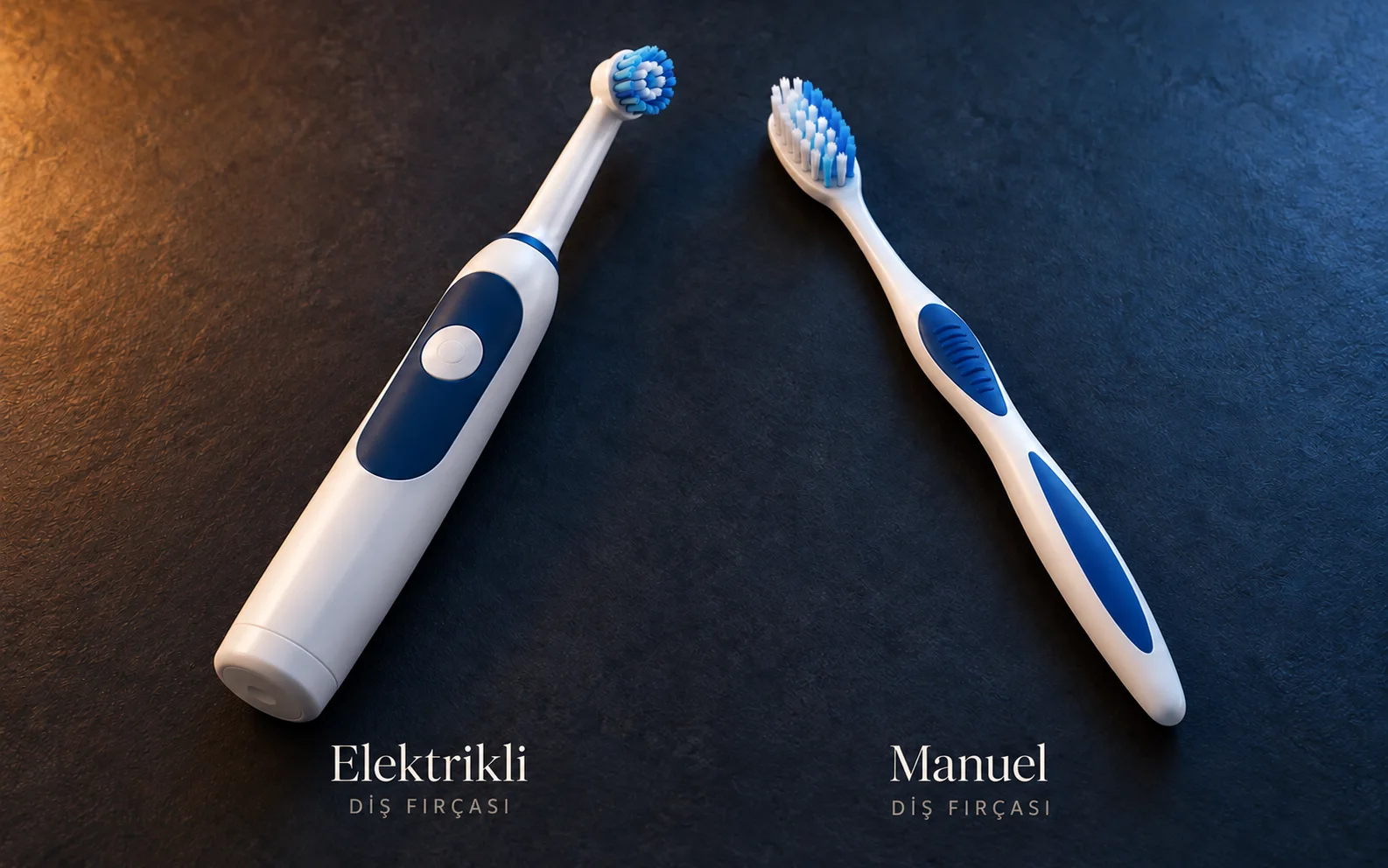
Elektriske børster er ikke én gruppe. To løsninger dominerer hyllene, og de beveger seg på ganske ulike måter.
- Oscillerende-roterende: et lite rundt hode som dreier én vei og så den andre, og i de fleste modeller pulserer inn og ut i tillegg. Det er laget for å flyttes fra tann til tann.
- Sonisk: et lengre hode formet som en manuell børste som vibrerer sidelengs med svært høy frekvens. Busten feier tannen og setter samtidig væsken rundt i bevegelse.
Begge løsningene reduserer plakk, og for de fleste er forskjellen mellom dem for liten til å merkes fra dag til dag. Å velge den som passer måten du allerede pusser på, er en fornuftig måte å bestemme seg på.
Hvem tjener mest på en elektrisk børste
En elektrisk børste viser verdien sin når den veier opp for en svakhet i teknikken. Tre grupper merker den gevinsten tydelig.
- Folk med nedsatt håndkontroll: leddgikt, svakhet etter hjerneslag, skjelving eller såre ledd gjør små sirklende bevegelser vanskelige. Når børsten står for bevegelsen, blir renholdet bedre.
- Folk i kjeveortopedisk behandling: området rundt braketter og buer er tungvint å nå for hånd, og et lite rundt hode dreier lettere inn i de rommene.
- Folk som trykker hardt: å skure fram og tilbake som med et viskelær skyver tannkjøttet tilbake og sliter på rotflaten. En børste med trykksensor gjør vanen synlig.
Er det en annen som pusser, for eksempel om du steller en slektning som er sengeliggende, gjør en elektrisk børste jobben lettere. Hodet er lite, og du trenger ikke lenger å lage bevegelsen selv.
Hva trykksensorer og tidtakere er til for
To funksjoner på en elektrisk børste fortjener plassen sin; det meste av resten er pynt. En trykksensor lyser opp eller senker farten på hodet når du lener deg for hardt på tannen. For alle som har begynt å få tannkjøttet til å trekke seg tilbake, betyr den sensoren mer enn selve børsten.
Tidtakeren teller to minutter, og børsten stanser som regel kort hvert tretti sekund for å flytte deg videre til neste fjerdedel av munnen. De fleste tror de pusser lenger enn de virkelig gjør, og telleren retter opp det.
Slik får du gode resultater med en manuell børste
En manuell børste er fortsatt et fornuftig valg. Velg myk bust; hard bust rengjør ikke mer, den sliter bare på tannkjøttet og rotflaten. Hold hodet lite, så det dreier bak jekslene. Bytt den når busten begynner å sprike sidelengs, noe som vanligvis tar tre til fire måneder.
Del munnen i fire områder og gi hvert av dem tretti sekunder. En tidtaker på telefonen gjør den samme jobben som telleren innebygd i en elektrisk børste.
Batteribørster er ikke det samme som oppladbare
Noen børster på hylla ser elektriske ut, men går på vanlige AA-batterier. De beveger seg langt færre ganger i minuttet enn en oppladbar modell, og bevegelsen blir enda tregere etter hvert som batteriet svekkes. I praksis oppfører de seg omtrent som en manuell børste, og de fleste av dem har verken trykksensor eller tidtaker.
På en oppladbar børste holder farten seg jevn til batteriet går tomt, og én lading varer noen uker på mange modeller, noe som gjør reising enkelt. Siden håndtaket står på laderen hver dag, bør det ikke bli stående vått: ta av hodet etter pussing, skyll begge delene og la dem lufttørke.
Det som skyver tannkjøttet tilbake, er ikke motoren i børsten, men kraften du legger bak den.
Ofte stilte spørsmål
Rengjør en elektrisk tannbørste bedre enn en manuell?
I gjennomsnitt har den et lite forsprang, men det forspranget forsvinner for en som allerede pusser godt. Hvor lenge du pusser, vinkelen busten møter tannkjøttet i, og å gjøre det hver dag teller mer enn typen børste.
Bør jeg velge en oscillerende-roterende eller en sonisk børste?
Begge reduserer plakk. Liker du å flytte et lite rundt hode fra tann til tann, passer oscillerende-roterende deg; foretrekker du et håndtak som ligner en manuell børste, føles sonisk mer naturlig. Valget følger stort sett vanen.
Kan en elektrisk tannbørste skade tannkjøttet?
Børsten i seg selv gjør det ikke; for mye trykk gjør det. Hvil hodet mot tannen uten å presse, og la børsten gjøre jobben. Modeller med trykksensor gjør det lettere å oppdage feilen tidlig.
Passer elektriske børster for barn?
De passer for de fleste barn, og tidtakeren gjør pussingen til noe som ligner en lek, noe som hjelper på de fulle to minuttene. En voksen må fortsatt følge med på pussingen i ung alder; typen børste erstatter ikke det.
Trenger jeg fortsatt tanntråd hvis jeg bruker elektrisk børste?
Ja. Ingen børste når helt inn i flaten der to tenner møtes. Tanntråd eller en mellomromsbørste blir stående som en egen del av den daglige rutinen.
Når bør jeg bytte børstehodet?
Bytt det når busten begynner å sprike utover, noe som vanligvis tar tre til fire måneder. Sprikende bust plukker opp mindre plakk, særlig langs tannkjøttkanten. Mange bytter også hodet etter en sykdom.
Dette innholdet er til generell informasjon og erstatter ikke en undersøkelse.
Utarbeidet av
Elif Teke
Faglig gjennomgått av: Canan Kale, Spesialist i barnetannpleie
Denne artikkelen bygger på den kliniske erfaringen til teamet hos Papatya Dental og blir gjennomgått for riktighet før publisering.
- Sist oppdatert:
- 2026-09-21
- Redaksjonell kontakt:
- icerik@papatyadental.com