
Lips are the frame around a smile
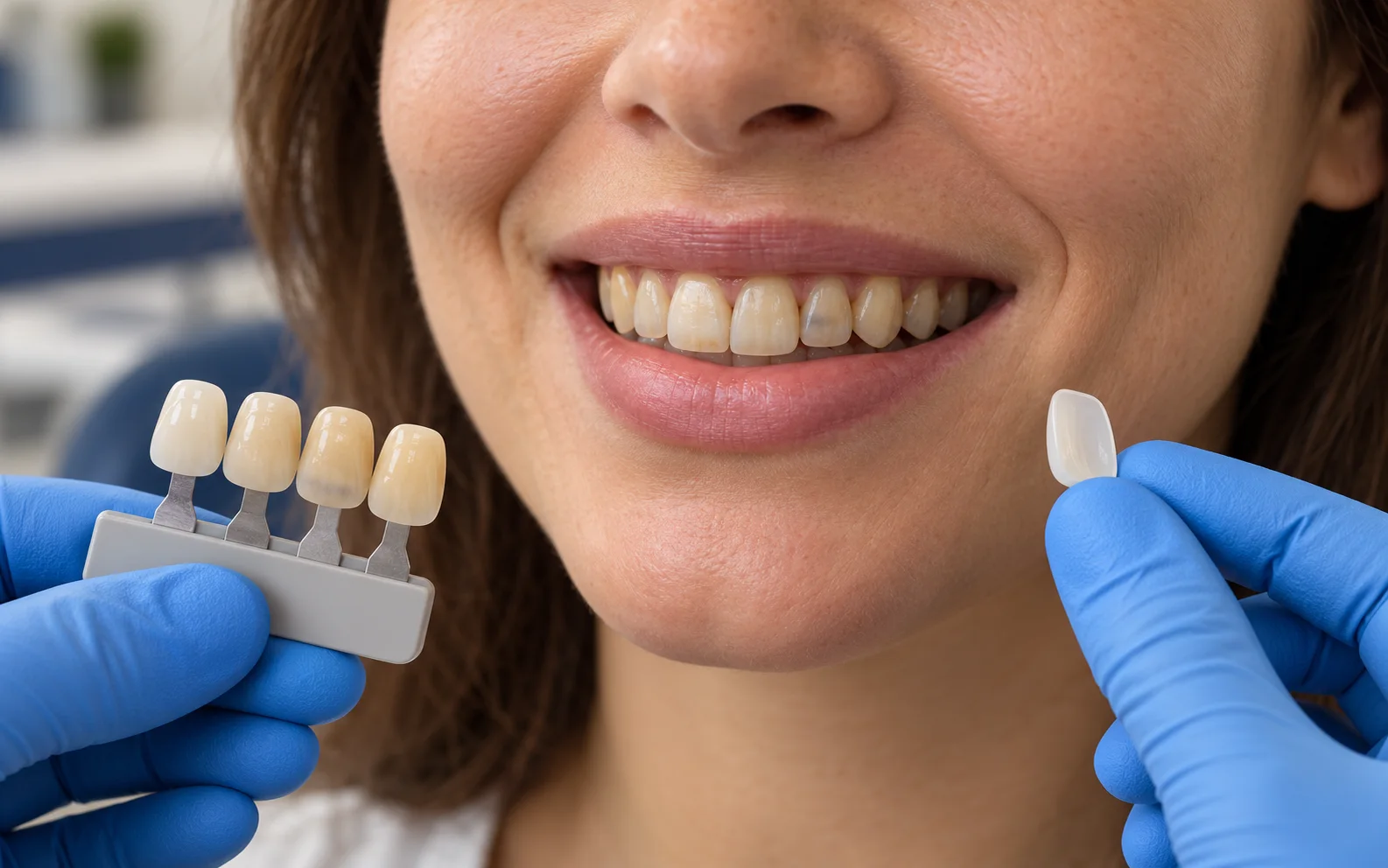
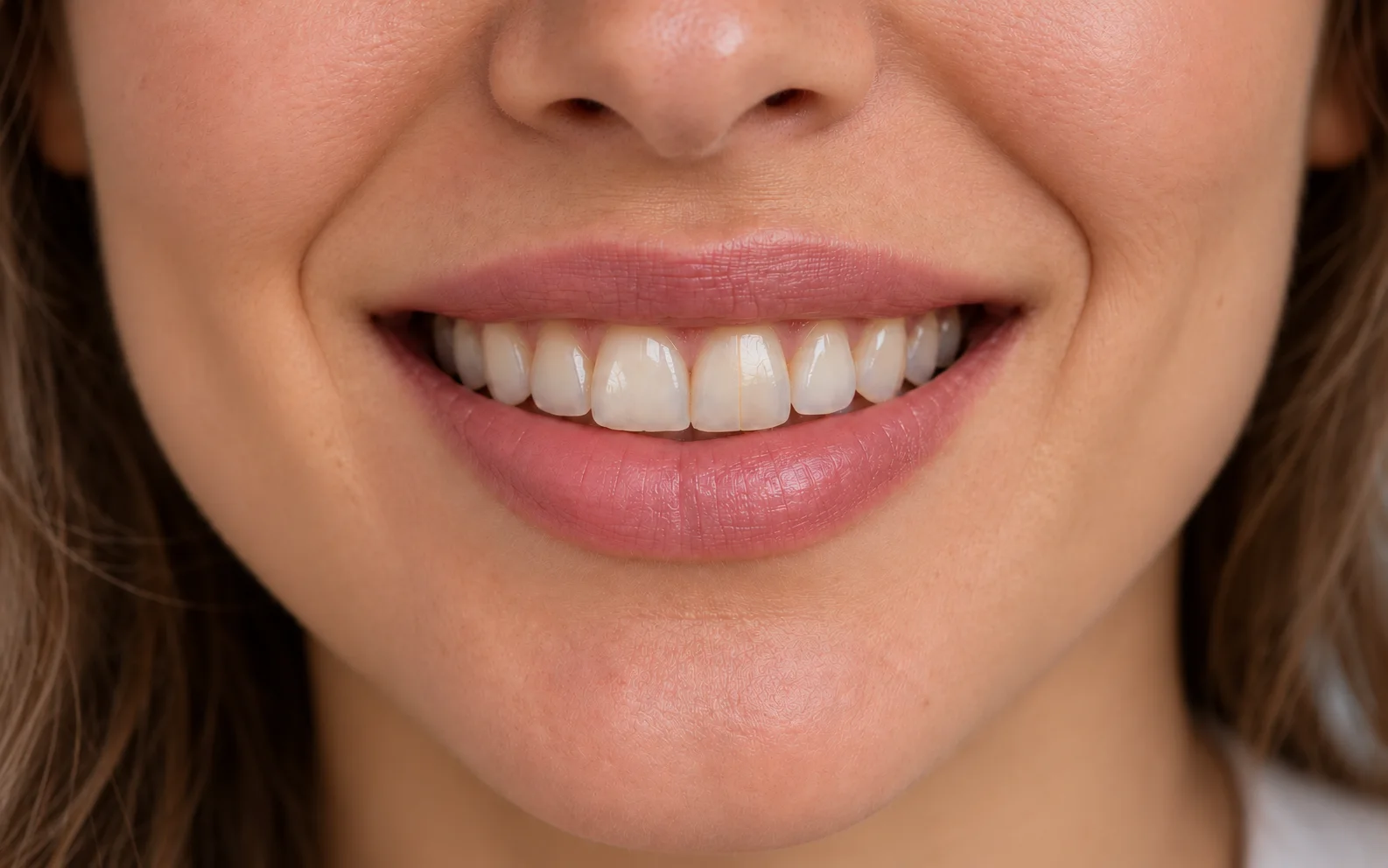
When you look at a smile you think you are looking at the teeth. What the eye takes in first is the frame: the line of the upper lip, the corners of the mouth, the lower lip running underneath. The teeth appear inside that frame. The same teeth set behind different lips give a completely different smile, which is why an assessment starts at the lips rather than at the teeth.
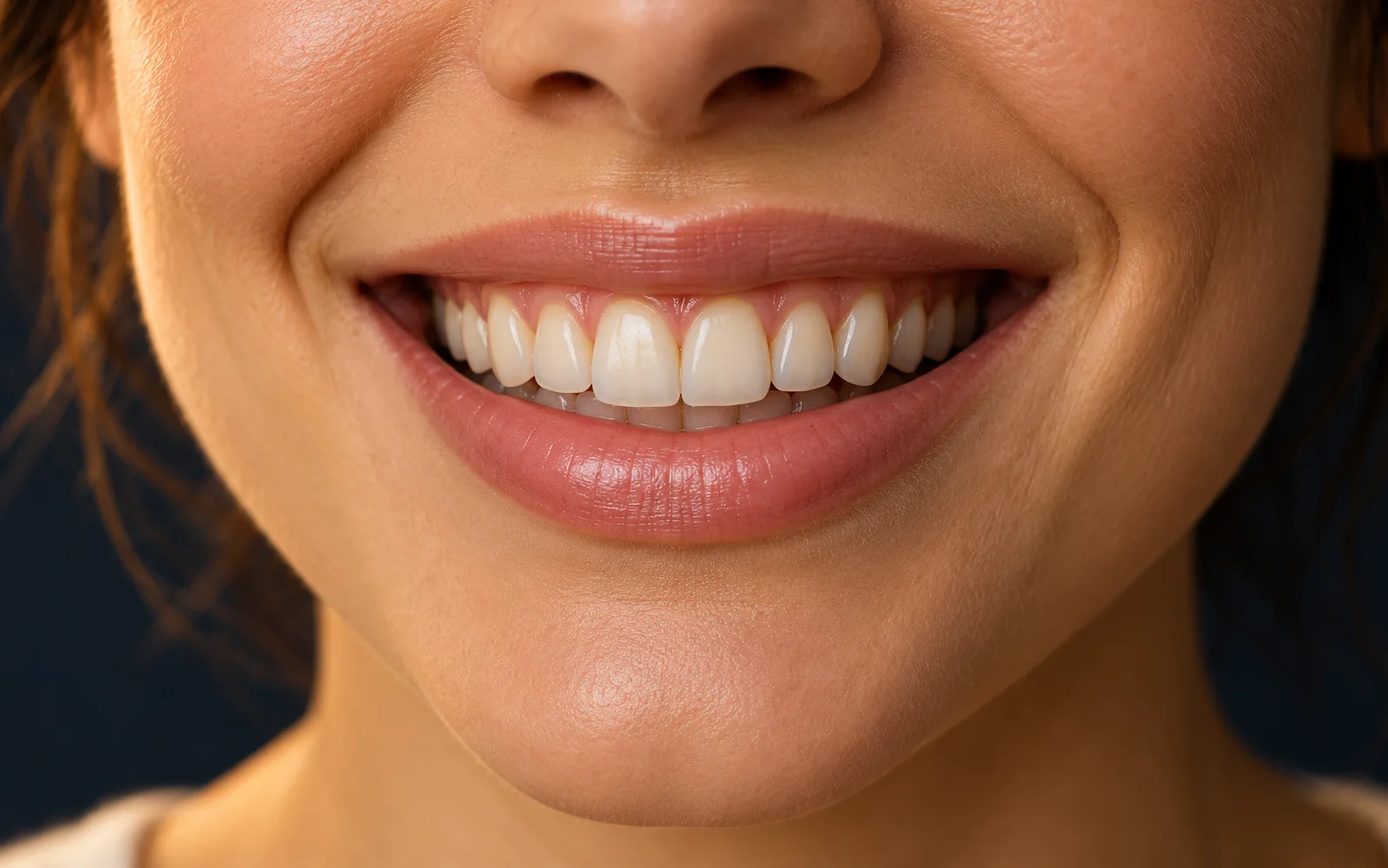
Lips move differently from person to person. In some people the upper lip lifts only a little, so a smile shows part of the upper teeth. In others the lip travels easily upwards and brings the whole tooth into view along with a band of gum above it. Both are common, and there is no single measure of a smile that holds for everyone.
How far the upper lip lifts
The first thing that decides how much tooth shows is how far the upper lip travels from its resting position. That range differs a good deal between people, and it is not fixed within one person either: a tired smile, a forced smile and a smile held for a camera do not move the lip in the same way.
- The length of the upper lip: a short lip shows more tooth and more gum even when it moves a normal amount.
- How far the lip travels: of two lips the same length, one can lift noticeably higher than the other.
- The length and position of the front teeth: teeth that are short or worn show less even when the lip is unchanged.
- The height of the upper jaw: the bone underneath sets where the lip and the teeth sit in relation to each other.
Showing gum is not a fault in itself
A few millimetres of gum above the upper teeth is a common sight and does not on its own mean anything is wrong. If the gum is pink, evenly outlined and does not bleed, the picture is a healthy one. A change is only worth considering when it bothers you, or when the gum is inflamed, swollen or uneven.
The same smile looks like three different things in conversation, in laughter and in a photograph, and none of the three is the true version.
When the tooth edges follow the lower lip
Join up the edges of the upper front teeth and you get a curve. In many people that curve runs roughly parallel to the lower lip during a smile, so the two lines echo each other. Flatter curves and slightly reversed ones occur just as naturally. Wear flattens the line over the years: the corners round off and the two middle teeth get shorter.
What changes over the years
Over the years the upper lip lengthens slightly and loses some of its tone, so it rests lower. The visible result is straightforward: the upper teeth show less and the lower teeth show more. Over the same years, wear shortens the upper front teeth. Upper teeth that were plainly visible on a young face can sit almost hidden behind the lip at rest decades later.
Where an assessment starts if you want something changed
An examination does not look at the teeth on their own. The lip is watched at rest, during speech and in a relaxed smile; the gum margin, the midline and the line of the tooth edges are judged together. In many cases a small change alters the whole picture: reshaping the gum margin, or putting a millimetre or two back onto worn edges. Which step comes first depends on the person.
Frequently asked questions
Is it normal for my gums to show when I smile?
Yes, in a great many people. Gum tends to show in a broad laugh rather than in a polite smile, so the amount varies with how wide the smile is. It also usually shows less over the years as the upper lip lengthens. If the look bothers you, the reason can be examined.
Is a flat smile line wrong?
No. Flat and slightly reversed lines occur naturally and do not call for treatment on their own. If the edges have flattened noticeably in a short time, though, that can be a sign of clenching or grinding at night, which is worth mentioning at an examination.
Why do my upper teeth show less as I get older?
Over the years the upper lip lengthens slightly and loses some of its tone, so it rests a little lower. The change is most noticeable when you talk: in youth the upper teeth show during speech, whereas later in life the lower teeth increasingly take over. It is part of the way a face changes.
Is there one smile that suits everyone?
No. Tooth length, lip movement, jaw shape and facial proportions vary from person to person, so a smile that looks balanced on one face looks artificial on another. An assessment works from the proportions of that face rather than from a fixed measurement.
Why does my smile look different in photographs?
A selfie taken with the front camera uses a wide-angle lens at arm's length, which enlarges the central teeth even more, and many phones show that image mirrored, so small asymmetries look unfamiliar. A photo taken from a few steps away with the rear camera, zoomed in slightly, comes much closer to how others see you.
Can the amount of gum on show be changed?
It depends on the reason. Where the gum margin sits too far down over the tooth, the level can be reshaped; where the lip simply travels a long way, something else is at issue. Which route fits is worked out from an examination and from measurements, and the same answer does not suit everyone.
This content is for general information only and does not replace an examination.
Edited by
Muhammet Buğra Şener
Medically reviewed by: Eren Koluaçık, Dentist, Aesthetic Dentistry
This article draws on the clinical experience of the Papatya Dental team and is reviewed for accuracy before publication.
- Last updated:
- 2026-09-21
- Editorial contact:
- icerik@papatyadental.com