

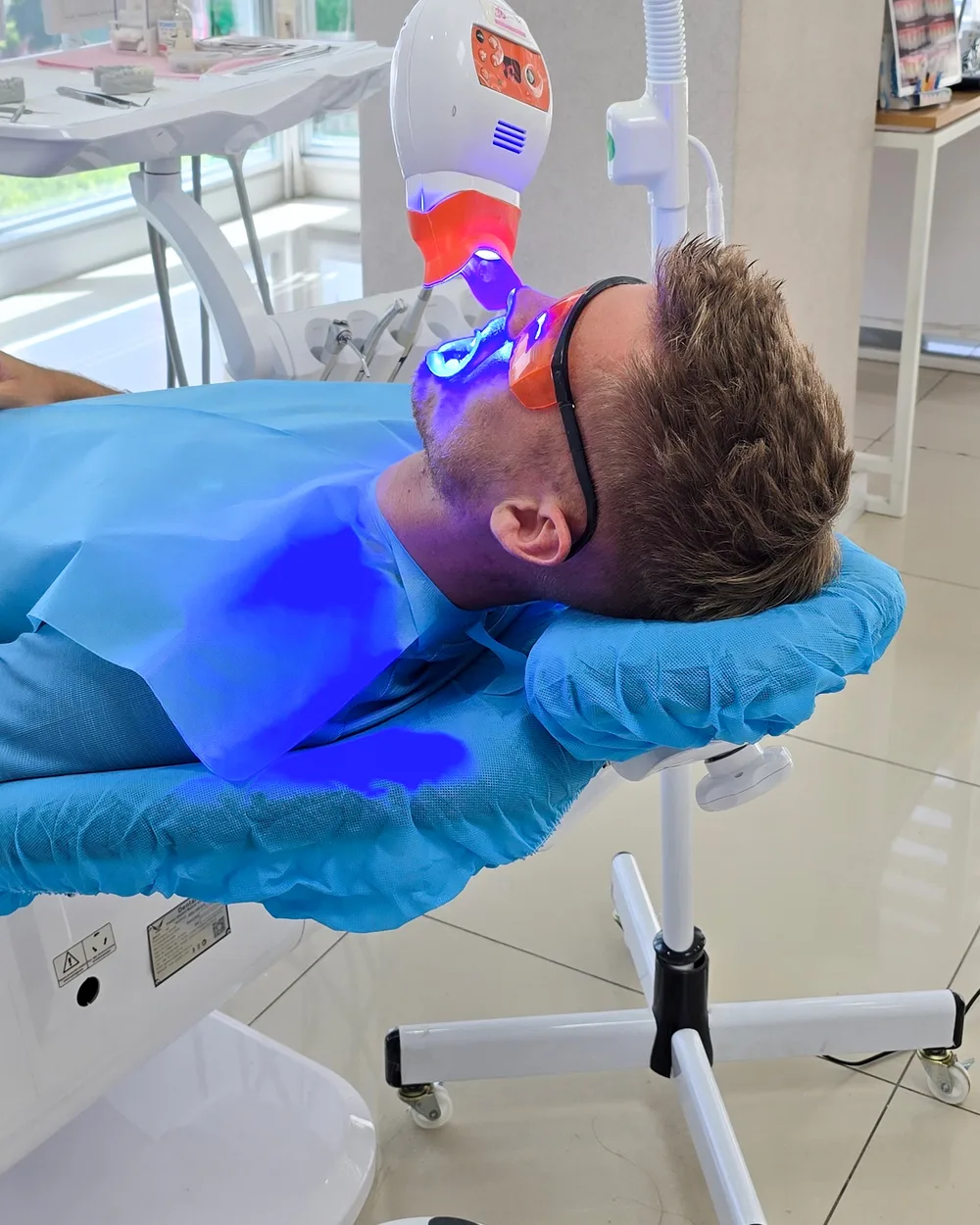
Whitening is the most requested treatment we offer and the one surrounded by the most misinformation. Here are the six claims we hear most often.
“Whitening erodes your enamel”
Applied in clinical conditions at the correct concentration, hydrogen peroxide does not erode enamel; it breaks down pigment molecules inside its pores. What does cause damage is unsupervised, high-dose product bought online.
“Charcoal powder is a natural alternative”
Activated charcoal scrubs surface stains mechanically; it does not lighten the tooth from within. It is highly abrasive, so over time it thins the enamel and makes the yellow dentine underneath more visible, the opposite of the goal.
“Everyone reaches the same shade”
Your starting shade, enamel thickness and the origin of the discolouration all shape the result. Surface stains from coffee and tea lift beautifully; tetracycline staining responds only partially and usually needs veneers.
“Fillings and crowns whiten too”
Whitening only works on natural tooth tissue. If you have composite fillings or crowns on your front teeth, a mismatch can appear afterwards. That is why the plan is usually “whiten first, then replace the restorations”.
“The sensitivity is permanent”
Post-treatment sensitivity is common but temporary, typically settling within 24–48 hours. Toothpaste containing potassium nitrate noticeably eases that window.
“One session lasts forever”
Results hold for one to three years on average, depending on diet and smoking. Short top-up sessions at home keep the shade stable far longer.
This content is for general information and does not replace an in-person examination. Treatment decisions should only follow a clinical assessment.
Edited by
Şerife Nur Kerpiçci
Medically reviewed by: Muhammet Buğra Şener, Dentist, Aesthetic Dentistry
This article draws on the clinical experience of the Papatya Dental team and is reviewed for accuracy before publication.
- Last updated:
- 2026-06-30
- Editorial contact:
- smile@papatyadental.com