

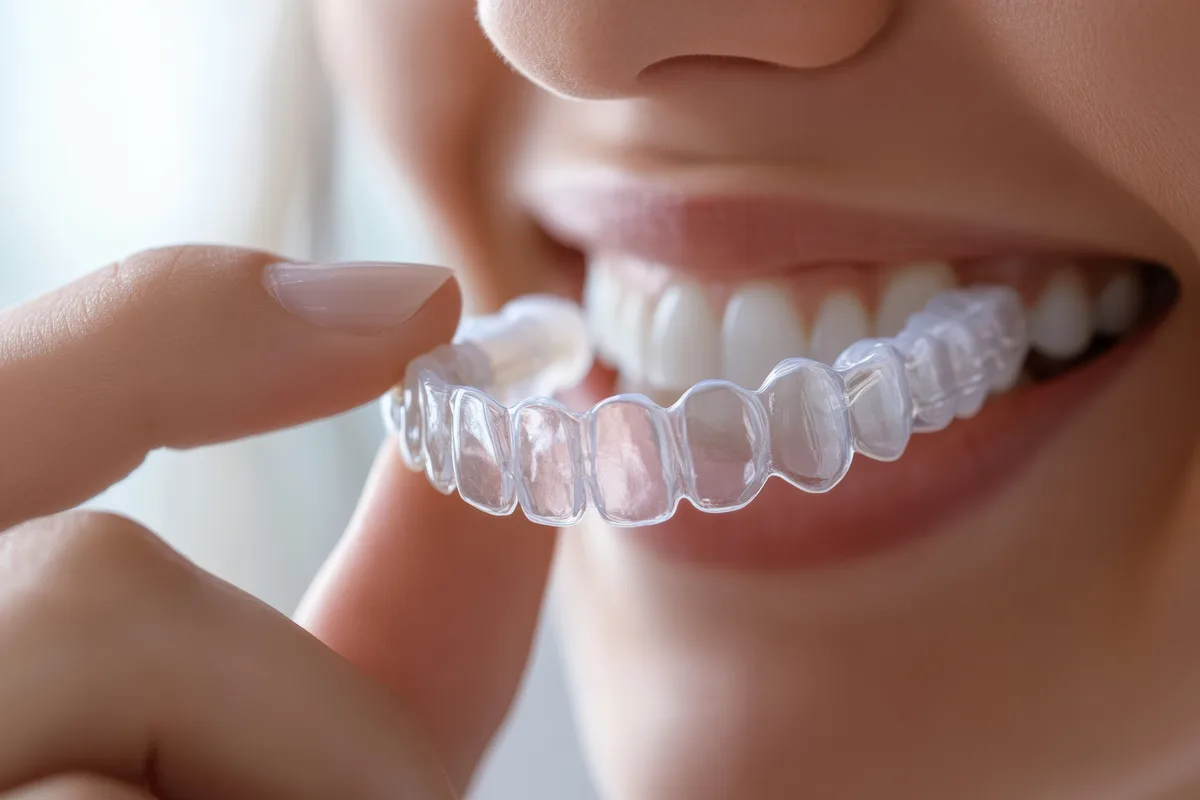
More adults start orthodontic treatment every year. Clear aligners explain much of that interest but they are not suitable for every case.
The real advantage of aligners isn’t looks, it’s hygiene
Because aligners come out, you brush and floss exactly as before. The white-spot lesions and gum inflammation that are the most common complications of fixed braces are markedly less likely with aligners.
But 22 hours a day really does mean 22 hours
Aligner success depends entirely on your discipline. Dropping below twenty hours a day delays the planned movements and stretches the treatment. Braces work regardless of willpower, which for some patients is the advantage.
Where braces still win
- Severe crowding and pronounced bite discrepancies
- Cases requiring substantial rotation of tooth roots
- Plans that need extraction spaces closed
- Patients who know they won’t keep the aligners in
Both treatments end the same way: retention
Teeth naturally tend to drift back. A fixed or removable retainer goes in the moment treatment ends, and it matters as much as the treatment itself. Patients who abandon retention see relapse within a few years.
This content is for general information and does not replace an in-person examination. Treatment decisions should only follow a clinical assessment.
Edited by
Hasan Kamak
Medically reviewed by: Fatih Bayır, Specialist Orthodontist
This article draws on the clinical experience of the Papatya Dental team and is reviewed for accuracy before publication.
- Last updated:
- 2026-05-05
- Editorial contact:
- smile@papatyadental.com