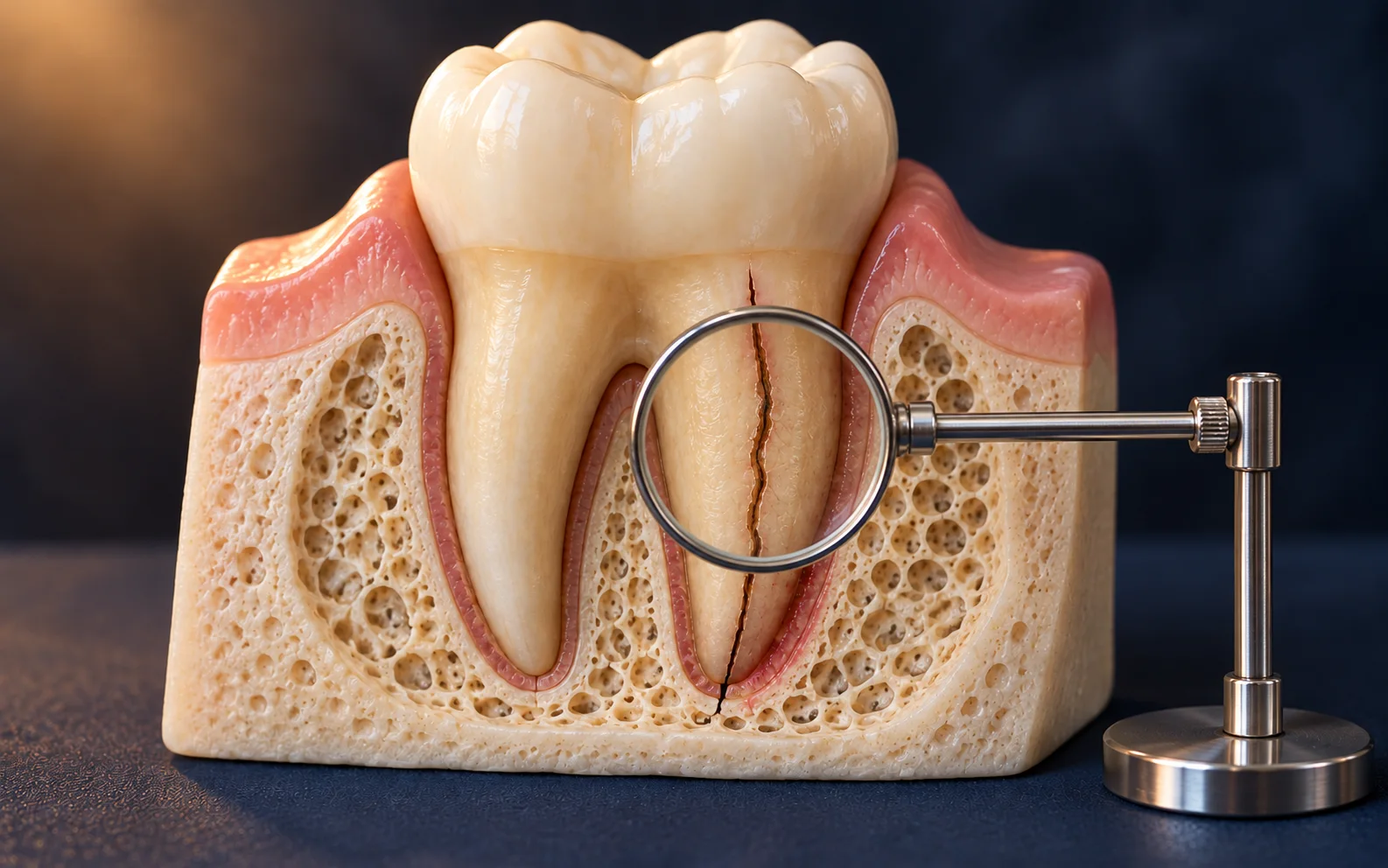


Opis jest zwykle ten sam: krótki, ostry ból przy nagryzieniu czegoś konkretnego, ale nie za każdym razem. Wykonuje się zdjęcie i nic nie pokazuje. To klasyczny początek zespołu pękniętego zęba.
Pęknięcia biegną równolegle do długiej osi zęba. Ponieważ wiązka promieniowania przechodzi w tej samej płaszczyźnie, pęknięcie zwykle nie zapisuje się na obrazie. Rozpoznanie opiera się więc na objawach i badaniach klinicznych.
Objaw rozróżniający: ból przy zwolnieniu nacisku
W pękniętym zębie ból często przychodzi nie w trakcie nagryzania, lecz w chwili zwolnienia nacisku. Nagryzanie rozdziela dwie części pęknięcia, zwolnienie łączy je z powrotem, a ten nagły ruch w kanalikach zębinowych staje się sygnałem nerwowym. Ten objaw odróżnia go od innych rodzajów bólu.
- Ból przy nagryzaniu w jednym konkretnym miejscu, niepowtarzający się przy każdym kęsie
- Ostry ból w chwili zwolnienia nacisku
- Wrażliwość na zimno, która się nasila, ale nie utrzymuje
- Trudność z dokładnym wskazaniem, który ząb boli
Jak się to wykrywa
Próba nagryzania przykłada nacisk kolejno do każdego guzka i pokazuje, który obszar daje ból. Prześwietlenie światłem, czyli świecenie przez ząb od tyłu, ujawnia, gdzie pęknięcie przerywa światło. Stosuje się też barwienie i oglądanie w powiększeniu. Część pęknięć staje się widoczna dopiero po usunięciu istniejącego wypełnienia.
Leczenie idzie za głębokością pęknięcia
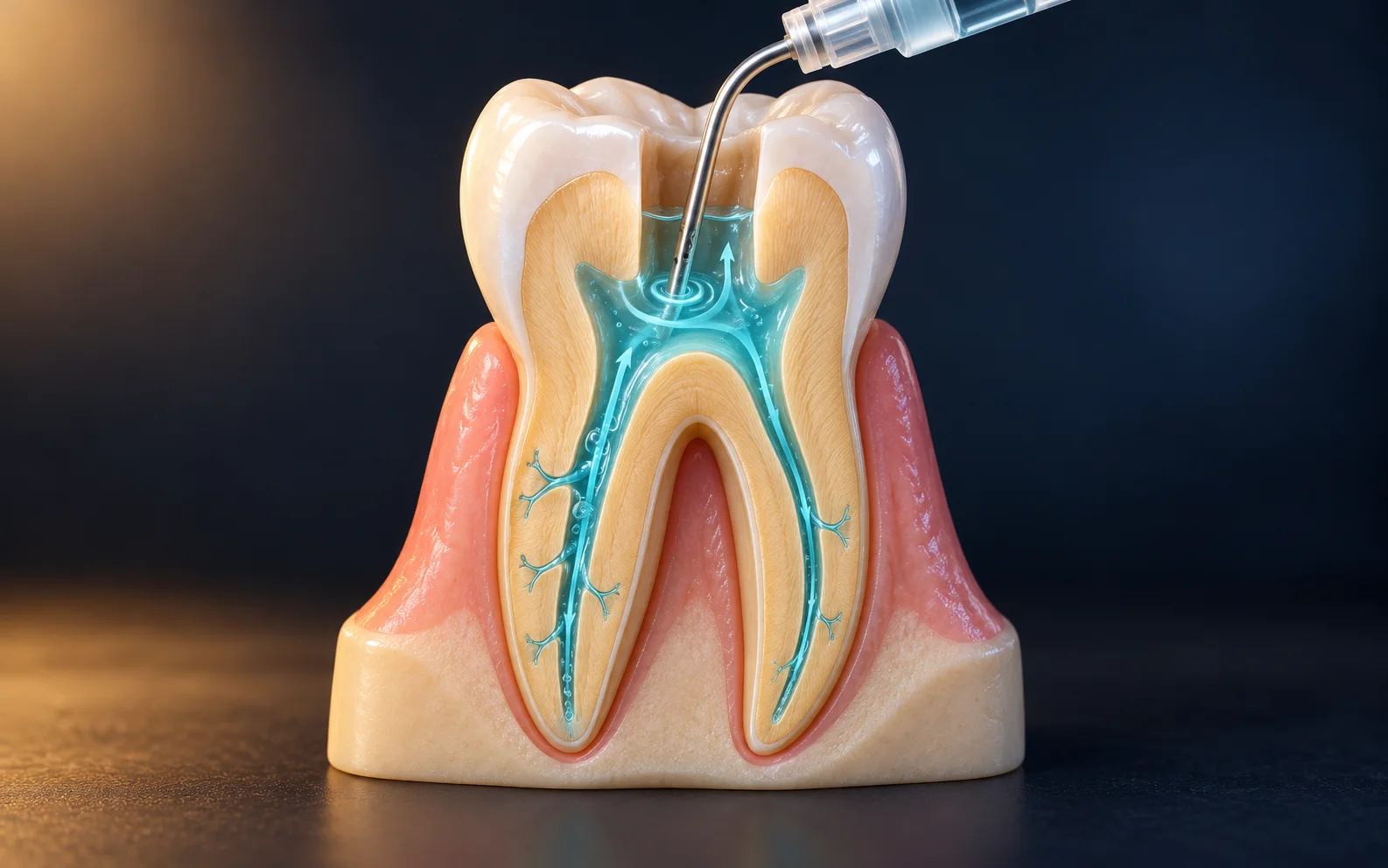
Powierzchowne pęknięcia szkliwa często nie wymagają leczenia i pozostają pod obserwacją. Pęknięcia sięgające zębiny leczy się odbudową, która trzyma ząb razem, zwykle koroną albo onlayem; celem jest zatrzymanie rozchylania się guzków. Jeśli zajęta jest miazga, najpierw idzie leczenie kanałowe, a po nim odbudowa ochronna.
Pęknięty ząb to jeden z nielicznych problemów stomatologicznych, w których czas pracuje przeciwko tobie. Czekanie zawęża możliwości.
Najczęściej zadawane pytania
Czy pęknięty ząb może zagoić się sam?
Nie. Szkliwo i zębina nie odnawiają się w sposób, który zamyka pęknięcie. Celem nie jest wyleczenie pęknięcia, lecz podparcie zęba, żeby nie mogło się ono pogłębiać.
Czy każdy pęknięty ząb wymaga usunięcia?
Nie, większość da się uratować. Ekstrakcja wchodzi w grę zwykle wtedy, gdy pęknięcie schodzi pionowo w korzeń.
Ta treść ma charakter ogólnoinformacyjny i nie zastępuje badania na miejscu. Decyzje o leczeniu powinny zapadać wyłącznie po ocenie klinicznej.
Opracowanie
Eren Koluaçık
Weryfikacja medyczna: Samed Kağan Bozkurt, Lekarz dentysta, stomatologia estetyczna
Ten artykuł powstaje w oparciu o doświadczenie kliniczne zespołu Papatya Dental i przed publikacją jest sprawdzany pod kątem rzetelności.
- Ostatnia aktualizacja:
- 2026-08-13
- Kontakt z redakcją:
- smile@papatyadental.com