


Treatment Approach for a Single Missing Tooth
Treatment for a single missing tooth aims to support the aesthetic appearance of the lost tooth, chewing function and balance within the mouth. Replacing the missing area with an appropriate restoration may also help reduce the risk of adjacent teeth shifting toward the space.
Treatment options are assessed according to the location of the missing area, the condition of the jawbone and gums, the health of the adjacent teeth and the person’s oral care habits. Alternatives such as an implant-supported crown, a bridge or, in some cases, a removable denture may be considered.
Before planning, the missing area, occlusal relationships and surrounding tissues are examined through an intraoral examination and any necessary imaging. The aim is not only to close the space, but to determine an approach that is compatible with the existing teeth, allows sustainable cleaning and takes oral health into account.
Purpose of treatment
To restore the space created by the missing tooth with a restoration that is functionally and aesthetically appropriate.
Options considered
Options such as an implant-supported tooth, a bridge and a removable denture may be considered according to the intraoral conditions.
Importance of adjacent teeth
In bridge planning, the structure and health of the adjacent teeth are assessed; in implant planning, the condition of the bone and gums is evaluated.
Occlusal balance
A missing tooth can affect the distribution of chewing forces and the tendency of the opposing tooth to over-erupt into the space.
Individualised planning
The most suitable approach is determined by considering the location of the missing tooth, oral health, expectations and daily care possibilities together.
Who May Be Suitable for Treatment of a Single Missing Tooth?
Suitability for treatment of a single missing tooth is determined by evaluating the location of the gap, jawbone and gum health, the condition of the adjacent teeth, the bite relationship, and whether oral care can be maintained.
Those who want to fill the gap left by a missing tooth
For people experiencing difficulty while chewing, concerns about the appearance of their smile, or discomfort caused by the gap, suitable restorative options can be assessed during an examination.
Those aiming to protect the adjacent teeth
Filling the gap may be considered for people at risk of the teeth next to the missing area shifting toward the gap or the opposing tooth becoming elongated.
Those whose adjacent teeth may be considered for a bridge
If the supporting capacity, restoration status, and periodontal health of the teeth next to the missing tooth are adequate, a fixed bridge may be considered in treatment planning.
Those with adequate conditions for an implant option
An implant-supported restoration may be considered for people whose bone volume and gum conditions in the missing area appear favorable and whose general health is suitable for evaluation.
Bone and soft-tissue structure of the missing area
Imaging and clinical examination are used to assess the amount and quality of bone, gum health, and anatomical relationships, and to determine the options that may be applied.
The bite, adjacent teeth, and oral hygiene
Chewing forces, the position of the opposing tooth, the support provided by the adjacent teeth, and the person’s cleaning habits affect the design of the restoration.
Active gum or infection-related problems
In the presence of active gum disease, untreated cavities, or infection, these problems may first need to be brought under control and oral health stabilized.
Systemic conditions affecting treatment planning
Some uncontrolled systemic diseases, medications that may affect healing, or inadequate care conditions may require treatment to be postponed or alternatives to be considered.
Potential Risks in the Treatment of a Single Missing Tooth
The risks of treating a single missing tooth may vary depending on the selected method, the location of the missing area, the health of the bone and gums, bite forces, and oral care. Examination and imaging findings help evaluate the potential benefits and limitations of each option together.
Temporary sensitivity and discomfort after the procedure
Sensitivity, mild pain, a feeling of pressure, or temporary gum irritation may occur after implant placement, tooth preparation for a bridge, or denture fitting. The severity of symptoms may vary depending on the extent of the procedure and the condition of the tissues.
Effects related to preparation of adjacent teeth
The adjacent teeth may need to be reduced when a bridge is made. This procedure may be associated with the subsequent development of sensitivity or, rarely, the need for additional treatment if the nerve tissue is affected, particularly when the tooth structure is already weakened.
Healing problems around the implant
With the implant option, healing of the surgical site may not progress in the same way for everyone. Conditions such as infection, insufficient bone integration, or inflammation in the tissues around the implant may affect the implant’s long-term stability.
Bite mismatch and chewing discomfort
If the restoration is too high, has premature contact, or is incompatible with the chewing pattern, it may cause discomfort when biting, fatigue in the jaw muscles, or excessive load on the restoration. These conditions are generally assessed through follow-up and necessary adjustments.
Loosening, fracture, or wear of the restoration
A crown, bridge, or removable denture may wear down or crack over time, or its connections may become loose, depending on chewing forces, teeth-clenching habits, trauma, and conditions of use. Regular check-ups help detect potential problems early.
Risk of gum disease and decay due to difficulty cleaning
If the area beneath the bridge pontic, crown margins, or around the implant is not cleaned sufficiently, plaque buildup may increase. This may contribute to gum inflammation, decay in the bridge-supporting teeth, or adverse effects on the tissues around the implant.
How does treatment for a single missing tooth progress?
The process of replacing a single missing tooth consists of an intraoral evaluation, planning the selection of a suitable restoration, its application, and follow-up. The steps may vary depending on the treatment selected and the condition of the oral tissues.
- 1
Intraoral examination and record-taking
The missing area, adjacent and opposing teeth, gingival tissues, and occlusal relationship are evaluated. Necessary imaging and measurements are taken to assess whether there is sufficient space for the restoration, the available support, and the current state of oral health.
- 2
Creating the treatment plan
Based on the examination findings, the feasibility of options such as an implant-supported crown, bridge, or removable prosthesis is assessed. The plan takes into account the restoration’s resistance to chewing forces, appearance, ease of cleaning, and compatibility with the surrounding teeth.
- 3
Preparing the oral tissues for treatment
Before the planned procedure, any necessary oral care and the management of cavities or gum problems are completed. If a bridge is planned, the abutment teeth may be prepared for the restoration; with an implant, surgical preparation of the relevant area may be planned.
- 4
Placement of the restoration
Depending on the selected method, the implant is placed, work is carried out on the teeth prepared for a bridge, or a removable prosthesis is made. During fabrication, the restoration’s color, shape, and relationship with the surrounding teeth are taken into consideration.
- 5
Fit and occlusion checks
The prepared tooth or prosthesis is tried in the mouth, and the marginal fit, contact points, appearance, and occlusal balance during chewing are checked. After any necessary adjustments, the restoration is secured or instructions on its use are provided.
- 6
Maintenance and follow-up
Daily oral care is maintained to protect the health of the gums and teeth around the restoration. During check-ups, the restoration’s fit, chewing function, and surrounding tissues are evaluated; maintenance recommendations are updated when necessary.
Treatment Alternatives for a Single Missing Tooth
The approach that may be considered for a single missing tooth varies according to the location of the gap, the condition of the neighboring teeth, bone and gum health, and the bite relationship. After an examination and imaging, the advantages, limitations, and maintenance requirements of each option are considered together.
Implant-Supported Crown
This involves completing the missing tooth with a single crown placed on an implant inserted into the jawbone. It may be considered when restoring the gap without treating the neighboring teeth is desired, provided that sufficient bone and healthy surrounding tissues are present.
Fixed Dental Bridge
This is a fixed restoration that closes the gap by using the teeth on either side of the missing tooth for support. It may be considered as an option when the neighboring teeth already require crowns or when implant treatment is not considered suitable in certain situations; the health of the supporting teeth is important.
Removable Partial Denture
This involves using a removable prosthesis to replace the missing tooth. It may be considered when surgery should be avoided or when conditions for a fixed restoration are limited. The fit and cleaning of the prosthesis, as well as regular check-ups, are important throughout its use.
Digital Records and Planning for a Single Missing Tooth
In treatment planning for a single missing tooth, imaging, intraoral records, and impression methods help assess the relationship between the edentulous area and the surrounding tissues. This information supports evaluating implant, bridge, or removable prosthesis options in terms of their position and fit within the mouth.
Panoramic or, when necessary, three-dimensional imaging may provide additional information about the bone structure and adjacent anatomical regions. Intraoral scanning or conventional impressions can be used to record the shape of the teeth, the width of the space, and the occlusal relationships.
The records and methods required vary depending on the location of the missing tooth, the planned restoration, and the condition of the bone and gums. These tools support the dentist’s examination findings; the treatment decision is made together with the clinical assessment.
Intraoral examination and photographic records
Helps document the edentulous area, adjacent teeth, gingival contours, and aesthetic requirements in the visible region.
Radiographic evaluation of bone and roots
Two-dimensional radiographs may support assessment of the bone level in the edentulous area, the roots of adjacent teeth, and the relationship with the opposing tooth.
Three-dimensional imaging
When an implant option is being considered, it may be used according to clinical requirements to examine the bone volume and the location of anatomical structures in greater detail.
Digital scanning or conventional impression
Helps record the dimensions of the teeth and the edentulous space for preparing the restoration, and plan contact points and gingival margins.
Occlusal and try-in records
Helps assess tooth contacts and the relationship of chewing forces; the shape of the restoration may be reviewed based on these records.
Recovery After Treatment for a Single Missing Tooth
Recovery may vary depending on the treatment provided, the extent of the procedure, the condition of the oral tissues, and your personal care habits. Your dentist’s post-procedure instructions take priority; if anything unexpected occurs, seek clinical evaluation.
- 1
The Early Period After the Procedure
Sensitivity, mild discomfort, or an unusual sensation while chewing may occur in the treated area. Temporary swelling and tenderness may develop, particularly after implant surgery or a procedure involving the gums.
- 2
Adjusting to the New Restoration
After a crown, bridge, or removable denture is placed, the tongue and chewing muscles may need time to adapt to the new structure. During the first few days, you may notice a feeling that your bite is high or short-term changes in speech.
- 3
Recovery of the Oral Tissues
The gums and surrounding tissues heal according to the type of procedure performed. Keeping the area clean helps reduce plaque buildup around the restoration and maintain the health of the tissues.
- 4
Long-Term Adaptation and Follow-Up
The restoration’s chewing balance, fit with the gums, and cleanability are assessed over time. Whether follow-up appointments are needed and when they should take place are determined according to your treatment plan and your dentist’s clinical evaluation.
Gentle, Regular Oral Care
Gently clean the treated area and the surrounding teeth using the method shown by your dentist. Use the recommended care tools regularly to reduce food accumulation around a bridge or denture.
Be Mindful of Chewing Habits
During the adjustment period, avoid biting very hard or sticky foods forcefully. If you feel that the restoration is too high, loose, or affecting chewing, inform the clinic.
Increasing Pain or Pronounced Swelling
Contact your clinic if, instead of mild sensitivity, you experience pain that is gradually increasing, pronounced swelling, persistent bleeding, or a bad taste and discharge from the treatment area.
A Feeling That the Restoration Does Not Fit Properly
Seek clinical evaluation without delay if a crown, bridge, or denture breaks, becomes loose, shifts out of position, causes a stabbing sensation, or noticeably changes your bite.
Factors Affecting the Cost of Treating a Single Missing Tooth
The cost of treating a single missing tooth may vary depending on the treatment method selected and the existing conditions in the mouth. The exact fee is determined after the examination, any necessary imaging, and preparation of a personalized treatment plan for the missing area.
Selected treatment option
An implant-supported crown, bridge, and removable prosthesis involve different clinical applications and laboratory processes. Therefore, the method selected according to the location of the missing tooth and the suitability of the oral conditions affects the overall scope of treatment.
Location of the missing tooth
Aesthetic expectations, chewing forces, ease of access, and the occlusal relationship may differ between the front and back regions. The location of the missing area may affect the design of the restoration and the scope of the clinical procedures to be performed.
Jawbone and gum conditions
When an implant is being considered, the amount and quality of the bone, as well as gum health, are important in planning. Examination and imaging determine whether the surrounding tissues need to be prepared for treatment.
Condition of the adjacent teeth
For bridge treatment, the strength of the teeth next to the gap, their existing crowns, and their restoration needs are evaluated. The preparation and restorative procedures required to use these teeth as supports may change the scope of treatment.
Material and laboratory design of the restoration
The aesthetic, durability, and occlusal fit objectives for a crown or bridge play a role in planning the material to be used and the laboratory production process. Detailed work may be required for color and shape matching, particularly in visible areas.
Existing oral health and additional preparation needs
Cavities, gum disease, infection, occlusal problems, or conditions affecting oral hygiene are assessed first. The extent of the preparation required to plan the restoration on healthy tissues may affect the cost.
Temporary price estimate
€500 – €4,000
This estimate is not the clinic’s final price quotation; the actual fee is determined after the examination and personalized treatment plan have been completed.
Before / After

Frequently Asked Questions About Treatment for a Single Missing Tooth
Why should a single missing tooth be treated?
Treating a single missing tooth may help support chewing function and aesthetic appearance. Properly filling the space is also considered in terms of reducing the tendency of adjacent teeth to shift and the opposing tooth to extend into the space.
What treatment options are available for a single missing tooth?
An implant-supported crown, a bridge, and, in some cases, a removable prosthesis may be considered. The appropriate option is determined according to the location of the missing tooth, the condition of the adjacent teeth, and the bone and gum structure.
Is an implant or a bridge more suitable for me?
The choice between an implant and a bridge is determined following an individualized clinical evaluation. For implant planning, the condition of the bone and gums is considered; for bridge planning, the health and structural characteristics of the adjacent teeth and the bite relationship are taken into account.
What examinations are performed before treatment?
An intraoral examination and the necessary imaging are performed before treatment. The missing area, surrounding tissues, adjacent and opposing teeth, and chewing bite are assessed to create an appropriate treatment plan.
Does the location of the missing tooth affect the treatment plan?
Yes, the location of the missing tooth in the mouth affects the treatment plan. Aesthetic expectations, chewing forces, the width of the space, and the condition of the surrounding tissues may differ between the front and back regions, so the options are evaluated accordingly.
Is care required after treatment for a single missing tooth?
Yes, regular oral care is important for maintaining the health of the restoration and surrounding tissues. Choosing a cleaning plan that can be maintained, attending recommended check-ups, and assessing care habits are important parts of treatment.
Can every single missing tooth be treated using the same method?
No, the same method may not be suitable for every single missing tooth. Oral health, the condition of the jawbone and gums, the structure of the adjacent teeth, bite balance, and the person's daily care capabilities should be evaluated together.
Medical sources
View medical sources
Medically reviewed by

Ahmet Metin Bal
Chief Dentist
View doctor profile
Nilufar Tulanova Şener
Dentist, Aesthetic Dentistry
View doctor profile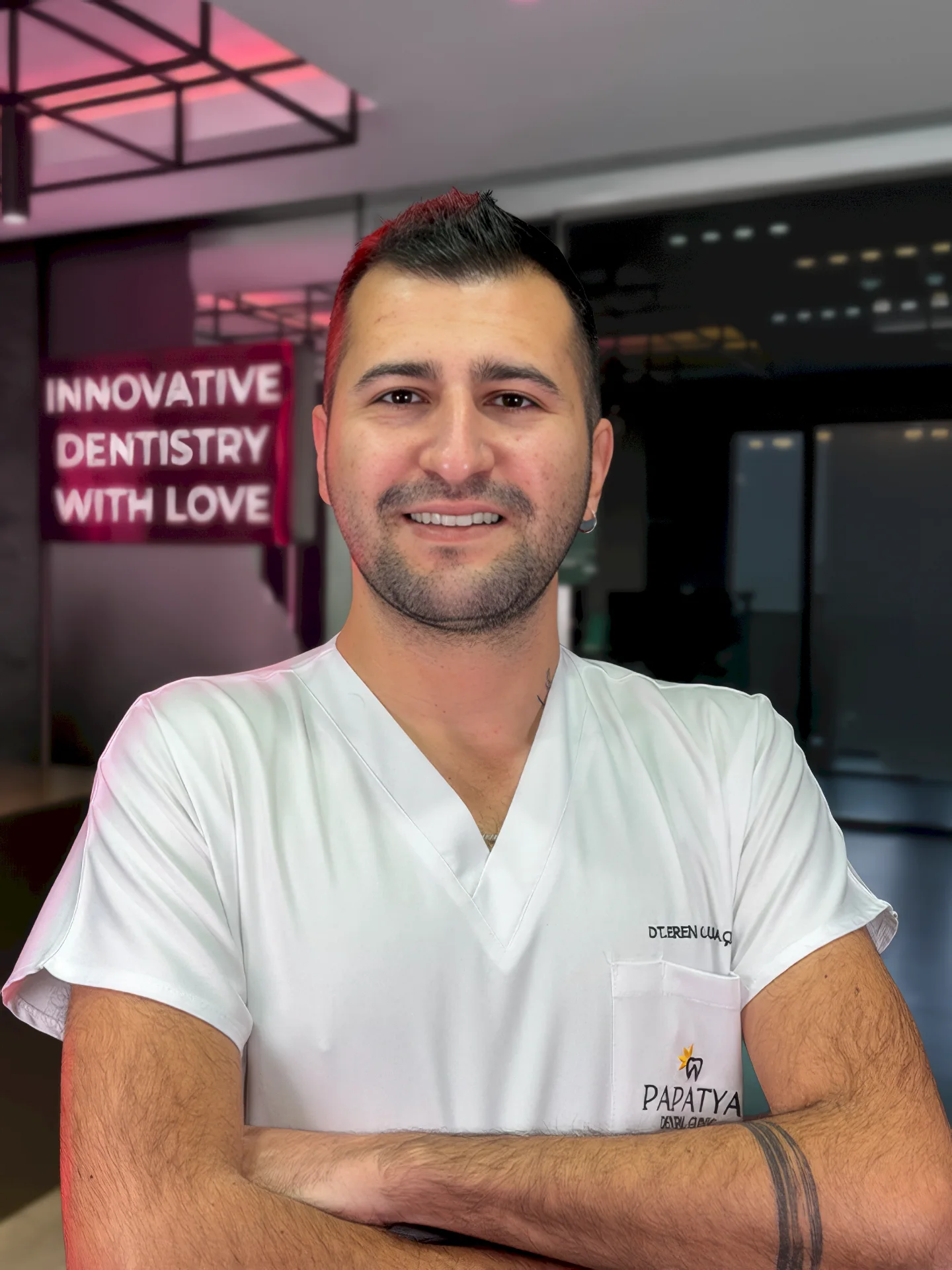
Eren Koluaçık
Dentist, Aesthetic Dentistry
View doctor profileLast medical review: 10 August 2026