

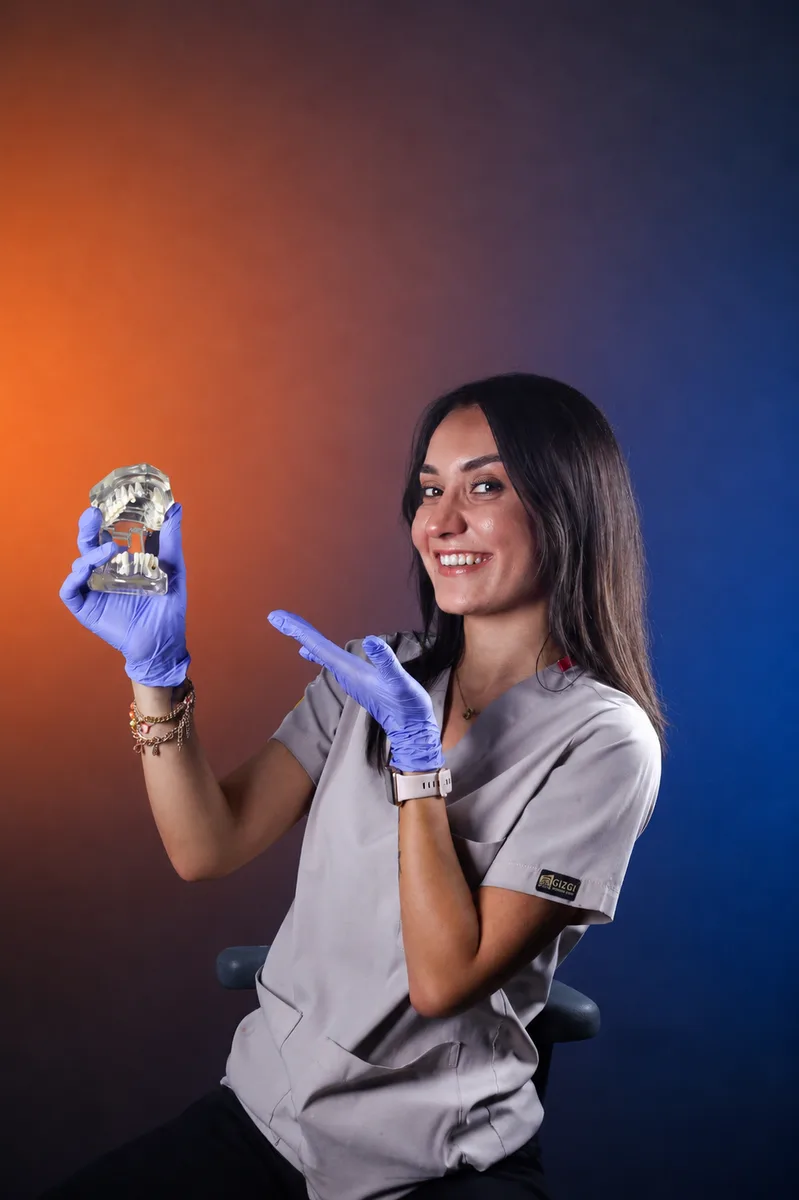
What You Need to Know About Teeth Growing Back
Natural teeth lost in adulthood do not grow back on their own according to current biological knowledge. This guide helps clarify common questions on the subject while helping you understand the possible effects of missing teeth on oral health, chewing and daily life.
Baby teeth and permanent teeth develop differently; baby teeth lost during childhood are usually replaced by permanent teeth. However, when a permanent tooth is lost, assessment generally focuses on the condition of the gap and options for replacing it.
When considering treatment planning in Antalya, the cause of tooth loss, the condition of the remaining teeth and gums, jawbone structure and general health information are important. These factors help determine which approaches may be considered after examination.
When making a decision, it is useful to discuss your expectations, travel and time plans, oral care habits and the long-term maintenance requirements of the recommended option. On this page, you can learn about the difference between natural teeth growing back and approaches for replacing a missing tooth.
Do permanent teeth grow back?
Lost permanent teeth do not normally grow back on their own.
Why are baby teeth replaced?
Baby teeth are replaced during childhood as permanent teeth erupt from beneath them.
Why is tooth loss assessed?
The gap may be assessed in terms of chewing, speech, the position of neighboring teeth and oral hygiene.
Factors affecting personal planning
Gum health, bone structure, the location of the missing tooth and general health are assessed together.
Planning before travel
Before coming to Antalya, it may be helpful to share your expectations, available time and maintenance needs.
Who Might Be Suitable for Missing-Tooth Options?
For people exploring options for a missing tooth rather than waiting for a natural tooth to regrow, it may be more realistic to make a decision by considering the length of the Antalya trip, required consultations, possible additional appointments, budget and long-term care plan together.
People who can plan their travel schedule in advance
People who can set aside enough time for a visit to Antalya and arrange appointment dates flexibly around their travel schedule may find it easier to assess the options.
People who want to address multiple needs together
For those who also want to discuss other oral health needs during the same visit period as the missing tooth, a comprehensive planning approach may be meaningful.
People ready to plan long-term care
People who take into account that the selected approach may require daily care, check-ups and additional follow-up when necessary may manage the decision-making process more consciously.
People who want to communicate their expectations clearly
People ready to discuss their expectations regarding chewing comfort, appearance, timing and budget in advance may compare the options suitable for them more clearly.
Visit duration and appointment sequence
The time that can be spent in Antalya is considered together with consultation, planning, necessary procedures and possible check-up times. Some approaches may not be limited to a single visit.
Planning care and follow-up conditions
Daily oral care after treatment, recommended check-ups and remote communication requirements are assessed. Routine dental check-ups in the country of residence can also be included in the planning.
Very short or inflexible travel period
If only a very limited time can be spent in Antalya, there may not be enough time for consultation and necessary follow-up steps. It may be necessary to reschedule the travel dates.
Being unable to set aside time for follow-up and care
If it is currently not possible to follow long-term care recommendations or organise necessary check-ups, it may be necessary to postpone the decision or consider a different plan.
Questions to Ask When Choosing a Clinic for Missing-Tooth Treatment
When planning an assessment in Antalya to replace a missing tooth, it is useful to choose a clinic by considering not only the proposed procedure but also planning, communication, travel arrangements, and post-treatment support together. Your needs, oral anatomy, and the planned scope may affect these details.
Written treatment plan and cost breakdown
Ask whether the recommended options, procedures to be performed, possible additional treatments, and cost items will be provided in writing after the examination and assessment. This allows you to plan your travel and budget based on clearer information.
Impression-taking and digital planning methods
Find out how intraoral impressions are taken, whether digital scanning or imaging methods are used, and which records the plan is based on. This information helps you understand the planning process and the expected sequence of visits.
Number and timing of visits
Discuss in advance approximately how many visits the treatment is expected to require, whether waiting between visits will be necessary, and how your stay in Antalya will be planned. The process may vary depending on the option selected and the clinical assessment.
Communication language and information sharing
Clarify which language will be used for consultations, consent procedures, and post-treatment information, and who will answer your questions. Receiving the treatment plan, care recommendations, and written documents in a language you understand can make decision-making easier.
Remote follow-up after treatment
Ask how communication will continue if you need a check-up or have questions after returning to your country. It may be helpful to have the arrangements for remote consultations, photo sharing, care guidance, and communication steps to follow when necessary explained in advance.
Material information and contingency planning
Find out whether the brands and specifications of the restorative materials or systems planned for use will be disclosed. Also ask how the options, timing, and possible additional fees will be discussed if an additional need is identified during the plan.
How does planning for missing-tooth treatment proceed?
When evaluating options to replace a missing tooth in Antalya, the process begins with sharing information remotely and becomes more defined according to the examination findings. Travel, appointments, treatment days and care after your return are arranged according to your needs and the scope of the planned approach.
- 1
Initial contact and information sharing
During the initial consultation, you can share your expectations regarding the missing tooth, general health information, any recent X-rays and intraoral photographs. This information helps outline which points need to be assessed before you travel to Antalya.
- 2
Preliminary assessment and discussion of options
Based on the information shared, a general preliminary consultation is held about the area of the missing tooth, the adjacent teeth and possible replacement approaches. Remote assessment does not replace a definitive diagnosis; the final decision is made after a clinical examination and any necessary imaging.
- 3
Planning, appointments and travel preparation
After the assessment, the scope of the recommended plan, the estimated appointment schedule and practical points to consider during treatment are discussed. When choosing your travel dates, it may be helpful to take follow-up requirements, your daily schedule and care after your return into account.
- 4
Examination in Antalya and finalising the plan
When you arrive at the clinic, your mouth, gums and jaw structure are assessed in detail; imaging is performed when necessary. The findings are considered together with the information shared remotely, the suitability of the plan is checked and information is provided about the approach to be carried out.
- 5
Treatment days and care information
After the plan is approved, the procedures are carried out in the determined order. After each stage, oral care, dietary routine and situations requiring attention are explained. The scope of the procedures and the schedule of visits may vary according to intraoral findings and the option selected.
- 6
Return and remote follow-up
Before your return, care recommendations, the need for follow-up and situations requiring you to get in touch are reviewed. After you leave Antalya, the healing and care process can be followed remotely; when necessary, the next steps are assessed through sharing up-to-date information or images.
Treatment Approaches That May Be Considered for Missing Teeth
When permanent teeth do not regrow on their own, different tooth-replacement options may be considered by evaluating the position of the missing tooth, the number of spaces, the condition of the neighboring teeth, and the gums and jawbone. During the planning process in Antalya, the travel schedule and care requirements are also discussed.
Replacing a Tooth with a Dental Implant
A dental implant is an option based on preparing a tooth-like restoration over an artificial root placed in the jawbone. It may be considered for a single missing tooth or multiple missing teeth after evaluating the bone and gum conditions and general health information.
Fixed Dental Bridge
A fixed bridge aims to close the gap left by a missing tooth with an artificial tooth supported by the neighboring teeth. It may be considered in some cases where an implant is not deemed suitable or the neighboring teeth require restoration.
Removable Partial Denture
A removable partial denture aims to provide support for multiple missing teeth with a prosthesis that can be inserted and removed. It may be considered during planning after examining the distribution of the remaining teeth, the location of the gaps, and the condition of the oral tissues.
Complete Denture and Implant-Supported Denture
When all teeth in the jaw are missing, complete dentures or implant-supported dentures may be discussed. These options are evaluated together with the denture’s retention in the mouth, chewing expectations, bone structure, and daily cleaning requirements.
Travel and Appointment Planning for Missing Teeth in Antalya
When teeth do not grow back on their own, travel and appointment planning for an evaluation in Antalya can be considered in advance. The process varies according to the condition of the missing tooth, the examinations required, and the stages of the planned approach; therefore, it is useful to ask about timing during the initial consultation.
While some evaluations and procedures can be completed in a single visit, more comprehensive plans may require several visits and a waiting period between visits. Although the exact number of days varies from person to person, it is appropriate to keep travel plans flexible and take possible follow-up appointments into account.
Before the appointment, existing panoramic images, previous treatment records, medications being taken, and health information can be shared. Flight, accommodation, and local transportation plans should be arranged together with the appointment times; the communication language and the need for a companion should also be discussed in advance.
Visit Number and Duration Planning
The requirements for the initial evaluation, planning, procedure, and follow-up may not be the same. Travel duration and the number of visits are clarified according to the examination findings and the stages of the selected option.
Accommodation and Transportation Arrangements
Arranging accommodation and transportation while taking appointment times, possible follow-up needs, and the need for rest after the procedure into account may make travel organization easier.
Health Information Before the Appointment
Sharing current dental images, if available, previous treatment information, regularly used medications, and general health status may help the initial consultation proceed in a more organized manner.
Communication Language and Need for a Companion
The languages in which consultations can be conducted can be confirmed before the appointment. People who need one may arrange for a companion to follow decision-making and care information more comfortably.
Post-Treatment Return and Remote Follow-Up
Following the treatment planning in Antalya, the return and follow-up process may vary depending on the scope of the approach used, your oral condition, and the clinical assessment. It is important to prioritize your dentist’s personalized recommendations regarding travel, care, and communication.
- 1
Planning Before Leaving Antalya
Before your return journey, the clinic will discuss whether a check-up is needed, your daily care expectations, and the follow-up information that will be provided to you. The timing of your journey, how you feel, and the dentist’s assessment are considered together.
- 2
Arranging a Comfortable Return Journey
It may be helpful to plan your travel in a way that leaves enough time for rest and care after treatment. If you experience something unexpected during or after the journey, inform the clinic rather than interpreting it on your own.
- 3
Continuing Care After Returning Home
When you return home, it is important to continue your oral care in accordance with the instructions provided by the clinic. The recommended follow-up information and care habits are considered part of your long-term oral health plan.
- 4
Remote Communication and Follow-Up
When needed, you can contact the clinic by message, telephone, or the requested images to provide information about your progress. Remote communication may provide general guidance; if an examination is required, a clinical assessment will be planned separately.
Keep Your Care Information Accessible
Before returning, keep the written recommendations and contact information provided in an easily accessible place. Continue your oral care according to the method and frequency explained to you.
Note Any Changes
Calmly observe changes in your mouth and any questions you may have. Noting when symptoms began and how they changed may make remote communication easier.
Increasing or Unexpected Discomfort
If you experience pain or swelling that is clearly increasing rather than decreasing, or discomfort that makes daily life difficult, contact the clinic without delay for assessment.
Bleeding or Changes in Function
Inform the clinic if you have bleeding that does not stop or recurs, a feeling of fever, difficulty opening your mouth, or an unexpected and marked change in chewing or speaking.
Factors Affecting the Cost of Replacing a Missing Tooth
The cost of replacing a missing tooth is not determined by a single method or criterion. For people planning to travel to Antalya, the oral condition, the approach selected, the visit schedule and any necessary additional procedures are evaluated together with the examination; the exact fee is clarified after individual planning.
Number of missing teeth and location of the gap in the mouth
The scope of planning may vary depending on whether one or more teeth are missing and whether the gap is located in the front or back of the mouth. Since the gap’s relationship with chewing, speech and adjacent teeth is evaluated, the scope of the solution may also affect the cost.
Replacement approach under consideration
Fixed or removable options that may be considered for a missing tooth can differ in terms of laboratory work, oral preparation requirements and follow-up. The appropriate approach is determined after evaluating the condition of the gap, the remaining teeth and the person’s expectations together.
Restorative material and laboratory work to be used
The type of material used in the replacement solution, aesthetic expectations and the scope of the laboratory work involved in production may affect the cost. Particularly in visible areas, personal adjustments required for colour, shape and harmony with the natural teeth may be reflected in the treatment planning.
Condition of the gums, bone and existing teeth
Gum health, jawbone structure and the condition of the teeth adjacent to the gap may affect whether additional evaluation or preparation is needed before replacement. These needs are not the same for everyone and can only be determined through a clinical examination.
Visit planning suitable for travel to Antalya
For people travelling from abroad, the number of clinical visits required may vary according to the measurement, try-in, placement and check-up stages of the selected approach. Coordinating travel dates with the timing of oral procedures may affect the organisation of the treatment scope.
Before / After
FAQ About Tooth Loss and Planning in Antalya
Should I wait for my lost permanent tooth to grow back?
No, lost permanent teeth do not normally grow back on their own. For this reason, it may be helpful to assess the possible effects of the gap on oral health, chewing and neighbouring teeth, and to discuss replacement options.
How does the planning process for a missing tooth in Antalya begin?
The process begins by sharing information about your missing tooth and expectations. Before you travel to Antalya, your current health information, possible travel date range and any previous dental records can be discussed; the definitive approach is determined after the examination.
How is it determined which option is suitable for me?
Suitability is determined through an assessment of your individual oral and general health. The location of the missing tooth, the condition of the remaining teeth and gums, the structure of the jawbone, the cause of the tooth loss and your oral care habits are considered together.
Can I find out in advance how long I need to stay in Antalya?
An estimated schedule can be shared after the assessment. Since the procedures required, the condition of the oral tissues and the planned approach vary from person to person, the length of the trip is planned according to the examination findings and care and follow-up needs.
What information would be helpful to share when travelling from abroad?
It may be helpful to share your current complaints, when and how the missing tooth was lost, your general health information, the medicines you take regularly and any previous records. This information assists with the preliminary consultation and travel planning, but does not replace an examination.
How is follow-up planned when I return to my country after treatment?
The need for follow-up is planned according to the approach selected and your individual oral health. During the assessment in Antalya, you may be given information about oral care, your check-up requirements and the points to pay attention to after returning to your country.
Is it always necessary to replace a missing tooth?
The same decision does not apply to every missing tooth. Depending on the location of the gap, its effect on chewing, the condition of the neighbouring teeth, oral hygiene and the person’s expectations, monitoring or different replacement options may be discussed.