

What treatment in Antalya actually involves for a Leeds patient
Travelling from Leeds to Antalya for dental care means fitting a course of treatment into a fixed number of days abroad, then managing the aftercare from Yorkshire. That is the whole picture in one sentence, and it is the part most people underestimate. The clinical work is only one half of the decision. The other half is planning, timing and what happens in the months after you fly home.
Most people who look into this are dealing with something long standing rather than a sudden problem. Missing teeth they have lived with for years, old crowns and bridges that keep failing, worn or heavily filled front teeth, or gum problems that have never been fully treated. Treatment abroad tends to be considered when the work needed is extensive enough to require several appointments anyway.
Leeds sits well for this kind of trip. Leeds Bradford Airport offers seasonal direct services to Antalya during the summer months, and connecting routes through Istanbul run all year, as do departures from Manchester which is a short train or road journey away. That flexibility matters, because complex treatment often needs two separate visits rather than one long stay.
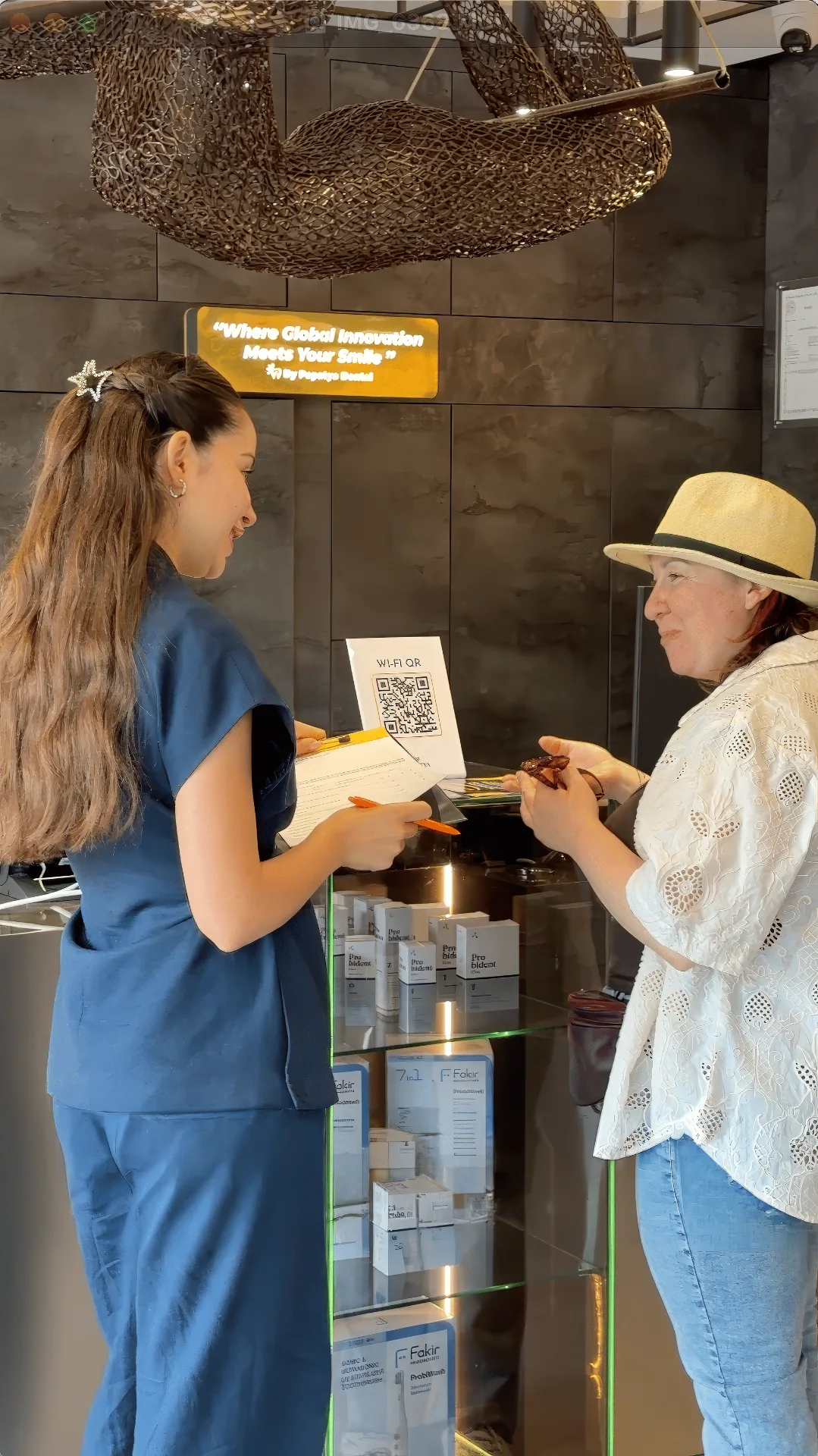
Papatya Dental is based in Antalya and treats patients who travel from the UK, so the planning side is familiar territory. What follows is not a sales page. It is the information you need to judge whether the option is sensible for your mouth, your calendar and the time you can take away from work.
Two visits are common
Implant treatment usually needs a first visit for surgery and a second visit months later for the final teeth. Crowns and veneers can often be finished in one visit of roughly a week.
Records come first
A useful plan starts with a recent x-ray or scan and clear photographs. Without them, anything you are told before you fly is an estimate rather than a plan.
Flight options vary by season
Direct services from Leeds Bradford to Antalya are seasonal. Outside the summer season, most patients connect through Istanbul or fly from Manchester.
Your medical history travels with you
Blood thinners, diabetes, bisphosphonate medicines and heart conditions all change how treatment is planned. Bring a current list of your medicines.
Aftercare needs a UK plan
Decide before you travel who will see you in Leeds if something needs attention. Registering with a local dentist beforehand is the simplest answer.
Who this suits, and who should think again
Travelling for treatment is not automatically right or wrong. It depends on what your mouth needs, how stable your general health is, and how much control you want over the timetable. The points below are the ones that most often decide it.
You need several teeth treated at once
When the plan covers a whole arch, multiple implants or a full set of crowns, the work is naturally grouped into a block of appointments. That structure fits a planned trip far better than a single small repair does.
Your general health is stable
Well controlled blood pressure, stable diabetes and no recent cardiac events make surgical treatment more predictable. Stable does not mean perfect, but it does mean your conditions are known, monitored and treated.
You can take a proper block of time
Being able to commit to a full week away, and to a second visit later if the plan needs one, is essential. Trying to compress implant treatment into a long weekend is how problems start.
You accept a two stage timeline
Implants integrate with bone over months, not days. If you are comfortable with temporary teeth in between and a return trip afterwards, the biology and your schedule can be made to agree.
Bone volume and sinus position
A three dimensional scan shows how much bone is available and where the sinus and nerve sit. This decides whether implants can be placed directly or whether grafting is needed first, which changes the whole timetable.
Bite, habits and existing work
Heavy grinding, an uneven bite or old bridgework changes what will last. These are assessed properly in the chair, which is why the plan agreed before you fly is always confirmed and adjusted on the first day in Antalya.
You have an active infection or untreated gum disease
Placing crowns or implants over inflamed, bleeding gums sets the work up to fail. Gum treatment has to come first, and that often means starting with a dentist in Leeds before any trip is booked.
You need an urgent repair right now
Pain, swelling or a broken tooth needs seeing quickly, locally. Book an emergency appointment in Leeds or contact NHS 111 for out of hours advice, then think about longer term plans once the problem is settled.
Risks worth taking seriously
Every dental treatment carries risk, and distance adds a few of its own. None of these are reasons to avoid treatment abroad by default. They are reasons to plan properly and to ask direct questions before you commit.
A plan agreed from photographs changes on arrival
Photographs and a description of your symptoms cannot show bone levels, cracks under old crowns or the true state of a root. Expect the plan to be confirmed with a scan and examination on day one, and be wary of any quote that promises never to change.
Rushing the timetable
The pressure to finish everything before a return flight is the single biggest risk in dental travel. Healing time, gum settling and bite adjustments cannot be shortened safely. A plan that leaves room in the schedule is safer than one that fills every hour.
Implant failure or delayed healing
A small proportion of implants do not integrate with bone. Smoking, uncontrolled diabetes and untreated gum disease all raise that risk. If it happens, it usually shows in the first few months, which is when you are back in Leeds rather than in the clinic.
Nerve, sinus and surgical complications
Lower implants sit near the nerve that supplies the lip and chin, and upper implants sit near the sinus. Numbness and sinus problems are uncommon but real. Careful planning from a three dimensional scan is how the risk is reduced.
Over treatment of healthy teeth
Preparing sound teeth for crowns removes enamel permanently and can affect the nerve inside the tooth. Ask why each tooth is being treated, and ask what the more conservative option would be, before agreeing to a full set.
Flying and blood clots after surgery
Long flights after surgery carry a small risk of clots in the legs, and air travel too soon after sinus surgery can be uncomfortable. Agree a safe gap between your last procedure and your flight, and move about the cabin on the way home.
How the process runs, step by step
The order below is the one that gives the fewest surprises. Each step exists to remove a decision from the day you are sitting in the chair with a return flight booked.
- 1
Send your records before anything else
Ask your dentist in Leeds for a copy of your recent x rays and notes, and take clear photographs of your teeth in daylight. These give the clinic something real to assess and let you compare answers between clinics on the same information.
- 2
Discuss the plan and its alternatives remotely
A first consultation is done by video or written correspondence. You should come away knowing which teeth are involved, what is proposed for each, how many visits it needs and what the alternative approaches are.
- 3
Book flights around the treatment, not the reverse
Fix the clinical timetable first, then book travel with a buffer at each end. Leave at least one clear day after your final appointment before flying home, in case an adjustment is needed.
- 4
Examination and scan on arrival
The first appointment in Antalya confirms or revises the plan using a clinical examination and a three dimensional scan. Anything that changes should be explained and agreed in writing before treatment starts.
- 5
Treatment across the stay
Surgery or tooth preparation happens early in the visit so there is time for review. Temporary teeth are fitted where needed. The last appointments are for fit, bite and appearance rather than new work.
- 6
Handover for follow up in Leeds
Before you leave you should receive your treatment records, x rays, details of the implant system or materials used, and written aftercare instructions. Any dentist in Leeds will need these if you go to them later.
Other routes worth comparing
Treatment abroad is one option among several. Comparing it honestly against the alternatives is the best way to be confident in whichever route you choose.
NHS treatment in Leeds
NHS dentistry covers care that is clinically necessary to keep your mouth healthy and pain free. Availability of NHS places varies, and cosmetic work is generally outside it, but for disease control and essential treatment it remains the first thing to check.
Private treatment closer to home
A private practice in Leeds or elsewhere in West Yorkshire means no travel, easy reviews and continuity if something needs adjusting. It is worth getting a full local plan in writing so you are comparing like with like.
Phased treatment over a longer period
Spreading work across a year or two, treating the most urgent problems first, is often the sensible route when time or energy for treatment is limited. It also lets you see how each stage settles before committing to the next.
A more conservative treatment plan
Composite bonding, a partial denture, a single bridge or simply repairing what is failing can achieve a great deal with less irreversible work. Ask what the minimum intervention option would look like before agreeing to a larger plan.
Technology that makes distance workable
The reason planned dental travel works better now than it did a decade ago is largely digital. Scans, photographs and design files can be shared and assessed before you travel, so most of the thinking is done before you arrive rather than while you wait.
The same tools compress time on site. Digital impressions and in house laboratory work remove the postal delays that used to stretch crown treatment over weeks. Guided surgery turns a planned implant position into a physical guide used on the day.
None of this replaces clinical judgement or shortens biological healing. What it does is reduce guesswork, cut down the number of appointments needed and give you records you can hand to any dentist in Leeds afterwards.
Three dimensional imaging
A cone beam scan shows bone height, bone width, nerve position and sinus anatomy. It is the basis of any honest implant plan and is taken before surgical treatment is agreed.
Digital impressions
An intraoral scanner replaces impression material for most cases. It is more comfortable, the file can be checked immediately, and it can be sent to the laboratory the same day.
Guided implant surgery
The implant position is planned on the scan, then a printed guide transfers that plan to the mouth. This helps keep the implant away from the nerve and sinus and in a position the final tooth can be built on.
On site laboratory work
Having the laboratory in the same building allows fittings, adjustments and remakes within a single visit. That is what makes a one week course of crown treatment realistic.
Digital records you keep
Scan files, x rays and details of the components used are exportable. Take copies home so a dentist in Leeds can service or repair the work without guessing what was fitted.
Recovery, aftercare and staying in touch
Most of your recovery happens in Leeds, not Antalya. Knowing what is normal at each stage, and what is not, keeps small issues from becoming return trips.
- 1
First 48 hours
After surgery expect swelling, some bruising and discomfort that responds to the painkillers you are advised to take. Cold packs help. Eat soft food, keep your head raised at night and avoid rinsing forcefully.
- 2
First week
Swelling settles and you return to normal eating gradually. Stitches, where used, are either dissolvable or removed before you fly. This is when any final fitting and bite adjustment appointments take place.
- 3
Weeks to months
Implants integrate with bone over several months before final teeth are attached. During this period you wear temporary teeth. Gum tissue around new crowns also settles and matures during these weeks.
- 4
Long term
Implants and crowns need the same maintenance as natural teeth: regular check ups, professional cleaning and good daily care. Book reviews with a dentist in Leeds and keep to them.
Daily cleaning around new work
Brush twice daily with fluoride toothpaste and clean between teeth and around implants with interdental brushes or floss as shown. Implants do not decay, but the gum and bone around them can become inflamed and that is what causes failures.
Habits that affect the result
Stopping smoking improves healing and long term implant survival more than any other single change. If you grind your teeth, wear the night guard you are given, because grinding damages new crowns quickly.
Signs of infection or unusual pain
Increasing pain after the third day, spreading swelling, fever, a bad taste or discharge all need assessment. Contact the clinic and see a dentist in Leeds promptly rather than waiting to see if it settles.
Movement, looseness or a change in your bite
A crown that feels high, a loose implant tooth or a screw that seems to have worked free should be reported straight away. These are usually simple to correct early and much harder to correct late.
What shapes the scope of treatment
This section is about scope and time rather than figures. The factors below decide how much treatment is involved, how many visits it takes and how long you need to be away from Leeds.
How many teeth are involved
A single tooth, one arch or a full mouth are three different projects. The number of teeth drives appointment length, laboratory work and how many days you need on site.
Preparatory treatment needed first
Gum treatment, extractions, removal of failed root canals or bone grafting all have to happen before the definitive work. Each one adds healing time and can turn a one visit plan into two.
Whether one visit or two is required
Crown and veneer work is often completed in a single stay. Implants normally need a healing period between placement and final teeth, which means a second trip and a second set of flights and accommodation.
Materials and laboratory work
Different ceramics, implant systems and framework designs suit different situations, and they differ in how much laboratory time they need. Ask what is proposed for your case and why that choice was made.
Follow up and maintenance arrangements
Long term reviews, cleaning appointments and any future repairs are part of the real scope. Plan where those will happen in Leeds and factor them in from the start rather than treating them as an afterthought.
Before / After

Common questions from patients in Leeds
How many days do I need in Antalya?
Crown, veneer and most restorative work usually takes six to ten days in one visit, allowing time for laboratory work and fitting appointments. Implant treatment is normally split into two visits, with a shorter first stay for surgery and a second stay months later for the final teeth. The exact number of days should be confirmed after your scan, not before.
Can I fly home immediately after surgery?
It is better to leave a clear day or two between your last surgical appointment and your flight. This gives time to check healing, deal with any bleeding and make adjustments if needed. Ask for specific advice if you have had sinus surgery or extensive bone grafting, as those cases sometimes call for a longer gap.
What happens if something goes wrong once I am back in Leeds?
Contact the clinic first so they can advise and review your records, and see a dentist in Leeds for anything that needs hands on attention. This is exactly why you should take home your x rays, treatment notes and the details of the implant system or materials used. Registering with a local dentist before you travel makes this far simpler.
Will an NHS dentist look after work done abroad?
NHS dentistry covers treatment that is clinically necessary, so an NHS dentist can treat problems such as infection or decay affecting your teeth. Routine maintenance or repair of private cosmetic work is generally treated as private care. It is worth asking your practice directly what they will and will not take on before you travel.
How do I check a clinic and its dentists?
Ask for the names and qualifications of the dentists who will actually treat you, and for the clinic's registration under the Turkish Ministry of Health. Ask which implant system is used and whether it is one with international distribution, so parts can be sourced in the UK. Vague answers to these questions are themselves an answer.
Are direct flights from Leeds Bradford available all year?
Direct services from Leeds Bradford to Antalya are seasonal and concentrated in the summer months. Outside that period most patients connect through Istanbul or fly from Manchester, which is easily reached from Leeds by train. Check current schedules before fixing treatment dates, particularly for a second visit that may fall in a different season.
I smoke. Does that rule out implants?
Smoking does not automatically rule out implant treatment, but it does increase the risk of failure and slows healing. Most clinicians will ask you to stop before surgery and to stay off it during healing. If you are considering treatment, this is the single change that most improves your odds of a lasting result.
Should I do anything with my dentist in Leeds before booking?
Yes. Have a check up, ask for recent x rays and get any active gum disease or infection under control first. Starting from a healthy, stable mouth makes the plan more accurate and reduces the chance of surprises in the chair when you arrive.