
Why smoking slows healing
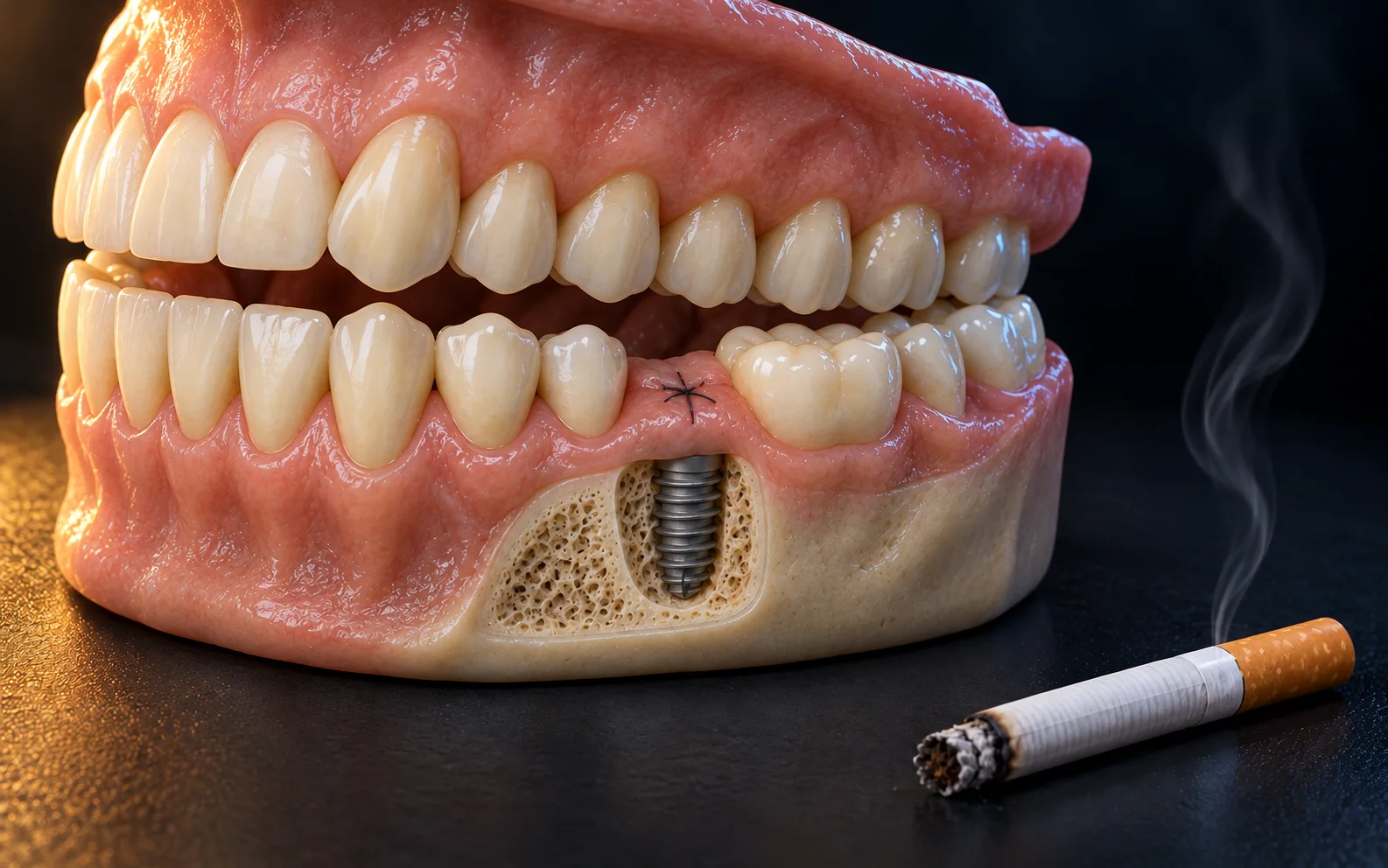
Nicotine narrows the small vessels that feed the gum and the jawbone. When less blood reaches the wound, less oxygen arrives with it, and healing tissue depends on exactly that oxygen. Smoke also dries the lining of the mouth and raises the temperature around a fresh wound, which leaves the gum less able to hold off bacteria.
Why the first days are treated separately
Once the implant is placed, the gum is closed with stitches, and healing starts with that line staying shut. Drawing on a cigarette creates suction inside the mouth, and hot smoke reaches the same spot directly; together they pull at a wound that has only just been closed. If the line opens early, the gum takes longer to heal and the bone has poorer ground to grow against. If this happens, or if the swelling grows and spreads, or you develop a fever or a discharge from the wound, seek dental or medical care the same day.
Bone takes months to grip the implant
An implant sits firmly on the day it is placed, but the real bond comes later: the jawbone grows tight against its surface, little by little. How long that takes varies from person to person and is counted in months rather than weeks. Smoking keeps blood flow low throughout, so the bond forms more slowly and, in some people, less completely.
What happens to the gum around an implant over time
In people who smoke, the gum bleeds less. That looks reassuring but says the opposite: bleeding is the earliest warning that the gum has become inflamed, and smoking mutes the warning. Inflammation around an implant can then run on quietly, and once the bone beneath it starts to go, that ground is hard to win back. Around an implant, these are the signs that call for an examination:
- A change in gum colour, redness or swelling
- Bleeding or tenderness when you brush, where there was none before
- A bad smell or taste coming from around the implant
- Gum pulling back so the implant looks longer
- A feeling of pressure, or discomfort when you bite down
If stopping is not realistic, does cutting down count?
The fewer cigarettes a day, the lighter the load on the tissue. That is not the same as stopping, but it is not nothing either. It matters most during the months while bone is growing against the implant, a long stretch in which even a small drop in the daily count adds up.
Saying that you smoke changes the follow-up
Once your dentist knows you smoke, checks are set at shorter intervals, and at each one a few things get particular attention: the depth of the gum pocket around the implant is measured, signs of bleeding and inflammation are looked for, and where needed an X-ray compares the bone level around the implant with earlier images. Scaling and cleaning may be booked more often as well. That way trouble is spotted while it is still small. Nobody is judging you here; the information simply changes what is worth doing.
In someone who smokes, gum that does not bleed is not a reassuring sign; it shows that the earliest warning has been silenced.
Frequently asked questions
How many days should you go without smoking after an implant?
There is no single number that fits everyone. The first days, while the wound is closing, carry the most weight, and how long the break should be in your case depends on how the surgery went and how healing progresses. The longer the break, the easier that stage passes, and the difference shows up most in the first week.
Does smoking mean the implant will be lost?
Not necessarily. Plenty of people who smoke keep their implants for years. What changes is the margin: healing takes longer, the gum around the implant becomes inflamed more easily, and problems surface later than they otherwise would. Shortening the intervals between checks is how that margin is managed.
Are vapes or a water pipe gentler while an implant is healing?
Nicotine and heat are still there, and drawing in produces the same suction that pulls at a freshly stitched wound. With a water pipe the pull is stronger and the session longer. During early healing, none of these forms can be treated as neutral.
What do nicotine patches or gum change?
The smoke, the heat and the suction disappear, and in the early stage that is a real difference. Nicotine still acts on the blood vessels, though, so these products are not neutral early on either. Whether they suit you is something to talk through with your dentist or the doctor looking after you.
Is it wrong to have an implant at all if you smoke?
Smoking is not a bar in itself. It is weighed up beforehand along with the state of the gum, the bone and your general health, and it shapes the plan rather than cancelling it. Being straight about it from the start is what makes the plan fit your situation.
My gum does not bleed, so is it healthy?
Not always. Smoking narrows the vessels and reduces bleeding, so a gum that looks calm can hide inflammation. Colour, swelling, smell and whether the gum is pulling back are more reliable signs to go on.
This content is for general information only and does not replace an examination.
Edited by
Elif Teke
Medically reviewed by: Ali Bulut, Specialist Oral, Dental and Maxillofacial Surgeon
This article draws on the clinical experience of the Papatya Dental team and is reviewed for accuracy before publication.
- Last updated:
- 2026-09-21
- Editorial contact:
- icerik@papatyadental.com