
Why a treated tooth still hurts
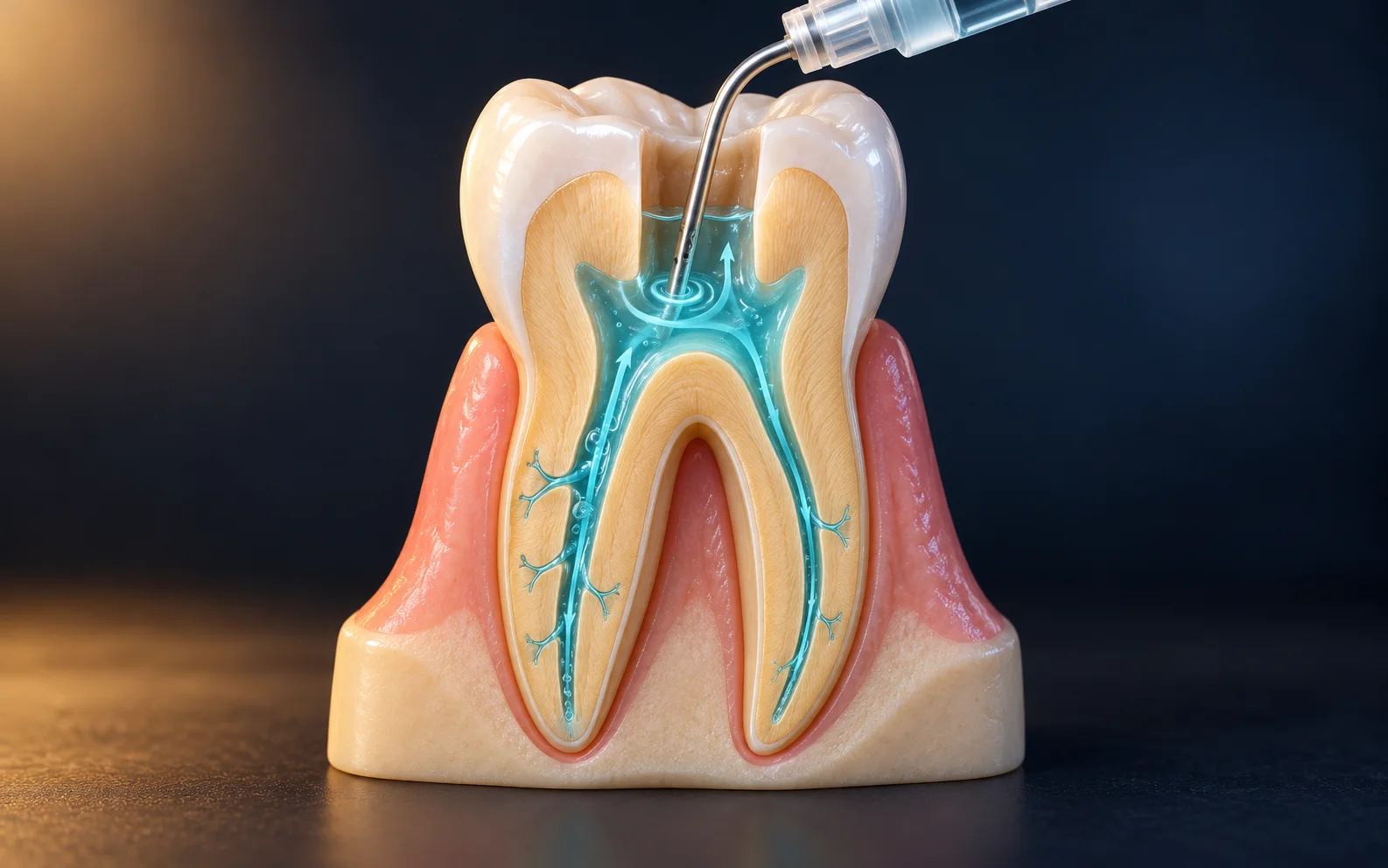
During root canal treatment the inflamed tissue inside the tooth is removed and the canals are cleaned and filled. The nerve inside the tooth is gone, but the ligament that holds the root in the jaw stays where it is. That thin layer is what gets irritated during treatment, and it stays swollen and touchy for a while. So the ache of the first days comes from around the root rather than from inside the tooth, which is why a tooth with no nerve left can still be sore to bite on.
What the first days usually look like
Expected pain is dull, spread out and clearly on its way down. It is most noticeable over the first two or three days and fades over the following week or two. How long it takes varies with the person and with the state the tooth was in beforehand: a tooth that already hurt before treatment settles more slowly.
- A mild soreness when you bite or press on the tooth
- Gum tenderness around the tooth for a few days
- A tired jaw from holding your mouth open
- A temporary filling that feels odd on the first day
Pain on biting often means the filling sits high
The filling placed on top of the tooth can end up a fraction too high in the bite. The whole chewing force then lands on one tooth, and on the very tooth that needs to be left alone, so the pain stops easing. The pattern is telling: the tooth hurts only when you bite and stays quiet the rest of the time. Reshaping the filling at a short visit sorts it out, and most people feel the difference the same day.
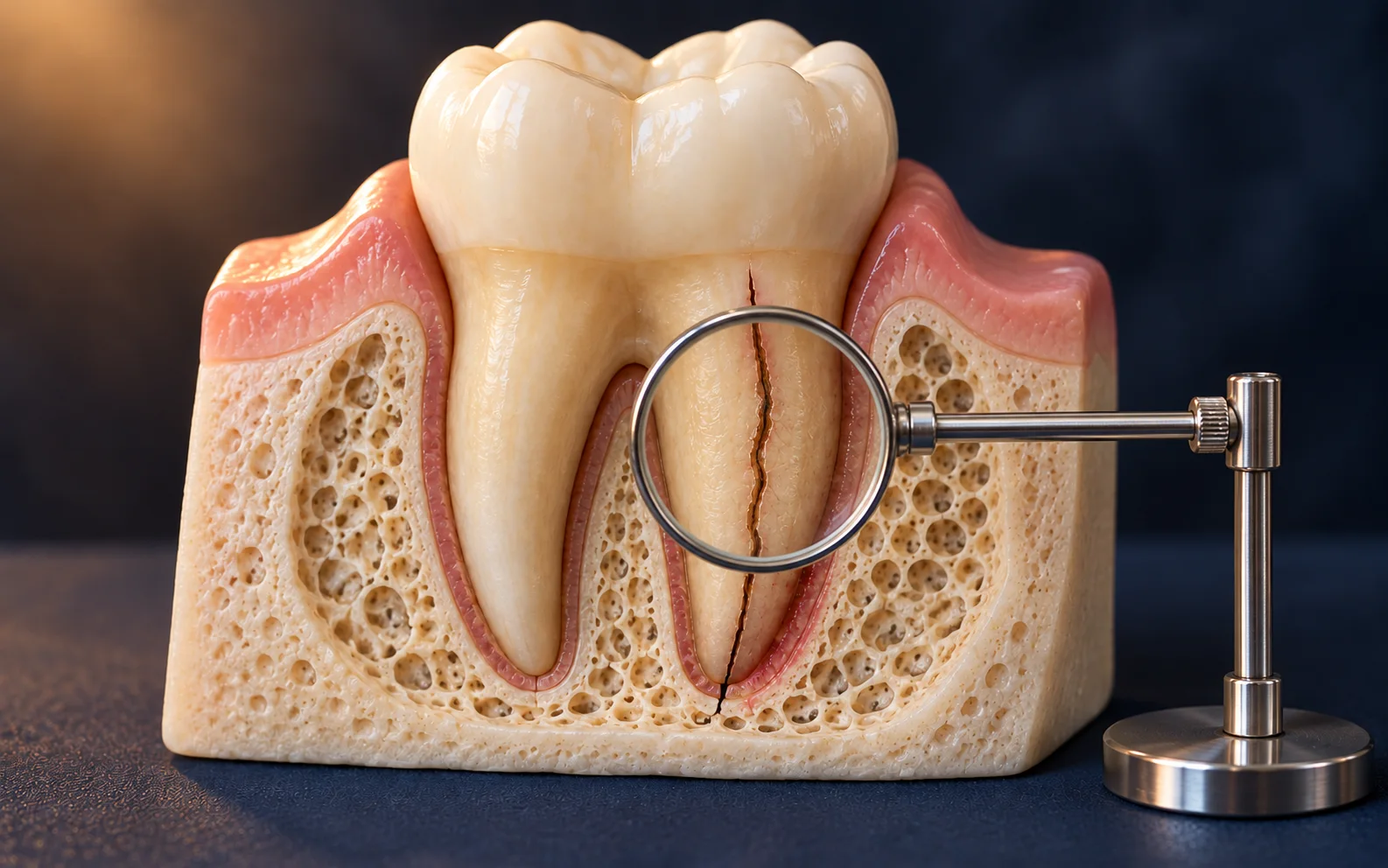
A quiet root-treated tooth is not automatically a sound one; at the back of the mouth, without a crown to spread the chewing load, it can crack later on.
Signs that are not part of healing
Some symptoms do not belong to normal recovery. Pain that builds day by day, pain that wakes you at night, throbbing that sharpens when the tooth is touched, swelling of the cheek or gum, fever, a bad taste in the mouth and difficulty swallowing all fall into this group. They can mean that inflammation has spread from the tip of the root into the tissue around it, and that does not settle on its own.
What helps at home
The aim in the first days is to leave the tooth alone. Resting the treated side lets the irritation at the root tip calm down faster. Heat on a throbbing tooth usually makes the pain worse; a cold compress held against the cheek tends to help more, and food and drinks are best kept lukewarm. If a painkiller is going to be used, ask the dentist who did the treatment which one suits you.
- Leave hard, sticky and very hot food for a few days
- Chew on the untreated side
- Do not bite anything solid with that tooth until the permanent filling or crown is finished
- Keep brushing; an area that stays clean heals more easily
What the dentist checks if pain drags on
Pain that runs past a few weeks, or comes back after a quiet spell, sends the treatment back for review. An X-ray shows whether the inflammation at the root tip is shrinking, whether the filling reaches the end of the canal, and whether a thin extra canal was missed. A crack in the root changes the picture altogether. Sometimes the source turns out to be the neighbouring tooth or the jaw joint, so pointing at the exact spot helps the examination.
Frequently asked questions
How long does pain last after root canal treatment?
For most people the noticeable tenderness sits in the first two or three days and fades over the following week or two. The length depends on the state the tooth was in before treatment. If the ache is a little smaller each day, it is going the right way; if it stays level or grows, the tooth needs to be checked.
If the nerve is gone, why does the tooth still hurt?
The nerve inside the tooth is removed, but the tissue that holds the root in the jaw keeps its own nerve endings. That thin layer is irritated by the treatment and still registers pressure and biting. So the ache comes from around the root, not from inside the tooth.
It only hurts when I bite. What does that mean?
That pattern usually points to a filling left slightly high in the bite. Chewing force lands on one tooth and the soreness stops improving. A short visit to reshape the filling is normally all it takes, and relief comes quickly.
What should I do if my face swells?
Swelling of the cheek or gum, fever or a bad taste means dental or medical care the same day. These can point to inflammation that has spread beyond the root tip and does not clear up by itself. If the swelling grows or moves towards the eye or neck, do not wait. If swallowing or breathing is getting harder, go to an emergency department straight away.
Can I chew on the treated tooth?
Chewing on the other side is more comfortable in the first days. At the back of the mouth, hard food waits until the permanent filling or crown is finished, because a root-treated tooth cracks more readily.
Can root canal treatment be redone?
If pain runs past a few weeks or returns later, the tooth is assessed again. An X-ray shows how the root tip is healing, how far the filling reaches and whether a narrow canal was missed. Depending on what is found, the treatment can be redone or a small operation at the root tip considered.
This content is for general information only and does not replace an examination.
Edited by
Eren Koluaçık
Medically reviewed by: Nilufar Tulanova Şener, Dentist, Aesthetic Dentistry
This article draws on the clinical experience of the Papatya Dental team and is reviewed for accuracy before publication.
- Last updated:
- 2026-09-21
- Editorial contact:
- icerik@papatyadental.com