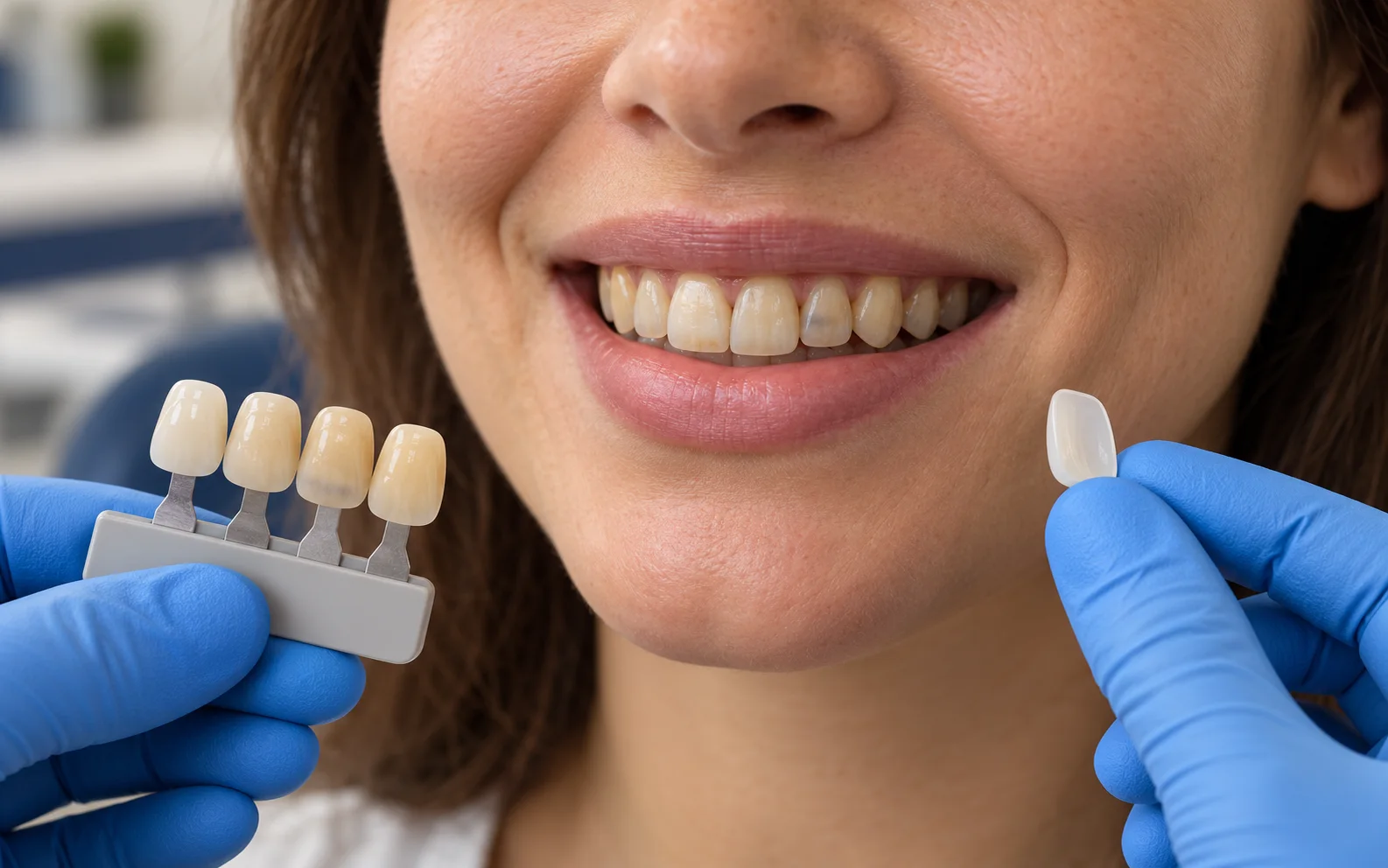

Przebarwienie powierzchniowe czy własny kolor zęba?
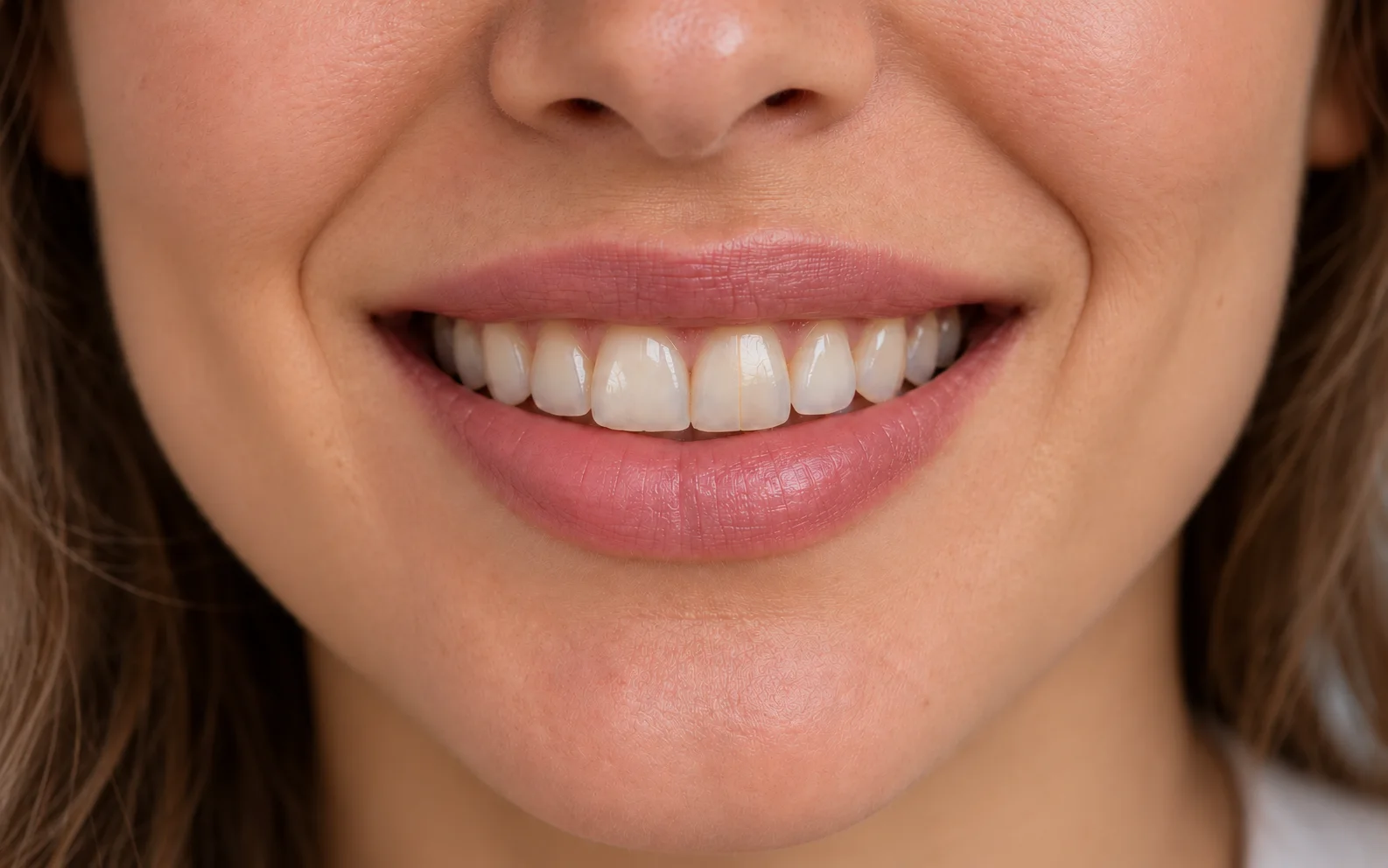
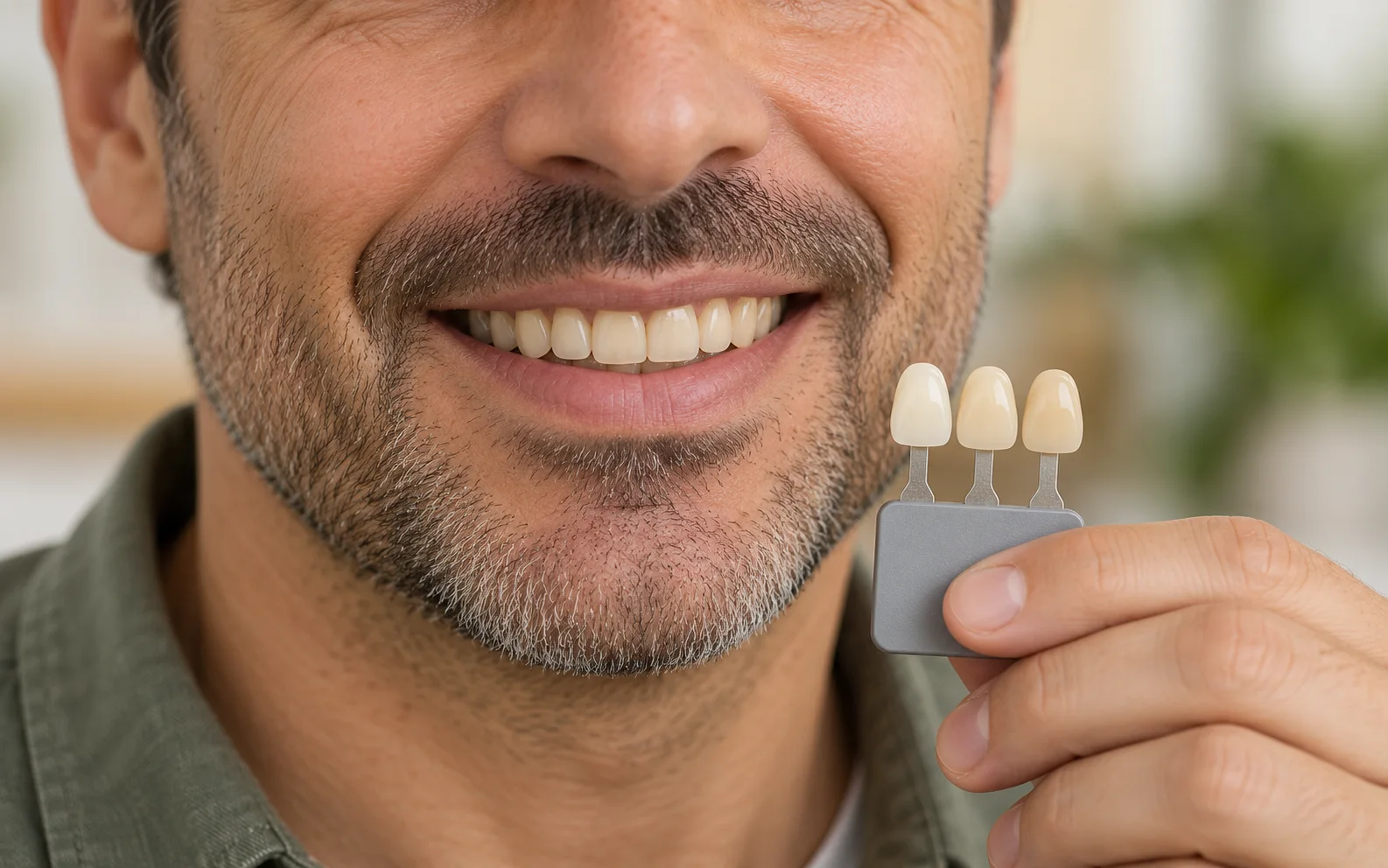
Z jednej strony jest kolor, który przychodzi z zewnątrz i osiada na powierzchni: przebarwienia zostawiane przez herbatę, kawę i tytoń. Z drugiej strony jest własny kolor zęba, ustalany wspólnie przez szkliwo i zębinę pod nim. Przebarwienie powierzchniowe schodzi; własnego koloru zęba nie da się wypolerować. To, co widzisz w lustrze, jest zwykle sumą obu, a to, które przeważa, rozstrzyga, co naprawdę pomoże.
Przebarwienia narastające na powierzchni
Szkliwo wygląda gładko, ale jego powierzchnia nie jest zupełnie równa. Barwne napoje, dym tytoniowy i część produktów spożywczych czepiają się jej. Tam, gdzie jest płytka albo kamień, przebarwienia osiadają szybciej, bo szorstka powierzchnia lepiej trzyma kolor. Ten rodzaj przebarwień pokazuje się najpierw wzdłuż linii dziąseł, między zębami i po wewnętrznej stronie dolnych przednich zębów. Szczotkowanie trzyma je w ryzach, a profesjonalne czyszczenie usuwa większość.
- Herbata, kawa, cola i ciemne soki owocowe
- Papierosy i inne wyroby tytoniowe
- Czerwone wino, sos sojowy i ciemne przyprawy
- Długotrwałe stosowanie niektórych płynów do płukania
Gdy szkliwo ścieńcza, prześwituje zębina
Szkliwo jest półprzezroczyste i przepuszcza część światła. Zębina pod nim jest z natury żółtawa. Kiedy szkliwo ścieńcza, zębina przejmuje kolor zęba i ząb wygląda bardziej żółto. Ścieńczają je dwie rzeczy: ścieranie i kwas. Szczotkowanie sztywnym włosiem, mocny nacisk i szerokie ruchy szorowania zabierają szkliwo przez lata. Kwaśne napoje, częsty refluks i wymioty je rozpuszczają. Tu na zębie nie ma w ogóle przebarwienia, tylko brakuje warstwy.
Kiedy wszystkie zęby żółkną razem, to zwykle dzieło lat; kiedy jeden ząb jest ciemniejszy od sąsiadów, trzeba przyjrzeć się czemuś innemu.
Zębina z wiekiem grubieje
Zębina powstaje przez całe życie. Przez lata komora w środku zęba się zwęża, warstwa zębiny grubieje, a jej kolor się pogłębia. W tym samym czasie szkliwo się ściera. Razem wzięte sprawia to, że zęby w wieku sześćdziesięciu lat wyglądają ciemniej niż w wieku trzydziestu. To zwykła zmiana, a nie choroba, choć u osób mocno szczotkujących pojawia się wcześniej.
Kiedy ciemnieje pojedynczy ząb
Jeśli jeden ząb jest wyraźnie ciemniejszy od sąsiadów, coś wydarzyło się w jego wnętrzu. Zwykłą przyczyną jest uderzenie: upadek, zderzenie, cios w czasie sportu. Naczynia krwionośne w zębie zostają uszkodzone, a pozostałe produkty krwi barwią zębinę na szaro, brązowo albo różowawo. Zmiana może pojawić się tygodnie, a czasem lata po urazie. Zęby po leczeniu kanałowym też z czasem ciemnieją. Żel nakładany z zewnątrz niewiele tu daje, bo kolor siedzi w środku zęba.
Przebarwienia wywołane lekami
Część leków zmienia kolor zęba od środka. Kiedy zęby wciąż powstają w kości, czyli w ciąży i w dzieciństwie mniej więcej do ósmego roku życia, niektóre antybiotyki odkładają się w zębinie; szare albo brązowe pasma, które zostawiają, stają się widoczne dopiero po wyrżnięciu zębów, a szczotkowanie nic im nie robi. Część płynów do płukania działa odwrotnie, barwiąc z zewnątrz: stosowane przez długi czas zostawiają brązowy film na zębach i języku, który usuwa czyszczenie.
Co wybielanie zmienia, a czego nie
Żel przechodzi przez szkliwo i rozkłada cząsteczki barwne w zębinie, więc działa na własny kolor zęba. Przebarwienia powierzchniowe to inna praca i tam najpierw idzie czyszczenie. Są też miejsca, do których wybielanie nie sięga. Wyniki bywają różne u różnych osób, ten sam żel nie rozjaśnia zębów każdej osoby w tym samym stopniu, a odcień przez kolejne miesiące trochę wraca.
- Wypełnienia, korony i licówki się nie rozjaśniają; gdy otaczające je zęby jaśnieją, niedopasowanie staje się bardziej widoczne.
- Ząb, który pociemniał po uderzeniu, nie odpowie na żel nakładany z zewnątrz i tam potrzebna jest inna droga.
- Białe plamy na szkliwie nie znikają przy wybielaniu i potem mogą się wyraźniej odznaczać.
- Powierzchnia korzenia odsłonięta przez cofnięte dziąsła nie rozjaśnia się przy wybielaniu.
Najczęściej zadawane pytania
Czy żółty ząb znaczy niezdrowy ząb?
Nie. Naturalny kolor zębów bywa różny u różnych osób, a zdrowy ząb z grubszą zębiną po prostu wygląda na bardziej żółty. Sam odcień nic nie mówi o próchnicy ani chorobie dziąseł; liczy się stan dziąseł i samego zęba.
Czy wybielanie uszkadza szkliwo?
Wybielanie prowadzone pod nadzorem stomatologicznym nie pozostawia trwałych uszkodzeń szkliwa. Nadwrażliwość trwająca kilka dni w czasie leczenia i po nim jest częsta i zwykle ustępuje sama. Bardzo mocne preparaty stosowane bez nadzoru mogą poparzyć dziąsła.
Czy pasty wybielające rozjaśniają kolor?
Zmniejszają przebarwienia powierzchniowe drobnymi cząstkami ściernymi i kilkoma dodanymi składnikami, a własny kolor zęba zostaje taki, jaki był. Używane mocno przez długi czas ścierają też szkliwo, a ząb wygląda wtedy ciemniej.
Czy pociemniały ząb wróci do dawnego koloru?
Różowawy odcień widziany w pierwszych tygodniach po uderzeniu czasem blednie. Ząb, który robi się szary albo brązowy, w większości taki zostaje, a tkanka w jego wnętrzu wymaga sprawdzenia. Zdjęcie rentgenowskie i test reakcji zęba na zimno pokazują, jak stoi sprawa.
Czy moje wypełnienia i korony też zbieleją?
Nie. Żel działa tylko na tkankę zęba. Gdy sąsiednie zęby się rozjaśniają, starsze wypełnienia i korony wyglądają przy nich ciemniej i dlatego wypełnienia w strefie widocznej zwykle wymienia się kilka tygodni po wybielaniu.
Czy kolor zębów poprawia się po rzuceniu palenia?
Nowe przebarwienia przestają narastać, więc zęby ciemnieją znacznie wolniej. Smoła, która już się osadziła, sama nie schodzi i wymaga profesjonalnego czyszczenia. Zysk dla dziąseł jest większy niż zmiana odcienia.
Ta treść ma charakter ogólnoinformacyjny i nie zastępuje badania.
Opracowanie
Samed Kağan Bozkurt
Weryfikacja medyczna: Nilufar Tulanova Şener, Lekarz dentysta, stomatologia estetyczna
Ten artykuł powstaje w oparciu o doświadczenie kliniczne zespołu Papatya Dental i przed publikacją jest sprawdzany pod kątem rzetelności.
- Ostatnia aktualizacja:
- 2026-09-21
- Kontakt z redakcją:
- icerik@papatyadental.com