
Czy z implantami zębowymi można wykonać rezonans
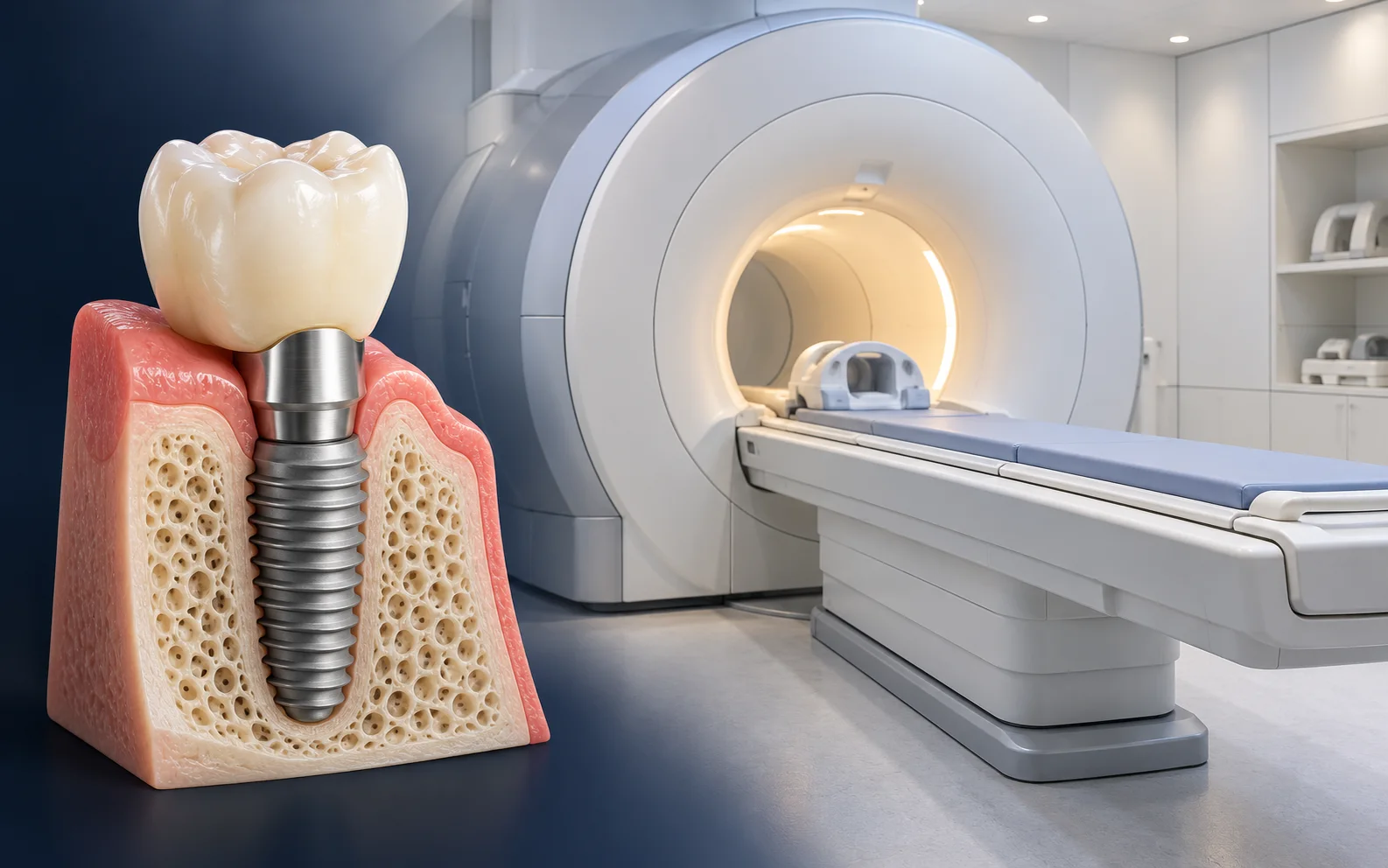
Implantów z tytanu i stopów tytanu magnesy nie przyciągają. Nie oczekuje się, żeby przesunęły się w silnym polu magnetycznym skanera, a implant zrośnięty z kością i tak siedzi w kości mocno. Z tego powodu implanty zębowe rzadko stają na drodze badaniu rezonansem. Ostateczna ocena i tak należy do zespołu radiologicznego, który zna aparat i używane ustawienia.
Prawdziwym problemem są zniekształcenia, a nie zagrożenie
Metal zaburza sygnał, który skaner odczytuje z otaczającej go tkanki. Na obrazie widać to jako ciemną pustkę z wykrzywionym brzegiem, a w radiologii nazywa się to artefaktem. To nie znak uszkodzenia; oznacza obszar, którego skaner nie zdołał odczytać. Kłopot zaczyna się wtedy, gdy ta ciemna plama zakrywa coś istotnego, bo żuchwa, dno jamy ustnej, nasada języka i ślinianki leżą blisko implantów zębowych.
To, jak duże będą zniekształcenia, zależy od tego, jaki metal jest w ustach i ile go jest. Pojedyncza śruba implantu zostawia skromny ślad, a korony metalowo-ceramiczne, starsze mosty i stałe aparaty zmazują znacznie szerszy obszar. Skanery o silniejszym polu, na przykład 3 tesle, zostawiają większy ślad niż aparaty 1,5 tesli. Metal w ustach zwykle bardzo mało przeszkadza obrazom mózgu, a bardzo mocno obrazom szyi i szczęk.
Co należy powiedzieć zespołowi radiologicznemu
- Powiedz, że masz implanty zębowe i mniej więcej kiedy je wszczepiono.
- Wyjaśnij, czy ząb na górze jest stały, czy stanowi część protezy, którą wyjmujesz.
- Wymień stałe aparaty, druty retencyjne i mosty z metalową konstrukcją.
- Zgłoś inne wszczepione urządzenia, takie jak rozrusznik serca, implant ślimakowy albo klips naczyniowy.
- Zabierz kartę implantu albo protokół zabiegu, jeśli je zachowano.
- Dowiedz się, która okolica będzie badana: przy obrazach szczęk i szyi metal ma znacznie większe znaczenie.
Protezy, które się wyjmuje, i zaczepy magnetyczne
Każdą protezę, którą się wyjmuje, zdejmuje się przed badaniem. Część z nich ma małe magnesy chwytające implanty pod spodem. Pole magnetyczne może trwale osłabić te magnesy, może też nagrzać protezę albo ją przesunąć. Mały metalowy element pozostawiony w ustach nie stanowi problemu; wyjąć trzeba protezę, która niesie magnes. Jeśli nie wiesz, czy twoja ma magnesy, zapytaj wcześniej dentystę.
Najbardziej przydatne, co zespół radiologiczny może usłyszeć, to które części twoich ust są stałe, a które się wyjmuje.
Jak przebiega badanie
Nie oczekuje się, żeby implant bolał w czasie badania. Część osób zauważa lekkie ciepło albo mrowienie w ustach, które bierze się z fal radiowych używanych przez skaner i zwykle szybko mija. Jeśli poczujesz wyraźne pieczenie, ból albo ciągnięcie, powiedz personelowi bez zwłoki, zamiast czekać do końca badania. Przycisk w twojej dłoni istnieje właśnie po to.
Kiedy zdjęcia nie są wystarczająco dobre
Badanie zepsute przez artefakt nie jest zmarnowane. Radiologia ma sekwencje zmniejszające ślad zostawiany przez metal, można zmienić ustawienie głowy, a zamiast tego użyć aparatu o mniejszym natężeniu pola. Przy niektórych pytaniach tomografia komputerowa albo badanie ultrasonograficzne jest bardziej przydatne niż powtarzanie rezonansu. O tym, którą drogą pójść, decyduje radiolog, który wie, czego się szuka.
Najczęściej zadawane pytania
Czy z powodu implantów trzeba odłożyć badanie rezonansem?
Zwykle nie. Pole magnetyczne nie działa na tytan, a implanty zębowe rzadko wykluczają badanie. Decyzja i tak należy do zespołu, który je przeprowadza w danym dniu, a wcześniejsze wspomnienie o implantach zwykle wystarcza.
Czy implant może się przesunąć w czasie badania rezonansem?
Nie oczekuje się, żeby implant zrośnięty z kością się przesunął, bo magnesy nie przyciągają tytanu. Przesunąć się może proteza ruchoma trzymana na zaczepach magnetycznych, a tę wyjmuje się z ust przed rozpoczęciem badania.
Co się stanie, jeśli implant zasłoni na obrazie coś ważnego?
Zespół radiologiczny może wybrać ustawienia zmniejszające ślad zostawiany przez metal, zmienić ustawienie głowy albo przejść na inną metodę. Zależnie od tego, czego się szuka, tomografia komputerowa albo badanie ultrasonograficzne może pokazać tę okolicę wyraźniej.
Czy implanty cyrkonowe to co innego?
Cyrkon to ceramika, więc nie zostawia tak szerokiego śladu jak metal i obraz wokół niego pozostaje czystszy. Pod względem bezpieczeństwa nie stwarza osobnego problemu, ale i tak warto powiedzieć, jakiego materiału użyto.
Czy stałe aparaty też sprawiają kłopot?
Stałe aparaty i druty retencyjne zniekształcają znacznie szerszy obszar niż pojedynczy implant i przy badaniach głowy i szyi pojawiają się częściej niż implanty. To, czy drut trzeba zdjąć, ustalają między sobą dentysta i radiolog, zależnie od badanej okolicy.
Co robić, jeśli w czasie badania poczuję ciepło w ustach?
Lekkie ciepło zdarza się części osób i zwykle trwa krótko. Jeśli pojawi się wyraźne pieczenie albo ból, naciśnij przycisk trzymany w dłoni i powiedz o tym personelowi bez zwłoki. Badanie można przerwać i sprawdzić sytuację.
Ta treść ma charakter ogólnoinformacyjny i nie zastępuje badania.
Opracowanie
Ali Bulut
Weryfikacja medyczna: Ozan Ergen, Specjalista chirurgii jamy ustnej i szczękowo-twarzowej
Ten artykuł powstaje w oparciu o doświadczenie kliniczne zespołu Papatya Dental i przed publikacją jest sprawdzany pod kątem rzetelności.
- Ostatnia aktualizacja:
- 2026-09-21
- Kontakt z redakcją:
- icerik@papatyadental.com