


What Is a PEEK Crown?
PEEK is a biocompatible thermoplastic polymer that resists heat and chemicals. It has long been used in orthopaedics and spinal surgery. In dentistry it is used as a metal-free material for crown and bridge frameworks, prostheses on implants and frameworks for removable dentures.
PEEK's elastic modulus is close to that of bone and dentine, making it much more flexible than metal and zirconia. It is light, contains no metal and does not cause the image distortion that metal does on X-rays.
PEEK is ivory or light beige in colour and does not have the translucency of a natural tooth. That is why, in visible areas, it is usually covered with a layer of composite or ceramic. The crown or bridge is designed on a computer and milled or pressed from PEEK.
Reviews of PEEK in dentistry highlight that the material has promising properties but that long-term clinical studies on crowns and bridges are still limited. For this reason, PEEK is considered not as a routine first choice, but as an option for specific needs.
Material
Polyetheretherketone (PEEK), a high-performance, biocompatible polymer.
Properties
Light, metal-free, with flexibility close to bone; it does not distort X-ray images.
Appearance
Ivory or light beige; in visible areas it is usually covered with a tooth-coloured layer.
Bonding
The surface is air-abraded, a PEEK-specific bonding agent is applied and it is bonded with resin cement.
Limits
There are fewer long-term clinical data for crowns and bridges than for other materials.
Who Might a PEEK Crown Suit?
PEEK is an option considered when there are specific needs. The decision depends on the condition of the tooth or implant and on what you expect.
People with a metal allergy
Because it contains no metal, it can be an alternative framework material for people sensitive to metal alloys.
Restorations on implants
Because it is flexible and light, it can be used as a framework for crowns, bridges and prostheses on implants.
Long-term temporary restorations
It can be a durable option for temporary restorations that will stay in the mouth for a long time until permanent treatment is planned.
Aesthetic expectations
PEEK on its own does not look like a tooth. For visible teeth, the covering to be added and how to care for it are discussed.
Bite and grinding
Wear or chipping of the composite layer on top is more likely in people who grind their teeth.
Comparison with alternatives
Materials such as zirconia and lithium disilicate have more long-term data; the reason for choosing PEEK is discussed openly at the examination.
Single front-tooth crowns with very high aesthetic expectations
When a natural look is the priority on a single front tooth, ceramic crowns are usually preferred.
Untreated decay or gum disease
Decay, gum inflammation or an infection at the root tip should be treated before the crown.
Possible Risks and Limits of a PEEK Crown
With PEEK crowns, the risks relate mainly to bonding, the covering layer and the limited long-term data.
Debonding
Because bonding to PEEK is difficult, the crown can loosen if surface preparation is not thorough enough.
Chipping and wear of the covering
The composite layer added on top can wear, stain or chip over time.
Limited long-term data
Clinical data on how PEEK crowns and bridges behave over many years are still limited.
Appearance
Uncovered PEEK does not look like a tooth; in visible areas a covering is needed.
Permanent loss of tooth tissue
On a natural tooth, the tooth is reduced for the crown and this cannot be undone.
How Is a PEEK Crown Made?
A PEEK crown is designed digitally and made in the laboratory. If a tooth-coloured layer is added on top, the process usually takes two or more appointments.
- 1
Examination and planning
Your dentist assesses the tooth or implant, your gums, your bite and any metal allergy, and takes X-rays if needed.
- 2
Preparing the tooth or implant impression
On a natural tooth, the tooth is reduced under local anaesthetic; for an implant, an impression or scan of the implant position is taken.
- 3
Digital scan or impression
The prepared tooth or implant area is scanned or an impression is taken, and a temporary restoration is fitted if needed.
- 4
Making and covering the framework
The PEEK framework is designed on a computer and milled or pressed. In visible areas, a composite or ceramic layer is added on top.
- 5
Try-in
The fit, edges, shade and bite are checked.
- 6
Bonding the crown
Because the PEEK surface does not react readily with other materials, it is conditioned before bonding. The inside is air-abraded with aluminium oxide powder, a special PEEK bonding agent is applied, and the crown is bonded with resin cement or self-adhesive resin cement.
Alternatives to a PEEK Crown
These metal-free options, with more long-term data, can also be considered.
Monolithic zirconia crown
Metal-free and highly strong; often used on back teeth and on implants.
Lithium disilicate crown
A metal-free glass-ceramic that gives a natural look and is bonded with resin.
Hybrid ceramic crown
A tooth-coloured crown option milled from a block combining ceramic and resin.
Titanium-framework restorations
If there is no metal allergy, an option with a long clinical record for bridges on implants.
Materials and Bonding in PEEK Crowns
PEEK's chemical stability helps it stay durable in the mouth but makes bonding harder. That is why air abrasion of the surface and bonding agents developed for PEEK are needed for the crown to hold securely on the tooth or implant abutment.
In PEEK crowns covered with composite, the bond between the covering and the framework also matters. The composite layer can wear, stain or chip over time; when this happens, it can often be repaired in the mouth.
PEEK does not show up like metal on X-rays and does not distort MRI images. This can be an advantage for people who may need imaging in the future.
Metal-free polymer
An alternative framework material for people with a metal allergy.
Flexibility close to bone
Absorbs chewing forces more flexibly than metal and zirconia.
Surface conditioning
Air abrasion and a special bonding agent are needed for a secure bond with resin cement.
Imaging-friendly
Does not cause metal-type distortion on X-ray and MRI images.
Settling In and Caring for a PEEK Crown
You can use the crown on the day it is bonded. Most people get used to it within a few days.
- 1
The first few hours
Avoid eating and hot drinks until the numbness wears off.
- 2
The first few days
With crowns on natural teeth, there may be brief sensitivity to hot and cold.
- 3
The first few weeks
If the crown feels high when you bite, go back for a check; a small adjustment is usually enough.
- 4
Long term
At regular check-ups your dentist looks at the covering surface, the edges, your gums or the area around the implant, and your bite.
Daily cleaning
Brush the crown twice a day with a soft toothbrush and clean between the teeth or around the implant with floss or an interdental brush.
Staining drinks
For composite-covered crowns, rinsing with water after coffee, tea and red wine helps reduce staining.
Night guard
If you grind your teeth, wear the night guard your dentist recommends.
Chipping or colour change of the covering
If a piece of the tooth-coloured layer has chipped off or the colour has changed noticeably, go for a check; it can often be repaired.
The crown feels loose
If the crown moves or comes off, keep it and contact the clinic. Do not try to glue it back yourself.
Swelling around the gum or implant
If there is lasting bleeding, swelling or pain around the crown, it needs assessment.
What Affects the Cost of a PEEK Crown
The cost depends on the type of restoration, the covering material and any treatment needed first. You will get exact information with your treatment plan after the examination.
Type of restoration
A single crown, a bridge or a prosthesis on implants needs different design and laboratory work.
Covering material
Adding a composite or ceramic layer over the framework changes the process.
Treatment needed first
Decay treatment, root canal treatment or gum treatment are added to the plan if needed.
Allergy assessment
If a metal allergy is suspected, extra assessment may be needed to choose the right material.
Appointment plan
For patients coming from abroad, laboratory time and try-in appointments are planned together with the length of your stay in Antalya.
Before / After

Frequently Asked Questions About PEEK Crowns
What is PEEK?
PEEK, or polyetheretherketone, is a high-performance, biocompatible polymer used in medicine and dentistry. It is light, contains no metal and has a flexibility close to that of bone.
Does a PEEK crown look like a tooth?
PEEK is ivory or light beige and does not have the translucency of a natural tooth. That is why, in visible areas, it is covered with a layer of composite or ceramic.
How is a PEEK crown bonded to the tooth?
Because the PEEK surface does not react readily with other materials, it is conditioned first. The inside is air-abraded with aluminium oxide powder, a PEEK-specific bonding agent is applied and the crown is bonded with resin cement.
Is PEEK suitable if I have a metal allergy?
Because PEEK contains no metal, it is one of the options that can be considered for people with a metal allergy. Zirconia and lithium disilicate are also metal-free alternatives.
How long does a PEEK crown last?
Long-term clinical data for PEEK crowns and bridges are still limited. Its lifespan is linked to the condition of the covering layer, the quality of bonding, your bite and oral hygiene.
Will a PEEK crown stop me having an MRI scan?
Because PEEK is not a metal, it does not distort MRI images and does not show up like metal on X-rays.
How many days do I need to stay in Antalya?
Because a PEEK crown is made in the laboratory and is often covered with another material, a few days of laboratory time and at least two appointments are usually needed. The exact time is confirmed after the examination.
Medical sources
View medical sources
Medically reviewed by
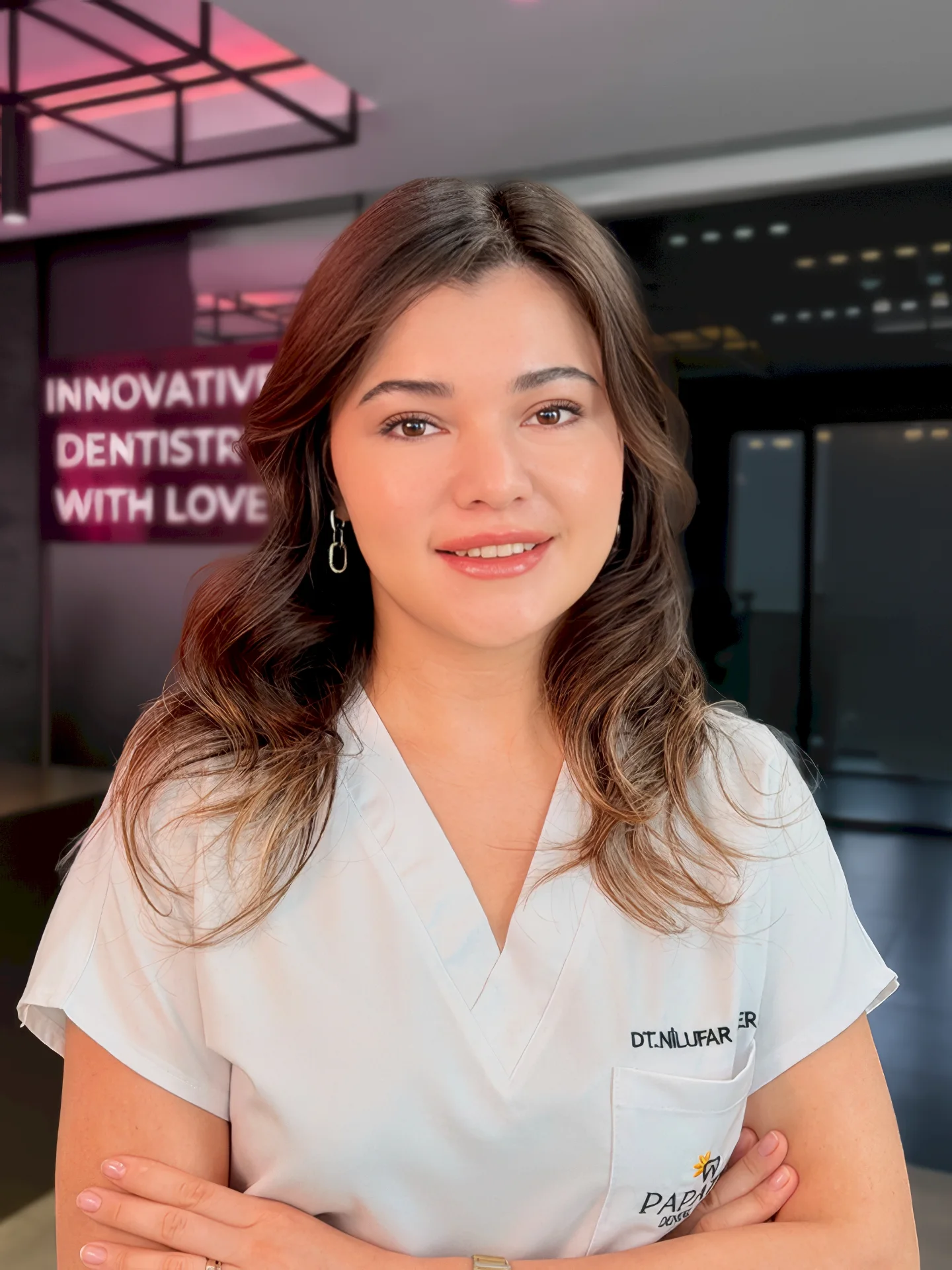
Nilufar Tulanova Şener
Dentist, Aesthetic Dentistry
View doctor profile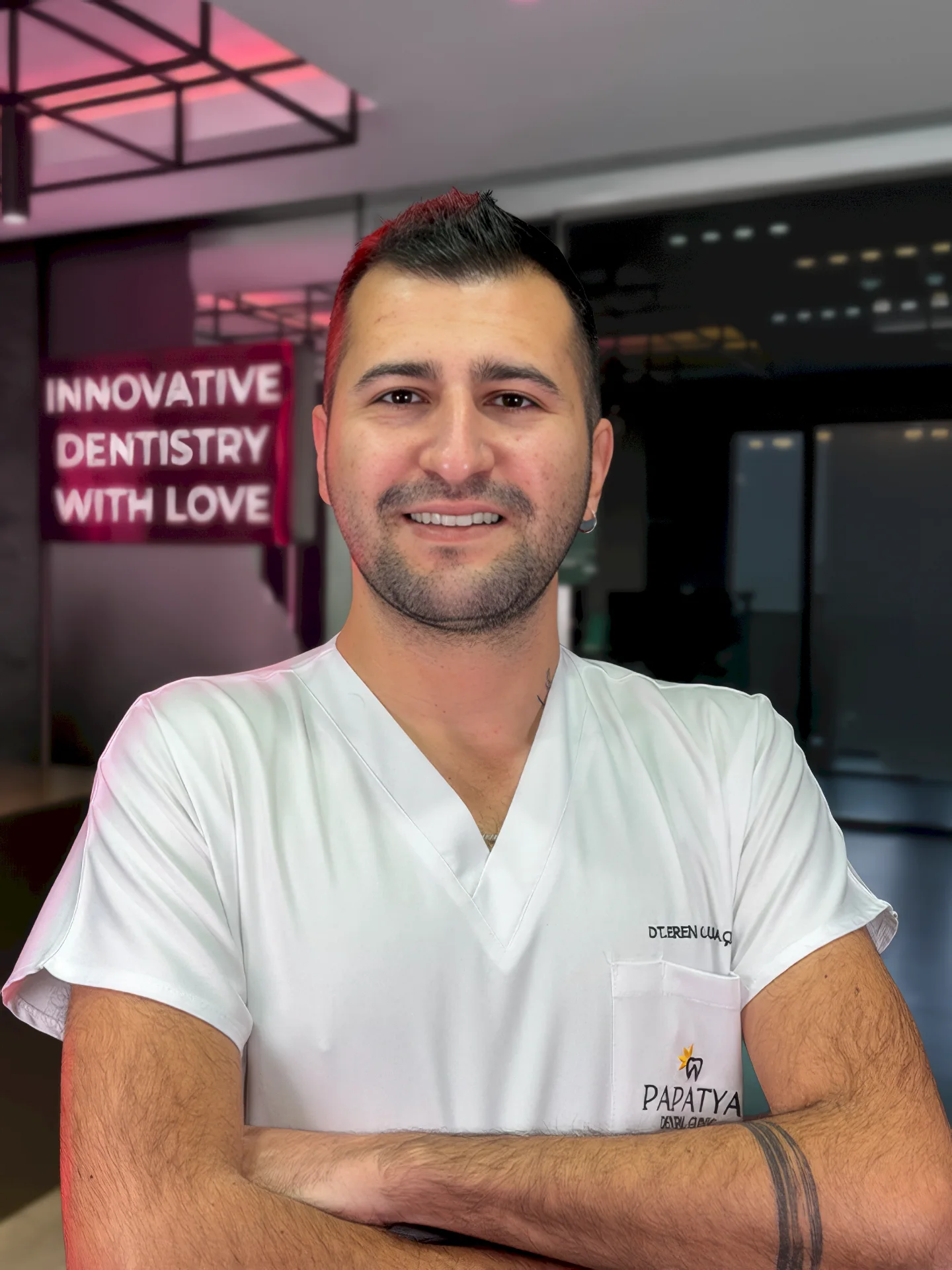
Eren Koluaçık
Dentist, Aesthetic Dentistry
View doctor profile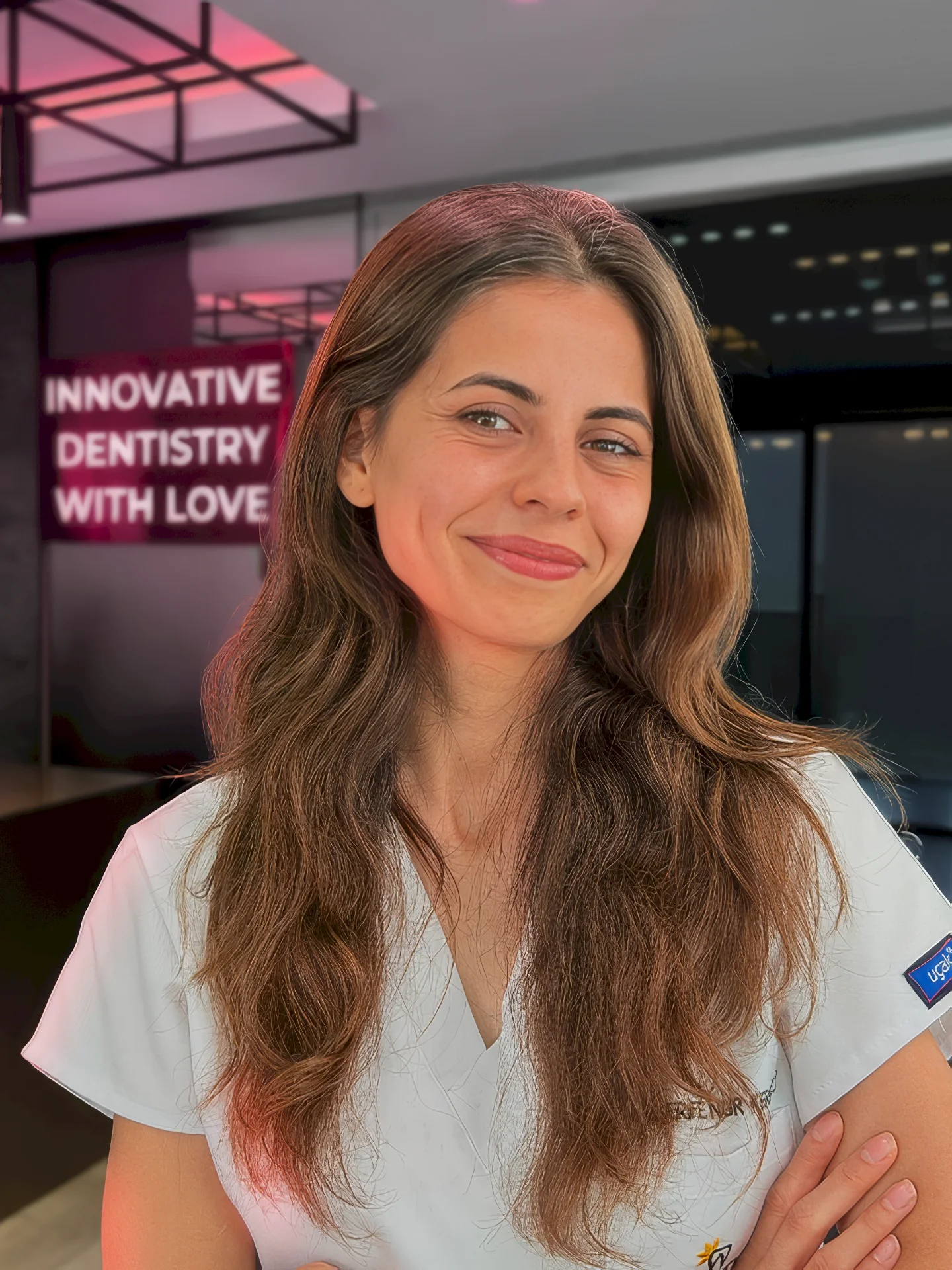
Şerife Nur Kerpiçci
Dentist, Aesthetic Dentistry
View doctor profileLast medical review: 12 October 2026