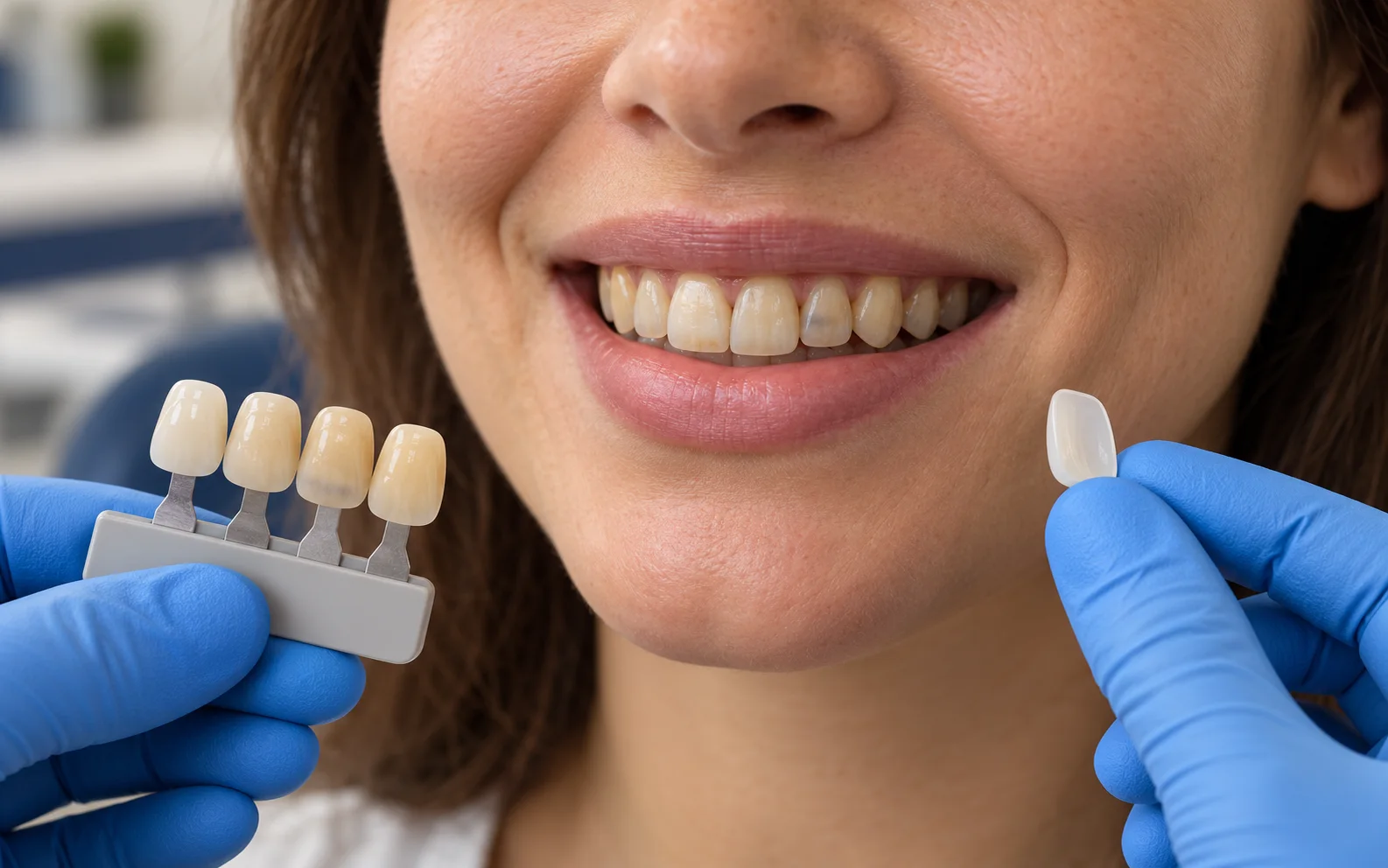

Dlaczego wybielanie uwrażliwia zęby
Żele wybielające zawierają nadtlenek. Przechodzi on przez szkliwo i dociera do zębiny pod spodem. Zębina jest przetkana bardzo cienkimi kanalikami biegnącymi ku żywej tkance w środku zęba. Kiedy nadtlenek wędruje wzdłuż nich, ta tkanka przez jakiś czas łatwiej się drażni. Stamtąd bierze się to krótkie, ostre, igiełkowate ukłucie, które czujesz. Ząb nie został starty ani uszkodzony.
Jak długo trwają ukłucia
U większości osób uczucie zaczyna się w dniu wizyty i wyraźnie słabnie w ciągu 24–48 godzin. Zwykle mija w tydzień. Przy wybielaniu nakładkowym w domu uczucie rozkłada się na więcej dni, ale pozostaje łagodniejsze. Po pojedynczej mocnej sesji w gabinecie pierwsze godziny mogą być bardziej intensywne. Te czasy bywają różne u różnych osób: grubość szkliwa, cofnięte dziąsła i wcześniejsza nadwrażliwość zmieniają obraz.
Co naprawdę pomaga
Dwa składniki, które wykonują większość pracy, to azotan potasu i fluor. Azotan potasu spowalnia zakończenie nerwowe, tak że przekazuje ono mniej sygnału, a fluor zwęża ujścia kanalików zębinowych. Pasty dla wrażliwych zębów właśnie dlatego często łączą oba.
- Wtarcie odrobiny pasty na nadwrażliwość w ząb opuszkiem palca po myciu i zostawienie jej bez spłukiwania sprawia, że pracuje mocniej.
- Krótka przerwa między sesjami też pomaga.
- Odłóż na kilka dni wszystko bardzo gorące i bardzo zimne. Ciepła woda i ciepła zupa nie sprawiają kłopotu.
- Używaj miękkiej szczoteczki i lekkiego nacisku; mocne szorowanie odsłania więcej zębiny.
- Kwaśne napoje zostawiają szkliwo bardziej podatne w dniach zaraz po wybielaniu.
Kiedy to nie jest zwykła nadwrażliwość
Nadwrażliwość po wybielaniu jest częsta i mija sama; znanym i przemijającym skutkiem żelu jest też zbielenie brzegu dziąsła na kilka godzin w miejscu, którego dotknął. Nie każdy ból bierze się jednak z żelu. Część objawów wskazuje na coś innego wewnątrz zęba, a to nie ustępuje samo.
- Ból, który ciągnie się dniami i rośnie, zamiast słabnąć.
- Ból, który zostaje w jednym zębie. Nadwrażliwość po wybielaniu czuje się zwykle w kilku zębach naraz.
- Pulsujący ból, który zaczyna się sam, bez jedzenia i picia.
- Ból wywoływany ciepłem, który utrzymuje się przez minuty po ustaniu bodźca.
- Dziąsła, które spuchły albo nie przestają krwawić.
Jak obniżyć ryzyko przed startem
To, jak silna okaże się nadwrażliwość, w dużej mierze rozstrzyga się przed nałożeniem żelu. Najpierw trzeba wypełnić próchnicę, usunąć kamień i ocenić cofnięte dziąsła. Odsłonięty korzeń nie ma nad sobą szkliwa i reaguje w czasie wybielania znacznie ostrzej. Każdemu, kto ma już wrażliwe zęby, zwykle łatwiej jest przejść to, jeśli kilka tygodni wcześniej zacznie pastę z azotanem potasu.
Kontynuowanie, gdy zęby są wrażliwe
Ukłucie nie znaczy, że wybielanie poszło źle, a silniejsze uczucie nie znaczy, że ząb bardziej się rozjaśnił. Pauza nie cofa już uzyskanego odcienia, tylko opóźnia dojście do tego, o który ci chodziło. Dlatego kiedy ból narasta, możesz spokojnie skrócić czas noszenia albo zrobić dzień lub dwa przerwy między sesjami.
Najczęściej zadawane pytania
Kiedy nadwrażliwość jest najsilniejsza i czy wraca po każdej sesji?
Najostrzejsze są zwykle godziny tuż po zdjęciu żelu, a przez noc i następny dzień wyraźnie się to uspokaja. Uczucie może wracać po każdej sesji, ale nie kumuluje się z sesji na sesję. Jeśli każda kolejna sesja boli bardziej, warto powiedzieć o tym dentyście prowadzącemu leczenie.
Kiedy zacząć pastę dla wrażliwych zębów?
Zwykłym podejściem jest rozpoczęcie kilka tygodni przed wybielaniem i używanie jej dwa razy dziennie zamiast zwykłej pasty. Efekt narasta przez wiele dni, a nie po jednym umyciu. Jeśli dwa tygodnie regularnego stosowania nic nie zmieniają, nadwrażliwość może brać się skądinąd i powinien obejrzeć to dentysta.
Czy wybielanie ścieńcza szkliwo na stałe?
Przy stężeniach stosowanych pod nadzorem stomatologicznym nie uważa się, by wybielanie ścieńczało szkliwo w wymiernym stopniu. Nadwrażliwość bierze się z docierania nadtlenku do żywej tkanki przez kanaliki zębinowe, a nie z utraty szkliwa. Częste powtarzanie kuracji w połączeniu z kwaśnymi napojami to osobna sprawa i faktycznie ściera szkliwo.
Czy moje wypełnienia i korony też staną się wrażliwe?
Kolor wypełnień i koron nie rozjaśnia się pod wpływem nadtlenku. Jeśli jednak na brzegu wypełnienia jest włosowata szczelina, żel może się w nią wsączyć i dać ostre ukłucie. Silny ból w jednym wypełnionym zębie po wybielaniu to powód, by sprawdzić to wypełnienie.
Co łatwiej zjeść po wybielaniu?
Przez pierwsze kilka dni zasada jest prosta: ciepło i mało kwasu. Woda, zupa, jogurt, banan i ryż nie sprawiają kłopotu. Napoje z lodem, bardzo gorąca kawa, cytryna, ocet i napoje gazowane warto odłożyć. Trzymanie się jasnych potraw pierwszego dnia ogranicza też nowe przebarwienia.
Ta treść ma charakter ogólnoinformacyjny i nie zastępuje badania.
Opracowanie
Muhammet Buğra Şener
Weryfikacja medyczna: Nilufar Tulanova Şener, Lekarz dentysta, stomatologia estetyczna
Ten artykuł powstaje w oparciu o doświadczenie kliniczne zespołu Papatya Dental i przed publikacją jest sprawdzany pod kątem rzetelności.
- Ostatnia aktualizacja:
- 2026-09-21
- Kontakt z redakcją:
- icerik@papatyadental.com